

By World Economic Forum / Wikimedia Commons / CC BY-SA 2.0

The United Kingdom Votes to Leave the European Union
On 23 June 2016, the United Kingdom voted by 51.9% to 48.1% to leave the European Union, with a turnout of 72%. England and Wales voted to leave, while Scotland and Northern Ireland voted to remain, Northern Ireland by 55.8%.
The UK had joined the European Economic Community in 1973, along with Ireland and Denmark. Prime Minister David Cameron had promised the referendum before the 2015 general election, and he resigned the day after the result and was succeeded by Theresa May.
The UK triggered Article 50 on 29 March 2017, and the future of the border between Northern Ireland and the Republic became one of the hardest issues in the negotiations. After the House of Commons rejected May’s withdrawal deal three times, Boris Johnson replaced her, and the UK left the EU on 31 January 2020. Northern Ireland stayed aligned with some EU rules under the Northern Ireland Protocol to avoid checks on the land border.
You can read more about Ireland and Britain joining the EEC here.
Donald Trump is Elected President of the United States


On 8 November 2016, the Republican Donald Trump, a New York property developer and television personality, defeated the Democrat Hillary Clinton in the US presidential election. Trump had campaigned on promises to cut immigration, build a wall on the border with Mexico and renegotiate trade deals, under the slogan “Make America Great Again”.
Most opinion polls had shown Clinton ahead, but Trump won narrowly in Michigan, Pennsylvania and Wisconsin. He won 304 electoral votes to Clinton’s 227, although Clinton won about 2.9 million more votes nationally. He became the first US president with no previous experience in government or the military.
In January 2017, US intelligence agencies concluded that Russia had interfered in the election to help Trump, and in May 2017 Robert Mueller was appointed to investigate. Trump lost the 2020 election to Joe Biden, and he won the presidency again in 2024.
Black Lives Matter Protests Spread Across the United States

The Black Lives Matter movement began in 2013, when the activists Alicia Garza, Patrisse Cullors and Opal Tometi started using the hashtag #BlackLivesMatter after George Zimmerman, a neighbourhood watch volunteer, was acquitted of killing the black teenager Trayvon Martin. It grew into a national movement in 2014 after the police killings of Michael Brown in Ferguson, Missouri, and Eric Garner in New York.
In July 2016, the police killings of Alton Sterling in Baton Rouge, Louisiana, and Philando Castile near Saint Paul, Minnesota, both recorded on video, led to protests in many cities. On 7 July a gunman killed five police officers during a protest in Dallas, Texas.
In August 2016 the American football player Colin Kaepernick began protesting against racial injustice during the national anthem, first by sitting and then by kneeling. The movement grew again in 2020, after the killing of George Floyd by a police officer in Minneapolis.
You can read more about the George Floyd protests here.
Suicide Bombers Kill 32 People in Brussels
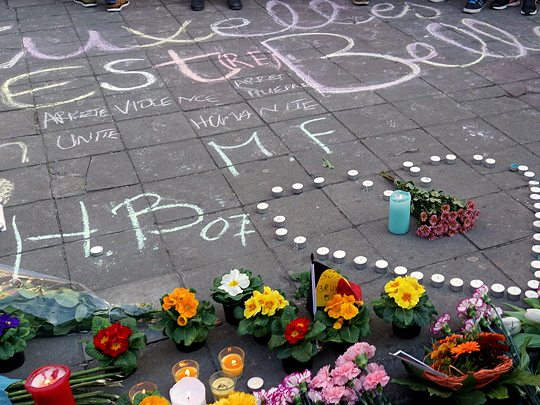

On the morning of 22 March 2016, two suicide bombers blew themselves up in the departures hall of Brussels Airport. About an hour later a third bomber attacked a metro train at Maalbeek station, close to the headquarters of the European Union.
Thirty-two people were killed, as well as the three bombers, and more than 300 were injured, making it the deadliest terrorist attack in Belgium’s history. The Islamic State group claimed the attacks.
The bombers belonged to the same network that had carried out the Paris attacks of November 2015, and the attacks came four days after the arrest in Brussels of Salah Abdeslam, the only surviving member of the Paris attack teams. In 2023 a Belgian court convicted Abdeslam and several other men over the bombings.
You can read more about the Paris attacks of November 2015 here.
A Gunman Kills 49 People at a Nightclub in Orlando


In the early hours of 12 June 2016, Omar Mateen, a 29-year-old security guard, opened fire inside the Pulse nightclub in Orlando, Florida, a gay club that was holding a Latin music night. He killed 49 people, most of them young Hispanic men and women, and wounded 53 others.
During a three-hour standoff, Mateen called 911 and pledged allegiance to the leader of the Islamic State group. Police stormed the building and shot him dead.
It was the deadliest attack on LGBT people in US history and the deadliest terrorist attack in the United States since 11 September 2001. It was also the deadliest mass shooting by a single gunman in US history until the Las Vegas shooting in October 2017.
A Truck Attack Kills 86 People in Nice


On the night of 14 July 2016, as crowds watched the Bastille Day fireworks on the Promenade des Anglais in Nice, a man drove a 19-tonne lorry into them along almost 2 km of the seafront. Eighty-six people were killed and more than 400 were injured.
The driver, Mohamed Lahouaiej-Bouhlel, a 31-year-old Tunisian living in Nice, was shot dead by police. The Islamic State group claimed the attack, eight months after the Paris attacks of November 2015.
France extended the state of emergency it had declared after the Paris attacks, and it stayed in place until November 2017. In December 2022 a French court convicted eight people of helping the attacker.
Colombia Signs a Peace Deal with the FARC


In 2016 the Colombian government of President Juan Manuel Santos reached a peace agreement with the FARC (Revolutionary Armed Forces of Colombia), a left-wing guerrilla group that had fought the state since 1964. The conflict, which also involved right-wing paramilitaries and drug cartels, killed more than 220,000 people.
The deal was negotiated over four years in Havana, Cuba, and signed in Cartagena in September 2016. On 2 October, Colombians narrowly rejected it in a referendum, by 50.2% to 49.8%.
A few days later Santos was awarded the Nobel Peace Prize. A revised agreement was signed on 24 November and approved by Congress, and in 2017 the FARC handed over its weapons to the United Nations and became a political party. The European Union’s special envoy to the peace process was the former Tánaiste Eamon Gilmore, appointed in 2015 because of his experience of the Northern Ireland peace process.
You can read more about the Good Friday Agreement here.
Hurricane Matthew Devastates Haiti
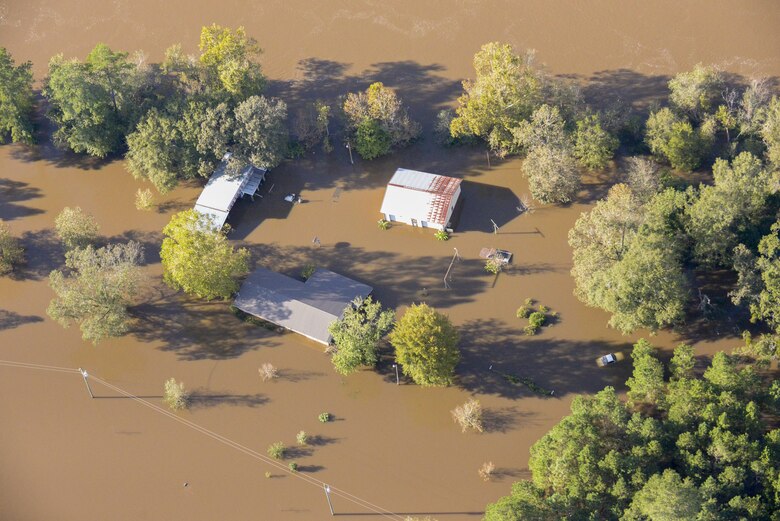
Hurricane Matthew formed in the Caribbean in late September 2016 and became the first Category 5 Atlantic hurricane since 2007. On 4 October it struck south-western Haiti as a Category 4 storm, with winds of about 230 km/h (145 mph).
The Haitian government confirmed 546 deaths, although other estimates were much higher. The storm destroyed homes, crops and livestock across the Tiburon Peninsula, left about 1.4 million people in need of aid and worsened a cholera epidemic, in the country’s worst disaster since the 2010 earthquake.
Matthew also caused damage in Cuba and the Bahamas before moving up the coast of the south-eastern United States. Flooding in North Carolina and other states killed more than 40 people in the United States.
The Chapecoense Football Team is Killed in a Plane Crash
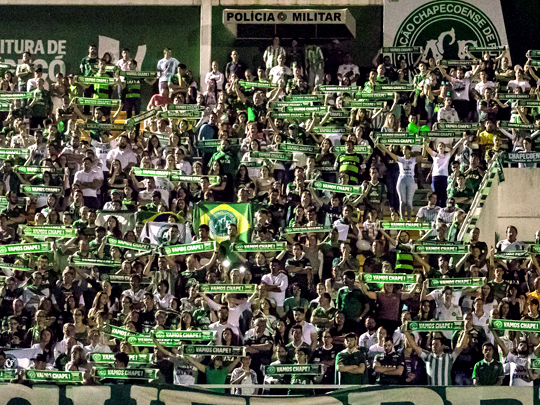

On 28 November 2016, LaMia Flight 2933 crashed into a mountain near Medellín, Colombia, killing 71 of the 77 people on board. The charter flight was carrying the Brazilian football club Chapecoense from Santa Cruz in Bolivia to play the first leg of the Copa Sudamericana final.
Only three of the players survived, along with a journalist and two crew members. Colombia’s aviation authority found that the plane had run out of fuel, because the airline had planned the flight without a refuelling stop and the crew had not declared an emergency until it was too late.
Chapecoense’s opponents, Atlético Nacional of Colombia, asked for the title to be given to Chapecoense, and the South American football confederation, CONMEBOL, awarded it to them. Tens of thousands of people filled Atlético Nacional’s stadium in Medellín for a memorial on the night the final was due to be played.
Ireland Marks the Centenary of the Easter Rising
In 2016 Ireland held hundreds of events to mark the 100th anniversary of the Easter Rising of April 1916, when about 1,250 rebels took over buildings in Dublin and proclaimed an Irish Republic. The main State commemoration took place on Easter Sunday, 27 March 2016.
President Michael D Higgins laid wreaths at Kilmainham Gaol, where 14 of the Rising’s leaders were executed, and at the General Post Office (GPO), the rebels’ headquarters. Captain Peter Kelleher of the Defence Forces read the Proclamation of the Irish Republic outside the GPO.
About 3,700 members of the Defence Forces, the Garda Síochána and the emergency services then marched on a 4.5 km route from St Stephen’s Green past the GPO, watched by large crowds. Events during the year included readings of the Proclamation in schools, a festival of talks and performances on Easter Monday, and the opening of new visitor centres at the GPO and Richmond Barracks.
You can read more about the Easter Rising here.
The Panama Papers are Published
On 3 April 2016, the International Consortium of Investigative Journalists (ICIJ) and the German newspaper Süddeutsche Zeitung began publishing stories based on 11.5 million leaked documents from Mossack Fonseca, a law firm in Panama. An anonymous source had given the files to the newspaper more than a year earlier, and journalists from more than 100 news organisations had studied them in secret.
The documents showed how the firm had set up more than 200,000 offshore companies for clients, including politicians, business people and celebrities, some of whom used them to hide money or avoid tax. Among those named were relatives and associates of several world leaders, including friends of the Russian President Vladimir Putin and the family of the Pakistani Prime Minister Nawaz Sharif.
On 5 April, the Prime Minister of Iceland, Sigmundur Davíð Gunnlaugsson, resigned after mass protests in Reykjavík, and in 2017 Nawaz Sharif was removed from office by Pakistan’s Supreme Court. Mossack Fonseca closed in 2018, and many countries investigated tax evasion revealed in the files.
A Military Coup Attempt Fails in Turkey
On the night of 15 July 2016, a faction of the Turkish armed forces tried to overthrow President Recep Tayyip Erdoğan. Soldiers blocked the bridges over the Bosphorus in Istanbul, seized the state broadcaster, and fighter jets bombed the parliament building in Ankara.
Erdoğan, who was on holiday in Marmaris, called on people to resist in a video call broadcast on live television, and thousands went into the streets to confront the soldiers. The coup collapsed by the next morning, after about 250 people opposing it had been killed and more than 2,000 injured.
The government blamed Fethullah Gülen, a Muslim preacher living in the United States, who denied any involvement. Under a state of emergency that lasted two years, more than 150,000 soldiers, police officers, judges, teachers and other public servants were dismissed or suspended, and tens of thousands were arrested.
The Syrian Government Retakes Aleppo
Aleppo, Syria’s largest city, had been divided since 2012, when rebel forces took control of its eastern districts during the Syrian civil war. In 2016, government forces, supported by Russian air power and militias backed by Iran, surrounded and besieged eastern Aleppo.
From September, eastern Aleppo was hit by heavy bombing that destroyed hospitals and homes and killed hundreds of people. In November, government forces advanced through the rebel districts, and in December the remaining rebels agreed to leave under a deal brokered by Russia and Turkey.
About 35,000 fighters and civilians were taken out of the city by bus, and on 22 December 2016 the government announced that it controlled the whole of Aleppo, its biggest victory of the war. Rebel forces recaptured the city in November 2024, shortly before the fall of President Bashar al-Assad’s government.
You can read more about the start of the Syrian uprising here.