
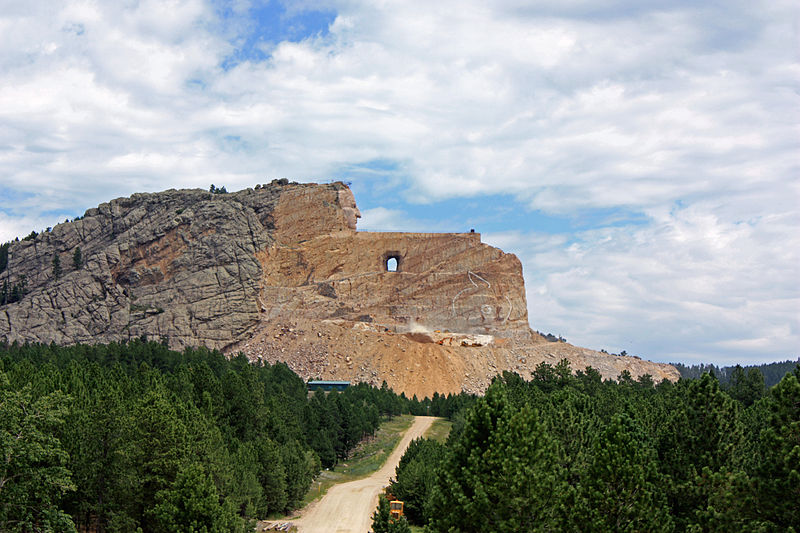
Wikimedia Commons / CC-BY-SA-3.0 / GFDL
Capital: Pierre
Population: 935,000+
Language: English (common language); Dakota/Lakota/Nakota (official indigenous language).
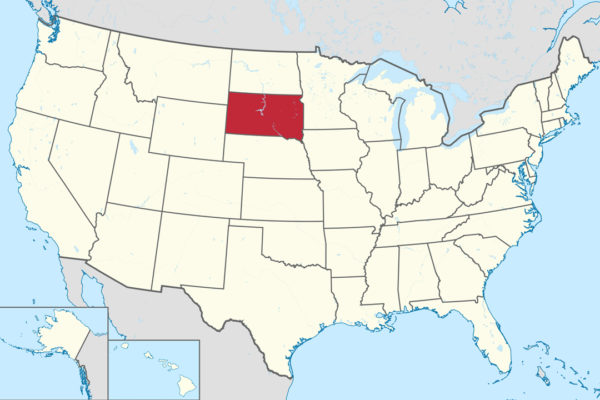
1 – Crazy Horse Memorial (also above)
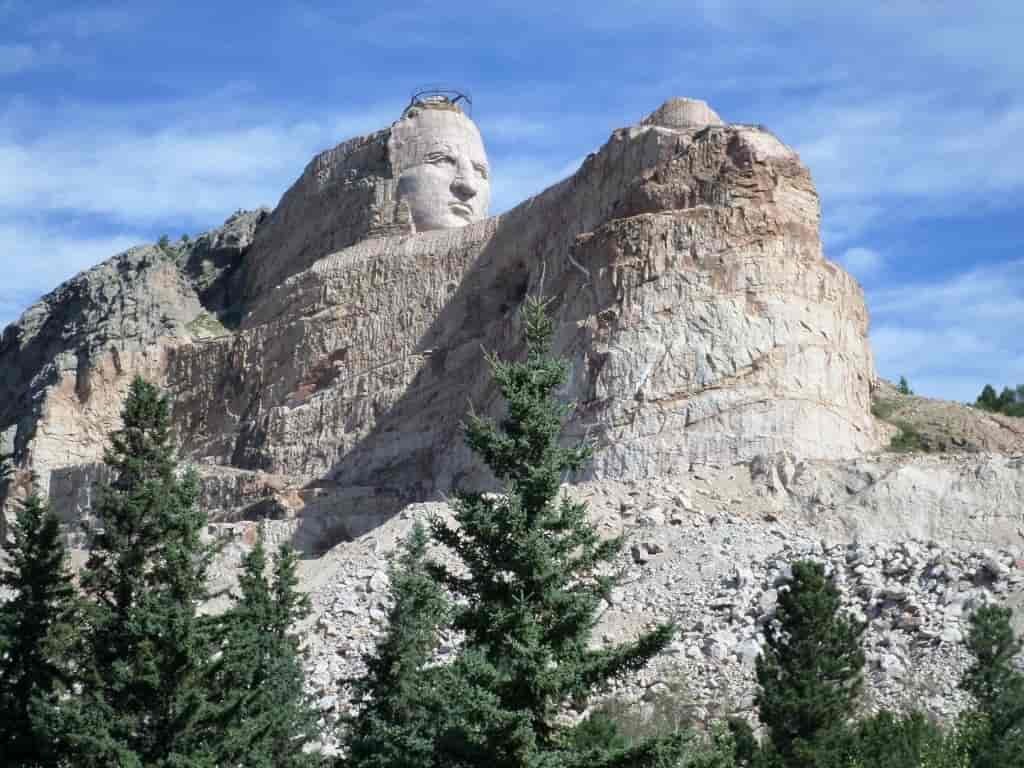
Crazy Horse Memorial is being carved from a granite mountain in the Black Hills, begun in 1948 by sculptor Korczak Ziolkowski, an orphan raised by an Irish prizefighter, at the invitation of Lakota chief Henry Standing Bear, who wrote that his fellow chiefs wanted the white man to know “the red man has great heroes, also”.
Crazy Horse Memorial’s 87-ft face was finished in 1998, and the full design of the warrior on horseback, 641 ft long and 563 ft high, would make it the world’s largest mountain carving once complete, all built without federal or state money by choice.
No authenticated photo of Crazy Horse exists, so the face isn’t a portrait but a tribute to Native Americans, and the memorial has Lakota critics, including Lame Deer, who called carving a wild mountain into a statue “a pollution of the landscape”.
2 – Badlands National Park
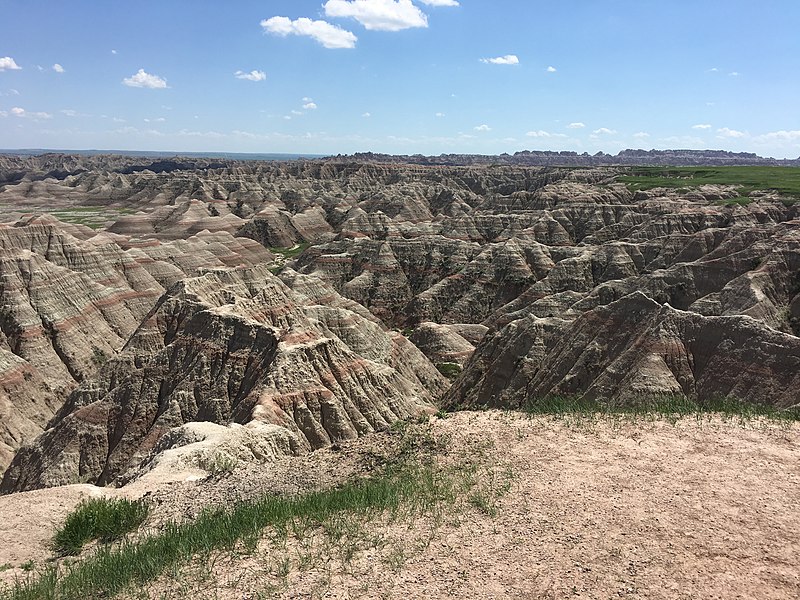
Badlands National Park in southwestern South Dakota takes its name from the Lakota “mako sica” and the French trappers’ “bad lands to travel across”, and its eroding buttes hold one of the world’s richest beds of Oligocene mammal fossils.
Badlands National Park takes in Stronghold Table in the South Unit, managed with the Oglala Sioux Tribe, where one of the last Ghost Dances was held in 1890, prairie where black-footed ferrets were returned after near-extinction, and nearby Wall Drug, whose free-ice-water signs have lured drivers since 1936.
The park’s famous “Big Pig Dig” turned up no pig, as the bone belonged to a hornless rhino ancestor, the rock wears away about an inch a year, and Terrence Malick’s Badlands was shot in Colorado, though Dances with Wolves, Starship Troopers and Nomadland really were filmed in the Badlands.
3 – Mount Rushmore
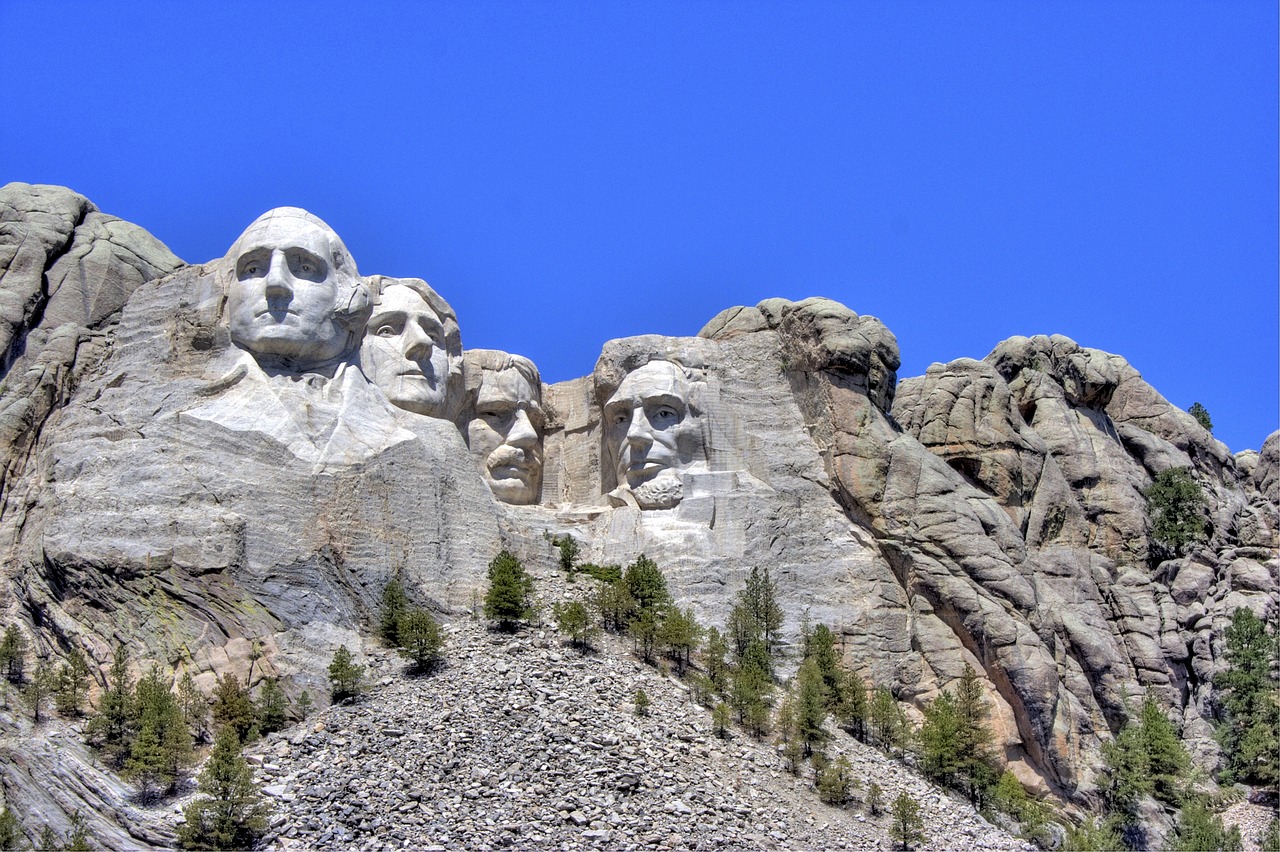
Mount Rushmore was carved from 1927 to 1941 by Gutzon Borglum, who had been deeply involved in Ku Klux Klan politics while working on Georgia’s Stone Mountain, with about 400 workers, none of whom died on the job, and it’s named after New York lawyer Charles E. Rushmore, who came to check mining titles in 1885.
Mount Rushmore’s four 60-ft presidential faces were mostly blasted from the granite with dynamite, and behind Lincoln’s head is Borglum’s unfinished Hall of Records, where panels telling the memorial’s story were sealed in 1998.
Mount Rushmore was first imagined with Western heroes like Lewis and Clark, Red Cloud and Buffalo Bill, Jefferson began on Washington’s other side until cracked rock forced the crew to dynamite him and start again, and Cary Grant never climbed the real faces in North by Northwest, as that chase was shot on a studio mock-up.
4 – Sioux Falls
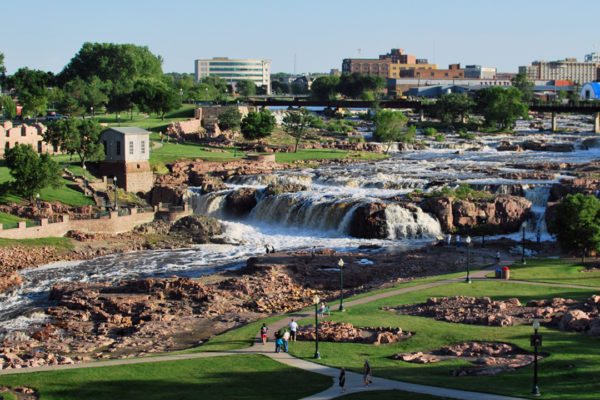
Sioux Falls, South Dakota’s largest city, grew up around the falls of the Big Sioux River, where land speculators founded a town in 1856 that was abandoned and burned during the Dakota War of 1862.
Sioux Falls’ Falls Park shows off the pink Sioux quartzite, some 1.5 billion years old, that built the 1893 Old Courthouse Museum, alongside the ruins of the Queen Bee Mill, which closed after about 18 months, and the USS South Dakota Battleship Memorial outlines the ship full-size in concrete.
Sioux Falls became a credit-card capital after Citibank moved its card operations here in 1981 once South Dakota scrapped its interest-rate caps, and the local boast that USS South Dakota was the most decorated warship of World War II doesn’t hold up, as USS Enterprise earned 20 battle stars to her 13.
5 – Black Hills
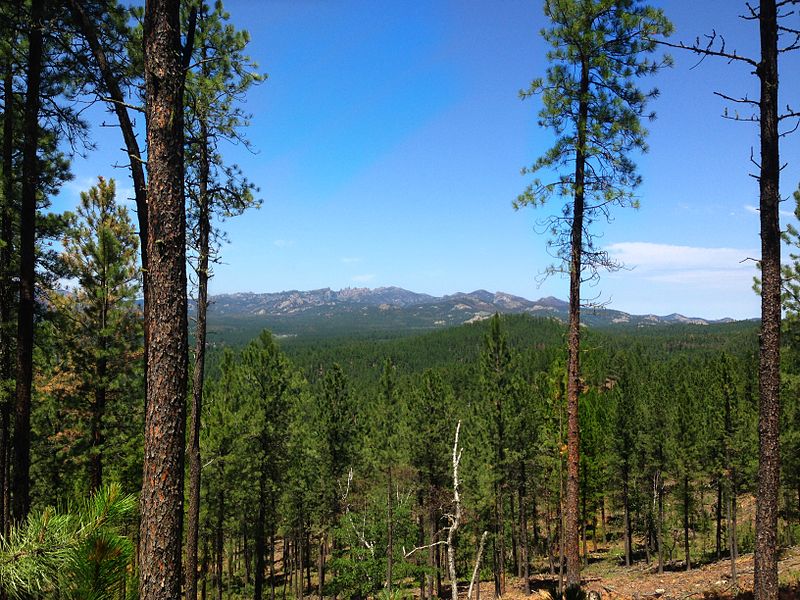
The Black Hills, called Pahá Sápa by the Lakota for their dark, pine-covered slopes, are sacred to the Lakota and were reserved for the Sioux by the 1868 Fort Laramie Treaty, until Custer’s 1874 expedition confirmed gold and Congress seized the hills in 1877.
The Black Hills hold Jewel Cave, found in 1900 by prospectors who felt cold air blowing from a hole and proclaimed a national monument in 1908, and Spearfish Canyon, where the final winter scene of Dances with Wolves was filmed.
In 1980 the Supreme Court ruled the Black Hills had been taken illegally and awarded the Sioux over $100 million, but the tribes have refused the money, as accepting it would end their claim to the land, which they say is not for sale.
6 – Rapid City

Rapid City was staked out on Rapid Creek in February 1876 by miners who had failed in the Black Hills gold rush, among them co-founder John R. Brennan, born in Kilkenny, and it was promoted as the Gateway to the Black Hills.
Rapid City’s City of Presidents puts life-size bronzes of US presidents on downtown street corners, Dinosaur Park’s concrete dinosaurs date from a 1930s WPA project, and the Chapel in the Hills is a replica of Norway’s Borgund stave church.
Rapid City’s ribbon of parks along Rapid Creek exists because of disaster, as the floodplain was cleared and turned into a greenway after the flood of June 1972 killed 238 people.
7 – Deadwood
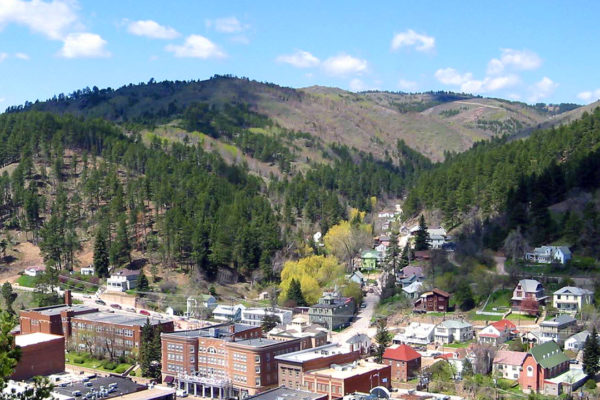
Deadwood sprang up in 1876 in a gulch of the northern Black Hills, a gold-rush town built on land the US had guaranteed to the Lakota, and the whole town became a National Historic Landmark in 1961.
Deadwood’s Mount Moriah Cemetery holds Wild Bill Hickok and Calamity Jane side by side, Main Street recalls the saloon where Jack McCall shot Hickok in 1876, and since 1989 legal gambling, making Deadwood the third US gambling destination after Nevada and Atlantic City, has paid for its preservation.
Deadwood’s legends wobble, as no one recorded Hickok’s cards and “aces and eights” dates from a 1926 biography, there’s no evidence Calamity Jane ever married him, and HBO’s Deadwood was filmed in California, while the Black Hills’ “Poet Scout”, Captain Jack Crawford, born in Carndonagh, Co. Donegal, wrote verse mourning Hickok.
8 – Black Elk Peak
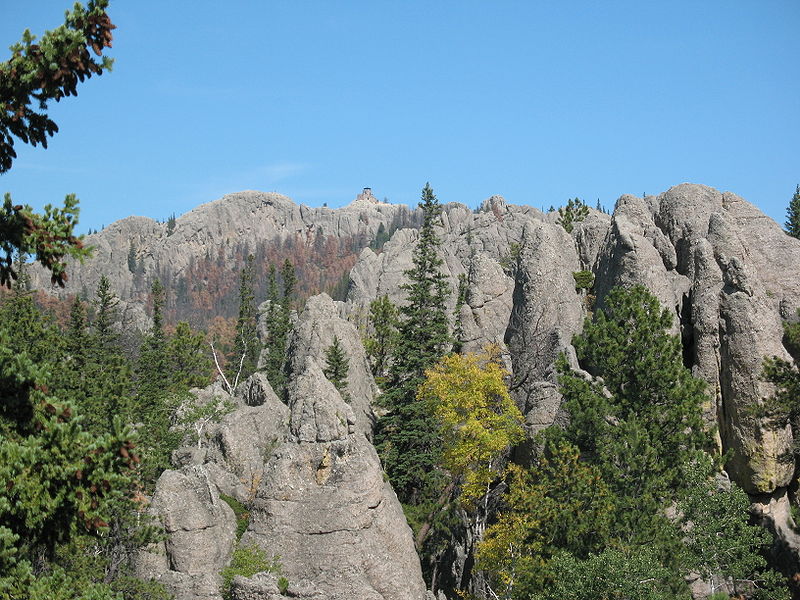
Black Elk Peak, at about 7,240 ft the highest point in South Dakota and often called the highest US summit east of the Rockies, was Harney Peak until 2016, named after General William S. Harney, whose troops killed women and children in an 1855 attack on a Brulé Lakota camp.
Black Elk Peak is topped by a stone fire lookout built by the Civilian Conservation Corps in the late 1930s, with views into four states, though the old boast that it’s the highest point between the Rockies and the Pyrenees ignores higher peaks in Greenland and the Canary Islands.
In Black Elk’s boyhood vision the spirits carried him to this peak, the centre of the world, while Harney had an Irish chapter of his own, carrying out the 1847 mass hanging of the San Patricios, mostly Irish deserters who fought for Mexico, timed to the raising of the US flag over Chapultepec.
9 – Wounded Knee Massacre Site
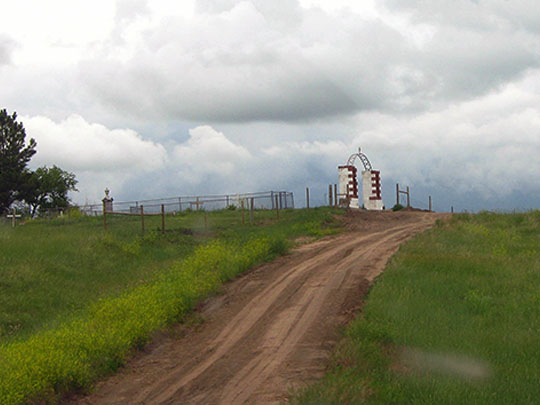
Wounded Knee Massacre Site, beside Wounded Knee Creek on the Pine Ridge Reservation, is where on 29 December 1890 the 7th Cavalry, disarming Spotted Elk’s band of Miniconjou Lakota, opened fire and killed between 150 and 300 people, many of them women and children, while 25 soldiers died, some by their own side’s fire.
Wounded Knee’s hilltop mass grave is where Lost Bird, a baby found alive beneath her dead mother, was reburied in 1991, and the site was occupied for 71 days in 1973 by the American Indian Movement.
About 20 soldiers received the Medal of Honor for Wounded Knee, among them Private Thomas Sullivan of Co. Meath and Sergeant George Loyd of Co. Tyrone, medals campaigners have sought to have revoked, and Dee Brown’s Bury My Heart at Wounded Knee took its title from a 1927 Stephen Vincent Benét poem about American place names.
10 – Wind Cave National Park
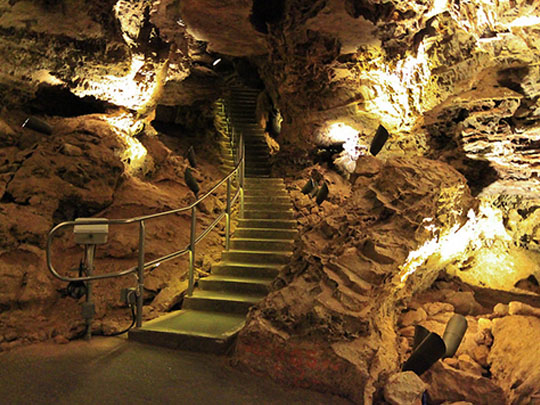
Wind Cave National Park in the southern Black Hills became in 1903 the first cave in the world protected as a national park, and in Lakota tradition it’s the place where people and bison first emerged onto the earth.
Wind Cave’s passages hold about 95% of the world’s known boxwork, thin fins of calcite in a honeycomb pattern, while bison and elk roam the prairie above.
Wind Cave really does breathe, as changes in outside air pressure push air in or out through its tiny entrance, but the story that it was found in 1881 when the wind blew Tom Bingham’s hat off is legend, though early explorer Alvin McDonald did scratch his name on its walls in the 1890s.
11 – Custer State Park


Custer State Park in the southern Black Hills became a state park in 1919 thanks to Governor Peter Norbeck, and inside it runs French Creek, where Custer’s 1874 expedition found gold.
Custer State Park’s 14-mile Needles Highway squeezes through the 8-ft-wide Needles Eye tunnel, and its bison herd, begun with 36 animals in 1914, is driven in every autumn in the Buffalo Roundup, held since 1965.
Calvin Coolidge spent the summer of 1927 at Custer State Park’s State Game Lodge and that August handed reporters slips saying “I do not choose to run for president in nineteen twenty eight”, and the park’s Sylvan Lake appears in National Treasure: Book of Secrets right behind Mount Rushmore, though it’s about 5 miles away.
12 – Minuteman Missile National Historic Site

Minuteman Missile National Historic Site, along I-90 near the Badlands, preserves a launch control centre and a silo from the 150 Minuteman missiles that the 44th Missile Wing kept on alert across western South Dakota during the Cold War.
Minuteman Missile’s Delta-01 launch control facility shows where crews stood watch underground, and at the Delta-09 silo a glass enclosure, installed in 2001 over a silo door fixed partly open under the START treaty, lets visitors look down on the missile.
The missile under the glass at Delta-09 is an unarmed training missile, and inside Delta-01 the crews painted the blast door with a spoof pizza logo promising “World-Wide Delivery in 30 minutes or less or your next one is free”.