
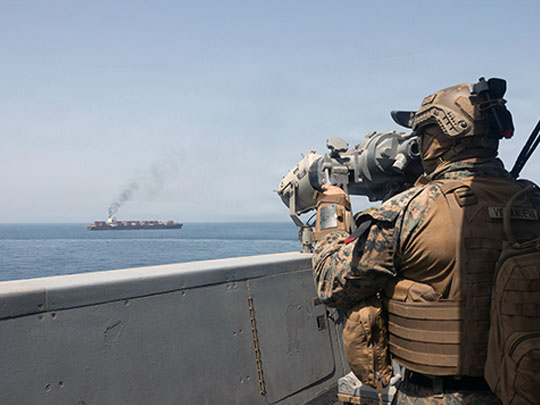
The US-Iran war and the Strait of Hormuz crisis
Featured image: Wikimedia Commons — 2026 Iran war
On 28 February 2026, the United States and Israel launched surprise airstrikes across Iran, hitting nuclear, military, and government sites and killing Iran’s supreme leader, Ayatollah Ali Khamenei, along with other senior officials.
Iran retaliated with waves of missiles and drones aimed at Israel, US bases, and American allies across the region, and moved to close the Strait of Hormuz — the narrow waterway through which roughly a quarter of the world’s seaborne oil passes — by laying mines and attacking merchant ships.
Commercial traffic through the strait fell by more than 90%, forcing shipping companies to reroute and driving up global energy prices.
US forces launched an air campaign to reopen the passage and imposed a naval blockade on Iran, while President Trump demanded Iran’s “unconditional surrender.”
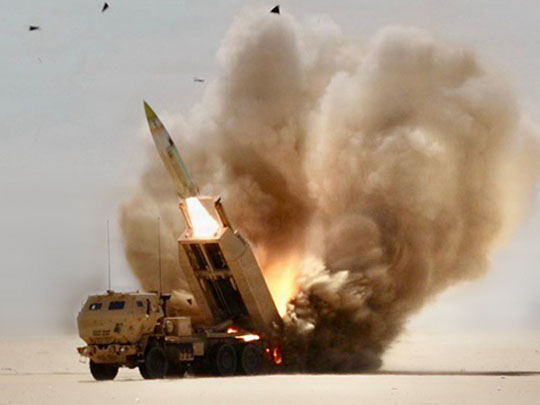
Wikimedia Commons — 2026 Iran war
A Pakistan-brokered ceasefire in April and a memorandum of understanding in June brought pauses, but strikes continued to be traded and the confrontation remained unresolved.
Human-rights monitors reported more than 1,700 civilian deaths in Iran, and more than 100 international-law experts publicly disputed the legality of the strikes.
Venezuela: a president seized and an earthquake catastrophe
Featured image: Wikimedia Commons — 2026 Venezuela earthquakes
Venezuela lurched through an extraordinary year.
In early January 2026, US forces struck the country and seized its authoritarian president, Nicolás Maduro, in a military operation that stunned Latin America; an acting government under Delcy Rodríguez was left running the country under Washington’s pressure.
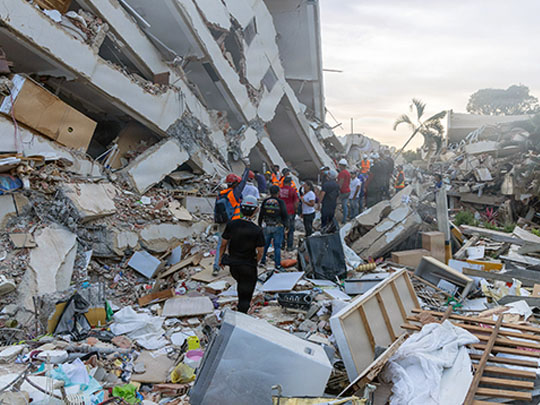
Then, on 24 June, disaster struck: two powerful earthquakes, of magnitude 7.2 and 7.5, hit northern Venezuela roughly half a minute apart.
The capital, Caracas, and especially the coastal state of La Guaira were devastated, with some 80% of buildings in La Guaira reported to have collapsed.
By late August, official figures put the death toll above 6,500, with more than 226,000 injured and tens of thousands displaced or still missing.
The World Bank estimated the direct physical damage at around $20 billion, in a country already gripped by more than a decade of humanitarian crisis.
The UAE breaks with OPEC
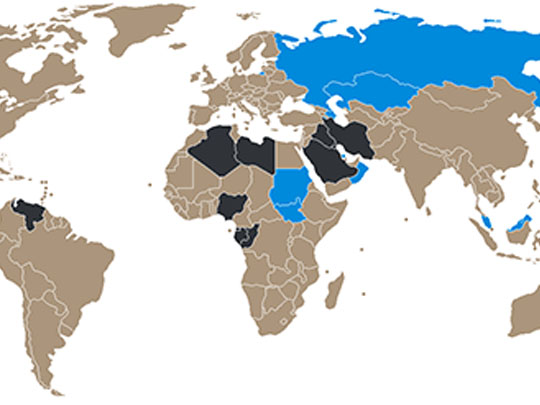
Featured image: Wikimedia Commons — OPEC
In a significant shift for the global oil industry, the United Arab Emirates withdrew from OPEC at the start of May 2026.
The organisation, founded in 1960 to coordinate the petroleum policies of its members, had long relied on its Gulf producers to help steer world oil prices, and the UAE’s departure was a blow to the cartel’s cohesion.
The White House declared that President Trump had “broken OPEC.” The move came amid wider upheaval in energy markets driven by the war with Iran and the turmoil in Venezuela, both major oil producers.
New supplies from countries such as Brazil, Guyana, and the United States had also been reshaping the market.
Together, the developments pointed to a loosening of the grip that oil-producing nations had held over global energy for decades.
An Ebola outbreak in the DR Congo
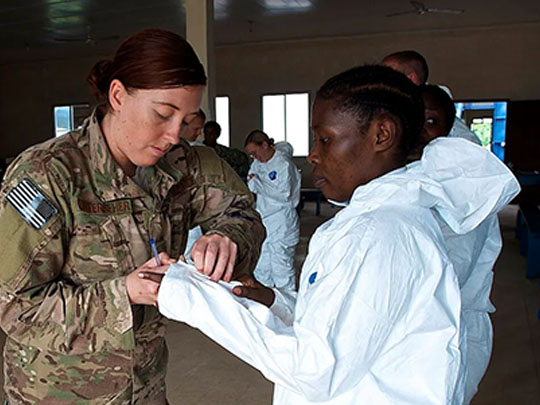
Featured image: Wikimedia Commons — 2026 Central Africa Ebola epidemic
In May 2026, an Ebola outbreak was declared in the Democratic Republic of the Congo. The virus — a strain known as Bundibugyo — was detected in Ituri Province, in the country’s east.
On 16 May, the World Health Organization declared the outbreak a public health emergency of international concern. It was the 17th Ebola outbreak in the DRC, coming only months after the previous one had ended.
Within weeks, more than a thousand suspected and confirmed cases and several hundred deaths had been reported.
Health officials warned that the true number of infections was probably higher than the confirmed count.
SpaceX’s record IPO and the first trillionaire
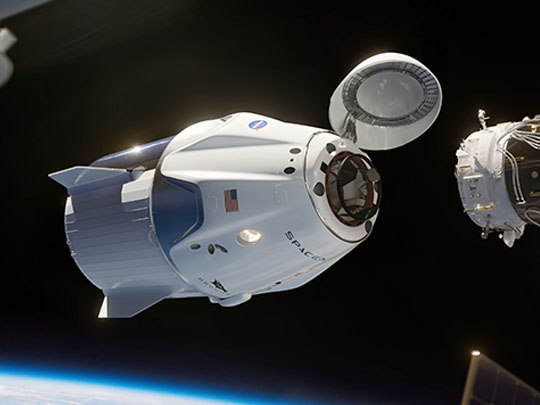
Featured image: Wikimedia Commons — SpaceX
On 12 June 2026, Elon Musk’s rocket company SpaceX held its long-awaited stock market debut.
The initial public offering raised a record $75 billion, the largest in history, and valued the company at around $1.77 trillion. The listing pushed Musk’s personal fortune past a symbolic landmark, making him the world’s first trillionaire.
SpaceX had become central to both commercial spaceflight and government space programmes, ferrying astronauts and satellites into orbit for NASA and others.
Its giant Starship rocket, meanwhile, continued its development toward Musk’s stated goal of sending humans to Mars. The flotation turned a company once seen as a risky venture into one of the most valuable in the world.
Britain changes prime ministers
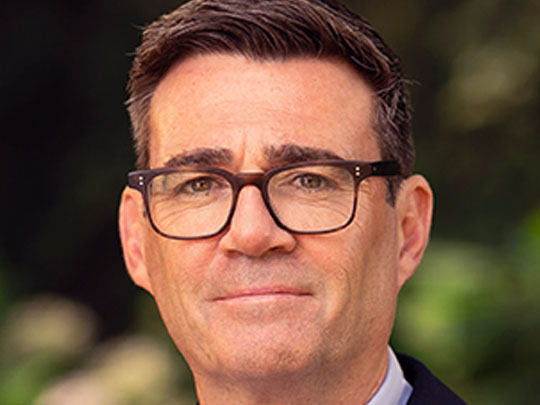
Featured image: Wikimedia Commons — Andy Burnham
Britain got a new prime minister barely two years after its last election.
Keir Starmer, who had led the Labour Party to a landslide victory in 2024, announced his resignation on 22 June 2026 after losing the confidence of his own MPs.
His government had slumped in the polls amid discontent over the economy and immigration and the rapid rise of the right-wing Reform UK party.
Andy Burnham, the mayor of Greater Manchester, emerged as his successor. Burnham first had to win a seat in Parliament — which he did in a by-election — before being acclaimed Labour leader, nominated by more than 90% of the party’s MPs.
He became prime minister on 20 July, the United Kingdom’s seventh in roughly a decade.
The biggest World Cup ever
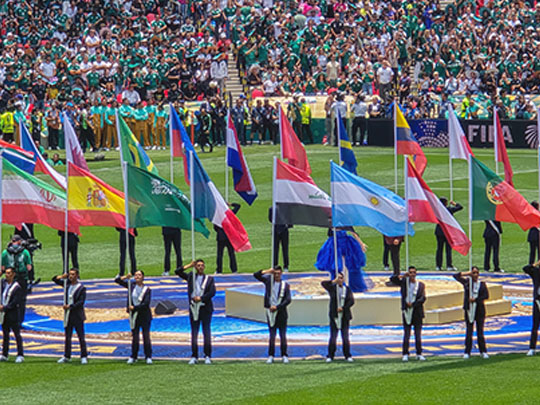
Featured image: Wikimedia Commons — 2026 FIFA World Cup
The 2026 FIFA World Cup was the largest in history, and the first to be hosted by three countries — the United States, Mexico, and Canada.
Running from 11 June to 19 July, it was also the first with 48 teams, up from 32, spread across 16 cities and 104 matches.
The final, at MetLife Stadium near New York, saw Spain beat Argentina 1-0 after extra time, with Ferran Torres scoring the only goal in the 106th minute.
It gave Spain its second World Cup title, its first since 2010. The tournament was widely expected to be the last for Argentina’s Lionel Messi.
France’s Kylian Mbappé won the Golden Boot as top scorer, becoming the first man to claim that award twice.
America’s 250th birthday

Featured image: Wikimedia Commons — United States Semiquincentennial
On 4 July 2026, the United States marked its semiquincentennial — 250 years since the adoption of the Declaration of Independence in 1776.
The milestone was the centrepiece of a year-long programme of celebrations across all fifty states.
Festivities included parades, concerts, fireworks, historical reenactments, and specially designed coins from the US Mint.
A national time capsule was buried at Independence National Historical Park in Philadelphia, where the Declaration had been signed. The last comparable milestone, the bicentennial, had been celebrated in 1976.
The anniversary gave Americans a moment to reflect on the country’s founding two and a half centuries on.
Europe’s AI rulebook takes effect
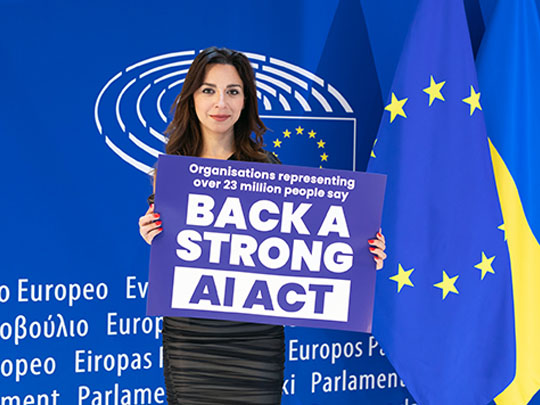
Featured image: Wikimedia Commons — Artificial Intelligence Act
On 2 August 2026, key provisions of the European Union’s landmark artificial-intelligence law came into force.
The EU AI Act, the world’s first comprehensive legal framework for AI, introduced transparency rules requiring people to be told when they are interacting with a chatbot or viewing AI-generated content such as deepfakes.
It also handed regulators new powers to investigate and fine companies, with penalties reaching into the tens of millions of euros or a share of global turnover.
Because the rules apply to any AI system whose output is used within the EU, they reach technology firms across the world.
A late amendment package delayed some of the tougher obligations on “high-risk” AI systems. The law was widely seen as a template that other jurisdictions might follow.
The war in Ukraine grinds on
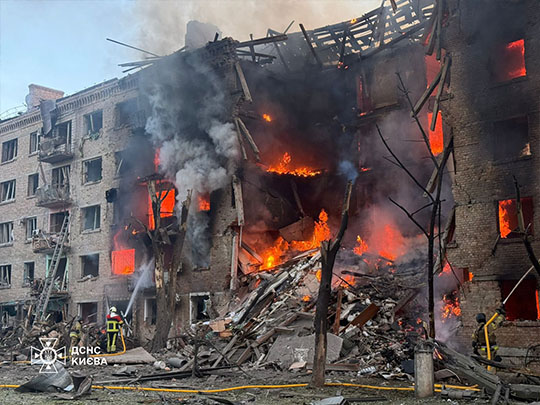
Featured image: Wikimedia Commons — Russian invasion of Ukraine
The war in Ukraine ground into its fifth year with no end in sight.
Efforts to broker peace continued to falter: a 32-hour truce declared for Orthodox Easter in April quickly broke down, with both sides accusing the other of hundreds of violations.
Russia rejected proposals for a ceasefire in the Black Sea, where attacks on shipping continued to threaten global grain exports.
Prisoner exchanges remained one of the few consistent points of contact between the two sides, with hundreds of captured soldiers swapped over the course of the year.
The fighting continued along largely static front lines. The conflict remained one of the defining stories of the decade.