

Wikimedia Commons / CC-BY-SA-3.0 / GFDL
Capital: Saint Helier
Population: 100,000+
Language: English/French

1 – Mont Orgueil and Gorey (also above)
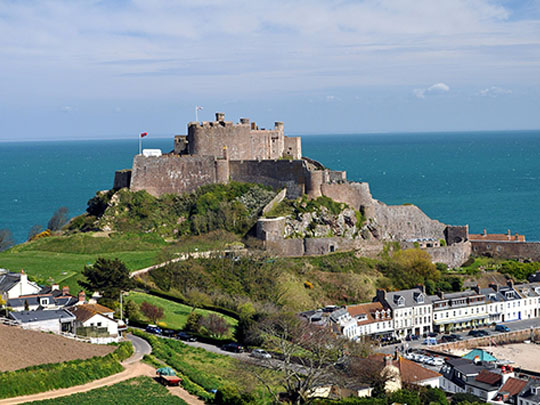
Mont Orgueil, meaning “Mount Pride”, is the castle that towers over Gorey harbour on Jersey’s east coast, facing France, built after 1204 when King John lost Normandy but Jersey stayed with the English Crown, and the French held it from 1461 to 1468.
Mont Orgueil is a maze of medieval towers and stairways topped by German WWII observation posts disguised to look medieval, while Gorey below grew from a fishing village into a busy port on a 19th-century oyster boom.
When Governor Walter Raleigh was urged to pull Mont Orgueil down for its stone in 1600 he refused, saying “’twere pity to cast it down”, and the castle went on to hold prisoners including Sir Hardress Waller, a County Limerick landowner who signed Charles I’s death warrant and died there in 1666.
2 – St Helier
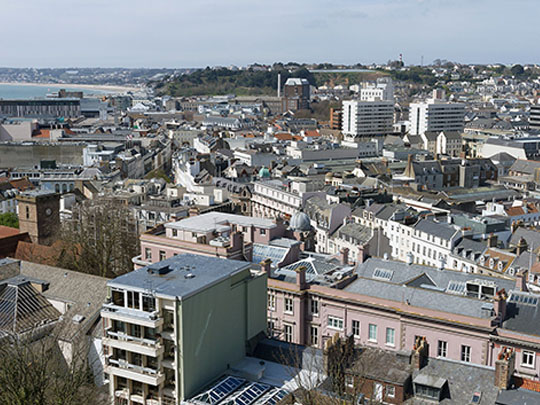
St Helier, Jersey’s capital on the south coast, takes its name from a 6th-century hermit who lived on a rock in the bay until raiders killed him, and in February 1649, within weeks of Charles I’s execution, its square proclaimed his son king as Charles II.
St Helier looks out to Elizabeth Castle, reached on foot at low tide and named Fort Isabella Bellissima by Walter Raleigh, while in town Liberation Square marks 9 May 1945, when the Union flag went up at the Pomme d’Or Hotel after five years of German occupation.
In the Battle of Jersey in 1781, Major Peirson was killed beating off a French invasion force in the square that became St Helier’s Royal Square, though Copley’s famous painting of his death takes liberties, since Peirson died before the fighting ended.
3 – La Corbière

La Corbière lighthouse stands on a tidal islet off Jersey’s south-west tip, its name meaning roughly “place of crows”, and when it was first lit in 1874 it was the first lighthouse in the British Isles built of concrete.
La Corbière can be reached on foot along a causeway at low tide, with an alarm warning when the sea turns, and the headland above has a German WWII range-finding tower and a clasped-hands memorial to the 1995 rescue of all 307 people aboard the catamaran Saint-Malo after it struck rocks nearby.
A granite plaque at the head of La Corbière’s causeway remembers assistant keeper Peter Larbalestier, who drowned in 1946 trying to save a visitor cut off by the tide, and ends with the warning “Take heed all ye who pass by”.
4 – Jersey War Tunnels
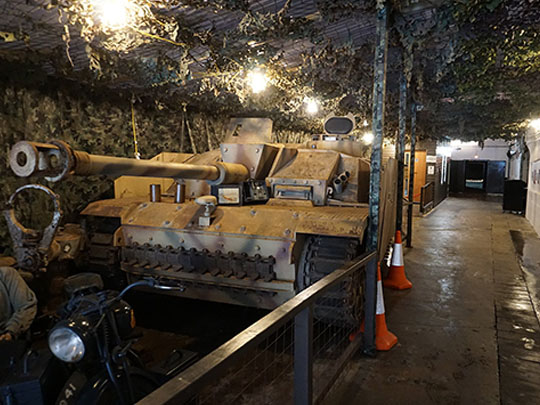

The Jersey War Tunnels were dug into the island from 1941 by forced labourers working for the Germans’ Organisation Todt, among them Spanish Republicans, Poles, French North Africans and Soviet prisoners.
The Jersey War Tunnels run for more than a kilometre, planned as bomb-proof barracks and stores before being converted from late 1943 into a 500-bed casualty clearing station and hospital, and they house a museum of island life under occupation.
For all that effort, the Jersey War Tunnels hospital never treated a battle casualty, and visitors have been touring the complex since 1946, when it was known as the German Underground Hospital.
5 – Elizabeth Castle
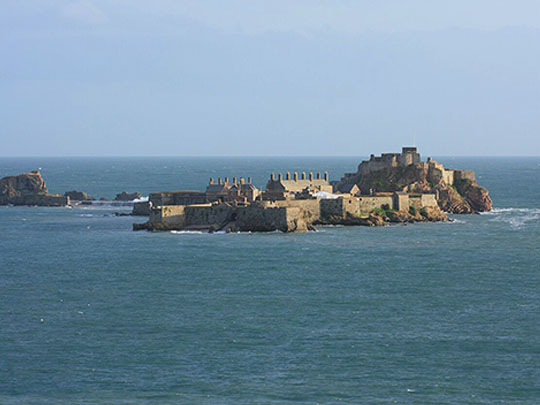
Elizabeth Castle stands on a tidal islet in St Aubin’s Bay off St Helier, begun in 1594 when cannon had made the old castle at Mont Orgueil inadequate, and governor Walter Raleigh named it Fort Isabella Bellissima after Elizabeth I.
Elizabeth Castle is reached on foot along a causeway at low tide or by amphibious vehicle when the sea is in, and beyond its walls and German WWII gun positions lies the Hermitage rock where the hermit Helier is said to have lived, the goal of a pilgrimage every July.
Royalist Jersey’s governor sheltered Charles II at Elizabeth Castle in 1646 and 1649, and in 1651 a Parliamentarian mortar shell hit gunpowder stored in the crypt of the castle’s old priory church, destroying it and forcing a surrender in December.