
almassengale / Wikimedia Commons / CC-BY-SA-3.0 / GFDL
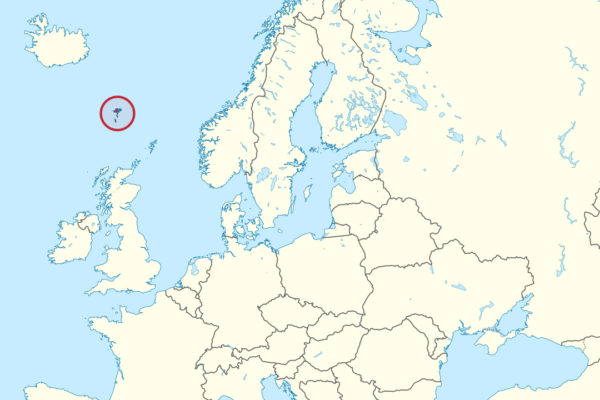
Capital: Tórshavn
Population: 54,000+
Language: Faroese/Danish
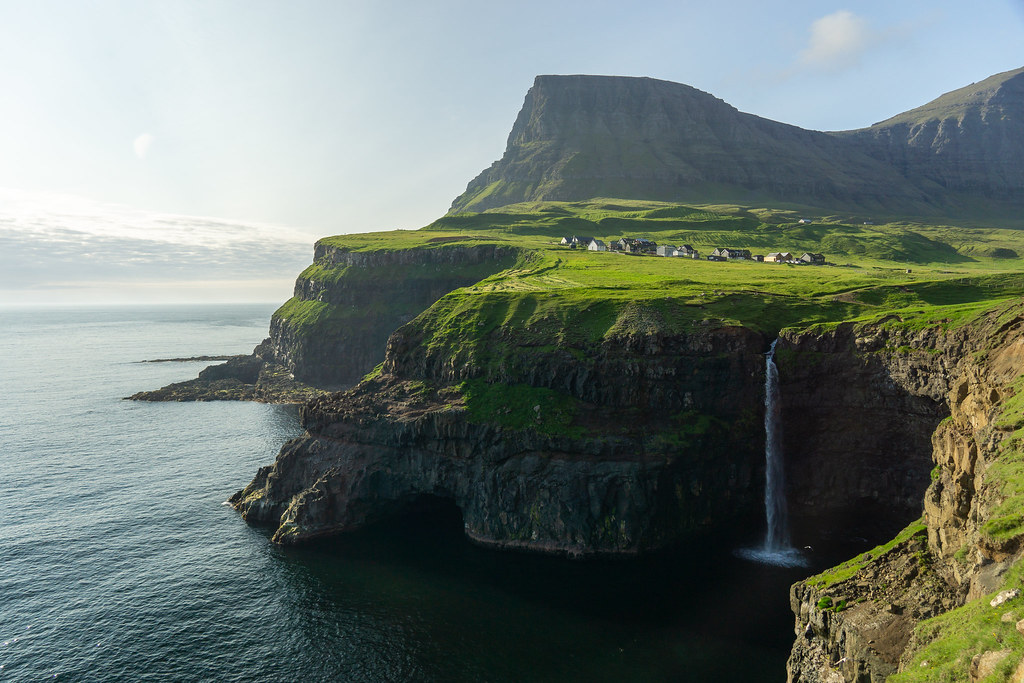
1 – Gásadalur (above)
Gásadalur is a tiny village on the west coast of Vágar, below Árnafjall, the island’s highest mountain, and was the only Faroese village with no road connection until a tunnel opened in 2004.
The big draw at Gásadalur is Múlafossur, a waterfall that pours off the cliff edge straight into the Atlantic, plus the old postman’s trail over the mountain from Bøur for anyone who wants to arrive on foot.
Before the tunnel, Gásadalur’s postman hiked that mountain path three times a week, because apart from a boat or a helicopter it was the only way in.
2 – Tórshavn
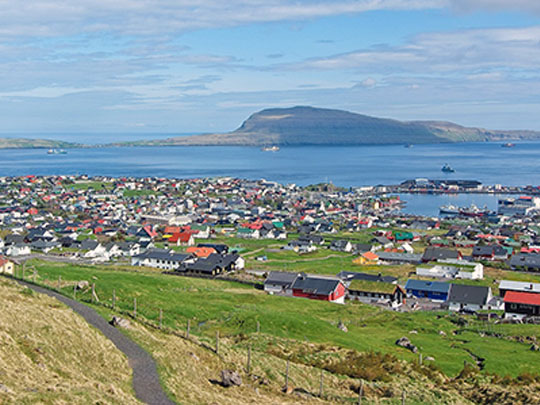
Tórshavn, “Thor’s harbour”, sits on the east coast of Streymoy, and its rocky Tinganes peninsula is often called one of the world’s oldest parliamentary meeting places, with Norse settlers said to have held their assembly there from the 9th century.
In Tórshavn, wander the turf-roofed red buildings of Tinganes, many from the 16th and 17th centuries and home to the Faroese government, then take in the cathedral, the old harbour fort at Skansin and the Nordic House.
One of the earliest accounts of the Faroes is Irish: in 825 the monk Dicuil described a North Atlantic archipelago where Irish hermits had lived for nearly a century until Norse raiders drove them out, an account widely matched to these islands.
3 – Kirkjubøur
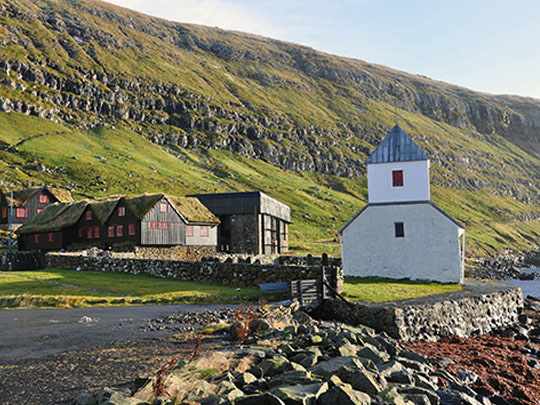

Kirkjubøur, on the southern tip of Streymoy a short drive from Tórshavn, was the seat of the Faroes’ medieval bishops and the islands’ church centre until the Reformation.
In Kirkjubøur, see the roofless walls of Magnus Cathedral, begun around 1300 and the largest medieval building in the Faroes, then St Olav’s Church, the country’s only medieval church in use, and the Kirkjubøargarður farmhouse, run by the Patursson family since the Reformation.
Kirkjubøur raised a king: Sverre grew up there under his uncle, Bishop Roe, and trained as a priest before learning he was said to be the son of Norway’s King Sigurd Munn and fighting his way to the Norwegian throne.
4 – Kalsoy
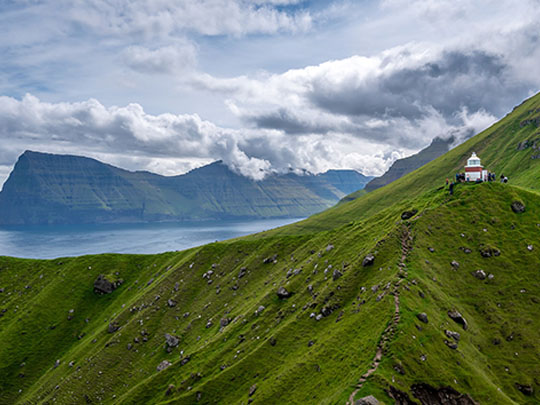
Kalsoy is a long, thin, mountainous island in the northern Faroes, its few villages strung along one road and linked by tunnels bored through the mountains.
On Kalsoy, hike from the village of Trøllanes out to the Kallur lighthouse at the island’s northern end, and stop in Mikladalur for the shoreline statue of Kópakonan, a seal woman who, legend says, cursed the village’s men after a farmer stole her skin.
Kalsoy played the villain’s hideout island in the Bond film No Time to Die, and the Kallur headland is where the film’s climax was shot.
5 – Sørvágsvatn
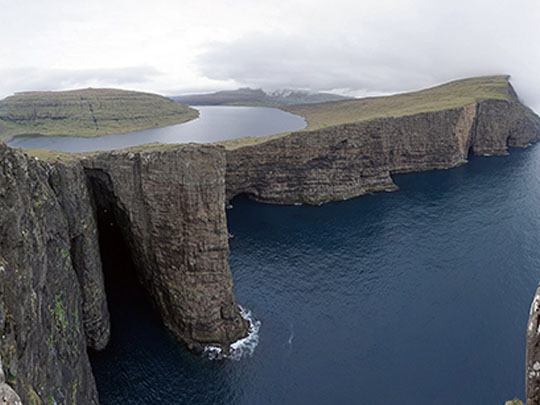
Sørvágsvatn, also called Leitisvatn, on the island of Vágar, is the largest lake in the Faroes, more than three times the size of the runner-up, and sits about 30 metres above the sea it almost touches.
At Sørvágsvatn, walk the lakeshore out to the Trælanípa cliffs, whose name means “slave cliff”, and to Bøsdalafossur, the waterfall where the lake spills over into the Atlantic.
Seen from the Trælanípa cliffs, Sørvágsvatn looks as if it’s hanging high above the ocean, an optical illusion created by the taller cliffs beside it.
6 – Saksun
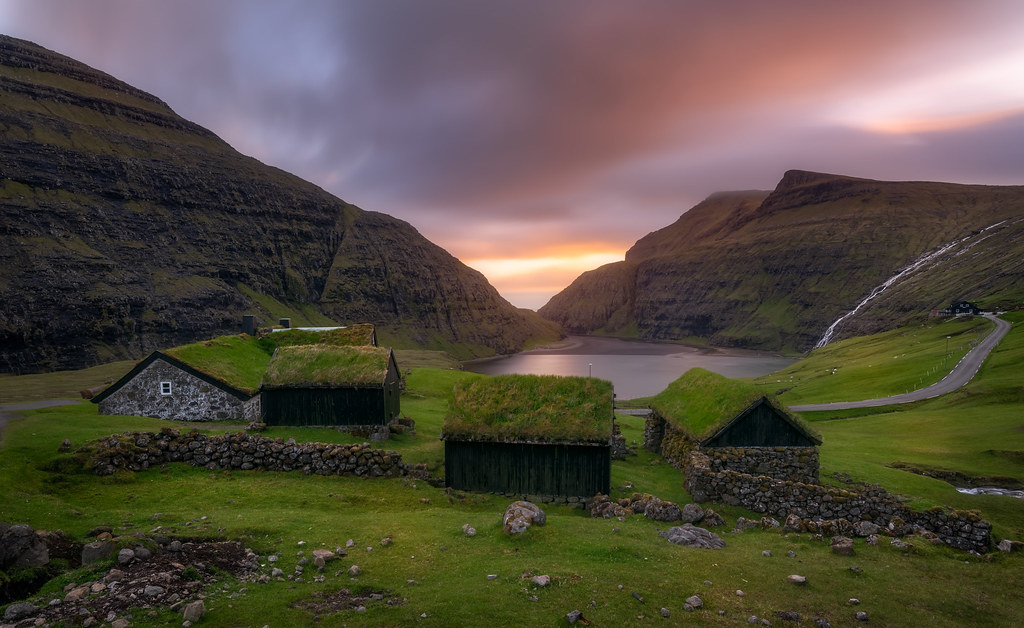
Saksun is a tiny farming village near the northwest coast of Streymoy, set above what was once a deep natural harbour until a storm sealed its mouth with sand and left a tidal lagoon.
In Saksun, see the white turf-roofed church above the water, the 17th-century Dúvugarðar farmstead, which doubles as a museum, and the lagoon itself, which fills and drains with the tides.
Saksun’s church started life in the village of Tjørnuvík, and in 1858 it was taken apart and carried over the mountains to be rebuilt in Saksun.