
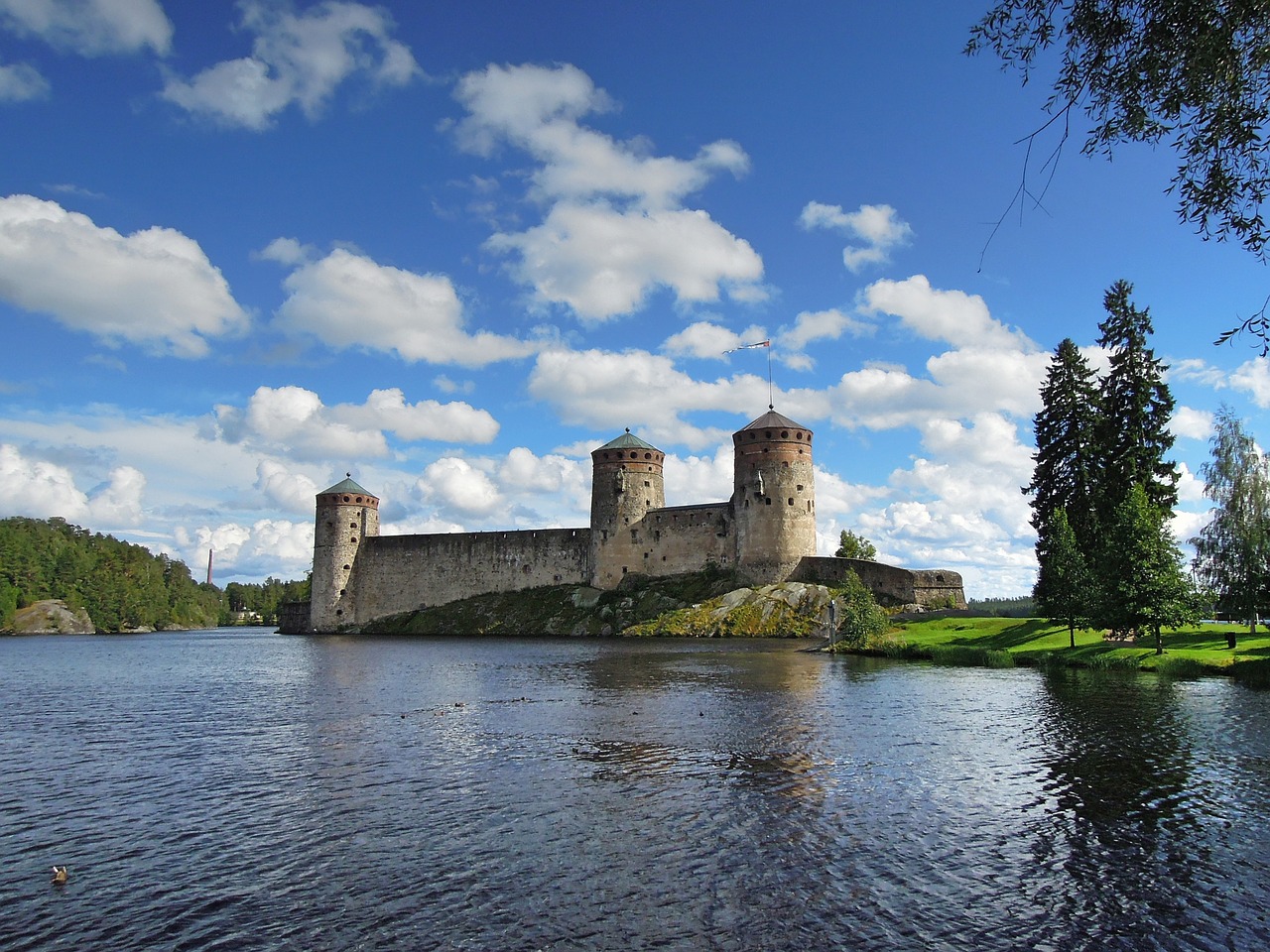
Wikimedia Commons / CC-BY-SA-3.0 / GFDL
Capital: Helsinki
Population: 5.6 million+
Language: Finnish
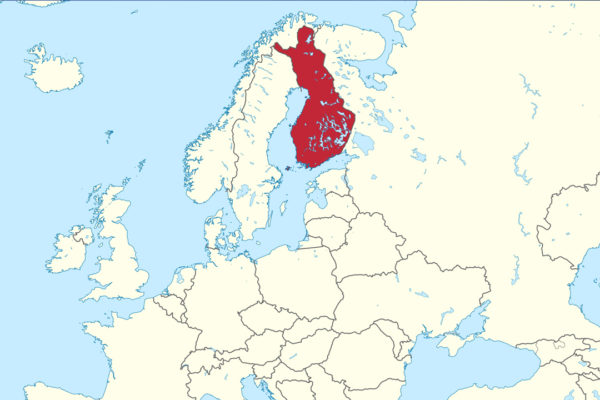
1 – Savonlinna (above)
Savonlinna is spread across islands in Finland’s vast Saimaa lake system, and its castle, Olavinlinna, was founded in 1475 by the knight Erik Axelsson Tott to guard the Swedish kingdom’s eastern frontier against Russia.
In Savonlinna, explore Olavinlinna, named after Norway’s St Olaf and set on a rocky islet in the strait, then head out to Kerimäki Church, the world’s largest wooden church.
Olavinlinna doubles as an opera house, because the soprano Aino Ackté first staged a festival in its courtyard in 1912, and the Savonlinna Opera Festival grew from that.
2 – Saariselkä
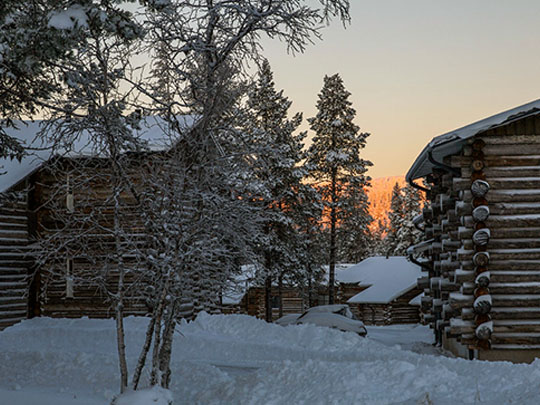
Saariselkä is a fell range and resort village in northern Lapland on the edge of Urho Kekkonen National Park, named after the president who hiked and skied there, and gold found on the nearby Ivalojoki river in 1868 set off Finland’s gold rush.
Around Saariselkä, climb Kaunispää fell for the views, hike to the old gold-diggers’ hut in Rumakuru gorge, and pan for history at the gold village and museum at Tankavaara.
Finland’s largest gold nugget, weighing 392.9 grams, was pulled out of the Luttojoki river in the Saariselkä wilderness in 1935.
3 – Lapland

Lapland is Finland’s vast northernmost region, straddling the Arctic Circle, and the homeland of the Sámi, often described as the EU’s only indigenous people, with three Sámi languages spoken on the Finnish side.
In Lapland, cross the Arctic Circle line at Santa Claus Village outside Rovaniemi, see Alvar Aalto’s library and Lappia Hall in Rovaniemi itself, and learn about Sámi life at the Siida museum in Inari.
Lapland’s claim to Santa goes back to 1927, when a Finnish radio host announced that he lives on Korvatunturi fell on the Russian border, though Rovaniemi bills itself as his official hometown.
4 – Helsinki
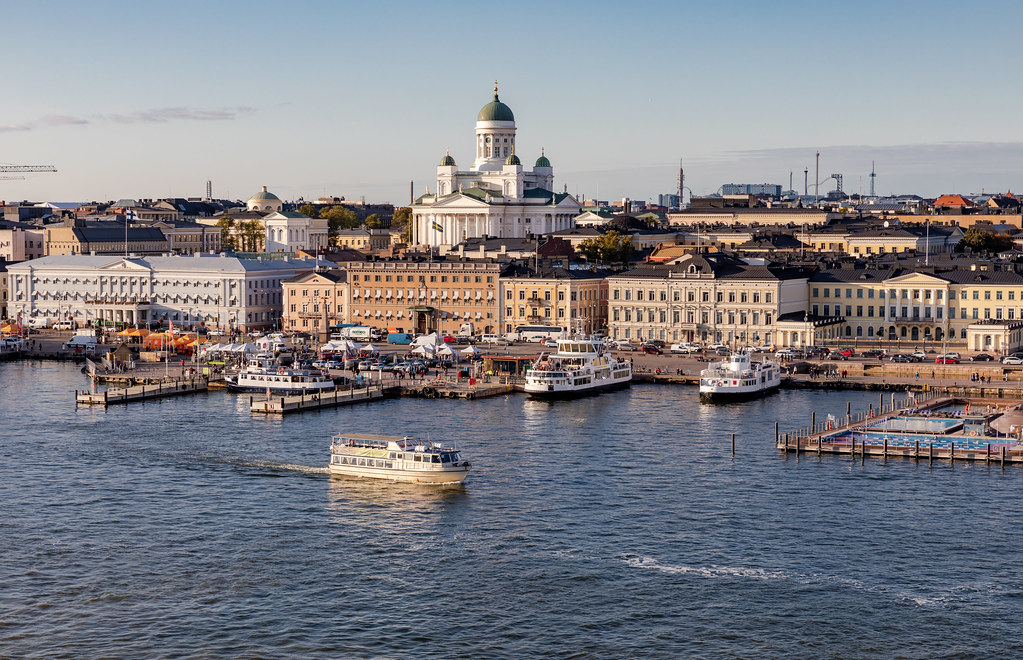
Helsinki was founded by Sweden’s King Gustav Vasa in 1550 and became Finland’s capital in 1812, when Tsar Alexander I moved the seat of government from Turku to reduce Swedish influence.
In Helsinki, start at Senate Square with C.L. Engel’s white Cathedral, see the red-brick Orthodox Uspenski Cathedral, and take the ferry to Suomenlinna, the island sea fortress begun by Sweden in 1748 and a UNESCO World Heritage Site.
Helsinki has an Irish chapter: in 1742 the Limerick-born Peter Lacy, a field marshal in Russian service, forced around 17,000 Swedish troops to surrender there, leaving all of Finland under Russian occupation.
5 – Levi
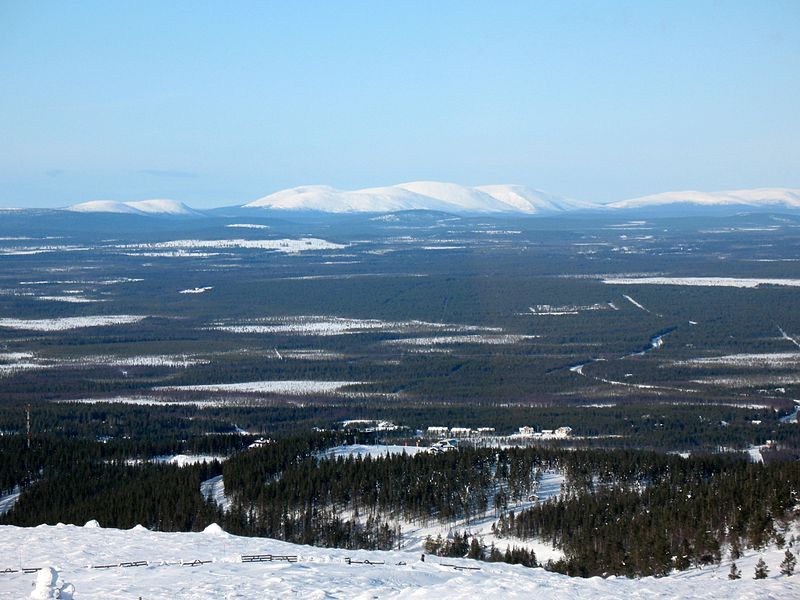
Levi is a fell in Kittilä, in Finnish Lapland, rising 531 metres over the village of Sirkka about 170 km north of the Arctic Circle, and it’s Finland’s largest ski resort.
In Levi, ski the slopes or ride the gondolas, then swap the piste for husky parks, reindeer farms and northern-lights watching.
Levi’s World Cup slalom winners are given a reindeer, though the prize stays on a local farm and the winner simply names it, with Mikaela Shiffrin’s herd including Rudolph, Sven and Grogu.
6 – Tampere
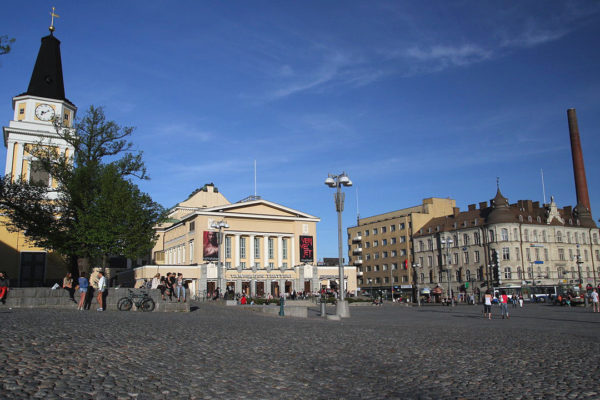
Tampere sits on a strip of land between two lakes, Näsijärvi and Pyhäjärvi, joined by the Tammerkoski rapids, and its mills earned it the nickname “Manchester of Finland”.
In Tampere, wander the red-brick Finlayson mill area, founded by the Scot James Finlayson in 1820, visit the Moomin Museum and Särkänniemi amusement park, and sweat it out at Rajaportti, the oldest public sauna in Finland in use.
Tampere’s Plevna weaving hall was the first building in the Nordic countries lit by electric light, in 1882, and the city’s Workers’ Hall is where Lenin first met Stalin, in 1905.
7 – Porvoo
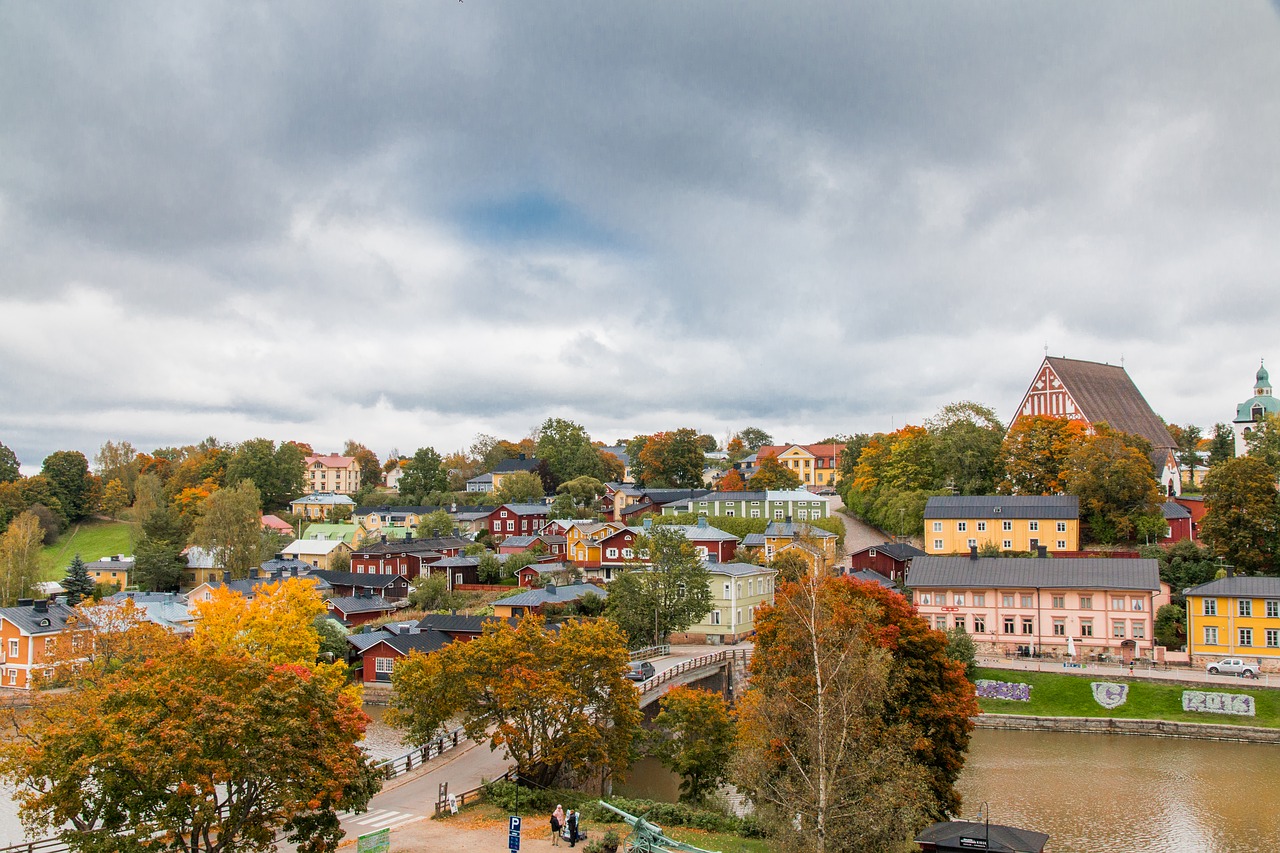
Porvoo, on the south coast about 50 km from Helsinki, is one of Finland’s six medieval towns, and in 1809 its cathedral hosted the Diet where Tsar Alexander I made Finland an autonomous Grand Duchy.
In Porvoo, wander the wooden Old Town along its medieval street plan, stroll the riverbank lined with storehouses, and visit the cathedral and the home of the national poet J.L. Runeberg, Finland’s oldest home museum.
Legend says Porvoo’s riverside storehouses were painted red ochre to honour a visit by King Gustav III, and the town’s signature pastry, the Runeberg torte, is linked to a recipe by the poet’s wife, Fredrika.
8 – Turku
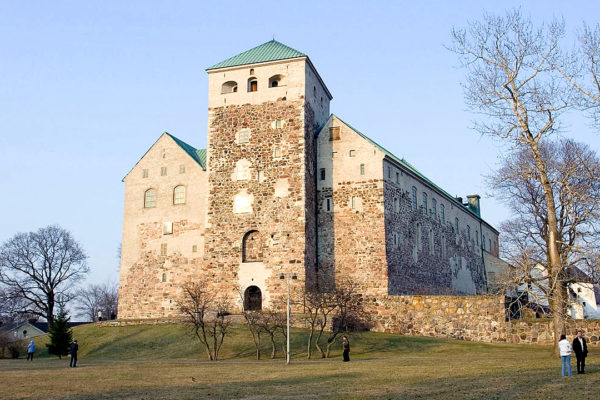
Turku, at the mouth of the Aura River on the Archipelago Sea, is often called Finland’s oldest city, counting its founding from 1229, and it served as the capital until 1812.
In Turku, see the cathedral, consecrated in 1300 and Finland’s only medieval basilica, and Turku Castle, begun around 1280 and the country’s largest surviving medieval building, then the riverside museums Aboa Vetus & Ars Nova and Forum Marinum.
At noon every Christmas Eve, Turku declares Christmas Peace from the balcony of the Brinkkala mansion, reading a text rewritten from memory after the original was lost in the Great Fire of 1827.
9 – Suomenlinna
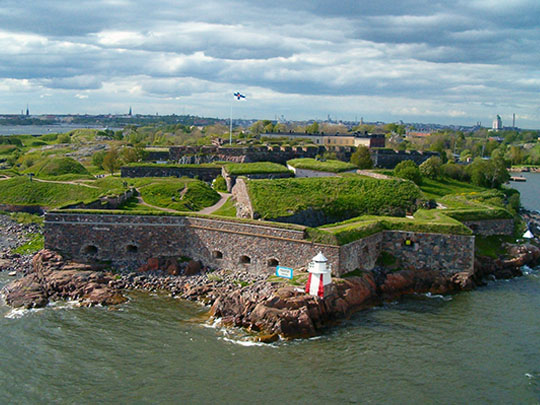
Suomenlinna is a sea fortress spread over a cluster of islands at the entrance to Helsinki’s harbour, begun by Sweden in 1748 as Sveaborg and renamed Suomenlinna, “Fortress of Finland”, in 1918.
On Suomenlinna, walk the bastions along some 6 km of defensive walls past about 200 buildings, and find the tomb of the fortress’s builder, Admiral Augustin Ehrensvärd, in its main courtyard.
Suomenlinna, nicknamed the “Gibraltar of the North”, defended three states in turn, Sweden, the Russian Empire and independent Finland, yet it surrendered to Russia in 1808 without being stormed.
10 – Old Rauma
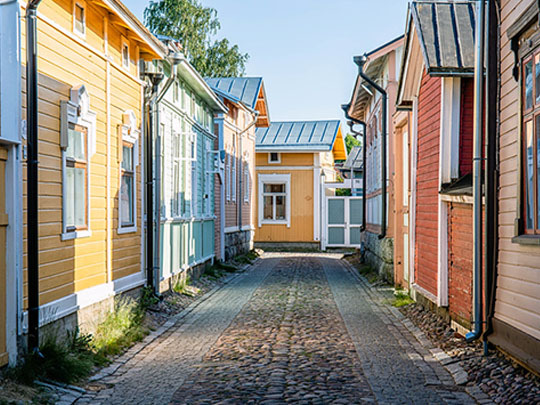
Old Rauma is the historic centre of Rauma on Finland’s west coast, a town that grew up around a medieval Franciscan friary and was rebuilt in wood after fires in the late 17th century, and it’s a UNESCO World Heritage Site.
In Old Rauma, wander around 600 wooden houses, step into the Church of the Holy Cross, the friary’s old church, and see the shipowner’s home at Marela and the sailors’ and craftsmen’s home at Kirsti.
Old Rauma is often called the largest intact wooden old town in the Nordic countries, and its long tradition of bobbin lace earns it the nickname “Lace Town” and a Lace Week every summer.
11 – Häme Castle
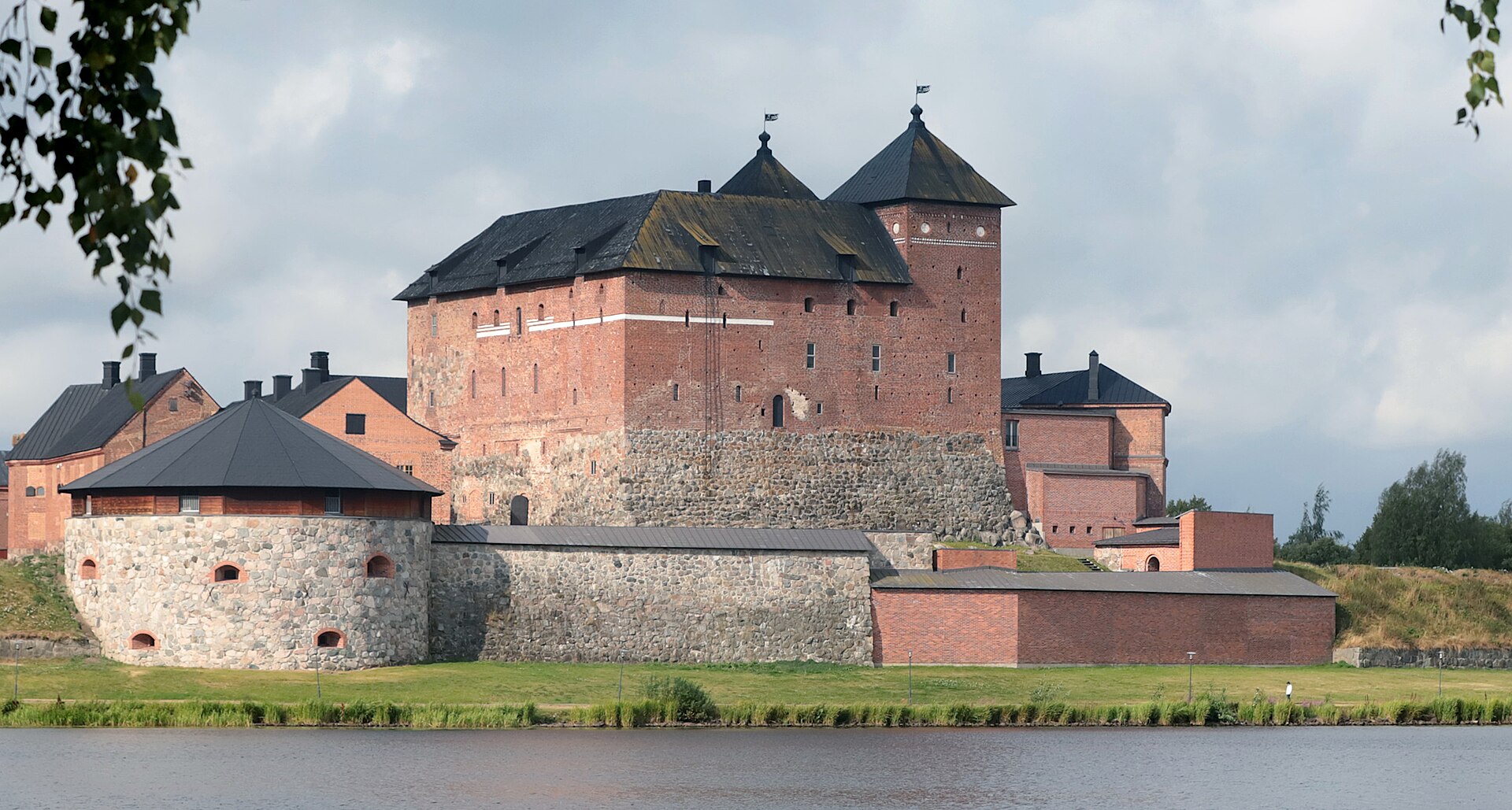
Häme Castle stands on the shore of Lake Vanajavesi in Hämeenlinna, the town named after it, and tradition links its founding to Birger Jarl’s Swedish crusade in the 13th century, though no finds there can be firmly dated before the 1320s.
At Häme Castle, explore the granite-and-red-brick keep and its exhibitions, then head into Hämeenlinna for the Prison Museum and the birthplace of the composer Jean Sibelius.
Häme Castle was one of the first places in Finland built in brick, and after Russia took over it served as a prison until 1953.