
Wikimedia Commons / CC-BY-SA-3.0 / GFDL
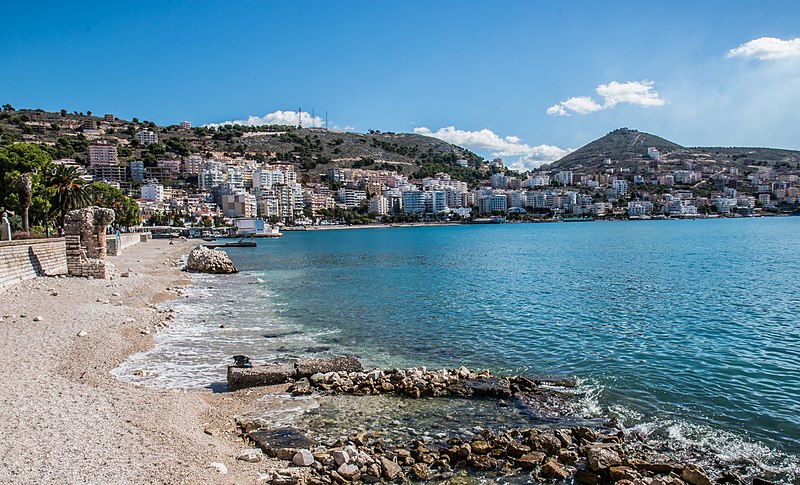
Capital: Tirana
Population: 2.4 million+
Language: Albanian
1 – Sarandë (above)
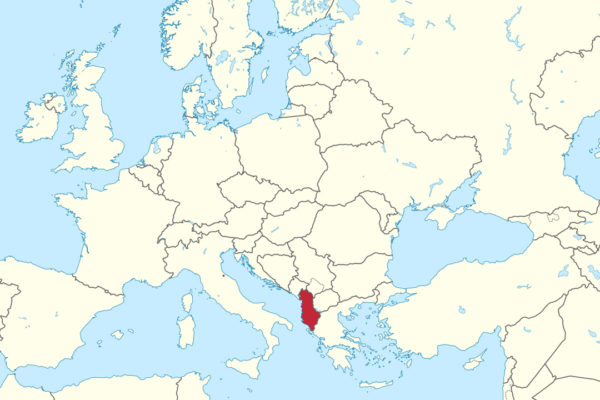
Sarandë sits on Albania’s Ionian coast looking straight across at Corfu, on the site of ancient Onchesmos, and in October 1946 British destroyers hit mines in the strait just offshore, killing 44 sailors and leading to the first case brought before the International Court of Justice.
In the town centre you’ll find the ruins of a late Roman synagogue, the oldest known in Albania, with a menorah on its floor mosaic, while Lëkurësi Castle, probably built by Suleiman the Magnificent in 1537, watches over the bay from the hill above.
Sarandë takes its name from the Byzantine Monastery of the Forty Saints just outside town, but despite what you’ll hear, the forty weren’t martyred here: they were Roman soldiers killed at Sebaste, in modern-day Turkey, around 320 AD.
2 – Berat
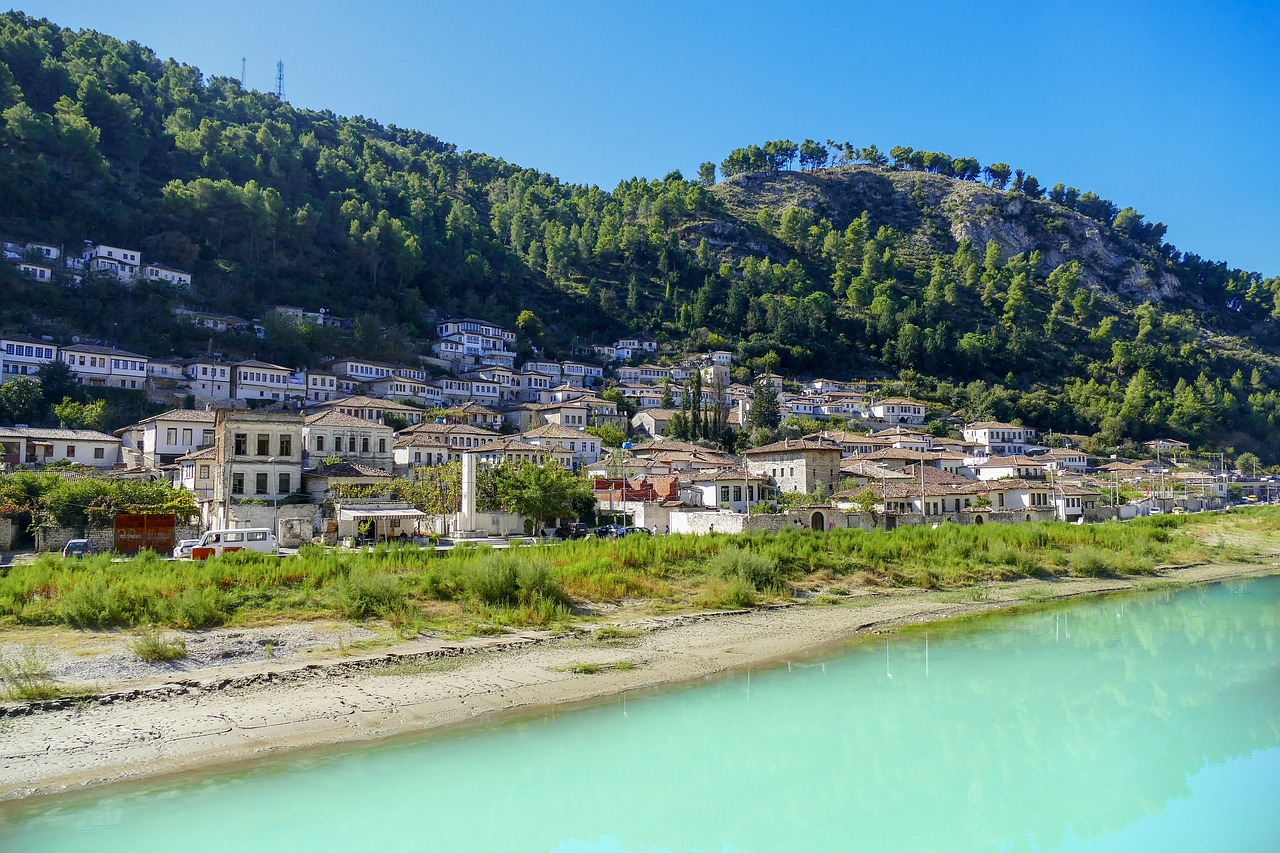
Berat climbs the slopes above the Osum river in south-central Albania, an Ottoman town from 1417 whose stacked white houses won it a UNESCO listing in 2008.
Start at Berat Castle, a walled hilltop quarter people live in, home to the Onufri Museum and its icons by the 16th-century painter famous for “Onufri red”, then cross the seven-arched Gorica Bridge between the old Mangalem and Gorica quarters.
Berat’s nickname, “City of a Thousand Windows”, is widely described as a mistranslation: the real sense is “one window above another”, which is exactly how the houses look stepping up the hillside.
3 – Vlorë
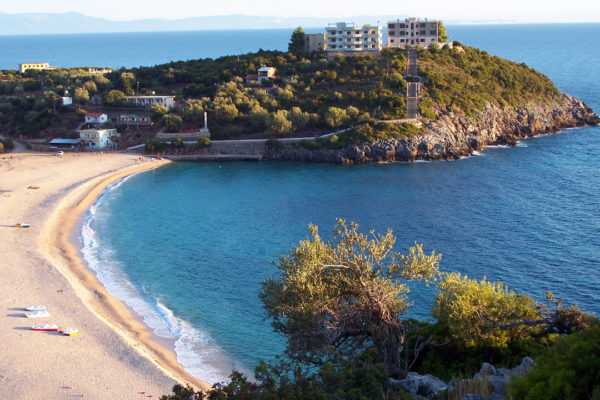
Vlorë, ancient Aulon, curves around a wide bay where the Adriatic meets the Ionian, and on 28 November 1912 Ismail Qemali declared Albania’s independence here.
See the Independence Monument on Flag Square, the Muradie Mosque, completed in 1542 and often attributed to the great Ottoman architect Mimar Sinan though nothing proves it, Kaninë Castle on the hill above, and Zvërnec Monastery, reached by a wooden footbridge across the Narta Lagoon.
When Albania broke with Moscow in 1961, Enver Hoxha’s regime seized four Soviet submarines at Pasha Liman, just south of Vlorë, which had been the Soviet Union’s only naval base in the Mediterranean.
4 – Krujë
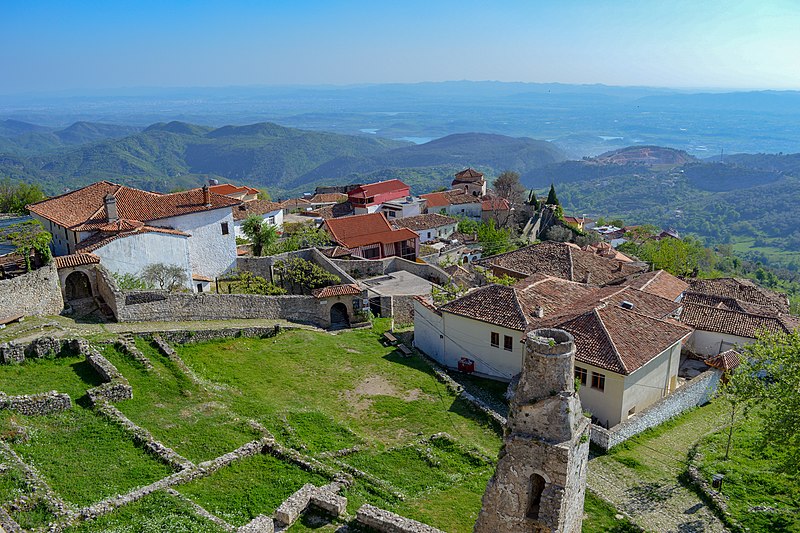
Krujë hangs on a mountainside north of Tirana, and its castle was Skanderbeg’s stronghold, where in 1450 he saw off an Ottoman siege led by Sultan Murad II that made him famous across Western Europe.
Inside the castle walls are the Skanderbeg Museum, designed by Pirro Vaso and Enver Hoxha’s daughter Pranvera, the 18th-century Dollma Tekke, a Bektashi shrine, and the Old Bazaar, lined with stalls selling felt qeleshe hats and carpets.
The goat-head helmet in Krujë’s museum is a replica, as the original, “probably” Skanderbeg’s, is in Vienna’s Kunsthistorisches Museum, and his name itself is a title: Iskander, for Alexander the Great, plus the Ottoman rank of bey.
5 – Tirana
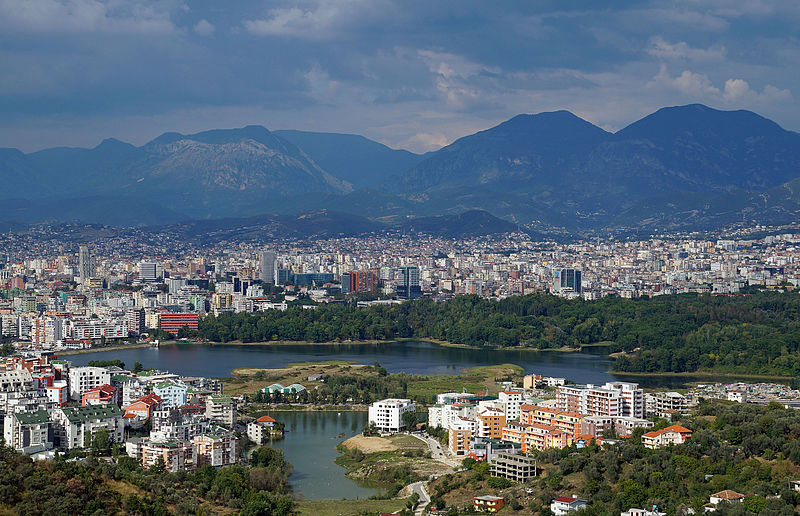
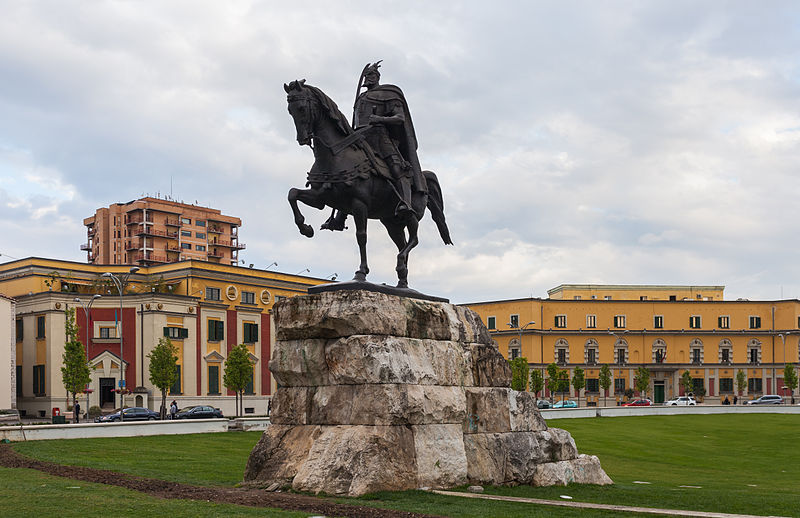
Tirana is traditionally dated to 1614, when Sulejman Pasha Bargjini built a mosque, hammam and bakery here, and it became Albania’s temporary capital in 1920 and its permanent one in 1925.
Around Skanderbeg Square you’ll find the Et’hem Bey Mosque with its frescoes of trees and waterfalls, the Clock Tower, Bunk’Art 1 in Enver Hoxha’s nuclear bunker, the House of Leaves surveillance museum, Blloku, the old communist elite district closed to ordinary Albanians until 1991, and the blocks Edi Rama had painted in bright colours as mayor from 2000.
Tirana’s airport is named after Mother Teresa, born to an Albanian family in Skopje in 1910, whose religious life began with a few weeks at Loreto Abbey in Rathfarnham, Dublin, in 1928, learning English before sailing for India.
6 – Durrës
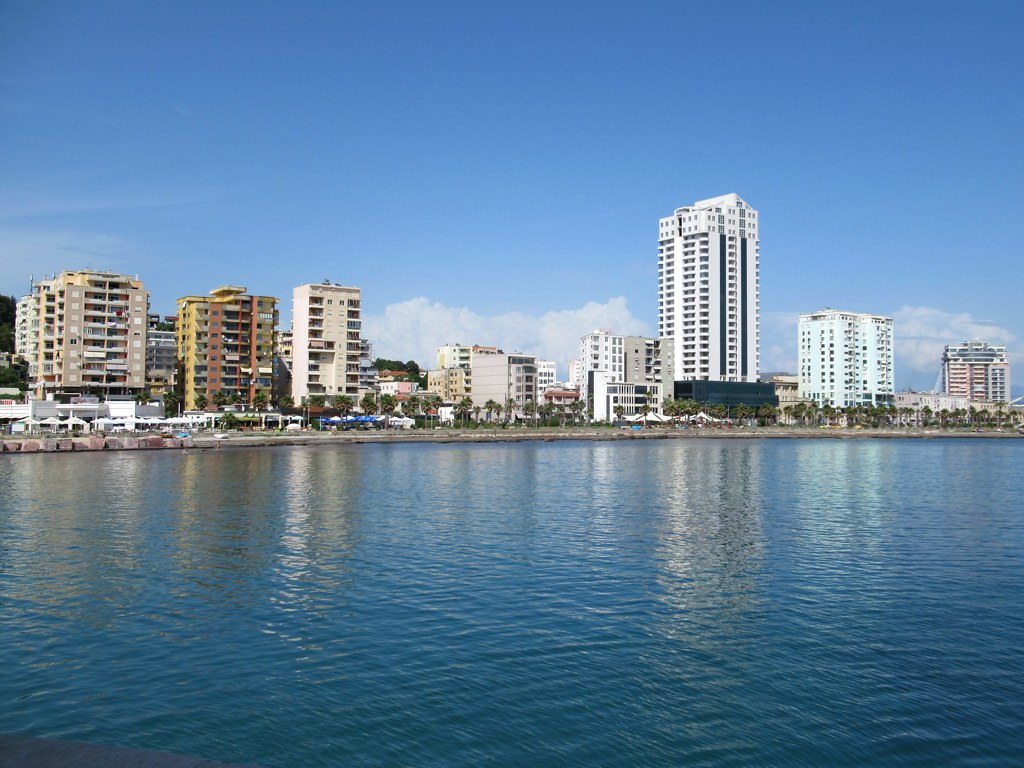
Durrës was founded as Epidamnos around 627 BC by settlers from Corcyra (Corfu) and Corinth, and as Roman Dyrrachium it was the starting point of the Via Egnatia to Byzantium, and the place where Pompey beat Julius Caesar in 48 BC.
The big draw is the 2nd-century Roman amphitheatre, built for about 20,000 spectators and often described as the largest in the Balkans, with an early Christian chapel and its mosaics tucked inside, followed by the Archaeological Museum and the Venetian Tower.
Durrës’s amphitheatre lay buried and forgotten beneath the city until 1966, and only part of it has ever been excavated.
7 – Shkodër
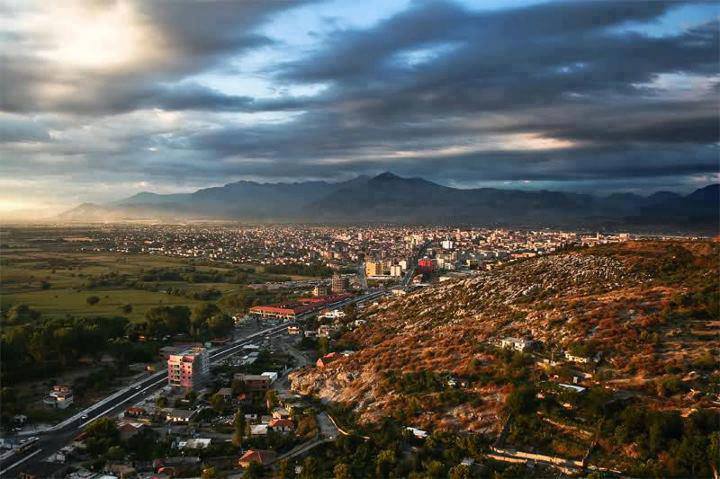
Shkodër sits at the foot of Lake Shkodër near the Montenegrin border, and as Illyrian Skodra it was the stronghold of King Gentius until Rome trapped him there in 168 BC.
Climb to Rozafa Castle for the views, then see the Marubi National Museum of Photography, whose 1858 portrait is among the earliest photographs taken in Albania, the Ottoman Mes Bridge, built by the Bushati pashas in 1768–70, and the Site of Witness and Memory in a former communist detention centre.
Shkodër’s Rozafa legend says a wife was walled into the castle to stop it collapsing, asking only for gaps to nurse her baby, but the same tale turns up all over the Balkans, from the Bridge of Arta in Greece to Curtea de Argeș in Romania.
8 – Korçë

Korçë sits on a high plateau in southeast Albania, and from 1916 to 1920 it was the French-backed Autonomous Province of Korçë, which printed “Republic” on its own stamps and banknotes.
Visit the Mësonjëtorja, opened in 1887 as the first secular Albanian-language school, the National Museum of Medieval Art with its icons by Onufri, the late 15th-century Mirahori Mosque, one of the oldest in Albania, and the Old Bazaar.
Korçë is sometimes called Albania’s “Little Paris”, and Birra Korça, founded here in 1928 and billed as the country’s first brewery, gives the town its beer festival every August.
9 – Mount Dajti
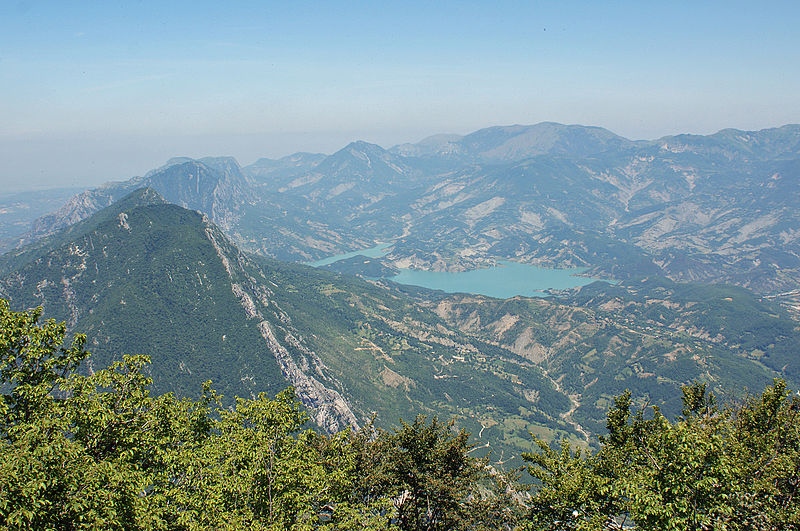
Mount Dajti rises straight up from Tirana’s eastern edge to 1,613 m, at the heart of a national park established in 1966.
Ride the Dajti Ekspres, a cable car built by Austria’s Doppelmayr that covers over 4 km in about 15 minutes, then explore the ruins of Dajti Castle and look out for Lake Bovilla, the reservoir that supplies most of Tirana’s drinking water.
The Dajti cable car doesn’t take you to the top of Mount Dajti: its upper station sits at roughly 1,050 m, more than 500 m below the summit.
10 – Ksamil
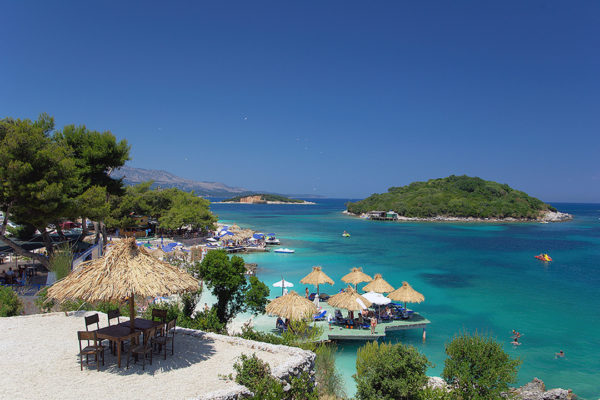
Ksamil lies on Albania’s far-south coast inside Butrint National Park, facing Corfu, and the village was built in 1966 under communist rule around a state citrus cooperative.
Ksamil’s big sight is the cluster of small islets just offshore, reachable only by water, with mussel farms in the lagoon nearby and the ancient ruins of Butrint a few minutes down the road.
The “Maldives of Europe” nickname is a tagline from British and Italian media, and there are four Ksamil islets, not the five some sites claim.
11 – Gjirokastër
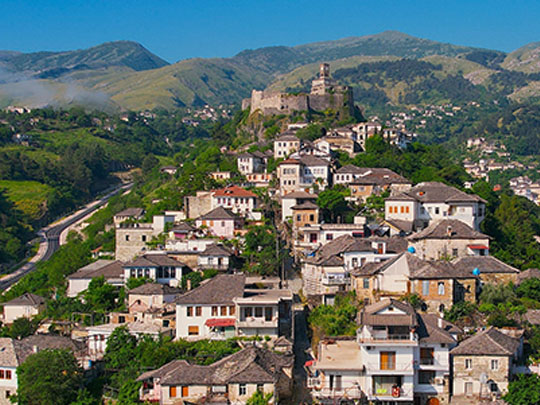
Gjirokastër looks down on the Drino valley in southern Albania, a “City of Stone” of Ottoman tower houses roofed with local limestone, gathered below a 13th-century citadel, and UNESCO listed it in 2005.
Explore the castle with its clock tower and old prison, the Cold War tunnel beneath it, with 59 rooms built as a nuclear shelter for party officials, the twin-towered Zekate House of 1811–12, the Old Bazaar, the Ethnographic Museum on the site of Enver Hoxha’s family home, and the restored birth house of novelist Ismail Kadare, whose Chronicle in Stone is based on Gjirokastër.
The American jet in Gjirokastër castle is a US Air Force T-33 trainer that was intercepted by Albanian MiGs and landed near Tirana in December 1957, and while the regime paraded it as a spy plane, its pilot said he’d simply got lost and was almost out of fuel.
12 – Butrint
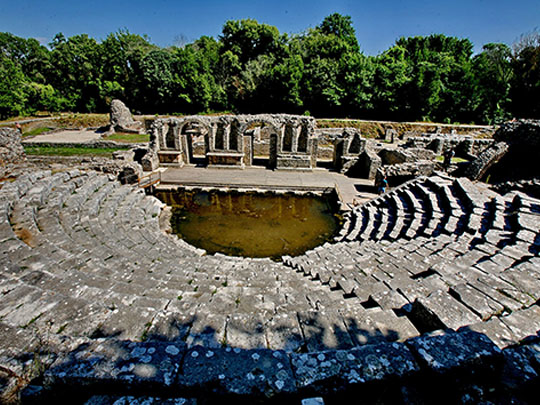
Butrint sits on a peninsula between Lake Butrint and the Vivari Channel near the Greek border, a city that passed from Greeks to Romans, Byzantines and Venetians before spreading marshes emptied it in the late Middle Ages, and in 1992 it became Albania’s first UNESCO World Heritage Site.
Wander past the Greek theatre, the sanctuary of Asclepius, the Great Basilica, the baptistery with its rings of early Byzantine floor mosaics, the Lion Gate, whose lion-and-bull relief was slotted in later to narrow the entrance, and the Venetian castle on the acropolis that houses Butrint’s museum.
In Virgil’s Aeneid, Aeneas finds the Trojans Helenus and Andromache ruling Butrint, and from 1928 Mussolini’s regime sponsored Luigi Maria Ugolini’s excavations there, keen to link Butrint to the legend of Rome’s Trojan founders.