

Wikimedia Commons / CC-BY-SA-3.0 / GFDL
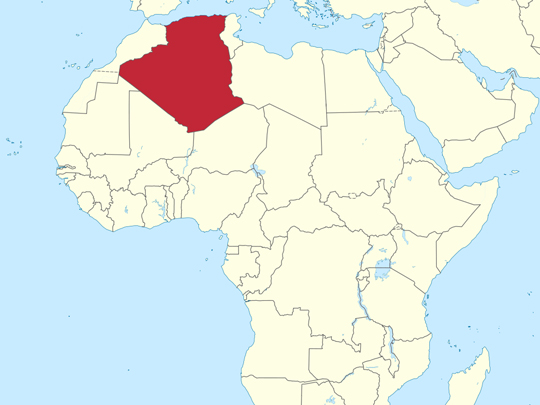
Capital: Algiers
Population: 47 million+
Language: Arabic & Tamazight
1 – Tipaza (above)
Tipaza, a Mediterranean coastal town about 70 km west of Algiers, has Phoenician, Roman, early Christian and Byzantine ruins running right down to the sea, and UNESCO made it a World Heritage Site in 1982.
Wander the seafront forum, theatre, baths, basilicas and necropolises, then head about 11 km south-east to the great circular Royal Mausoleum of Mauretania, traditionally said to be the tomb of Juba II and Cleopatra Selene, daughter of Cleopatra and Mark Antony.
Nobel-winning writer Albert Camus visited often as a young man in the 1930s and celebrated the ruins in his 1938 essay “Noces à Tipasa” (“Nuptials at Tipasa”), and a memorial stone carved with a line from it was set up among the ruins in 1961.
2 – Casbah of Algiers
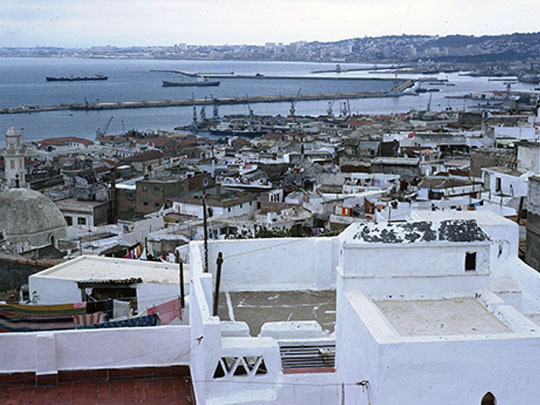
The Casbah of Algiers, the old town tumbling down a steep hillside above the bay, was founded in the mid-10th century by the Berber Zirid dynasty and walled in the 16th century as the seat of the Ottoman Regency of Algiers, a corsair state whose raiders carried off more than 100 people from Baltimore, County Cork, in 1631.
Climb the stepped lanes of this quarter, listed by UNESCO in 1992, past the remains of the citadel and the Palace of the Dey at the top, the Ketchaoua Mosque near the bottom, and the Palais des Raïs (Bastion 23), a cluster of Ottoman palaces and fishermen’s houses turned arts centre.
Gillo Pontecorvo shot The Battle of Algiers (1966) in these alleys with a mostly non-professional cast, including former FLN commander Saadi Yacef playing a version of himself, and the film was kept off French screens until 1971 but shown at the Pentagon in 2003 to officials dealing with Iraq.
3 – M’Zab Valley
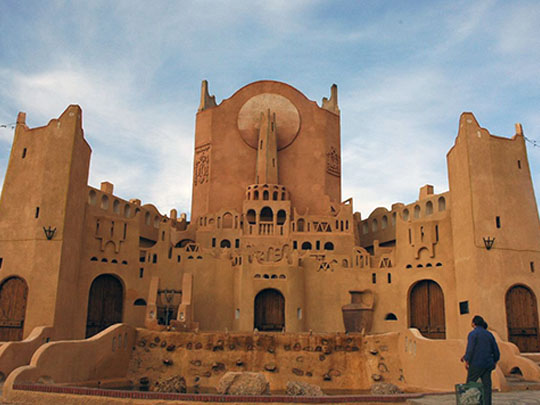
The M’Zab Valley, some 600 km south of Algiers in the northern Sahara, holds five fortified hilltop towns (Ghardaïa, Beni Isguen, Melika, Bou Noura and El Atteuf), built from the early 11th century by the Ibadi Mozabites, an Amazigh Muslim community who came south to escape persecution, and UNESCO listed it in 1982.
Each town rises in concentric rings of pale houses to a mosque built like a fortress, its minaret doubling as a watchtower, while the palm groves below are fed by an ingenious system for capturing and sharing scarce water.
UNESCO credits the valley’s austere, egalitarian planning with influencing architects from Le Corbusier to Fernand Pouillon and André Ravéreau, so a thousand-year-old Saharan oasis helped shape 20th-century modern architecture.
4 – Constantine
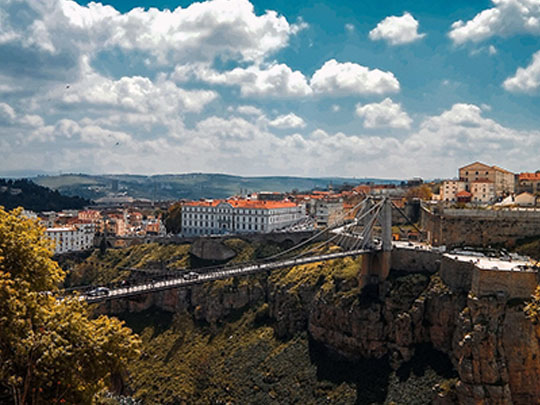

Constantine, perched on a limestone plateau in eastern Algeria and split by the deep gorge of the Rhumel, began as the Numidian town of Cirta, royal seat of the Berber king Massinissa from around 203 BC, and after it was sacked in a civil war in about 310, the Emperor Constantine rebuilt it under his own name in 313.
Cross the bridges that earned it the nickname “city of bridges”, from the 1912 Sidi M’Cid suspension bridge and the arches of Sidi Rached to El Kantara on the site of a Roman crossing, then see Ahmed Bey’s Ottoman palace, the Cirta Museum’s Numidian and Roman finds, and the modern Emir Abdelkader Mosque.
Constantine is the home of malouf, the local school of Arab-Andalusian classical music, whose most celebrated master, the Jewish singer Cheikh Raymond Leyris, was revered by Muslims and Jews alike until he was shot dead in the city’s souk in June 1961, sending his son-in-law and guitarist into exile in France, where he became the singer Enrico Macias.
5 – Gouraya National Park

Gouraya National Park rises steeply above Béjaïa in Kabylie, the medieval port where the young Fibonacci learned the Hindu-Arabic numerals he later popularised in Europe, and UNESCO named its forested slopes, which plunge straight into the Mediterranean, a Biosphere Reserve in 2004.
Hike up to the fort and shrine of Yemma Gouraya for sweeping views over the Gulf of Béjaïa, then take in the Pic des Singes (“Monkey Peak”), the Cap Carbon lighthouse and the Aiguades beaches below.
The park is one of the last refuges of the endangered Barbary macaque, the only macaque found outside Asia and the same species as the famous “apes” of Gibraltar.
6 – Tassili
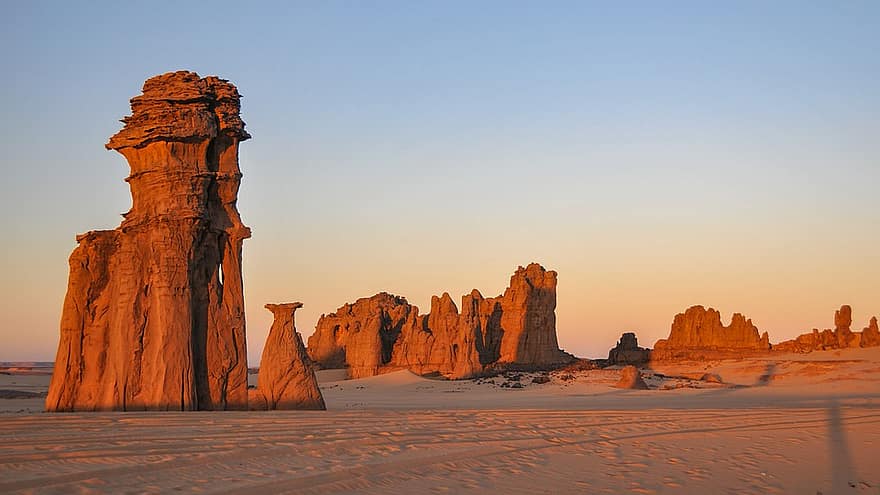
Tassili n’Ajjer, whose name means “plateau of rivers”, is a vast sandstone plateau in the Sahara of south-eastern Algeria, near the borders with Libya, Niger and Mali, and UNESCO listed it in 1982 for both its culture and its nature.
Explore one of the world’s most important collections of prehistoric rock art, with more than 15,000 paintings and engravings at sites such as Sefar and Jabbaren, set among wind-carved “forests of stone” and hundreds of natural arches, with the oasis of Djanet as the gateway.
The art, the oldest of it thought to be up to 12,000 years old, records a “Green Sahara” where giraffes, elephants and crocodiles lived and herders drove cattle across land that later turned to desert.
7 – Jardin d’Essai du Hamma
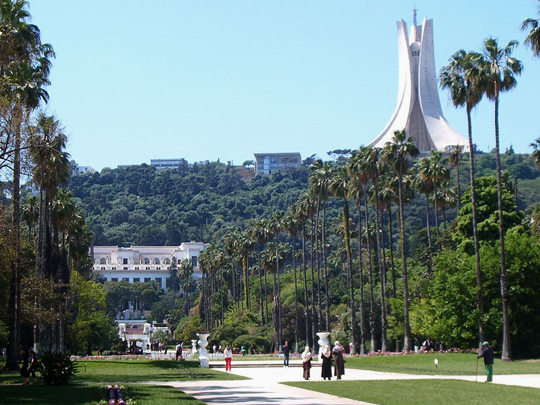
The Jardin d’Essai du Hamma, whose name means “trial garden”, is a grand botanical garden laid out by the French in 1832 in the heart of Algiers, facing the bay.
Stroll its grand avenues of plane trees, dragon trees, ficus and palms, wander between the formal French garden and the landscaped English garden, and visit the historic zoo.
Local legend links one of the garden’s giant ficus trees to the 1932 film Tarzan the Ape Man, starring Johnny Weissmuller, though the film’s records place the shooting in California.
8 – Timgad
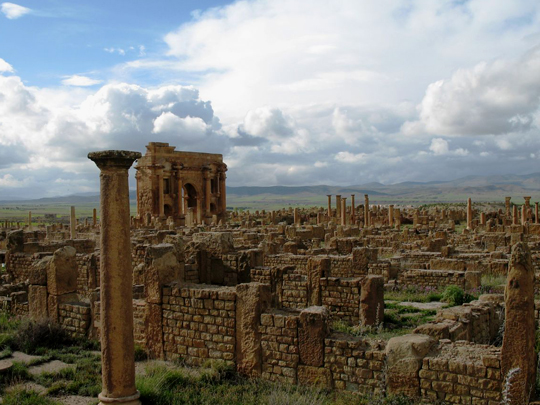
Timgad, on the northern slopes of the Aurès Mountains, was founded from scratch by the Emperor Trajan around AD 100 as a military colony, probably for veterans of the Third Augustan Legion, and UNESCO listed it in 1982.
Walk its grid of paved streets past the Arch of Trajan, the forum, the theatre, temples, no fewer than 14 baths and a rare Roman public library.
Often called the “Pompeii of North Africa”, Timgad was abandoned by the 8th century and largely buried by sand for nearly a thousand years, which is why its Roman street plan survives so clearly.
9 – Beni Hammad
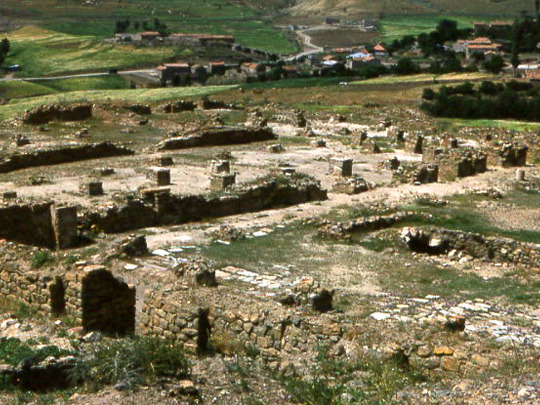
The Al Qal’a of Beni Hammad, the ruined first capital of the Berber Hammadid dynasty in the Hodna Mountains, was founded in 1007, abandoned for Béjaïa in 1090 and, in 1980, became Algeria’s first UNESCO World Heritage Site.
Trace some 7 km of partly dismantled walls enclosing palace ruins and the Great Mosque, the largest in Algeria after Mansourah’s at Tlemcen, whose square minaret stands about 25 m tall.
Though the city was short-lived, UNESCO calls Beni Hammad an authentic picture of a fortified Muslim city, whose art and architecture influenced building across the Maghreb, Andalusia and Sicily.
10 – Fort Santa Cruz, Oran
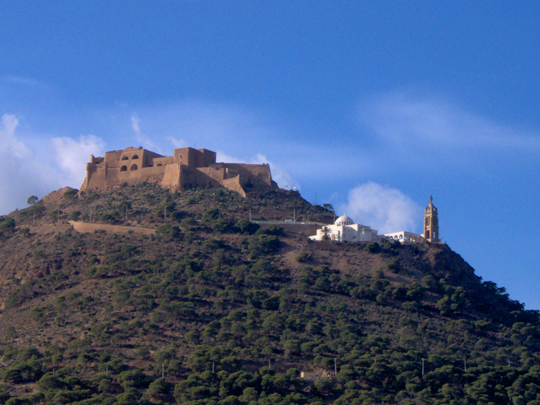
Fort Santa Cruz, a Spanish fortress built between 1577 and 1604 on Mount Murdjadjo some 400 m above sea level, overlooks Oran, Algeria’s second city, whose naval base at nearby Mers-el-Kébir was attacked by the Royal Navy on 3 July 1940 to keep the French fleet from Germany, killing nearly 1,300 French sailors.
Climb up for the fort’s thick ramparts and bastions and the views over the bay, then visit the neighbouring Chapel of Santa Cruz, whose tower was once crowned by a copy of Joseph Fabisch’s Virgin at Fourvière in Lyon.
The chapel was built after the cholera epidemic of 1849, when tradition holds that rain fell and the disease eased after a procession with a statue of the Virgin, and until 1962 Oran’s Catholics climbed to it every Ascension Day, a pilgrimage that later moved with the statue to Nîmes.
11 – Atlas Mountains
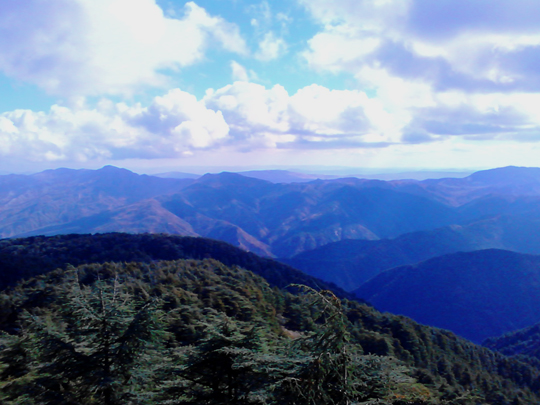
The Atlas Mountains wall Algeria’s fertile Mediterranean north off from the Sahara in two roughly parallel chains, the coastal Tell Atlas and the inland Saharan Atlas, running the breadth of northern Algeria.
Hike in Djurdjura National Park in Kabylie, crowned by Lalla Khedidja, at 2,308 m the highest peak of the Tell Atlas, explore the rugged Aurès massif, or wander the cedar forests of Chréa above Blida.
The Atlas ranges are the ancestral homeland of Amazigh (Berber) peoples, among them the Kabyle of the Djurdjura and the Chaoui of the Aurès, and the Aurès was the main stronghold of the 1 November 1954 uprising that began Algeria’s war of independence.
12 – Djémila
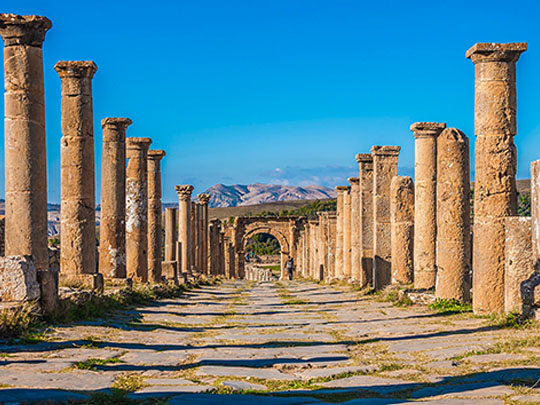
Djémila, whose Arabic name means “beautiful”, is the Roman town of Cuicul, founded under the Emperor Nerva in AD 96–98 as a colony for veterans on a rocky mountain spur some 900 m up, north-east of Sétif, and UNESCO listed it in 1982.
Walk the old forum with its Capitol, curia and Temple of Venus Genetrix, then the Severan quarter’s Arch of Caracalla (AD 216) and Temple of the Gens Septimia, the 3,000-seat theatre, a round baptistery among some of the largest early Christian buildings of their era, and a museum lined with mosaics.
Prince Ferdinand Philippe, Duke of Orléans, saw the Arch of Caracalla at Djémila on an expedition in 1839 and planned to ship it to Paris, but the scheme was dropped after his death in 1842, so the arch stands where the people of Cuicul raised it.