
Wikimedia Commons / CC-BY-SA-3.0 / GFDL
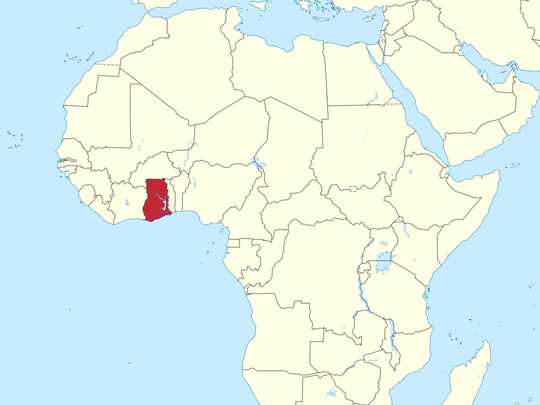
Capital: Accra
Population: 35 million+
Language: English (plus eleven indigenous languages, including Asante Twi, Akuapem Twi, Fante)
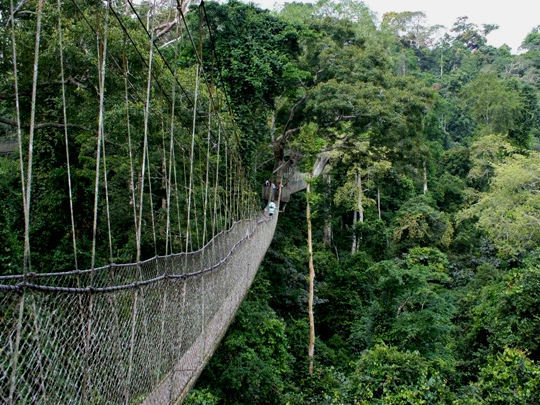
1 – Kakum National Park (above)
A rare surviving patch of the Upper Guinean rainforest, Kakum drapes the hills north of Cape Coast in dense, dripping jungle — home to forest elephants, Diana monkeys and hundreds of birds and butterflies, though the wildlife stays well hidden beneath the canopy.
The way to experience it is from above, on Kakum’s celebrated canopy walkway — a dizzying chain of seven rope-and-plank suspension bridges strung between giant trees, 40m up and 350m long, that sways gently as you inch through the treetops.
When it opened in 1995, this was the first canopy walkway anywhere in Africa — built by Canadian and Ghanaian engineers precisely to turn a neglected forest into a destination worth saving, and now one of the most visited spots in the country.
2 – Busua
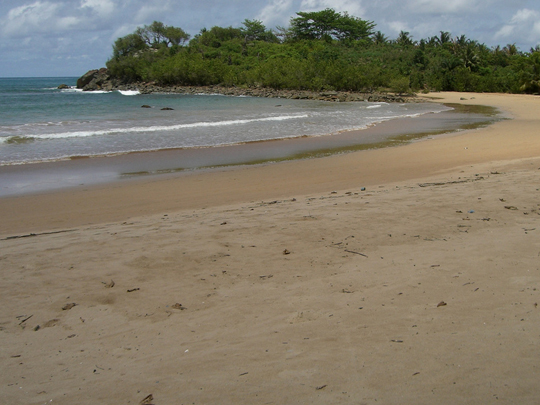
A sleepy fishing village turned traveller’s haven on Ghana’s palm-fringed west coast, Busua sits on a sheltered golden bay in what was once the heart of the Ahanta state, a coastal power that traded with Europe centuries ago.
Life here runs at beach pace — surf lessons and boards for hire, football on the sand at dusk, fresh lobster grilled at beachside shacks, and reggae and bonfires by night; a short walk or boat ride away lie the fishing village of Dixcove with its 17th-century British fort, and the mangroves of the Butre River.
Busua is Ghana’s surfing capital — the beating heart of a small but growing West African surf scene, with waves gentle enough that many first-timers catch their very first ride right here in the bay.
3 – Mole National Park
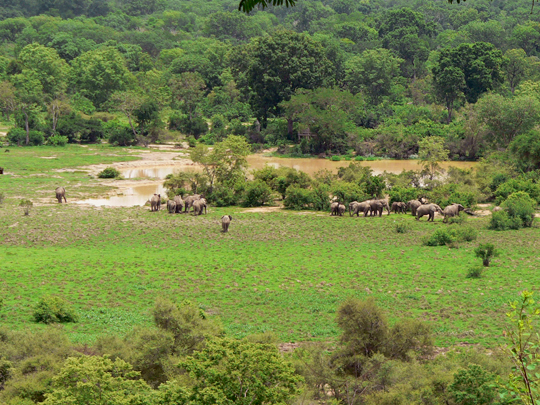
Ghana’s oldest and largest national park, Mole sprawls across nearly 5,000 km² of golden Guinea savanna in the country’s north — its greatest safari destination, and home to the largest herds of elephants in the country.
Uniquely, you can explore it on foot: guided by an armed ranger, walking safaris take you within metres of wild elephants at the waterholes, while the clifftop Mole Motel offers an “armchair safari,” with elephants, antelope and warthogs drinking in the valley below your pool terrace.
Just outside the park gate stands the little Larabanga Mosque, a whitewashed mud-and-timber building in the Sahelian style — traditionally dated to the 13th century and revered as one of the oldest mosques in West Africa, sometimes called the “Mecca of West Africa.”
4 – Elmina Castle
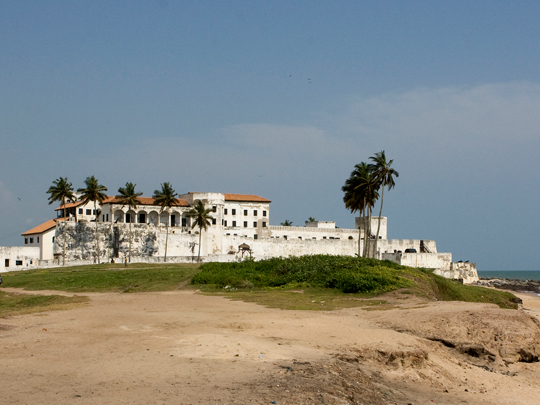
On a rocky spit on Ghana’s coast stands Elmina Castle, built by the Portuguese in 1482 to guard their trade in gold — the oldest European building still standing anywhere in sub-Saharan Africa, raised a full decade before Columbus reached the Americas.
Seized in turn by the Dutch and the British, it was turned into one of the grimmest hubs of the Atlantic slave trade; sombre guided tours lead through its whitewashed courtyards and down into the dark dungeons where hundreds of captives were held at a time, before being marched out through the infamous “Door of No Return.”
Elmina is only the grandest of some forty European forts and castles strung along Ghana’s short coastline — by far the densest concentration of such buildings anywhere in sub-Saharan Africa, and today collectively a UNESCO World Heritage Site.
5 – Lake Volta
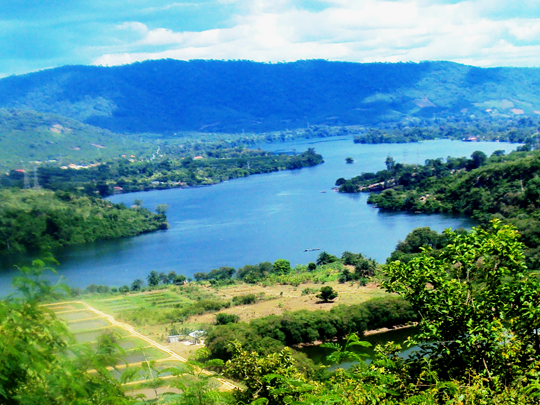
Ghana’s inland sea, Lake Volta is the largest man-made lake on Earth by surface area — a vast reservoir stretching some 400km through the southeast of the country and covering an astonishing 3.6% of Ghana’s entire land area.
It was created in 1965 when the Akosombo Dam sealed off the Volta River — a flagship project of newly independent Ghana that still generates much of the nation’s electricity; today ferries cross it linking the south to the north, fishermen work its waters, and lakeside lodges look out over the horizon-wide expanse.
Filling this artificial sea came at a steep human price — the rising water drowned some 740 villages and forced around 80,000 people from their homes, resettled in dozens of new townships built for them.
6 – Labadi Beach
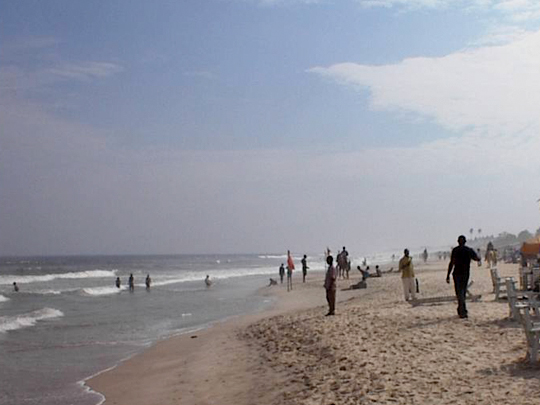
The busiest and best-loved beach in Ghana, La Pleasure Beach — universally called Labadi — is Accra’s seaside playground, a broad sweep of golden sand on the edge of the capital where the whole city seems to come to unwind.
Weekends and holidays turn it into a party: horses trot along the surf line, footballers and swimmers fill the sand, and drummers, dancers and DJs keep the beach bars pulsing late into the night, all fuelled by grilled tilapia, kelewele and coconuts from the vendors’ stalls.
The soundtrack is pure Ghana — this is the country that gave the world highlife music, and Labadi’s bonfire-lit weekends throb with everything from live drumming to the afrobeats now conquering dancefloors worldwide.
7 – Kumasi
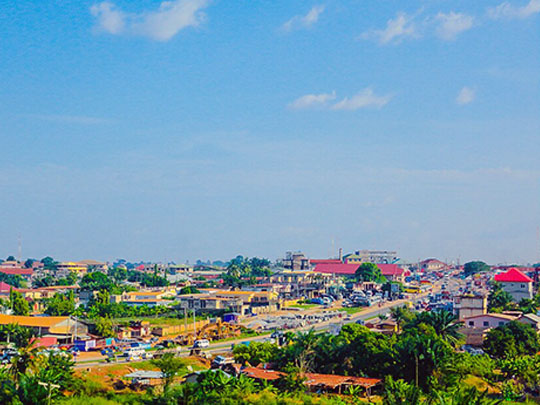
Founded around 1701 as the capital of the Asante and still the seat of the Asantehene, Kumasi ran an empire that controlled the gold trade, fought four wars against the British, and outlasted the colony that annexed it — the monarchy survives today, and the king still reigns from the Manhyia Palace.
The palace museum, built in 1925, holds the dynasty’s regalia and its story; Kejetia sprawls below as the largest market in West Africa; and in the villages around town stand the last of the Asante traditional buildings, their walls moulded in bold relief patterns under steep thatch, UNESCO-listed since 1980.
At the heart of it all is the Golden Stool, said to have been called down from the sky by the priest Okomfo Anokye and to hold the soul of the nation — never sat upon, never allowed to touch the ground; when a British governor demanded in 1900 to sit on it, Yaa Asantewaa raised an army, and though she was defeated and exiled, the stool was hidden and the British never found it.
8 – Nzulezu
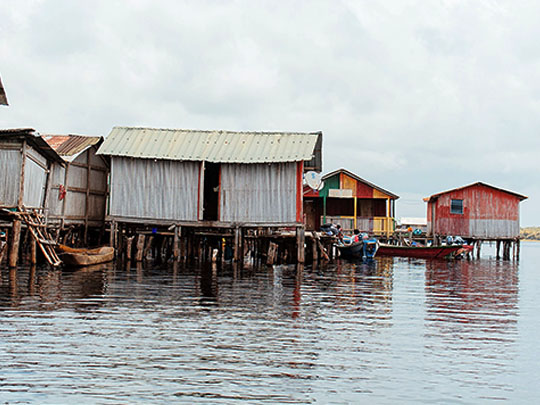
At the far western end of Ghana near the Ivorian border, Nzulezu — “surface of the water” in Nzema — is a village of some 500 people built entirely on stilts above Lake Tadane, reached only by an hour’s canoe through the reed channels and swamp forest of the Amansuri wetland.
The whole settlement is a single long wooden pier the villagers call Main Street, with houses of bamboo, raffia and timber ranged along both sides and a school, a church and a mosque among them; the lake is sacred, and no one works on it on Thursdays.
The founding story reaches a very long way back: the villagers say their ancestors came from Walata, a city of the ancient Ghana Empire in what is now Mauritania, and were led here by a snail, which they still keep as a totem — that empire is where this country took its name, remembered in a village a thousand miles from where it stood.
9 – Accra
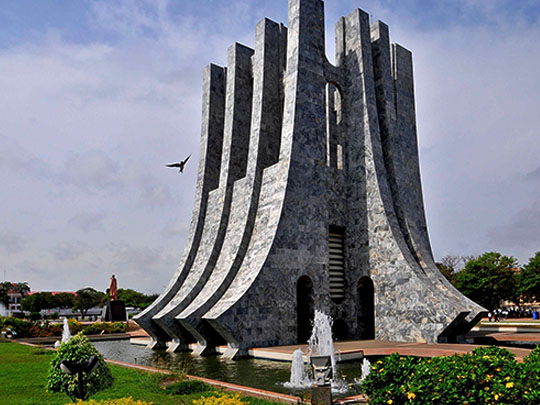

The Ga settled this coast long before Europeans arrived, and three rival forts — Danish, Dutch and British — grew together into one town; it became capital of the Gold Coast in 1877, and on 6 March 1957 Kwame Nkrumah stood here and declared Ghana independent, the first colony in sub-Saharan Africa to break free.
Jamestown is the quarter to walk, a fishing town inside a capital: pirogues hauled up on the shore beneath an 1871 lighthouse, and boxing gyms that have turned out a startling number of world champions; inland lie the crowded aisles of Makola market and the Kwame Nkrumah Memorial Park, where he lies buried.
Out at Teshie, carpenters build fantasy coffins to order — a fisherman buried in a marlin, a pilot in an aeroplane, a farmer in a cocoa pod, a trader in an outsized Coca-Cola bottle — a trade begun in the 1950s and now taken seriously enough to sit in museum collections around the world.