
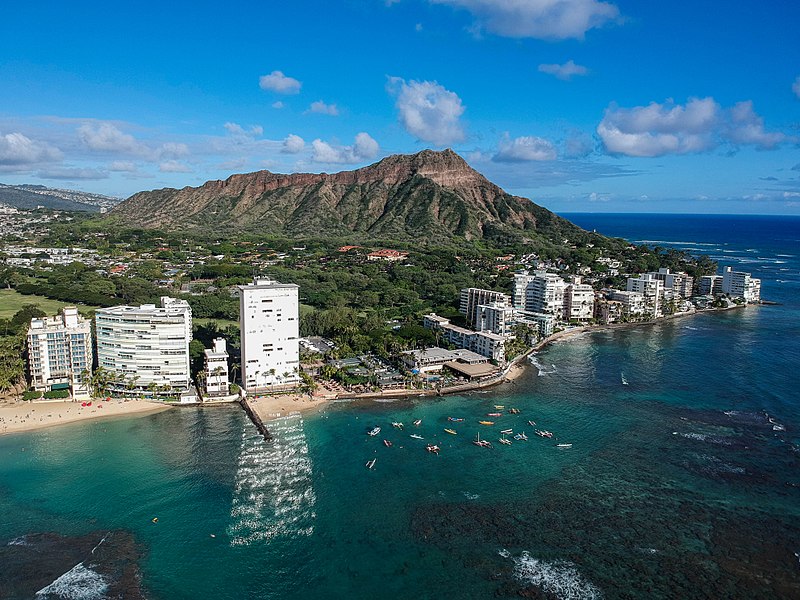
Wikimedia Commons / CC-BY-SA-3.0 / GFDL
Capital: Honolulu
Population: 1.4 million+
Language: English and Hawaiian
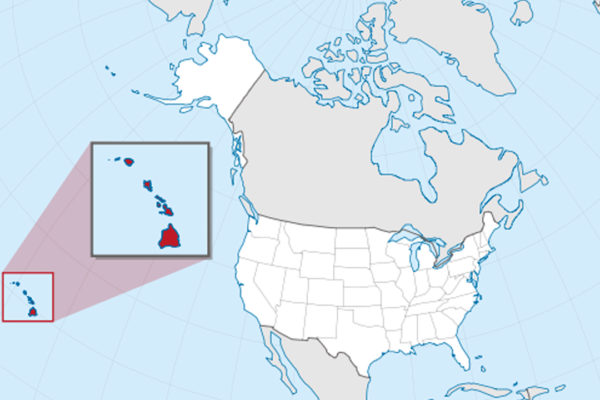
1 – Honolulu (also above)
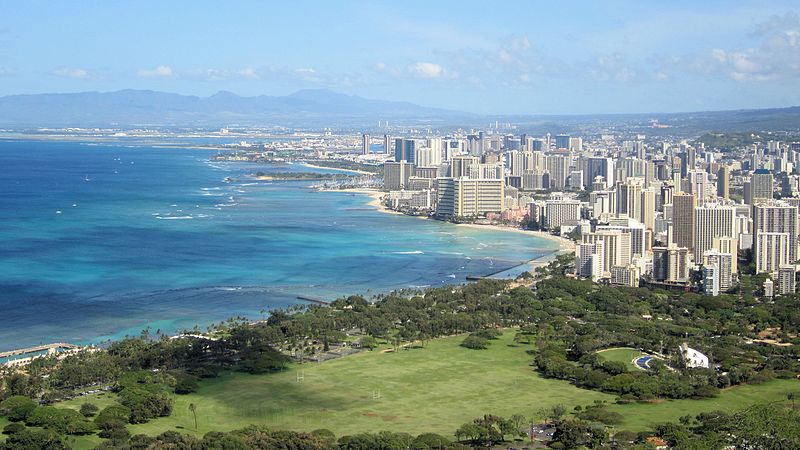
Honolulu, on the south shore of Oʻahu, takes its name from the Hawaiian for “sheltered harbour”, became Kamehameha I’s base around 1809 and the kingdom’s seat of government in 1845, when Kamehameha III moved it from Lahaina, and it’s where Barack Obama was born in 1961.
In Honolulu you can explore Chinatown, ride up the 1926 Aloha Tower, visit the Bishop Museum of Hawaiian history, and walk the National Memorial Cemetery of the Pacific in the Punchbowl crater, while the gilded statue of Kamehameha downtown is a copy — the original, cast in Paris in 1880, went down with its ship off the Falkland Islands, was salvaged by islanders and now stands in Kapaʻau on Hawaiʻi Island.
One of Honolulu’s great fortunes was made by James Campbell, born in Derry in 1826, who stowed away to sea at 13, bought 41,000 acres of dry land at ʻEwa that others thought worthless, drilled Hawaii’s first artesian well there in 1879, and turned it into sugar country — today it’s Kapolei, Oʻahu’s “second city”.
2 – Kauai
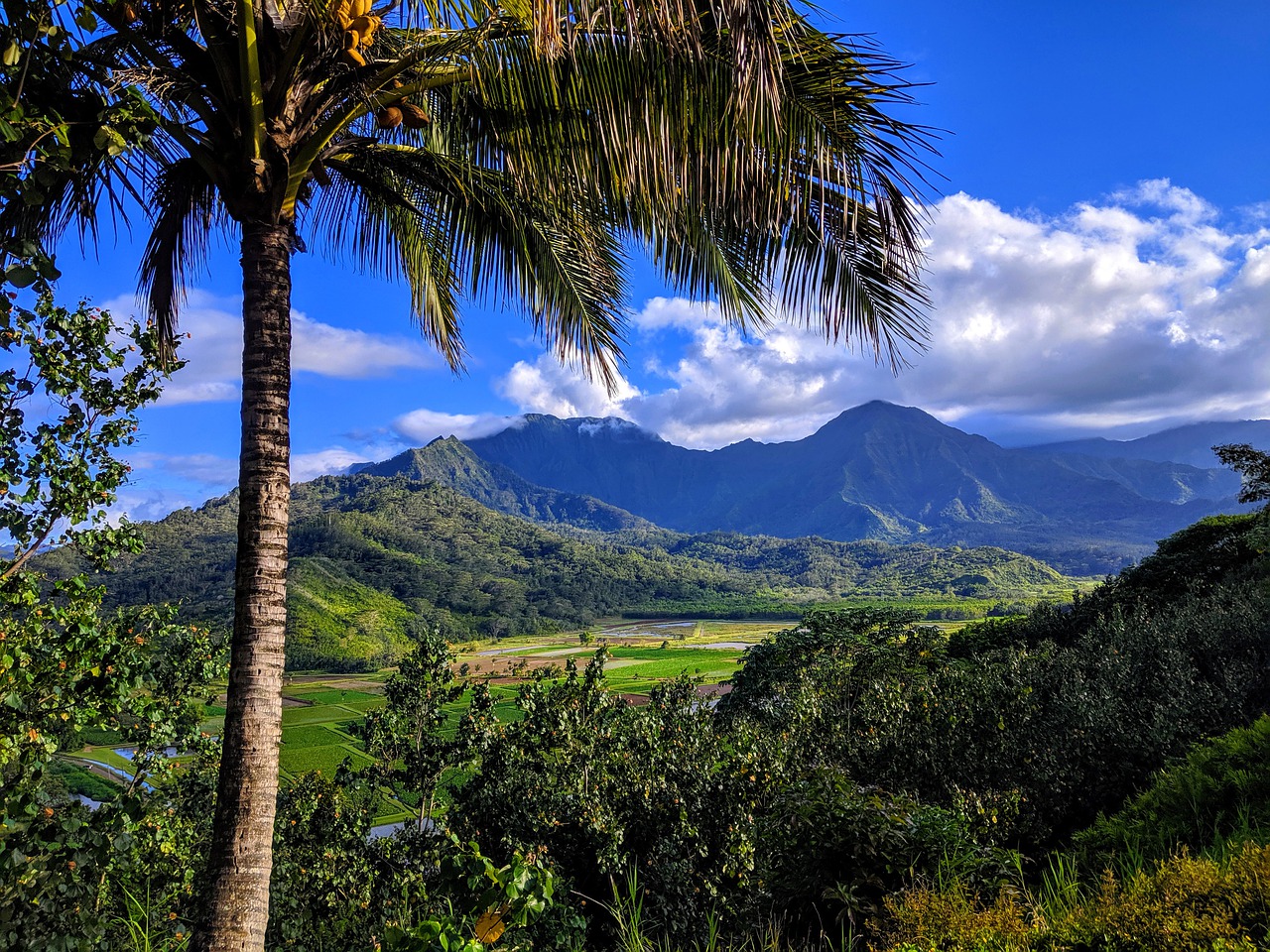
Kauaʻi, the northernmost of the main Hawaiian islands and among the oldest, at about 5 million years, is where Captain Cook landed at Waimea on 20 January 1778, the first recorded European contact with Hawaii, and in 1810 its king, Kaumualiʻi, joined Kamehameha’s kingdom by agreement rather than conquest.
On Kauaʻi you can hike the start of the Kalalau Trail along the cliffs of the Nā Pali Coast from Hāʻena State Park (book ahead), look into the red gorge of Waimea Canyon, walk Hanalei Pier on Hanalei Bay, and see the ruins of a Russian fort of 1817, built when Kaumualiʻi briefly hoped Russia would help him break free of Kamehameha.
Kauaʻi’s famous nickname, “the Grand Canyon of the Pacific”, is often credited to Mark Twain, but he never set foot on the island, and “Puff, the Magic Dragon” isn’t about Hanalei either — while Hurricane Iniki hit during the filming of Jurassic Park in September 1992, and the opening of Raiders of the Lost Ark was shot on the island’s Hulēʻia River.
3 – Waipio Valley
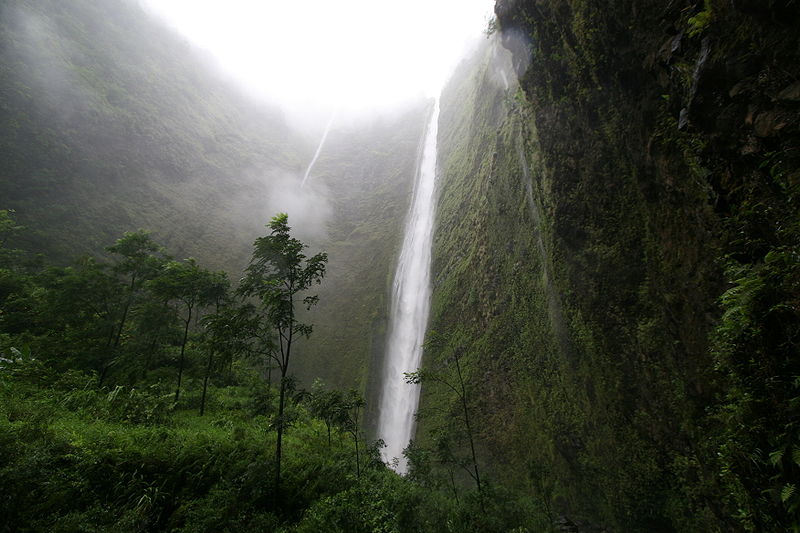
Waipiʻo Valley cuts into the Hāmākua coast in the northeast of Hawaiʻi Island, the Big Island, and was the seat of great chiefs such as Līloa and his son ʻUmi, which is why it’s called the “Valley of the Kings” — in 1782 the young Kamehameha was granted the district, along with care of the war god Kūkāʻilimoku.
At Waipiʻo Valley the lookout at the end of the road gives the classic view of the black-sand beach and the cliffs, with waterfalls such as Hiʻilawe at the back of the valley, but the road down, which averages a 25% grade, has been closed to visitors since February 2022 — the only way in is a permitted shuttle tour.
In 1791 Kamehameha fought a sea battle off Waipiʻo, Kepuwahaʻulaʻula, “the red-mouthed gun”, named for the Western cannon both sides used, and Waipiʻo played “Dryland”, the paradise found at the end of Kevin Costner’s Waterworld (1995).
4 – Waikiki Beach
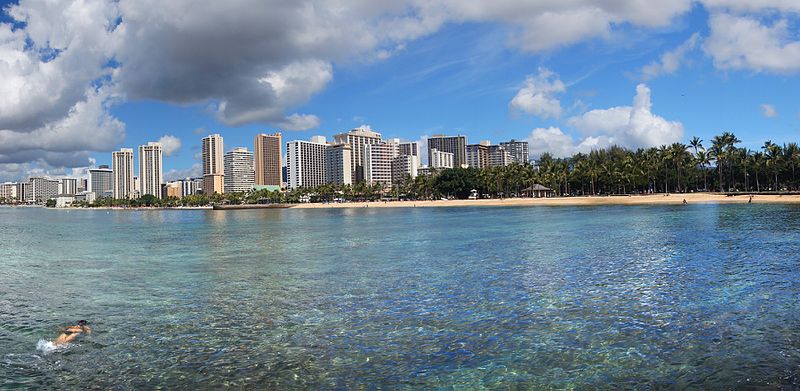
Waikīkī Beach, just east of downtown Honolulu, is named “spouting fresh water” for the springs and streams that once fed wetlands here, and the district was drained by the Ala Wai Canal, dug from 1921 to 1928, to make room for the resort it became.
At Waikīkī you can surf or take a lesson, have a drink at the Moana of 1901, the first big resort hotel on the beach, or the pink Royal Hawaiian of 1927, and find the statue of Duke Kahanamoku, the Olympic swimmer whose demonstration at Freshwater Beach near Sydney in December 1914 helped spread surfing around the world.
Much of Waikīkī’s sand isn’t from Waikīkī — some was reportedly shipped from Manhattan Beach in California in the 1920s and 1930s — and the four Stones of Kapaemahu, honouring healers from Tahiti said to be of both male and female spirit, were buried under a bowling alley in 1941 and only recovered in 1963.
5 – Pearl Harbor
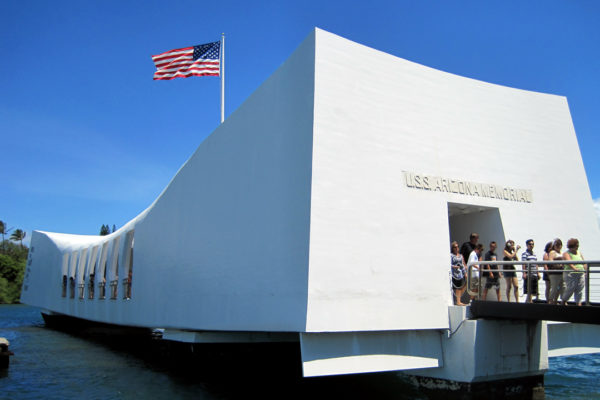
Pearl Harbor, the US Navy’s great base on Oʻahu west of Honolulu, was known in Hawaiian as Wai Momi, “waters of pearl”, for its pearl oysters, and the Japanese attack on 7 December 1941 killed about 2,400 Americans — the National Park Service counts 2,390 — including 1,177 aboard the battleship Arizona.
At Pearl Harbor National Memorial you can take the boat out to the USS Arizona Memorial over the wreck, then visit the Battleship Missouri, on whose deck Japan surrendered in Tokyo Bay in 1945, the submarine Bowfin and the Pearl Harbor Aviation Museum on Ford Island.
The Arizona Memorial was designed by Alfred Preis, a Viennese architect who had fled the Nazis and was interned for three months as an enemy alien after the attack, and it sags in the middle and rises at the ends for “initial defeat and ultimate victory” — over 900 men are still inside the ship, oil still leaks from it, and 44 survivors chose to be interred with their shipmates, the last in 2019.
6 – Maui

Maui, the second-largest Hawaiian island, is named after the demigod of Polynesian legend, and its old whaling port of Lahaina was the royal capital of the Hawaiian Kingdom from about 1820 until 1845 — until the wildfire of 8 August 2023 destroyed the town and killed 102 people, according to officials.
On Maui you can watch the sunrise from the 10,023-foot summit of Haleakalā, the “house of the sun”, with a reservation, drive the winding Road to Hāna, and see humpback whales off the coast in winter, while Front Street in Lahaina reopened to traffic in August 2026.
Lahaina’s great banyan, planted by the sheriff in 1873 to mark 50 years of the Protestant mission, was scorched in the fire and has had about 40% of it cut away but is putting out new leaves, while Baldwin House of the 1830s, Maui’s oldest building, the Pioneer Inn and Waiola Church were lost.
7 – Volcanoes National Park

Hawaiʻi Volcanoes National Park, on the southeast of Hawaiʻi Island, was created in 1916, became a World Heritage Site in 1987, and takes in Kīlauea, one of the world’s most active volcanoes, and Mauna Loa, the largest active volcano on Earth by volume, which erupted in 2022 for the first time since 1984.
In Hawaiʻi Volcanoes you can drive Crater Rim Drive to view Halemaʻumaʻu, the home of the fire goddess Pele, which deepened by about 400 metres when the summit collapsed in 2018, take Chain of Craters Road down to the sea, and walk through Nāhuku, the Thurston Lava Tube, around 500 years old.
Kīlauea’s current eruption, which began in December 2024, has had more than 50 episodes of lava fountains, a record for the volcano, reaching up to 1,770 feet — and the “Pele’s curse” on anyone who takes home a lava rock is a 20th-century invention, though the rocks are sacred to Hawaiians and taking them is illegal anyway.
8 – Iolani Palace
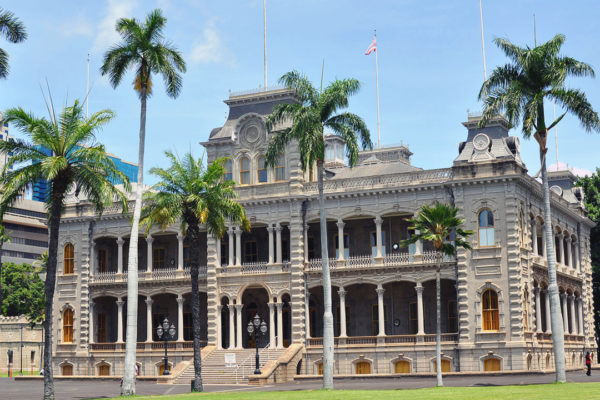
ʻIolani Palace, in downtown Honolulu, was built from 1879 to 1882 by King Kalākaua, the first monarch to travel around the world, and it’s the only official state residence of royalty on US soil — and the stage for the overthrow of his sister, Queen Liliʻuokalani, on 17 January 1893.
On a tour of ʻIolani Palace you can see the throne room and the upstairs room where Liliʻuokalani was held for about eight months in 1895 after a failed royalist rising, and the palace had electric lights by 1887, four years before the White House.
Liliʻuokalani’s “Aloha ʻOe” is often said to have been written during her imprisonment, but she composed it in 1878 — and the palace’s restoration was led for nearly 30 years by Abigail Kawānanakoa, great-granddaughter of the Derry-born tycoon James Campbell, who lay in state here in 2022.
9 – Kealakekua Bay
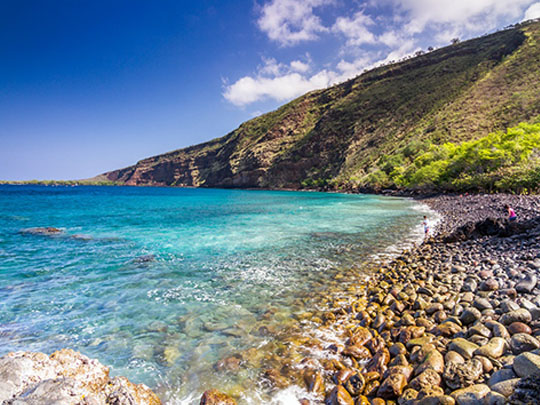

Kealakekua Bay, on the Kona coast of Hawaiʻi Island, is where Captain Cook anchored on 17 January 1779, during the Makahiki festival, and where he was killed at Kaʻawaloa on 14 February, after coming back with a broken mast and trying to take the high chief Kalaniʻōpuʻu hostage over a stolen boat — four marines and about 17 Hawaiians died with him.
Kealakekua Bay is a marine reserve for snorkelling, and you can reach the white Captain Cook Monument of 1874 by a permitted kayak tour, by boat or down the steep Kaʻawaloa Trail, while Hikiau Heiau, across the bay, is where Cook read the burial service over a seaman, William Watman, the first recorded Christian service in Hawaii.
Historians still argue over whether Hawaiians took Cook for the god Lono, and beside him when he died was the marine lieutenant Molesworth Phillips, born in Swords, Co. Dublin, who was wounded but saved one of his men and is buried in Westminster Abbey — and William Bligh, later of the Bounty, was master of the Resolution.
10 – Puʻuhonua o Hōnaunau
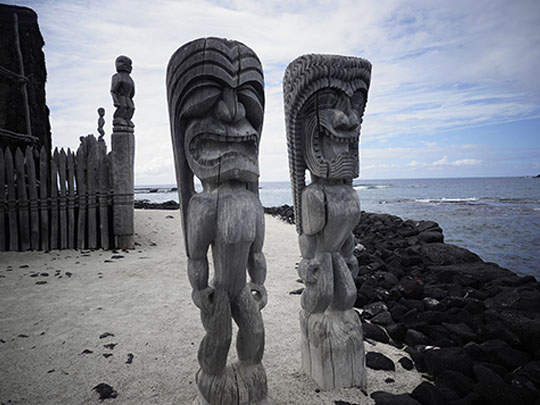
Puʻuhonua o Hōnaunau, on the black lava coast of south Kona, was a place of refuge: anyone who broke a kapu, one of the sacred laws, could be absolved by a priest here if they got in ahead of their pursuers, often by swimming across the bay, and defeated warriors could shelter here in wartime, until the kapu system ended in 1819.
At Puʻuhonua o Hōnaunau National Historical Park you can walk along the Great Wall of about 1550, roughly 1,000 feet long and 10 to 12 feet high, see the rebuilt temple of Hale o Keawe with its carved wooden kiʻi, the royal grounds and the canoe landing where green turtles haul out, and snorkel next door at Two Step.
Hale o Keawe held the bones of 23 chiefs, whose mana protected the refuge, until they were removed in 1829 — by the regent Kaʻahumanu in older accounts, by the chiefess Kapiʻolani in others — and the park’s old English name, “City of Refuge”, was dropped in 1978, since it was never a city.
11 – Nuʻuanu Pali
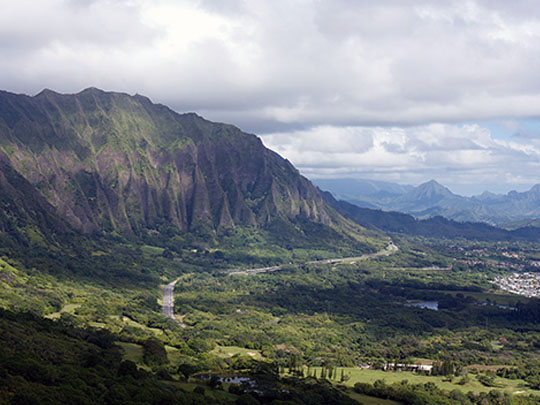
Nuʻuanu Pali, the sheer cliffs at the head of Nuʻuanu Valley above Honolulu, is where Kamehameha won Oʻahu in May 1795, driving the army of the island’s king, Kalanikūpule, up the valley until many were forced over the edge — estimates of the dead range from hundreds upwards.
At the Nuʻuanu Pali State Wayside lookout, about 1,200 feet up, you can lean into the famous winds and look out over the windward coast of Kāneʻohe and Kailua, with a parking fee of $7 for visitors, and in the valley below is Queen Emma’s Summer Palace.
Kamehameha’s cannon at Nuʻuanu were commanded by John Young, an English sailor who became one of his chief advisers and was Queen Emma’s grandfather, and around 800 skulls were reportedly found when the first carriage road over the Pali was built in 1897 — while local legend says that if you carry pork over the Pali, your car will stall.