
Wikimedia Commons / CC-BY-SA-3.0 / GFDL
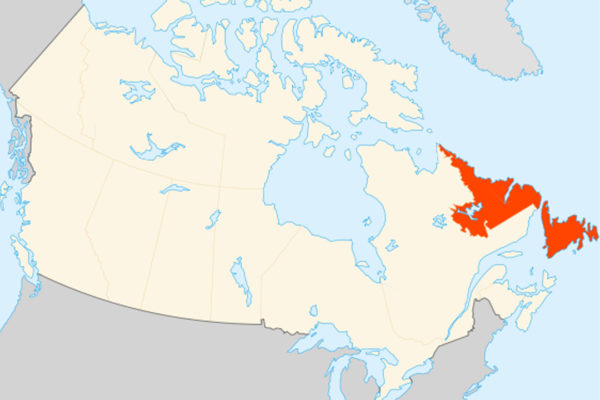
Capital: St. John’s
Population: 550,000+
Language: English (Irish was spoken here from the 1670s into the early 1900s, and the island still has its own Irish name, Talamh an Éisc, “land of the fish”).
1 – Gros Morne National Park (also above)
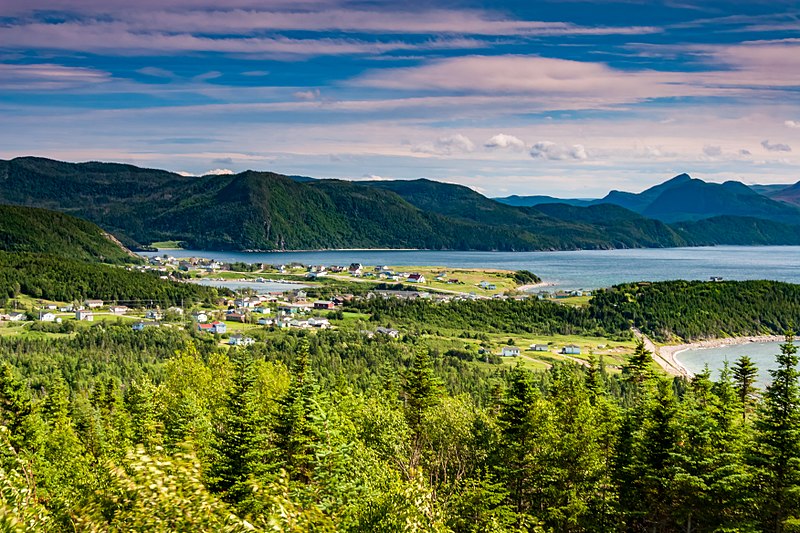
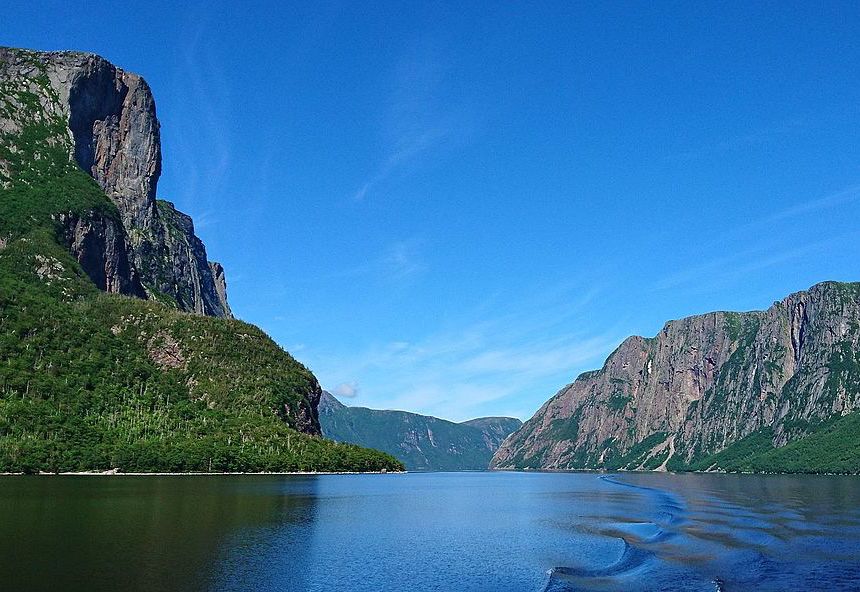
On Newfoundland’s west coast, Gros Morne National Park takes its name from its 806-metre mountain — often translated as “big gloomy mountain”, though morne is more likely the Caribbean French word for a lone rounded hill — and at Green Point its shoreline is the world’s official reference point for the start of the Ordovician period, about 487 million years ago.
Walk out onto the Tablelands, orange-brown and almost bare because rock from the Earth’s mantle is too rich in magnesium and metals and too poor in nutrients for most plants, then climb Gros Morne Mountain, whose summit trail closes in May and June for caribou calving, and finish at Lobster Cove Head lighthouse above Rocky Harbour.
Nearly every moose in Gros Morne, and on the whole island, descends from four animals brought over from New Brunswick in 1904, and they have grown so numerous that Parks Canada has run a cull inside the park since 2011 to let the forest recover.
2 – Trinity
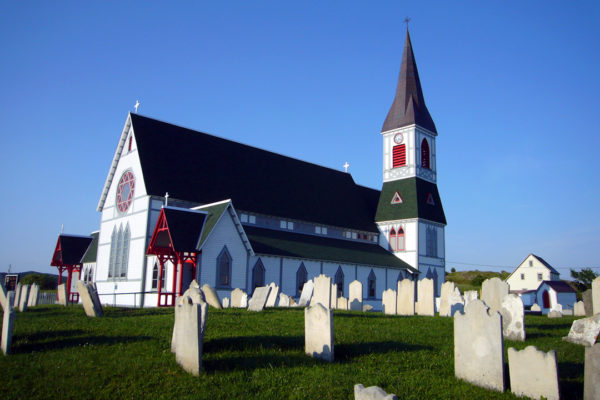
On a sheltered harbour in Trinity Bay on the Bonavista Peninsula, Trinity was one of Newfoundland’s great English merchant ports, run in the 18th century by the Poole merchant Benjamin Lester, whose fleet reached nearly 30 ships — and the bay is said to have been named by the Portuguese explorer Gaspar Corte-Real on Trinity Sunday around 1500.
Trinity’s lanes hold the rebuilt Lester-Garland House, the Green Family Forge and St Paul’s Church, Rising Tide Theatre walks summer audiences through the town’s history, and the film set of Random Passage survives at New Bonaventure down the road.
Trinity’s doctor, John Clinch, a schoolfriend of Edward Jenner, was probably the first person in North America to vaccinate against smallpox, around 1798, using vaccine Jenner sent him — and Random Passage was a Canadian-Irish co-production, partly shot in Ireland.
3 – St. John’s
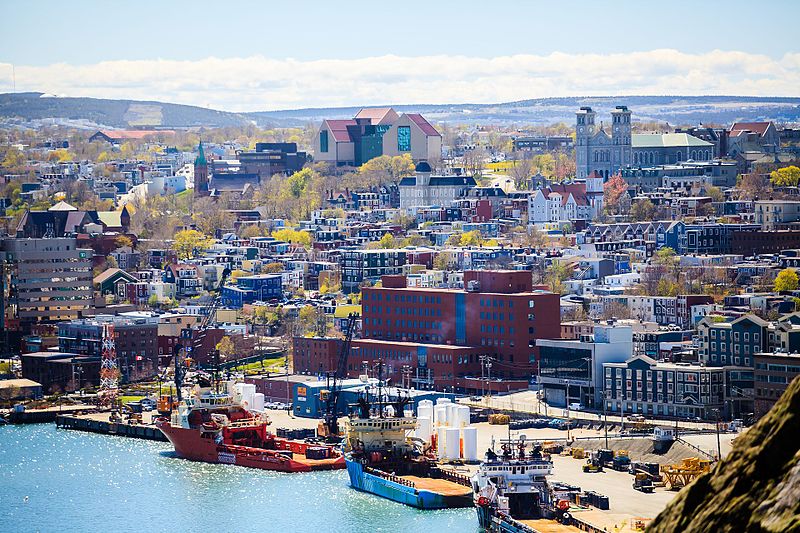
On a narrow harbour on the Avalon Peninsula, St. John’s was used by European fishermen from the 1500s and settled permanently in the early 1600s, and it’s where Humphrey Gilbert claimed Newfoundland for England on 5 August 1583 — though its billing as “the oldest city in North America” turns out to be a tourism slogan of the 1950s.
Climb Signal Hill to Cabot Tower, built in 1897–1900, walk the painted houses of Jellybean Row, coloured in a heritage drive from the 1960s and 70s rather than for sailors in the fog, visit The Rooms museum, and drive out to Cape Spear, the easternmost point of North America outside Greenland.
On 12 December 1901 Marconi reported receiving the first transatlantic wireless signal in a building on Signal Hill, a claim still doubted because his assistant was the only witness, and in June 1919 Alcock and Brown took off from St. John’s on the first non-stop transatlantic flight, ending nose-down in a bog near Clifden, close to Marconi’s own Irish station.
4 – Greenspond
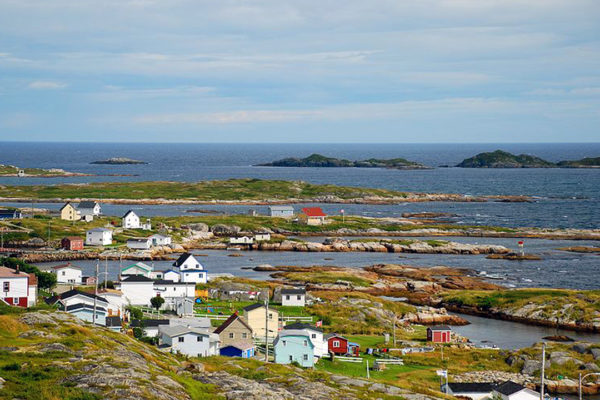
On a cluster of islands in Bonavista Bay, Greenspond had settlers from Devon, Dorset and southern Ireland by the 1690s, which makes it one of the oldest continuously inhabited outports on Newfoundland’s north-east coast.
Greenspond has been joined to the mainland by a causeway since 1983, and its courthouse of 1899, Anglican church and harbour sit on bare granite where gardens have sometimes been made with topsoil carried over from the mainland.
Greenspond was known as the “Capital of the North”, a trading and sealing centre of nearly 2,000 people around 1900, sitting on the main sea lanes along the coast — and today only a few hundred people live there.
5 – Corner Brook
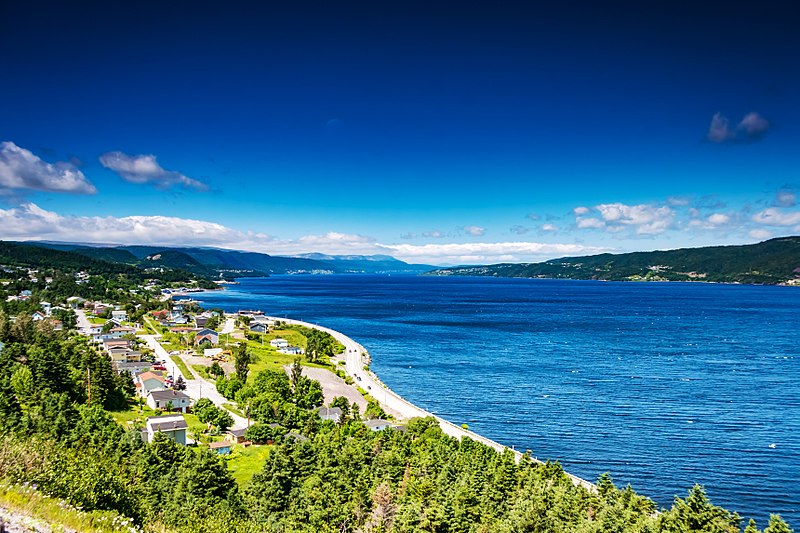
At the mouth of the Humber River on the Bay of Islands, on a coast charted by James Cook in 1767, years before his Pacific voyages, Corner Brook grew up around a paper mill opened in 1925 and became a single city in 1956, when four neighbouring communities merged.
The Captain James Cook monument on Crow Hill looks out over Corner Brook and the Humber Arm, the Humber River draws salmon anglers, and Marble Mountain, just up the valley, is the island’s ski hill.
Western Newfoundland is home to the Qalipu Mi’kmaq First Nation, created in 2011 for an expected 8,700 to 12,000 members — around 104,000 people applied, and the rules were later tightened, stripping status from more than 10,000 who had already been accepted.
6 – Twillingate

On islands in Notre Dame Bay, Twillingate takes its name from Toulinguet, a headland near Brest in Brittany, and it was in Notre Dame Bay in 1823 that Shanawdithit, the last known Beothuk, was captured; she died in St. John’s in 1829.
Twillingate is one of several towns that call themselves the Iceberg Capital of the World, and from Long Point Lighthouse, built in 1876, you can watch the bergs drift down Iceberg Alley in late spring and early summer.
Twillingate produced an international opera singer, Georgina Stirling, who performed as “Marie Toulinguet” after training in Paris, and like every outport it was hit by the cod moratorium of 2 July 1992, which put about 30,000 Newfoundlanders out of work.
7 – L’Anse aux Meadows
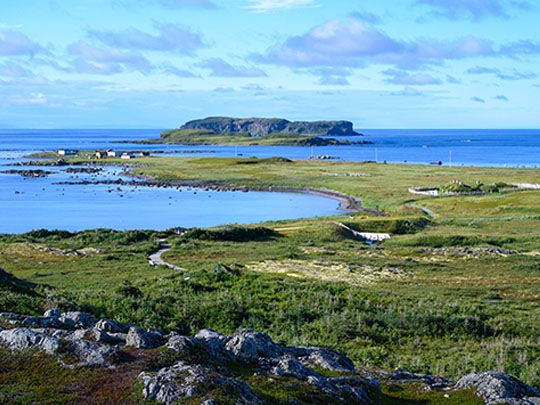
At the northern tip of Newfoundland’s Great Northern Peninsula, L’Anse aux Meadows is the only authenticated Norse site in North America outside Greenland, found in 1960 when a local man, George Decker, led the explorer Helge Ingstad to a set of grassy mounds by the shore, and listed by UNESCO in 1978.
The archaeologist Anne Stine Ingstad led the 1960s digs that uncovered eight turf buildings — halls, a forge and workshops — and today three reconstructed sod houses with costumed interpreters stand beside the excavated outlines at L’Anse aux Meadows, with the separate replica village of Norstead a couple of kilometres away.
In 2021 scientists dated wood cut with metal tools at L’Anse aux Meadows to exactly 1021 AD, using the trace of a solar storm in the tree rings, and a spindle whorl and a needle-sharpening stone suggest women were part of a camp that lasted only a few years — possibly the sagas’ Straumfjörður, a gateway to Vinland rather than Vinland itself.
8 – Red Bay, Labrador
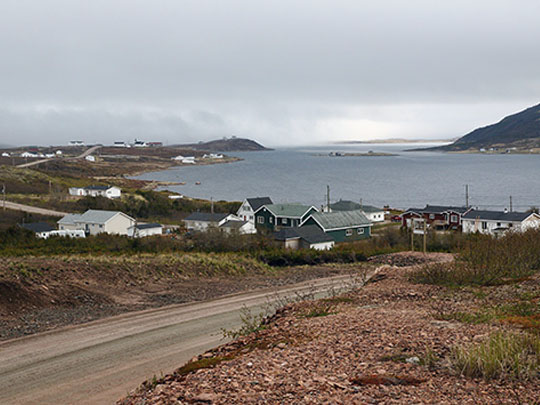
On the Strait of Belle Isle in southern Labrador, Red Bay was a Basque whaling station from the 1530s or 40s to the early 1600s, with crews from Gipuzkoa, Bizkaia and Labourd crossing each summer, up to 2,000 men a year, and UNESCO calls it the earliest and most complete testimony of the European whaling tradition.
Reach Red Bay by the ferry from St Barbe to Blanc-Sablon in Quebec and an hour’s drive up the coast, then see the 16th-century chalupa whaling boat recovered from the harbour and cross to Saddle Island, where more than 130 whalers lie in some 60 graves.
Red Bay was found in the archives first — Selma Barkham spent years in Basque notarial records before pinning it down in the 1970s — and in 1978 Parks Canada divers found the galleon San Juan, sunk in 1565 with about 1,000 casks of whale oil, mostly from bowheads; a full-size replica was launched in the Basque port of Pasaia in 2025, with a voyage to Canada planned.
9 – Mistaken Point

On the south-eastern tip of the Avalon Peninsula, Mistaken Point is named for the fog in which sailors mistook it for Cape Race, with dozens of wrecks as a result, and its cliffs hold what UNESCO calls the oldest abundant and diverse large fossils known anywhere, 580 to 560 million years old.
Mistaken Point can only be visited on a guided walk from the Edge of Avalon Interpretive Centre in Portugal Cove South, in groups of up to 12, with booties pulled over your boots before you step onto the fossil beds — a reserve since 1987, after collectors had gone at them with sledgehammers and explosives.
The fossils at Mistaken Point were preserved by falls of volcanic ash that buried whole sea-floor communities where they stood — UNESCO calls each layer an “Ediacaran Pompeii” — and they include frond-like creatures such as Charnia unlike anything alive today, plus trails reported in 2010 as among the earliest evidence of animals moving.