
Wikimedia Commons / CC-BY-SA-3.0 / GFDL
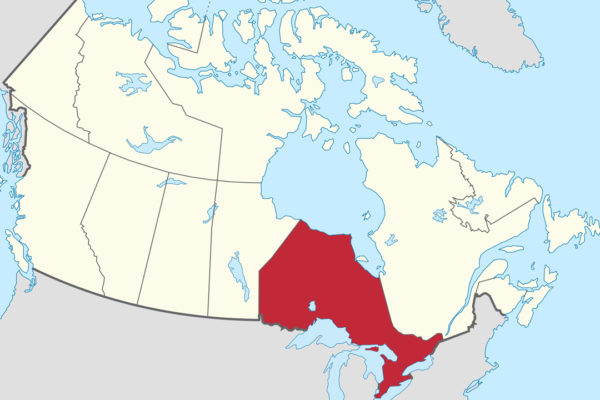
Capital: Toronto
Population: 16.3 million+
Language: English/French
1 – Ottawa (also above)
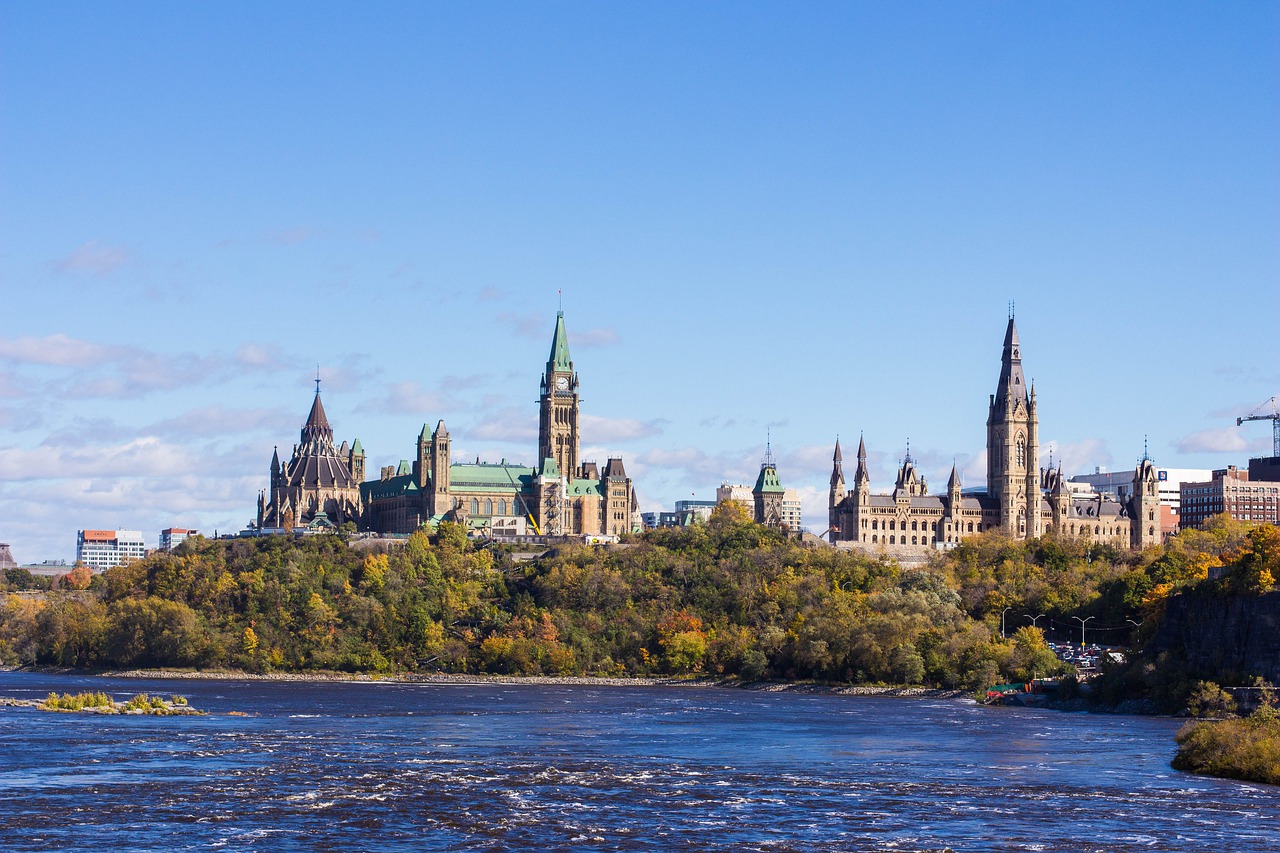
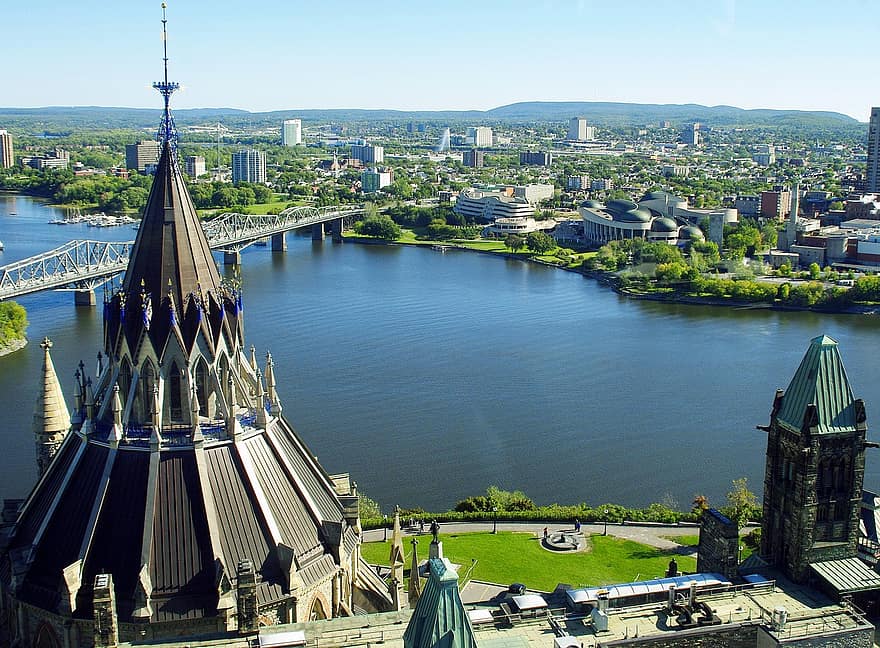
At the meeting of the Ottawa and Rideau rivers, Ottawa grew up around the northern end of the Rideau Canal, a 202 km military supply route to Kingston (entry 7) built from 1826 to 1832 by Lieutenant-Colonel John By of the Royal Engineers, and UNESCO calls it the only canal of the early 19th-century canal-building era still working on its original line.
In Ottawa walk up the flight of eight locks beside Parliament Hill, past the 1827 Commissariat that is now the Bytown Museum, into the ByWard Market, which dates from the canal years, and on to the National Gallery and Louise Bourgeois’s giant bronze spider, Maman, bought for C$3.2 million.
Most of the Rideau Canal’s labourers were Irish and French Canadian, malaria killed hundreds of them, and Celtic crosses at Ottawa and Kingston now remember the dead — while By, censured in London for overspending, went home in 1832 and died in 1836 without ever being honoured in Britain.
2 – Toronto
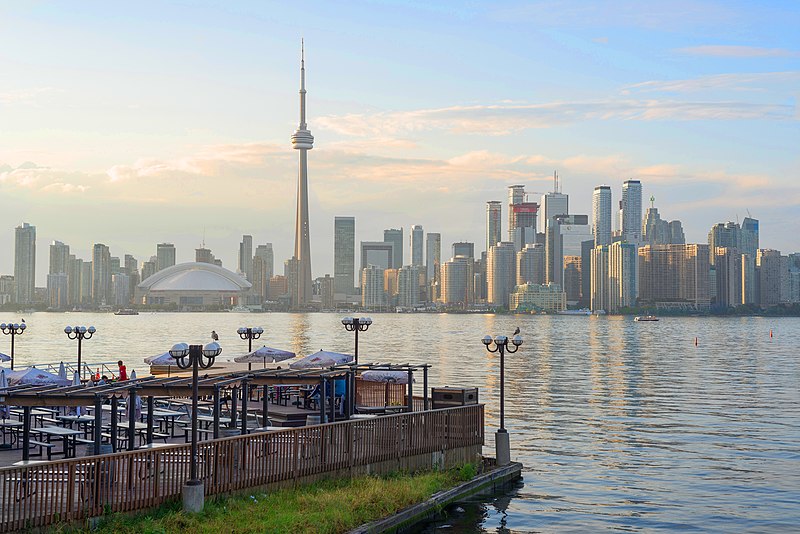
On the north shore of Lake Ontario, Toronto was founded as York by John Graves Simcoe in 1793 and took its present name in 1834, from the Mohawk tkaronto, “where there are trees standing in the water” — a name that first belonged to the fish weirs at Lake Simcoe, far to the north.
Toronto’s skyline is the 553-metre CN Tower, opened in 1976 and the world’s tallest freestanding structure until 2007, and below it are Fort York, overrun by American troops in 1813, the Victorian brick of the Distillery District, once the largest distillery in the British Empire, and the ferries to the Toronto Islands.
In 1847 about 38,500 Irish famine emigrants landed in a Toronto of only some 20,000 people, more than 1,100 died of typhus, and Ireland Park on the waterfront remembers them with five bronze figures by Rowan Gillespie that answer his famine sculptures on Custom House Quay in Dublin.
3 – Niagara Falls
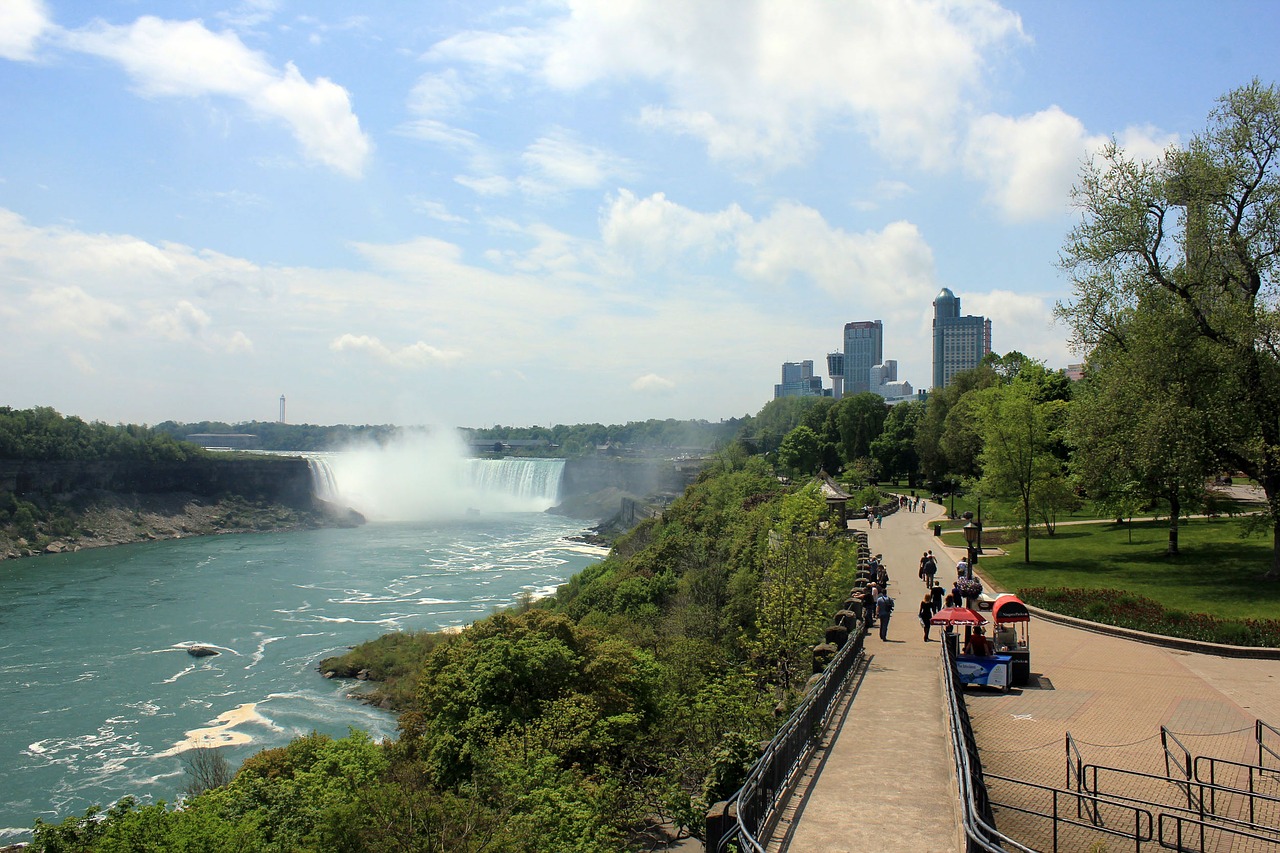
On the Niagara River between Lake Erie and Lake Ontario, the Horseshoe Falls at Niagara — 57 metres high and mostly in Canada — carry about 90% of the river’s water, and in the 12,000 or so years since the ice retreated the falls have cut their way about 11 km back upstream.
See Niagara Falls from the boats that sail into the spray at the foot of the Horseshoe, from the tunnels of Journey Behind the Falls or from Queen Victoria Park, opened in 1888, and visit Lundy’s Lane, where one of the bloodiest battles of the War of 1812 was fought in July 1814.
Under a 1950 treaty up to three-quarters of the river is diverted into hydro tunnels, more at night and in winter, which has slowed the falls’ erosion to about 30 cm a year — and on her 63rd birthday in October 1901, Annie Edson Taylor became the first person to go over the Horseshoe Falls in a barrel and live.
4 – Hamilton
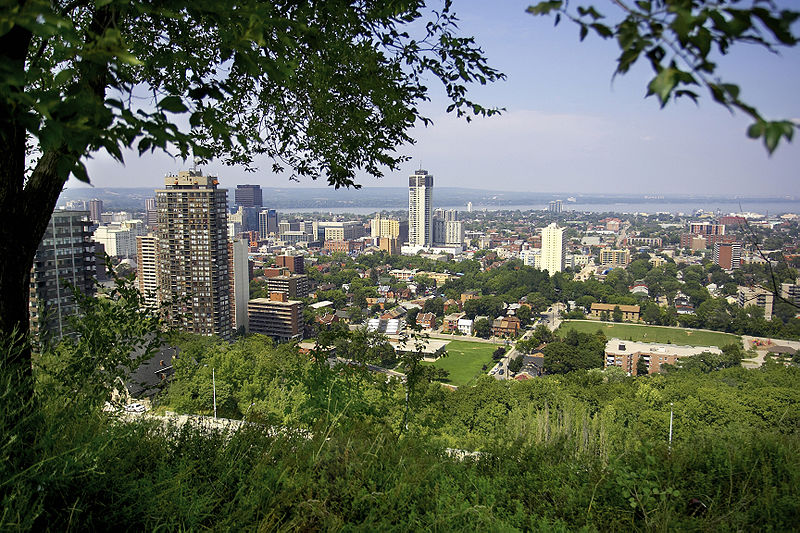
At the western tip of Lake Ontario beneath the Niagara Escarpment, Hamilton grew into Canada’s steel city with Stelco in 1910 and Dofasco in 1912, and at Stoney Creek, now inside the city, about 700 British troops routed a far larger American force in a night attack in June 1813.
Hamilton’s sights are Dundurn Castle, finished in 1835 for Sir Allan MacNab, the Royal Botanical Gardens, the Canadian Warplane Heritage Museum, home to one of only two airworthy Lancaster bombers in the world, and some 100 waterfalls spilling off the Escarpment that locals call “the Mountain”.
On 17 May 1964 the hockey player Tim Horton opened the first Tim Horton Donuts on Ottawa Street North in Hamilton, and a former Hamilton police constable, Ron Joyce, took over the store the next year and built it into a national chain.
5 – London

At the forks of the Thames in south-western Ontario, London was picked by Simcoe in 1793 to be the capital of Upper Canada until his superiors overruled him, and it was finally laid out in 1826, with Victoria Park later made on the grounds of the British garrison that stood here from about 1838 to 1869.
London’s downtown has Victoria Park, the Covent Garden Market, Eldon House of 1834, and Banting House, where at 2 a.m. on 31 October 1920 Frederick Banting scribbled the note on diabetes that set him on the road to insulin — though the experiment it proposed proved wrong and the breakthrough came in Toronto.
Two Irish stories run through London: John Kinder Labatt, from Mountmellick in County Laois, went into partnership in 1847 in a London brewery that still carries his name, and near Lucan, north-west of the city, a mob killed five members of the Donnelly family from Tipperary in February 1880, and nobody was ever convicted.
6 – Algonquin Provincial Park

On the southern edge of the Canadian Shield between Georgian Bay and the Ottawa River, Algonquin Provincial Park was created in 1893, the oldest park in Ontario’s provincial park system, and covers over 7,600 km² of lakes and forest, where — unusually for a park — logging still goes on across roughly two-thirds of it.
Algonquin’s Highway 60 corridor has the trails, campgrounds and lookouts, including the Cache Lake lookout, pictured, above the site of a vanished railway hotel, and beyond the highway lies a backcountry of lakes and portages, home to moose and to wolves of a distinct and much-debated type.
Tom Thomson painted Algonquin’s lakes until he drowned in Canoe Lake in July 1917, three years before his friends formed the Group of Seven — murder theories have circulated ever since, and whether his body lies at Leith or still at Canoe Lake is debated — and the park’s public wolf howls, which drew crowds from 1963, ended in 2022.
7 – Kingston
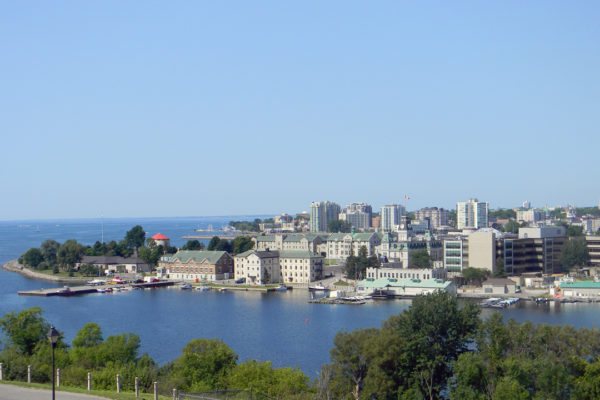
Where Lake Ontario flows into the St Lawrence, at the southern end of the Rideau Canal (entry 1), Kingston was the first capital of the Province of Canada, from 1841 until 1844, when it was judged too small and too exposed to the Americans.
Kingston’s Fort Henry, built in the 1830s to guard the canal’s entrance and never attacked, and its Martello towers are part of the Rideau Canal World Heritage Site, and you can also tour Kingston Penitentiary, in use from 1835 to 2013, see the Royal Military College and take a boat out into the Thousand Islands.
Kingston’s past is not all comfortable: Sir John A. Macdonald, Canada’s first prime minister, grew up and practised law here, and in 2021 the council voted 12–1 to remove his statue from City Park, while a mass grave by the general hospital holds some 1,400 Irish famine emigrants who died of typhus in 1847–48.
8 – Petroglyphs Provincial Park
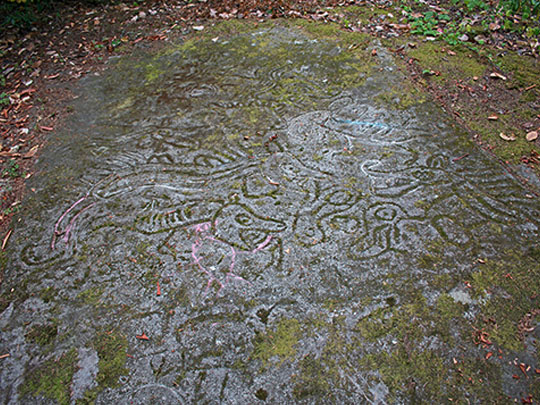
North-east of Peterborough, Petroglyphs Provincial Park protects Kinoomaagewaapkong, “the rocks that teach”, a single outcrop of white marble carved with several hundred Anishinaabe images — turtles, snakes, human and shaman figures and a sun-like form — usually dated to somewhere between about 900 and 1400 CE.
Since 1985 the carvings at Petroglyphs Provincial Park have sat inside a glass-and-steel building that shields them from acid rain, frost and vandals, photographing them is not allowed for spiritual reasons, and the Learning Place visitor centre explains the teachings, with Curve Lake First Nation as the site’s custodian.
The carvings were brought to wide attention by a mining crew in 1954, though a local historian had reported them in 1924, and in spring you can hear an underground stream beneath the rock, understood as the spirits speaking — while the protective building itself was called vandalism by the archaeologist who first recorded the site.
9 – Sainte-Marie among the Hurons
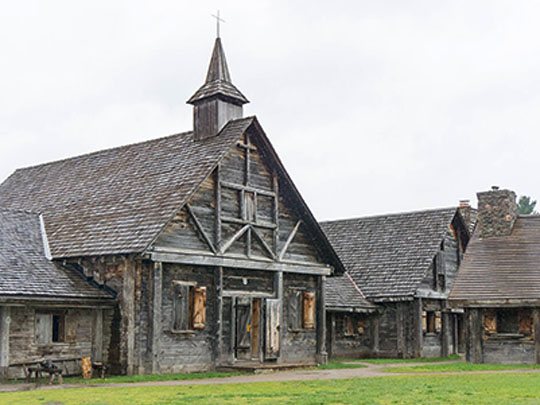
At Midland on Georgian Bay, Sainte-Marie among the Hurons was a French Jesuit mission built in 1639 in Wendake, the homeland of the Wendat, and is usually called the first European community in what is now Ontario.
The reconstructed mission at Sainte-Marie, rebuilt on the original site from 1964 with chapel, longhouse, workshops and palisade, is staffed by costumed interpreters, and the twin-spired Martyrs’ Shrine stands on the hill across the road.
In 1649, with Wendat country devastated by epidemics and then by Haudenosaunee raids, Jean de Brébeuf and Gabriel Lalemant were killed and the Jesuits burned Sainte-Marie themselves rather than leave it — and the lock-like waterway in the reconstruction may never have existed, since some archaeologists read the evidence as a mill race.
10 – Josiah Henson Museum, Dresden
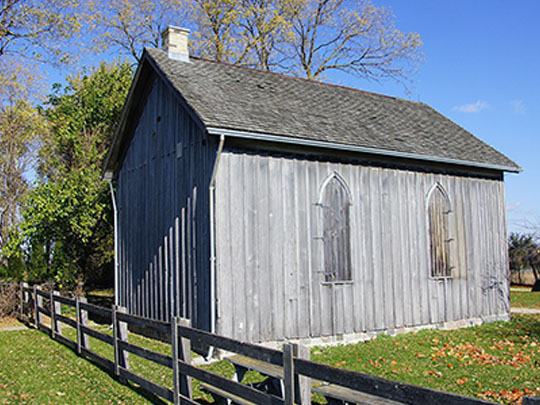
Near Dresden in south-western Ontario, the Josiah Henson Museum of African-Canadian History stands on part of the Dawn Settlement, founded in the early 1840s by Henson, who escaped slavery in Maryland and reached Upper Canada with his wife Charlotte and four children on 28 October 1830.
The Josiah Henson Museum keeps Henson’s house from about 1850, a Pioneer Church of the 1850s, a restored sawmill and the family cemetery, and tells the story of the Underground Railroad and of Dawn, which ran its own school, the British American Institute.
Harriet Beecher Stowe credited Henson’s 1849 memoir with ideas for Uncle Tom’s Cabin, and he was later sold as “the real Uncle Tom”, though he once told a Glasgow audience “My name is not Tom” — he met Queen Victoria at Windsor in 1877, and the museum itself was called Uncle Tom’s Cabin Historic Site until 2022.
11 – The Bruce Peninsula & Fathom Five
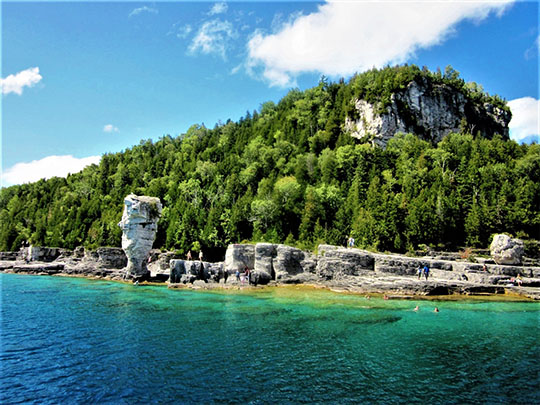
At the northern end of the Niagara Escarpment, between Lake Huron and Georgian Bay, the Bruce Peninsula is the end of the Bruce Trail, Canada’s oldest and longest marked footpath at about 890 km, and its cliffs are part of the oldest forest in eastern North America, with cedars more than a thousand years old.
Bruce Peninsula National Park has the Grotto, a sea cave at Indian Head Cove where parking now has to be booked in season, and from Tobermory boats run out to Fathom Five, Canada’s first national marine conservation area, and to the sea stacks of Flowerpot Island.
Fathom Five’s cold, clear water preserves more than 20 wrecks, including the schooner Sweepstakes, sunk in Big Tub Harbour in 1885, and the steamer City of Grand Rapids, burned there in 1907, both seen from glass-bottomed boats — and Flowerpot Island had three stacks until one fell in 1903.
12 – Manitoulin Island
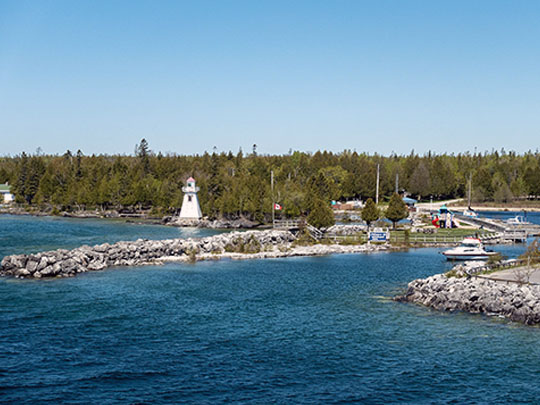
In northern Lake Huron, Manitoulin Island — Mnidoo Mnising, “Spirit Island”, to the Anishinaabe — is at 2,766 km² the largest freshwater island in the world, and in 1862, when most of its chiefs signed it away, Wiikwemkoong refused, which is why its eastern peninsula remains unceded.
Reach Manitoulin on the Chi-Cheemaun ferry from Tobermory or over the 1913 swing bridge at Little Current, then hike the Cup and Saucer cliffs, see Bridal Veil Falls at Kagawong, and come in summer for the Wikwemikong Cultural Festival, held since 1961.
Manitoulin has lakes on an island in a lake, with Treasure Island in Lake Mindemoya usually billed as the largest island in a lake on an island in a lake — and at Sheguiandah, an archaeologist’s 1950s claim of human occupation 30,000 years ago has since been revised to about 10,000.