

Wikimedia Commons / CC-BY-SA-3.0 / GFDL
Capital: Quebec City
Population: 9.05 million+
Language: French
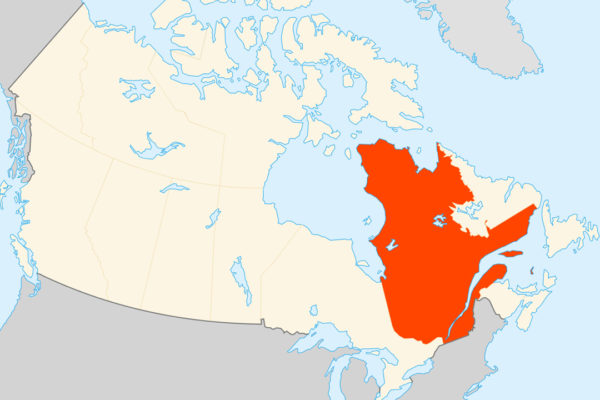
1 – Quebec City (also above)

Where the St Lawrence narrows below Cap Diamant, Quebec City takes its name from the Algonquian kebec, “where the river narrows”, and on 31 December 1775 its walls held off an American attack in which General Richard Montgomery, born at Feltrim near Swords in County Dublin, was killed leading the assault on the Lower Town.
Beyond the Château Frontenac, Quebec City has the star-shaped Citadelle, built in the 1820s and 1830s and still a working garrison and vice-regal residence, the Holy Door of Notre-Dame de Québec, opened in 2013 and described as the only one outside Europe, the Morrin Centre, a former jail turned library, and the 420 m² Fresque des Québécois mural.
Bonhomme has presided over Quebec City’s Winter Carnival since 1955, and just upriver the Quebec Bridge of 1917 still has the world’s longest cantilever span, though collapses in 1907 and 1916 killed some 88 workers, 33 of them Mohawk ironworkers from Kahnawake — the story that Canadian engineers’ iron rings are made from its steel is a myth.
2 – Saguenay
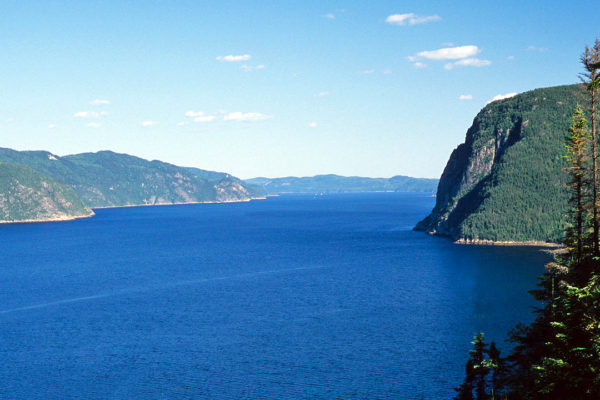
On the Saguenay River north of the St Lawrence, Saguenay is a city of about 145,000 formed in 2002 from Chicoutimi, Jonquière and La Baie, in a region named after the “Kingdom of Saguenay”, the land of gold and rubies that Chief Donnacona described to Jacques Cartier and François I in the 1530s.
Saguenay’s Pulperie de Chicoutimi, a pulp mill from 1896 to 1930, is now a museum, the Petite maison blanche still stands on the rock where it rode out the 1996 flood that killed 10 people, and the fjord runs about 100 km down to Tadoussac through a marine park created in 1998 to protect its belugas.
Cartier’s “diamonds and gold” from his 1541–42 voyage turned out to be quartz and pyrite, and at Arvida, now part of Saguenay and named from the first letters of the Alcoa president Arthur Vining Davis, 270 houses went up in 135 days in 1926 for a smelter that would supply much of the Allies’ aluminium in the Second World War.
3 – Montreal
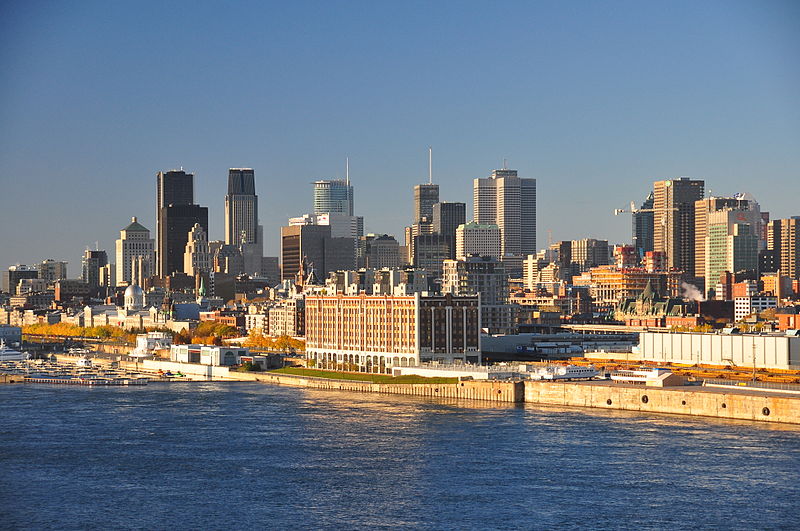
On an island in the St Lawrence, Montreal grew from Ville-Marie, founded in 1642 by Paul de Chomedey de Maisonneuve in the area of Hochelaga, the Iroquoian village Cartier visited in 1535, and it was capital of the Province of Canada until a mob burned its Parliament in 1849.
Walk Old Montreal to the Notre-Dame Basilica, finished in 1829, climb Mount Royal through Frederick Law Olmsted’s park of 1876, take the Underground City, which Guinness lists as the largest pedestrian subway network at more than 32 km, and eat at Jean-Talon Market or Schwartz’s deli, smoking meat since 1928.
Montreal’s Irish roots run deep: there’s a shamrock on the city flag, the St Patrick’s parade has marched since 1824, Notre-Dame’s architect, James O’Donnell from Wexford, is the only person buried in its crypt, and the Black Rock by the Victoria Bridge, raised by the bridge’s workmen in 1859, is inscribed to 6,000 emigrants who died of ship fever in 1847–48.
4 – Gatineau

Across the Ottawa River from Parliament Hill, Gatineau began in 1800 as Wright’s Town, founded by Philemon Wright from Woburn, Massachusetts, who floated the first square-timber raft down to Quebec in 1806, and took its present shape in 2002 when Hull, Aylmer, Gatineau, Buckingham and Masson-Angers merged.
Gatineau’s Canadian Museum of History, Douglas Cardinal’s curving building of 1989, faces Parliament across the river, and behind the city Gatineau Park covers 361 km² of lakes and hills, with Mackenzie King’s estate and, at Harrington Lake, the prime minister’s country residence.
In April 1900 a fire that started in Hull destroyed about two-thirds of the town and jumped the river to Ottawa, Aylmer is named after Lord Aylmer, an Irish-born governor, and the tale that Gatineau honours a fur trader who drowned in the river first appeared in 1897 with no evidence behind it.
5 – Laval
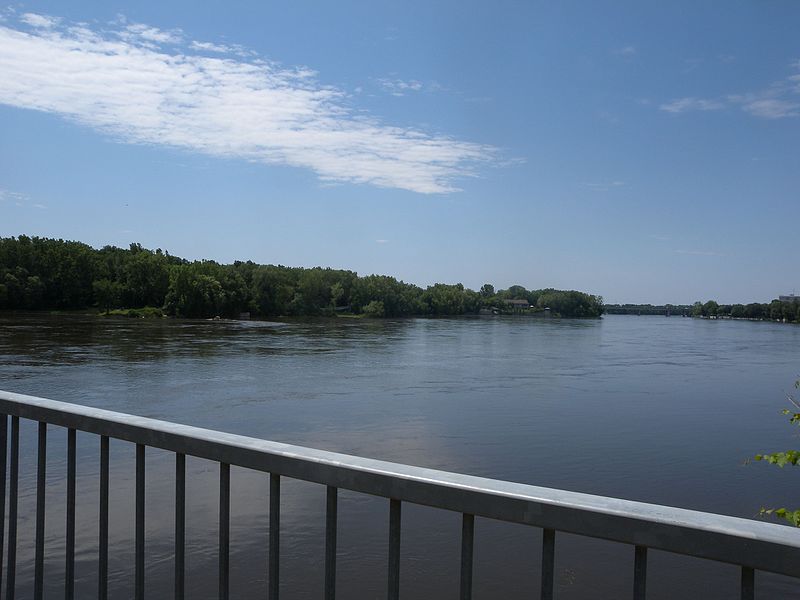
On Île Jésus, the island just north of Montreal (entry 3), Laval is Quebec’s third-largest city, with nearly 440,000 people, created in 1965 from 14 municipalities and named after François de Laval, the first bishop of Quebec, who acquired the island in 1675 and gave it to the Séminaire de Québec.
Laval’s sights include the Cosmodôme space museum, the islands and canoe routes of the Rivière des Mille Îles along its northern shore, and Laval-des-Rapides, pictured, beside the rapids of the Rivière des Prairies, since 2007 a Metro ride from downtown Montreal.
The Jesuits were granted the island in 1636 and named it after their order, and Laval’s longest-serving mayor, Gilles Vaillancourt, in office from 1989 to 2012, pleaded guilty in 2016 to fraud, breach of trust and conspiracy over city contracts and was sentenced to six years.
6 – Montmorency Falls
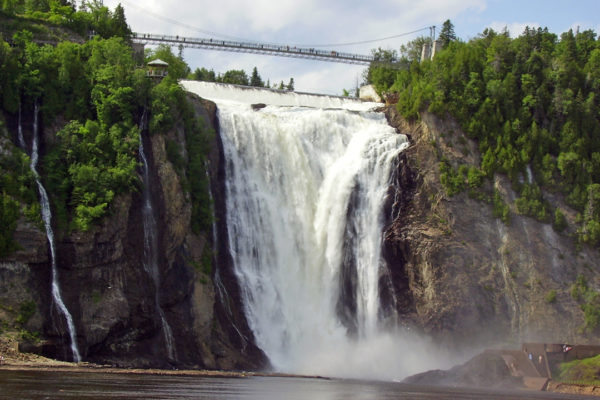
Where the Montmorency River drops into the St Lawrence about 12 km from Old Quebec (entry 1), Montmorency Falls is 83 metres high, some 30 metres higher than Niagara, and on the shore below them on 31 July 1759 Wolfe’s first attack on Quebec failed with heavy British losses.
A cable car, running in some form since about 1901, climbs beside Montmorency Falls to a suspension bridge over the brink, with stairs, a via ferrata and a zip line, and on the clifftop stands the Manoir Montmorency, Governor Haldimand’s villa of about 1781, rebuilt after a fire in 1993, where Queen Victoria’s father, the Duke of Kent, spent summers from 1791 to 1794.
In winter the spray freezes into a cone of ice at the foot of Montmorency Falls, the “pain de sucre”, that people once slid down, and in 1885 power sent from the falls lit 34 arc lamps on Quebec’s Dufferin Terrace, one of North America’s first long-distance transmissions of electricity.
7 – Magog
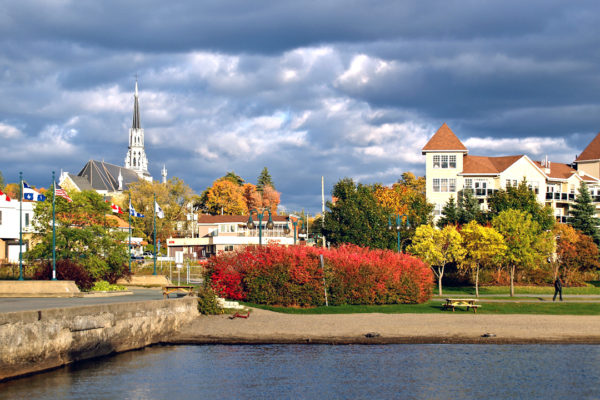
At the northern tip of Lake Memphrémagog, a 51 km lake whose southern end lies in Vermont, Magog takes its name from the Abenaki for “big expanse of water” and was founded by Ralph Merry, who arrived from Massachusetts in 1799 and whose house of 1821 is the town’s oldest.
Magog’s waterfront looks down the lake, Mont-Orford National Park rises to the north-west, and down the shore the Benedictine Abbaye de Saint-Benoît-du-Lac, founded in 1912 by monks from France, sells its cheese and cider.
Calico printing came to Magog in 1884 and Dominion Textile’s cotton mill ran the town for most of the 20th century, and Memphré, the lake’s monster, has been reported since 1816 — the claim that it comes from an ancient Abenaki legend has never been documented.
8 – Mingan
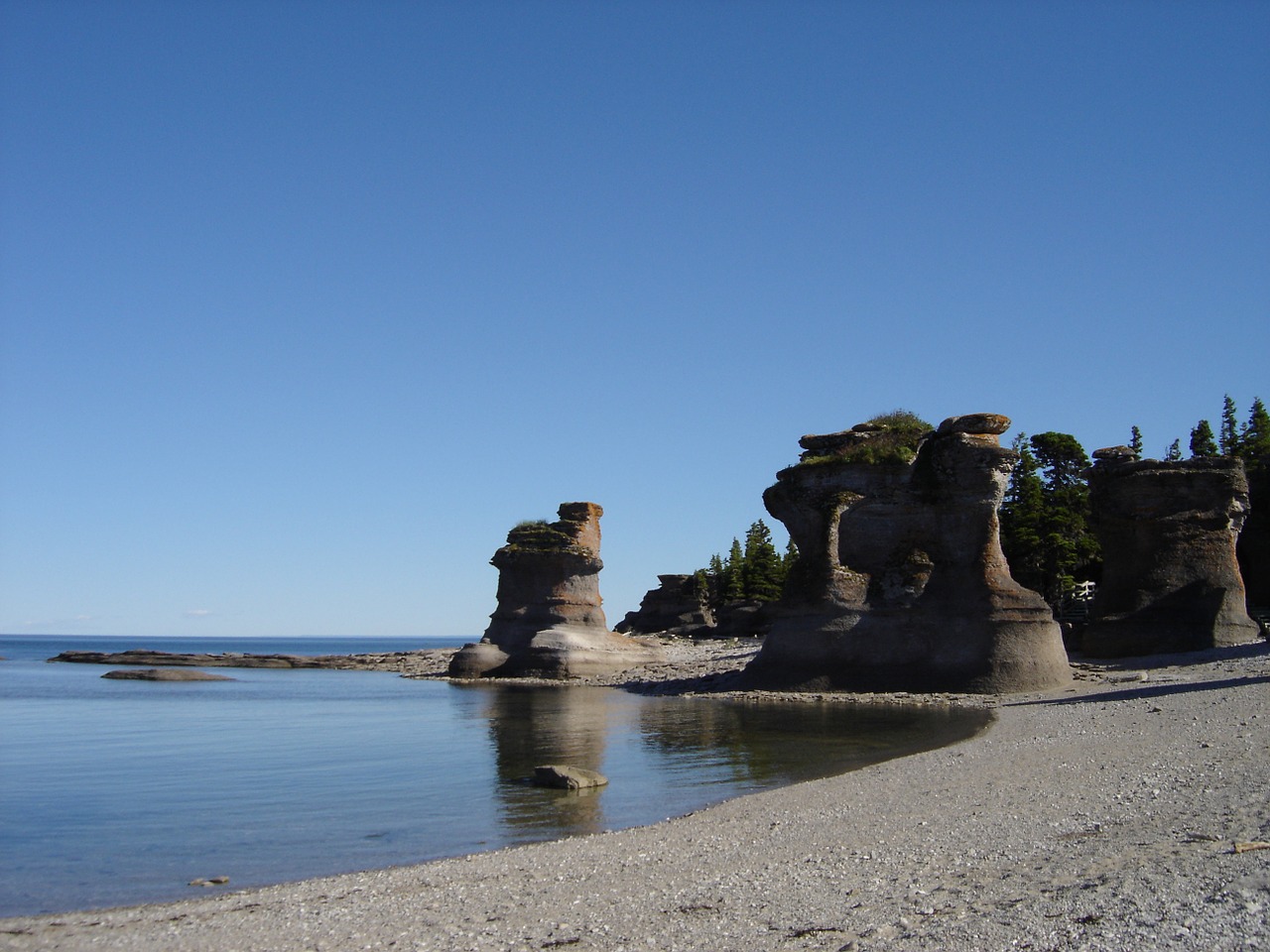
On Quebec’s Côte-Nord facing Anticosti Island, the Mingan Archipelago — some 40 islands and more than 1,000 islets and reefs — has been a national park reserve since 1984, and in 1679 New France granted it to the explorer Louis Jolliet and Jacques de Lalande.
Boats from Havre-Saint-Pierre and Longue-Pointe-de-Mingan take you out among the Mingan Archipelago’s limestone monoliths, the largest concentration of these sea-carved stacks in Canada, cut by waves and frost from rock laid down about 450 million years ago.
The Mingan monoliths exist only because the land is still rising out of the sea after the last ice age, and at Longue-Pointe-de-Mingan the Mingan Island Cetacean Study, founded by Richard Sears in 1979, has spent more than four decades studying the Gulf’s blue whales.
9 – Mont Tremblant

In the Laurentians about 130 km north-west of Montreal, Mont Tremblant — the “trembling mountain” — owes its name to an Algonquin account, recorded by the geologist William Logan in 1859, of a mountain that rumbled and shook underfoot, and the park around it began in 1895 as one of Quebec’s first protected reserves.
Mont Tremblant’s pedestrian village sits at the foot of the ski runs, the national park behind it has lakes, canoe routes and trails, and Circuit Mont-Tremblant, opened in 1964, hosted Formula One’s Canadian Grand Prix in 1968 and 1970.
Joe Ryan, from a wealthy Philadelphia family, opened Mont Tremblant Lodge in February 1939 with what the Canadian Ski Museum counts as Canada’s first chairlift — the often-repeated claim that it was the second in North America doesn’t hold up, since Sun Valley had one by 1936.
10 – Grosse Île and the Irish Memorial
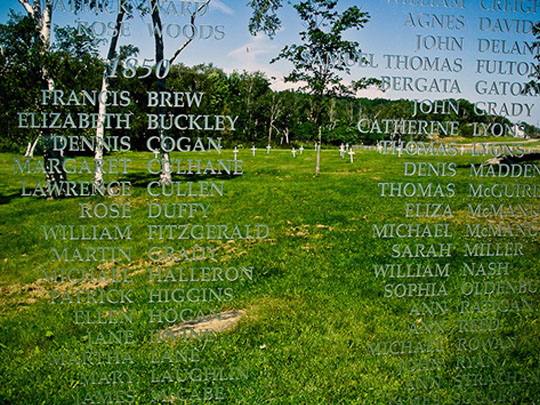
In the St Lawrence about 48 km downstream from Quebec City (entry 1), Grosse Île was Canada’s quarantine station from 1832 to 1937, and in 1847, the worst year of the Famine, nearly 100,000 emigrants came up the river, most of them Irish, and thousands died on the island or on the ships waiting off it.
Summer boats run to Grosse Île from Berthier-sur-Mer, and Parks Canada guides take you through the Lazaretto, the only hospital building left from 1847, the disinfection building of 1892 with its 44 showers, the Irish cemetery, where more than 6,000 lie, many in trenches dug in 1847, and the 1998 glass memorial engraved with the names of the dead.
The Celtic cross raised on Grosse Île by the Ancient Order of Hibernians in 1909 has a mild English inscription and an Irish one that blames “foreign tyrants and an artificial famine”, and hundreds of orphans were taken in by French-Canadian families, among them Patrick and Thomas Quinn from the Mahon estate at Strokestown, County Roscommon, who both became priests.
11 – Tadoussac
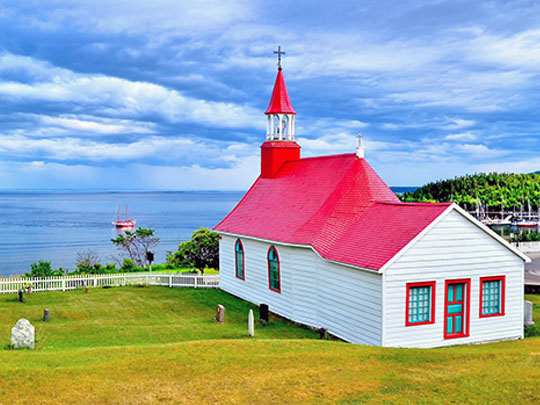

Where the Saguenay fjord meets the St Lawrence, Tadoussac was an Innu gathering and trading place long before Pierre de Chauvin built a trading house here in 1600, and only five of the 16 men he left for that first winter survived, with Innu help.
Tadoussac’s sights are the whale-watching boats heading out into a marine park where 13 whale species have been recorded, a replica of Chauvin’s trading house built in 1942, the red-roofed Hôtel Tadoussac, rebuilt the same year, and the little chapel of 1747–50, one of the oldest wooden churches still standing in Quebec.
In May 1603 Champlain and Gravé Du Pont feasted with Innu, Algonquin and Etchemin leaders just across the Saguenay from Tadoussac, the start of the French alliance with the Innu, and the Hôtel Tadoussac had a starring role in the 1984 film The Hotel New Hampshire, with Jodie Foster and Rob Lowe.
12 – Kanesatake / Kahnawake
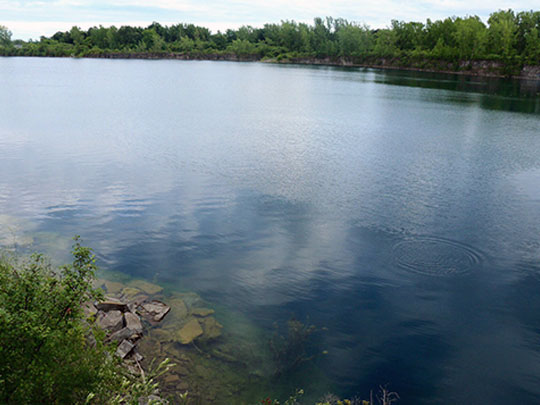

On either side of Montreal, Kahnawake on the south shore of the St Lawrence and Kanesatake on the Lake of Two Mountains are Mohawk communities grown from Catholic missions — Kahnawake, “at the rapids”, on its present site since 1716, and Kanesatake, beside the village of Oka, since 1721, on land the Sulpicians claimed and the Mohawk have contested since the 1780s.
Kahnawake’s St Francis Xavier church holds the relics of Kateri Tekakwitha, who died there in 1680 and in 2012 became the first Indigenous woman from North America to be canonised, and from 1886 Kahnawake’s ironworkers began the tradition that put Mohawk men on the girders of the Empire State Building and the World Trade Center.
In 1990 a plan to extend a golf course onto the Pines at Kanesatake, land that includes a Mohawk burial ground, led to the 78-day Oka Crisis, in which police Cpl Marcel Lemay was killed on 11 July and some 4,000 soldiers were deployed while Kahnawake blocked the Mercier Bridge — and the land is still in dispute.