
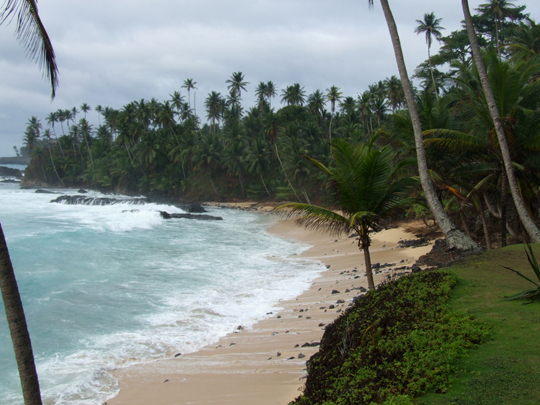
Wikimedia Commons / CC-BY-SA-3.0 / GFDL
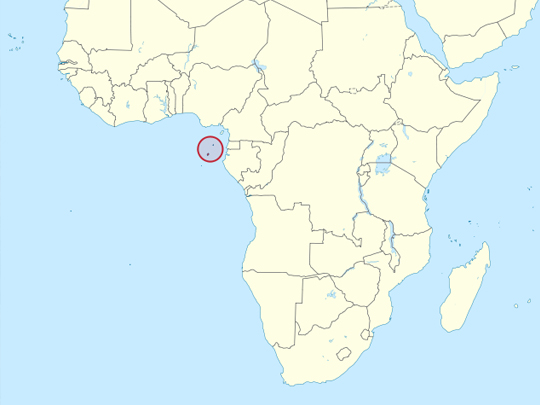
Capital: São Tomé
Population: 235,000+
Language: Portuguese
1 – Ilhéu das Rolas (also above)
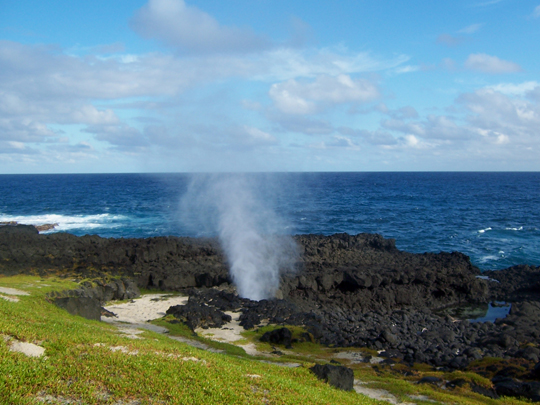
A tiny, palm-covered islet off the southern tip of São Tomé, Ilhéu das Rolas has a claim few places on Earth can match — the Equator runs straight through it, slicing the little island neatly between the Northern and Southern Hemispheres.
A short boat ride and a hot uphill walk bring you to the Marco do Equador, a monument set with a tiled map of the world marking latitude zero, where visitors line up to be photographed with one foot in each hemisphere; beyond it lie quiet beaches, a century-old lighthouse and a single low-key resort.
There’s a strange bonus to standing here: because the Earth bulges at its middle and spins fastest at the Equator, you actually weigh a touch less on Ilhéu das Rolas — around half a percent lighter than you would at the North or South Pole.
2 – Boca do Inferno
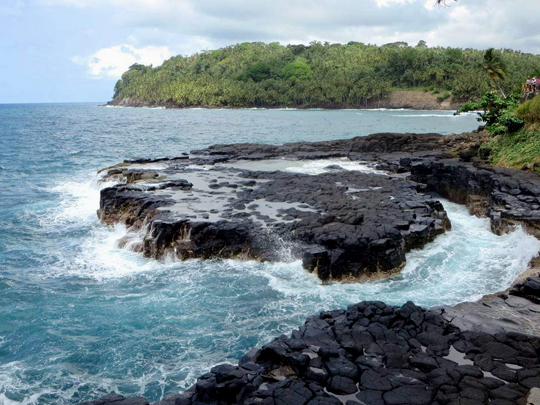
On the rugged northeastern coast of São Tomé, where the island’s black volcanic rock meets the Atlantic, lies the Boca do Inferno — the “Mouth of Hell,” a natural blowhole carved by the relentless sea.
When the swell is up, waves surge into a hidden sea cave and burst back out through a gap in the twisted lava rock, firing spray high into the air with a booming roar; on a calm day it’s a gentle, scenic stop on the coast road, framed by palms, tide pools and ocean views.
The dramatic name is a colonial import — Portuguese settlers borrowed it from the far more famous Boca do Inferno, a thundering sea chasm on the cliffs near Lisbon, one of many corners of these islands that still carry an echo of far-off Portugal.
3 – Pico Cão Grande
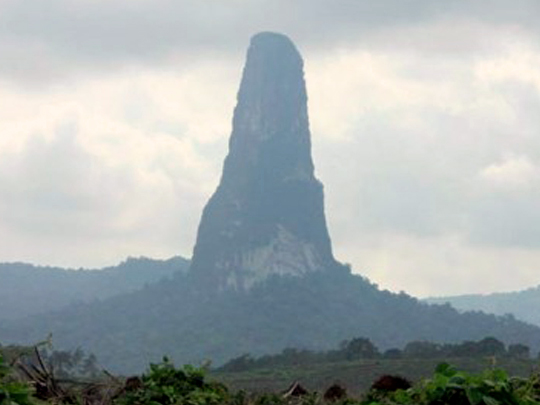
Soaring almost vertically out of the rainforest in the south of São Tomé, the Pico Cão Grande — “Great Dog Peak” — is the island’s most unforgettable sight: a slender, cloud-wreathed stone needle towering some 370m above the jungle canopy.
Named for its resemblance to a giant dog’s tooth, the spire sits deep in the lush Obô rainforest, often half-hidden in mist; most travellers admire it from the coast road or trek to its base, for its sheer, moss-slicked walls are among the hardest and most dangerous climbs in Africa — long thought unclimbable, and first conquered only in 1991.
The peak is really what’s left of a volcano — a “volcanic plug,” the hardened magma that once choked the vent of an ancient volcano; over some 3.5 million years the softer mountain around it wore away, leaving only this bare, tooth-like core standing alone against the sky.
4 – The Chocolate Islands
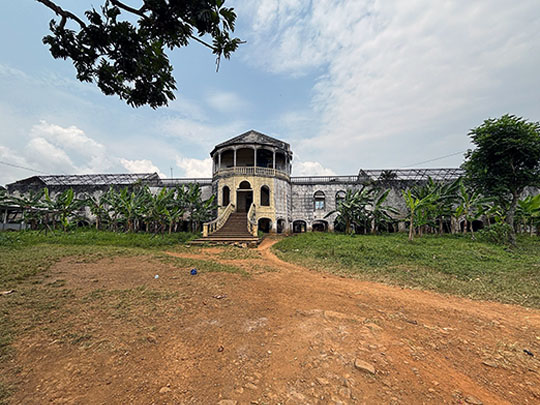
Cocoa was the making of São Tomé: brought by Portuguese planters in the 19th century, it thrived so well in the rich volcanic soil that by around 1900 this tiny nation was the largest cocoa producer on Earth — earning it the enduring nickname the “Chocolate Islands”, – the crop was grown on grand plantation estates called roças, each a self-contained world of factories, workers’ quarters, a church and a hospital.
Two of the greatest can still be visited: Roça Água Izé, on the east coast — the island’s oldest plantation and the birthplace of its cocoa trade, where a crumbling grand hospital and the remains of old railway lines hint at its former scale; and the vast Roça Agostinho Neto near the capital, biggest of them all, its long avenue of faded pastel buildings, church and hospital now half haunting ruin, half living village.
Behind the grandeur lay a brutal secret: the cocoa was harvested by African labourers brought from Angola, Mozambique and Cape Verde and held in conditions of near-slavery — a scandal so notorious that in 1909 Britain’s great Quaker chocolate makers, Cadbury among them, boycotted São Tomé cocoa altogether.
5 – Príncipe
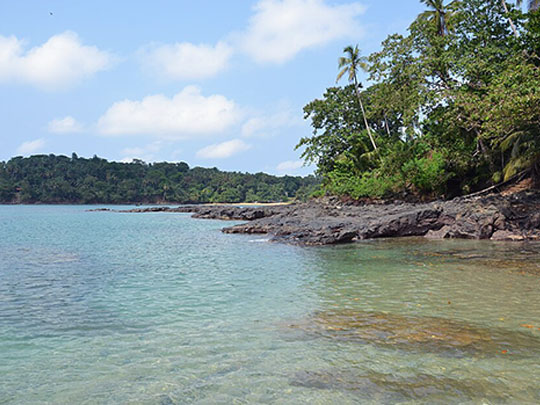

The smaller and older-settled of the two islands lies 150km northeast of São Tomé and holds barely 8,000 people — a jungled volcanic stub of forested peaks and empty bays, so little disturbed that UNESCO made the entire island a Biosphere Reserve in 2012.
Santo António, its capital, is among the smallest places anywhere to be called a city: a handful of pastel streets around a river mouth. Beyond it the road runs out at Banana Beach’s perfect crescent of sand, boats go round to coves reachable no other way, turtles come ashore to nest, and birds found nowhere else on Earth call from the forest.
On 29 May 1919 the astronomer Arthur Eddington set up his telescopes at a plantation here to photograph a total eclipse of the sun and see whether its gravity bent the light of distant stars; cloud almost ruined everything and the sky cleared only at the last — but the plates proved Einstein right, and general relativity was confirmed from a cocoa estate on this island.
6 – São Tomé City
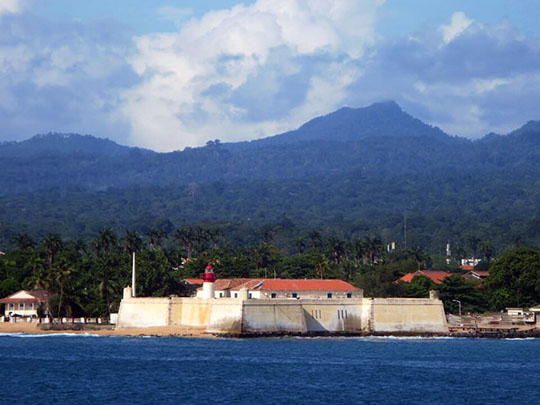
The capital stands on a bay on the northeast coast, laid out in the late 1400s to run the first plantation colony in the tropics — sugar first, worked by enslaved Africans, and cocoa later — which makes this small, shuttered town the administrative root of a system that was eventually copied across the Atlantic world.
The Fort of São Sebastião of 1575 still guards the point and holds the national museum, with its colonial portraits and church silver; behind it are a pink cathedral, streets of louvred verandas in slow decay, and a market piled with breadfruit, palm oil and fish landed that morning.
In February 1953 the colonial governor claimed to have uncovered a plot among the Forros, the descendants of freed slaves, and turned settlers and troops loose on them; hundreds were killed in the days that followed. Batepá is now marked every year as Martyrs’ Day, and it is generally taken as the moment the country’s independence movement began.