

The COVID-19 pandemic
Wikimedia Commons / CC-BY-SA-3.0 / GFDL

The first cases of a novel coronavirus were detected in Wuhan, China, in late December 2019.
On 30 January 2020, the World Health Organization declared a Public Health Emergency of International Concern, and on 11 March it characterised COVID-19 as a pandemic.
That same period brought a cascade of disruptions in a matter of days: the NBA suspended its season, actor Tom Hanks announced he had tested positive, and the United States imposed sweeping travel bans.
Countries around the world went into lockdown, closing schools, offices, and borders, and the global economy tipped into its sharpest contraction since the Great Depression.
The virus altered the basics of daily life — how people worked, learned, shopped, and gathered — with mask-wearing and social distancing becoming near-universal.
By early December, confirmed cases had passed 65 million worldwide and the global death toll had crossed 1.5 million.
Australia’s Black Summer bushfires
Wikimedia Commons / CC-BY-SA-3.0 / GFDL
.jpg)
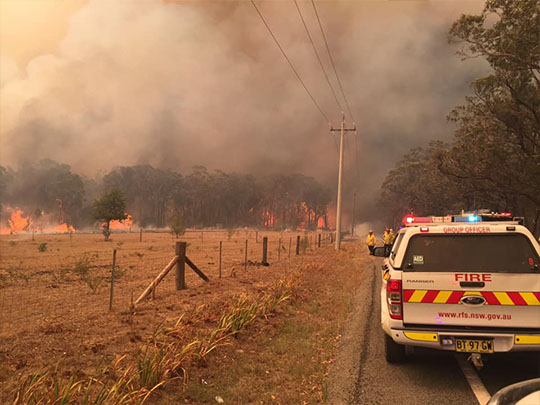
Fires that began in mid-2019 raged into the early months of 2020 in a season that became known as the Black Summer.
They were fuelled by Australia’s hottest and driest year on record, and burned roughly 24 million hectares — an area larger than the United Kingdom.
Thirty-three people died directly, including several firefighters, and more than 3,000 homes were destroyed.
The toll on wildlife was severe: the WWF later estimated that nearly three billion animals were killed or displaced, with koalas among the worst affected.
Kangaroo Island, off the coast of South Australia, was devastated, with around half of it burned.
Smoke from the fires drifted across the Pacific and circled the globe, and states of emergency were declared before the last major fires were brought under control in March 2020.
The killing of Qasem Soleimani
Wikimedia Commons / CC-BY-SA-3.0 / GFDL

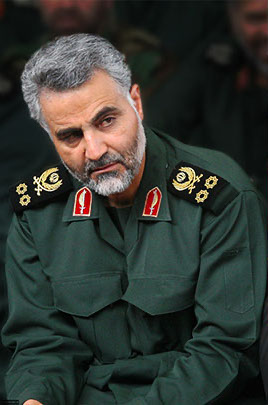
On 3 January, a United States drone strike near Baghdad airport killed Qasem Soleimani, commander of Iran’s Quds Force, along with Iraqi militia leader Abu Mahdi al-Muhandis and several others.
The strike was ordered by President Donald Trump, and the Pentagon said it was carried out to disrupt planned attacks on American personnel.
Iran’s supreme leader, Ayatollah Ali Khamenei, vowed “severe revenge” and declared three days of national mourning, while Iraq’s parliament voted to expel foreign troops from the country.
On 8 January, Iran fired ballistic missiles at two Iraqi bases housing US soldiers.
That same night, amid the heightened tensions, Iranian air defences mistakenly shot down Ukraine International Airlines Flight PS752 shortly after it took off from Tehran, killing all 176 people on board.
After initially denying involvement, Iran admitted several days later that its forces had brought the plane down.
Kobe Bryant’s death
Wikimedia Commons / CC-BY-SA-3.0 / GFDL

On 26 January, a Sikorsky S-76B helicopter crashed into a hillside in Calabasas, California, in heavy fog.
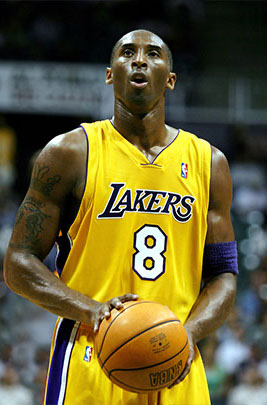
All nine people on board were killed, including basketball icon Kobe Bryant, 41, and his 13-year-old daughter Gianna.
They were travelling to a youth basketball game at Bryant’s Mamba Sports Academy, and the other victims included baseball coach John Altobelli, his wife and daughter, two more of Gianna’s teammates and family members, and the pilot.
Bryant had spent his entire 20-year NBA career with the Los Angeles Lakers, winning five championships and an MVP award.
His death prompted an outpouring of grief worldwide, with landmarks including the Burj Khalifa and the Empire State Building lit in the Lakers’ purple and gold.
A public memorial for Bryant and his daughter was held at the Staples Center on 24 February.
Brexit becomes real
Wikimedia Commons / CC-BY-SA-3.0 / GFDL

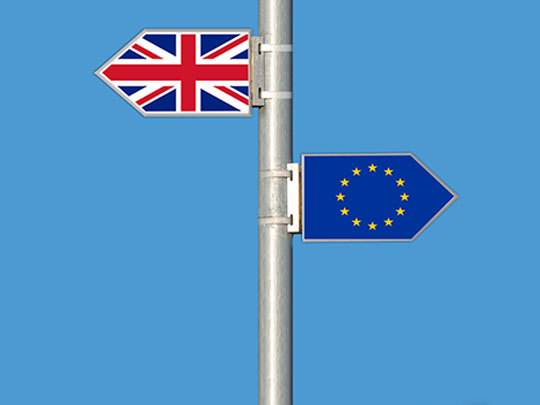
At 11pm GMT on 31 January, the United Kingdom formally left the European Union after 47 years of membership, becoming the only member state ever to withdraw.
Departure was followed immediately by a transition period, during which the UK continued to follow EU rules while remaining in the single market and customs union.
The move ended three and a half years of political turmoil that had followed the 2016 referendum.
The transition period ended on 31 December 2020, when the UK left the single market and customs union.
A UK-EU trade and cooperation agreement was reached on 24 December, just days before the deadline. The Irish border, and arrangements to keep it open, sat at the heart of the negotiations throughout.
George Floyd protests
Wikimedia Commons / CC-BY-SA-3.0 / GFDL
.jpg)
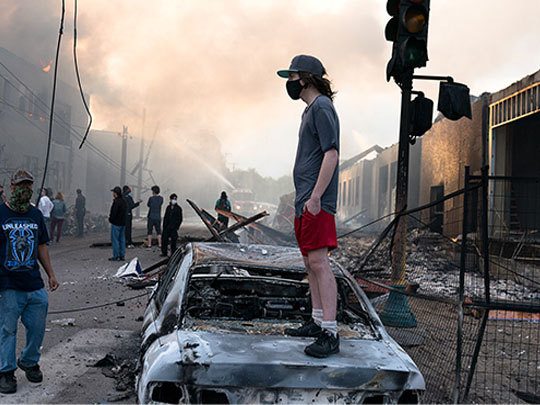
On 25 May, George Floyd, an unarmed Black man, died in Minneapolis after police officer Derek Chauvin knelt on his neck for more than nine minutes.
A bystander video of his final minutes, filmed by 17-year-old Darnella Frazier, spread rapidly across social media.
It set off the largest racial-justice protests in the United States since the civil rights era, with demonstrations continuing through the summer.
The movement crossed borders, sparking protests in dozens of countries and prompting the removal of some statues linked to slavery and colonialism.
Many of the demonstrations took place under the constraints of the ongoing pandemic.
Chauvin was charged with murder, and three other officers were charged with aiding and abetting; Chauvin was convicted the following year.
SpaceX launches astronauts
NASA / CC-BY-SA-3.0 / GFDL
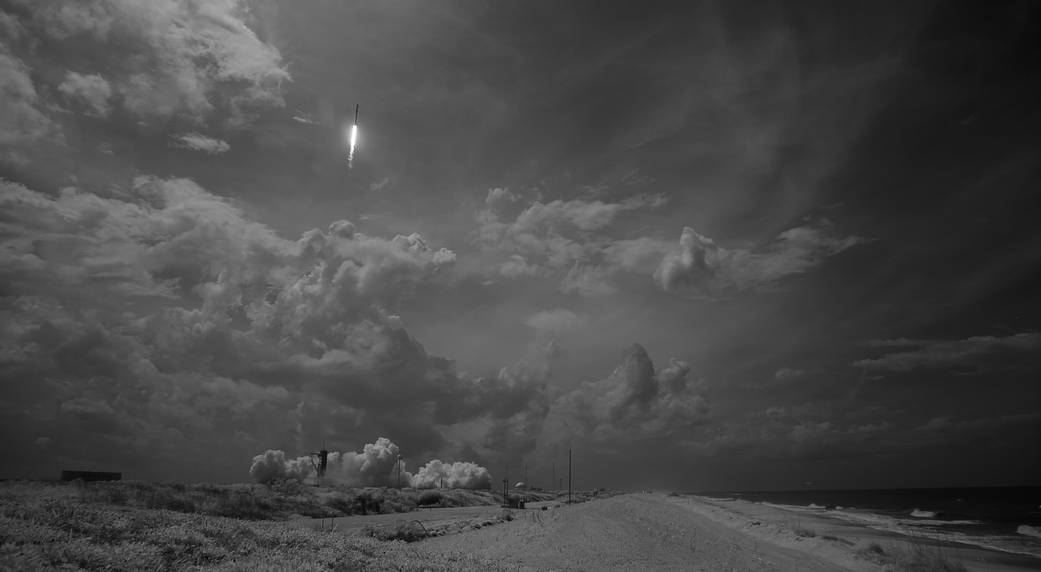
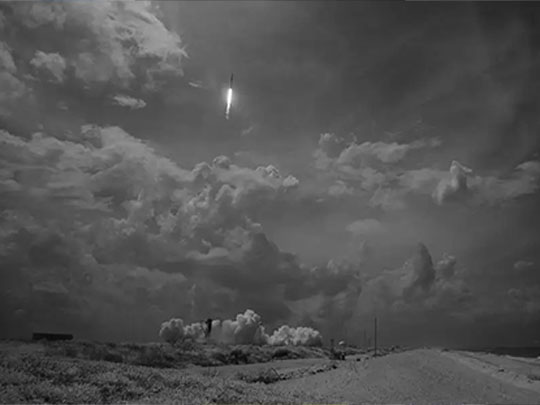
On 30 May, a SpaceX Falcon 9 rocket lifted off from Kennedy Space Center in Florida carrying NASA astronauts Bob Behnken and Doug Hurley.
Their Crew Dragon capsule, on the mission known as Demo-2, docked with the International Space Station about 19 hours later.
It was the first launch of astronauts from US soil since the Space Shuttle was retired in 2011, ending nearly a decade of reliance on Russian rockets to reach the station.
It was also the first time a private company had sent humans into orbit.
Following tradition, the crew named their capsule — choosing Endeavour, after the Space Shuttle both men had previously flown.
Behnken and Hurley returned to Earth on 2 August, splashing down in the Gulf of Mexico after roughly two months in space.
The Beirut port explosion
Wikimedia Commons / CC-BY-SA-3.0 / GFDL

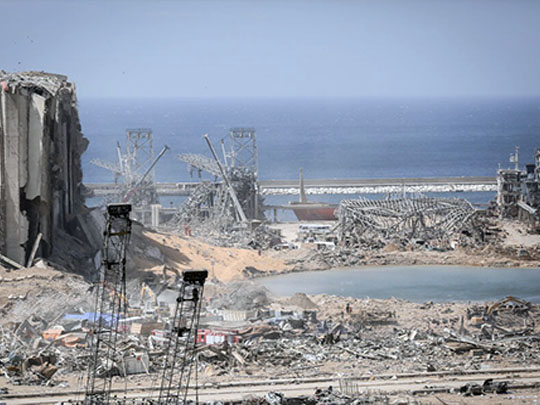
On 4 August, roughly 2,750 tonnes of ammonium nitrate detonated at the Port of Beirut.
The chemical had been stored unsafely in a warehouse for about six years, after being confiscated from a ship, despite repeated warnings about the danger.
The blast was one of the largest non-nuclear explosions ever recorded, and was felt as a small earthquake.
More than 200 people were killed, around 7,000 were injured, and an estimated 300,000 were left homeless as the explosion tore through large parts of the city. Property damage was estimated in the billions of dollars.
The disaster struck a country already in the grip of a severe financial crisis, and the public anger it unleashed led Prime Minister Hassan Diab and his cabinet to resign within days.
War over Nagorno-Karabakh
Wikimedia Commons / CC-BY-SA-3.0 / GFDL

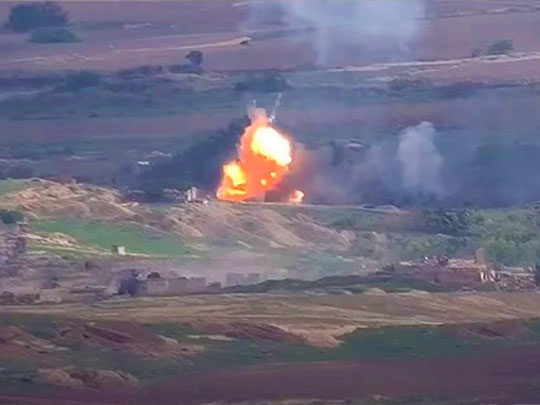
On 27 September, fighting erupted between Armenia and Azerbaijan over the disputed enclave of Nagorno-Karabakh, reigniting a conflict frozen since the 1990s.
Over 44 days of war, Azerbaijan — backed by Turkey and making heavy use of combat drones — broke through Armenian lines and made significant territorial gains.
Its forces captured the strategically important town of Shusha, prompting both sides to agree to a ceasefire.
Several thousand people were killed during the fighting. Russia brokered the ceasefire agreement, signed on 9 November by the leaders of Armenia, Azerbaijan, and Russia.
Under its terms, Armenia ceded control of territory it had held for decades, and roughly 2,000 Russian peacekeepers were deployed to the region.
The US presidential election
Wikimedia Commons / CC-BY-SA-3.0 / GFDL

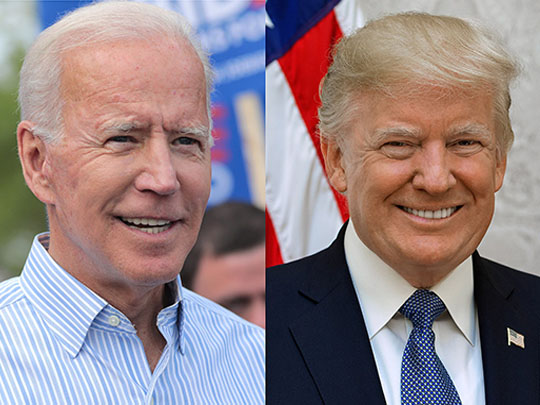
Held on 3 November against the backdrop of the pandemic, the US presidential election drew the highest voter turnout by percentage since 1900.
Joe Biden defeated the incumbent, Donald Trump, winning 306 electoral votes to 232. Biden received more than 81 million votes — the most ever cast for a presidential candidate — while Trump’s total was the second-highest on record.
A record surge of mail-in ballots slowed the count in several states, and major news outlets did not project Biden as the winner until the morning of 7 November.
Trump refused to concede and repeatedly claimed, without evidence, that the election had been stolen; officials across both parties found no evidence of widespread fraud.
Biden’s running mate, Kamala Harris, became the first woman, and the first woman of colour, elected vice president of the United States.
The first COVID vaccines arrive
Wikimedia Commons / CC-BY-SA-3.0 / GFDL
.jpg)
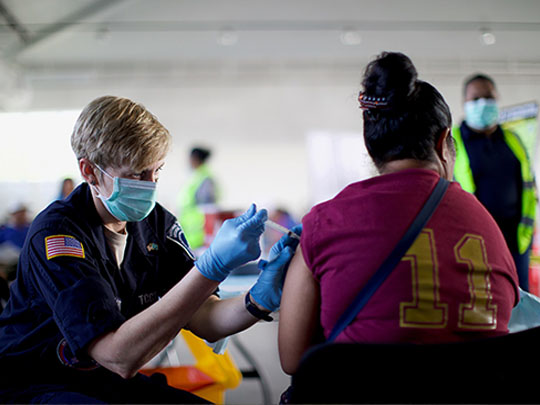
Effective COVID-19 vaccines were developed, tested, and approved within a year of the virus emerging — a process that normally takes many years.
On 2 December, the United Kingdom became the first country to approve the Pfizer-BioNTech vaccine for general use, after trials reported it was about 95% effective.
On 8 December, Margaret Keenan, a 90-year-old grandmother, became the first person in the world to receive an approved dose outside a clinical trial, at a hospital in Coventry.
It was the first vaccine using mRNA technology to be cleared for human use. Other vaccines followed in quick succession, including those from Moderna, Oxford-AstraZeneca, and Russia’s Sputnik V.
The rollouts began even as case numbers and death tolls continued to climb around the world.