
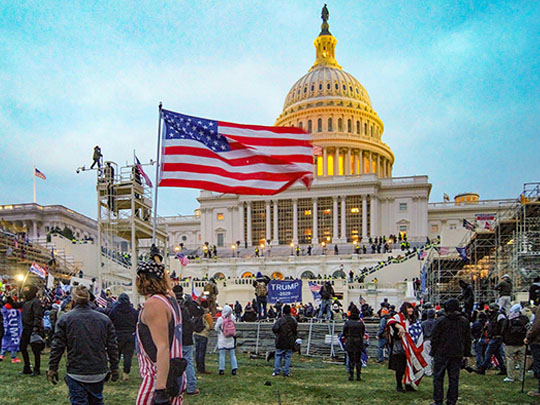
The storming of the US Capitol
Featured image: Wikimedia Commons — 2021 storming of the United States Capitol
The year was six days old when American democracy had one of its most alarming days in living memory.
On 6 January, as Congress met to certify Joe Biden’s election win, a mob of Donald Trump’s supporters stormed the US Capitol — egged on by Trump’s own false claims, at a rally minutes earlier, that the election had been stolen.
The mob sought to keep Trump in power by preventing Congress from counting the Electoral College votes to confirm the victory of president-elect Joe Biden.
Rioters smashed through barricades and windows, ransacked offices, and sent lawmakers and Vice President Mike Pence scrambling into hiding. The mob shouted “Hang Mike Pence!” and had a noose erected outside.
Five people died in or shortly after the chaos, and the building wasn’t cleared for hours. The electoral vote count was completed by the following morning, with Pence declaring the final vote count in favor of President-elect Biden.
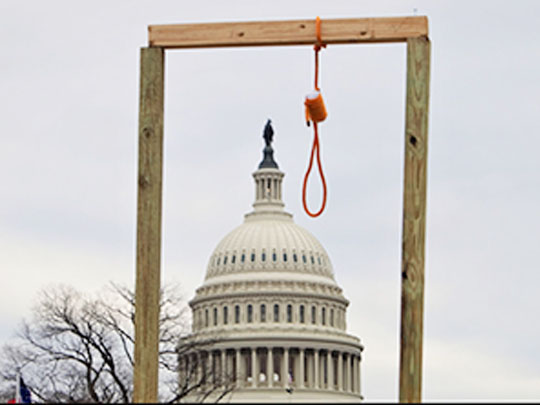
Congress reconvened that same night and confirmed Biden’s victory, but the images of a ransacked Capitol travelled the globe, and hundreds were later charged with federal crimes.
Of the 1,424 people then charged with federal crimes relating to the event, 1,010 pled guilty, and 1,060 were sentenced, 64% of them to jail time.
On January 20, 2025, upon taking office again, Trump granted clemency to all January 6 rioters, including those convicted of violent offenses but excluding himself.
Myanmar’s military coup
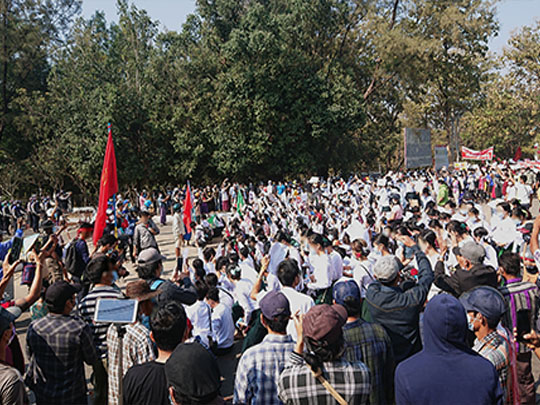
Featured image: Wikimedia Commons — 2021 Myanmar protests
Just hours before Myanmar’s newly elected parliament was due to sit, the military seized the country back.
On 1 February, generals detained the elected civilian leader Aung San Suu Kyi, President Win Myint, and much of her party, declaring a year-long state of emergency and handing power to armed-forces chief Min Aung Hlaing.
Their justification — unproven fraud in the 2020 election — had already been rejected by the country’s own election commission.
What followed was extraordinary: millions joined a nationwide Civil Disobedience Movement dubbed the “Spring Revolution,” with the three-finger salute as its symbol.
The security forces answered with live ammunition, killing hundreds of protesters and tipping the nation toward a grinding civil war that still hasn’t ended.
Perseverance and Ingenuity reach Mars
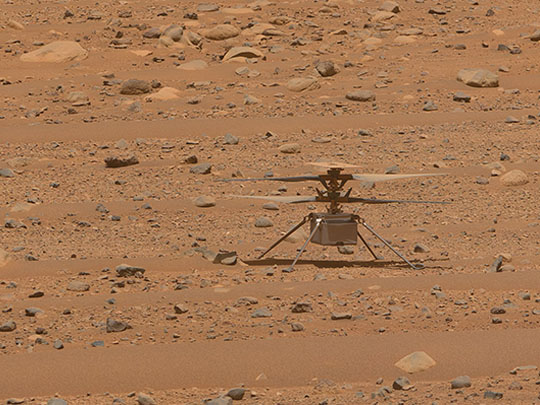
Featured image: NASA — Perseverance lands on Mars
On 18 February, after a seven-month journey, NASA’s car-sized Perseverance rover touched down in Jezero Crater to hunt for signs of ancient microbial life and stash rock samples for a future return to Earth.
It arrived during a genuinely busy Martian season — the United Arab Emirates’ Hope orbiter and China’s Tianwen-1 mission both reached the planet the same month.
Tucked under the rover’s belly was a tiny 1.8kg helicopter called Ingenuity, and on 19 April it pulled off something never done before: the first powered, controlled flight by an aircraft on another world.
NASA called it a “Wright Brothers moment,” and the little chopper went on to fly dozens more times.
The ship that blocked the world
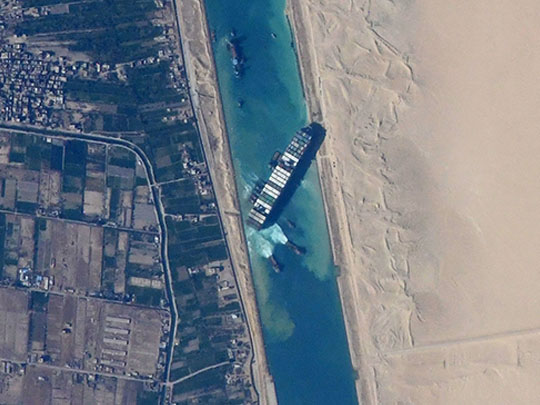
Featured image: Ever Given in the Suez Canal

On 23 March, the Ever Given — a 400-metre container ship as long as the Empire State Building is tall — was caught by strong winds and wedged itself diagonally across the Suez Canal, one of the busiest shipping arteries on Earth.
For six days it sat there, immovable, while more than 400 ships piled up at both ends and an estimated $9 billion of trade was held up every single day.
Salvage crews threw everything at it: dredgers clawing sand from the bow, a flotilla of tugboats, and finally a helpful spring tide that freed it on 29 March.
The saga exposed just how fragile global supply chains had become — and, briefly, gave the internet the meme of the year.
The death of Prince Philip
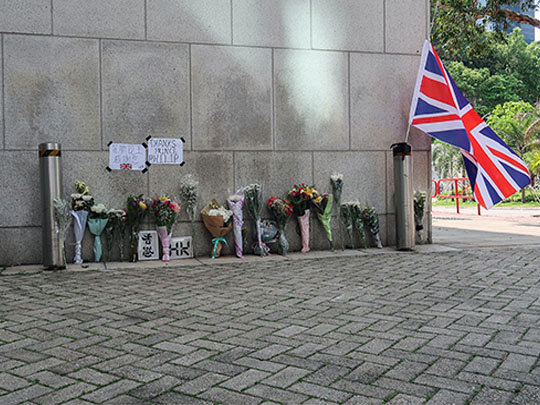
Featured image: Wikimedia Commons — Prince Philip, Duke of Edinburgh
On 9 April, Prince Philip, the Duke of Edinburgh, died peacefully at Windsor Castle at the age of 99.
He was Britain’s longest-serving royal consort, married to Queen Elizabeth II for 73 years and a constant, sometimes gruff presence at her side through seven decades of change.
His funeral on 17 April was a deliberately scaled-down affair, held under the COVID restrictions of the time.
The enduring image was of the 94-year-old Queen sitting entirely alone in St George’s Chapel, masked and in mourning — a picture that captured the pandemic’s toll as sharply as any.
Derek Chauvin found guilty
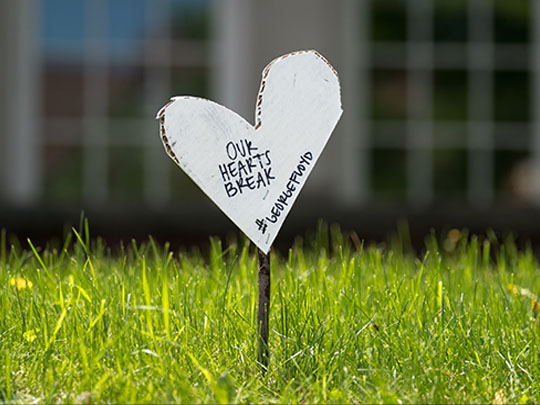
Featured image: Wikimedia Commons — Murder of George Floyd by Lorie Shaull
.jpg)
Almost a year after George Floyd’s killing set off the largest protests in a generation, the reckoning reached a courtroom.
On 20 April, a Minneapolis jury found former police officer Derek Chauvin guilty on all three counts — second-degree murder, third-degree murder and manslaughter — for kneeling on Floyd’s neck for more than nine minutes.
The verdict, delivered after roughly ten hours of deliberation, was watched around the world as a test of whether American justice would hold a police officer accountable.
Crowds outside the courthouse erupted in relief, and tributes gathered at the spot where Floyd died.
Chauvin was later sentenced to more than 20 years in prison.
Crisis upon crisis in Haiti
Featured image: Wikimedia Commons — Jovenel Moïse
For Haiti, 2021 brought back-to-back catastrophes.
In the early hours of 7 July, a squad of gunmen burst into the private home of President Jovenel Moïse in Port-au-Prince, killing him and wounding his wife; investigators later pointed to a group of largely Colombian mercenaries, though the full plot remains murky.
The assassination threw an already unstable country — the poorest in the Americas, gripped by gang violence — into deeper turmoil.
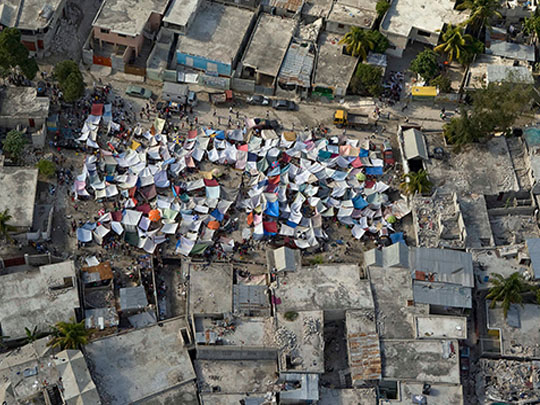
Then, on 14 August, a magnitude-7.2 earthquake tore through the country’s southwest, killing more than 2,200 people and injuring thousands more.
Aid was desperately hard to deliver, with armed gangs controlling key roads. It was a brutal one-two blow to a nation that has never fully recovered from its 2010 quake.
The billionaire space race
Featured image: Wikimedia Commons — Inspiration4
On 11 July, Richard Branson rode his Virgin Galactic space plane to the edge of space, narrowly beating fellow billionaire Jeff Bezos, whose Blue Origin capsule launched nine days later on 20 July carrying 82-year-old aviation pioneer Wally Funk.
Both were brief suborbital hops, offering a few minutes of weightlessness and a curved-Earth view for those who could afford the fare.
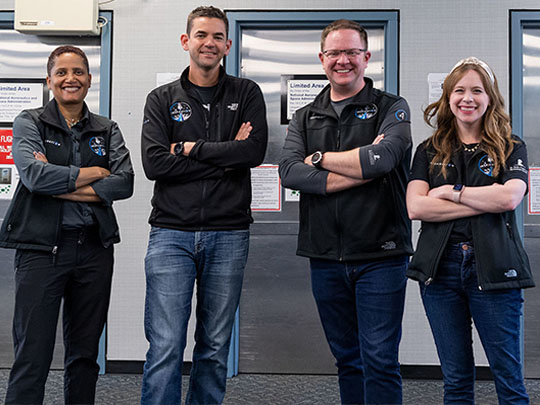
Then in September, Elon Musk’s SpaceX went further, sending the all-civilian Inspiration4 crew on a three-day orbital flight — no professional astronauts aboard.
Together the flights signalled that space tourism had genuinely arrived, even if, for now, only for a wealthy few.
The Tokyo Olympics, a year late
Featured image: Wikimedia Commons — 2020 Summer Olympics
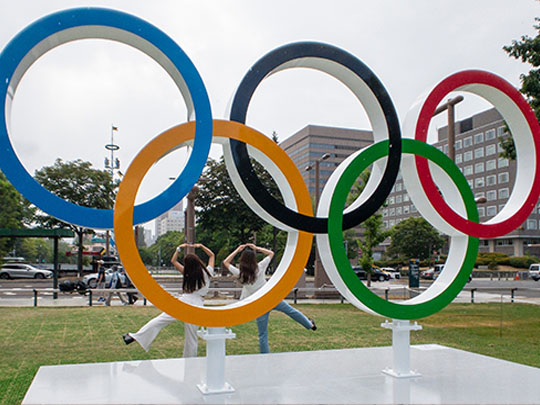
The Games that were supposed to happen in 2020 finally opened on 23 July — the first Olympics ever postponed by something other than war.
Held under a Tokyo state of emergency, they took place in near-empty stadiums, with fans banned and athletes competing without even their families in the stands. The result was a strange, muted spectacle, magnificent and melancholy at once.
One of the defining moments came when American gymnast Simone Biles, the greatest of her generation, withdrew from several events citing her mental health — a decision that sparked a worldwide conversation about the pressure on elite athletes.
For all the oddness, the Games went ahead, and the closing ceremony on 8 August marked the end of one of the most surreal sporting events on record.
The fall of Kabul
Featured image: Wikimedia Commons — 2021 Taliban offensive
As the last US and allied troops withdrew after 20 years, Afghanistan collapsed with stunning speed.
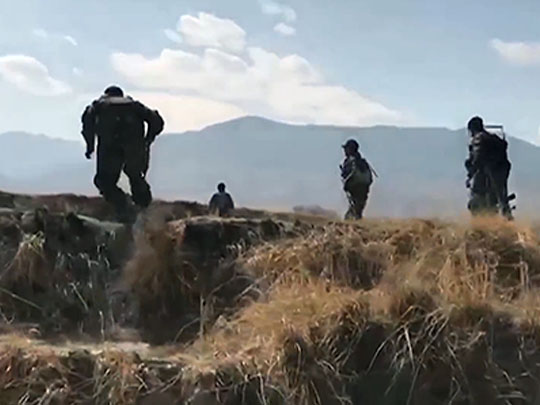
The Taliban swept across the country and entered Kabul on 15 August; President Ashraf Ghani fled, and the Western-backed government simply evaporated.
The scenes at Kabul’s airport were harrowing — thousands of desperate Afghans crowding the tarmac, some clinging to departing military planes.
On 26 August, an ISIS-K suicide bombing at the airport gate killed 13 US service members and around 170 Afghan civilians.
The final American forces left on the night of 30–31 August, ending the longest war in US history and leaving the Taliban back in power two decades after they were toppled.
COP26 in Glasgow
Featured image: Wikimedia Commons — 2021 United Nations Climate Change Conference
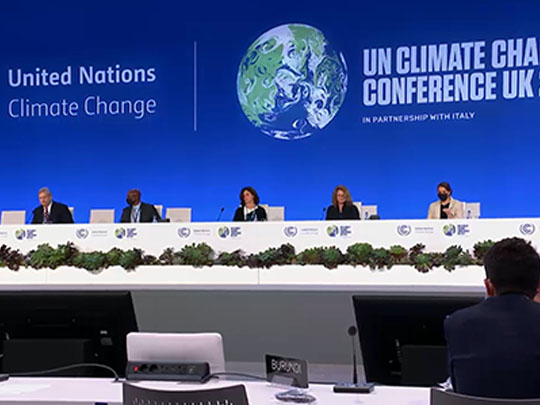
In late autumn, the world’s leaders gathered in Glasgow for the UN climate summit, itself delayed a year by the pandemic.
Running from 31 October to 13 November, COP26 produced the Glasgow Climate Pact — notable as the first agreement in the UN climate process to explicitly name coal and fossil fuels as things to move away from.
In dramatic final-hour scenes, a last-minute intervention led by India, backed by China, softened the wording from “phase out” to “phase down” unabated coal, prompting visible dismay from the summit’s chair.
Supporters argued the deal kept the goal of limiting warming to 1.5°C alive; critics said it fell well short of what the science demands.
Either way, for a fortnight the fight against climate change had the world’s full attention.
Year two of the pandemic: Delta and Omicron
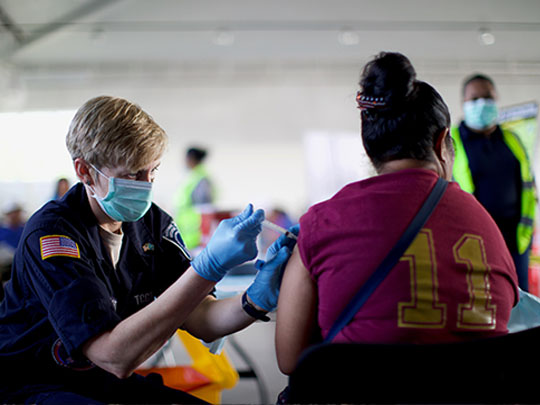
Featured image: Wikimedia Commons — COVID-19 pandemic
The virus, of course, never left. Year two brought a mass global vaccine rollout and, for many, a cautious return to something like normal life — but it also brought new variants that kept resetting the clock.
The highly transmissible Delta variant drove fresh waves through the middle of the year, filling hospitals even in heavily vaccinated countries.
Then, in late November, scientists in South Africa flagged a new, heavily mutated version of the virus, and on 26 November the World Health Organization designated it a variant of concern and named it Omicron.
Within weeks it had been detected on continents around the world, triggering fresh travel bans and a nervous end to the year. The pandemic, it was clear, was not done yet.