
The Hamas attack and the Gaza war
Featured image: Wikimedia Commons — 2023 Israel–Hamas war
On 7 October 2023, the militant group Hamas led a surprise assault on southern Israel from the Gaza Strip, attacking by land, air, and sea.
Around 1,200 people, most of them civilians, were killed, and about 251 were taken hostage into Gaza. It was the deadliest single day in Israel’s history, among the victims were attendees of the Nova music festival and residents of kibbutzim near the border.
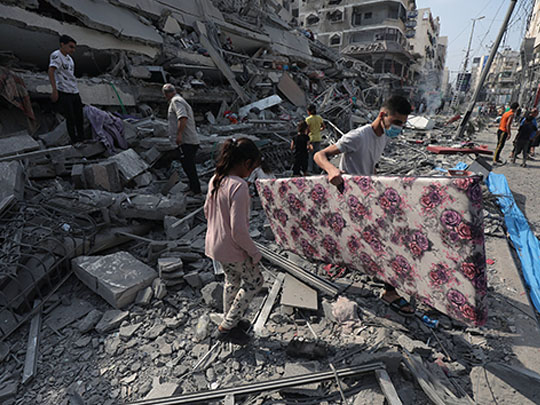
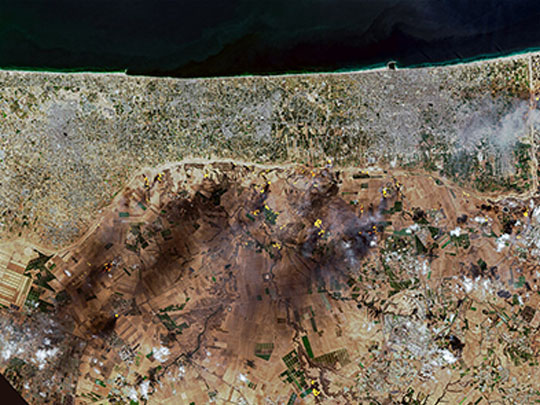
Israel declared war, imposed a complete siege on Gaza, cutting food, fuel, and electricity, and launched an intense bombing campaign followed by a ground invasion from late October.
Wikimedia Commons — 2023 Israel–Hamas war
By the end of the year, more than 20,000 Palestinians had been killed in Gaza, according to the territory’s health ministry, and much of the north had been reduced to rubble.
A week-long truce in late November saw some hostages exchanged for Palestinian prisoners before the fighting resumed.
The Turkey-Syria earthquake
Featured image: Wikimedia Commons — 2023 Turkey–Syria earthquakes
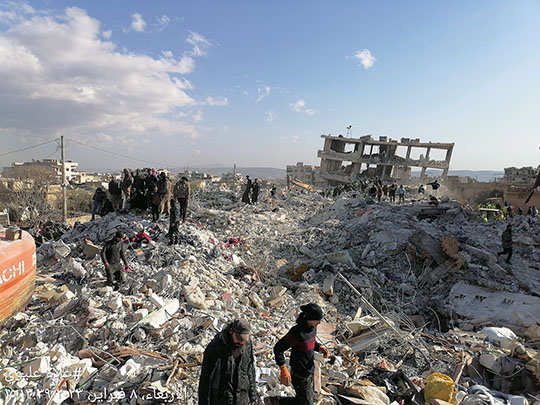
Before dawn on 6 February 2023, a magnitude-7.8 earthquake struck southern Turkey near the Syrian border, followed about nine hours later by a second quake of magnitude 7.5.
The tremors ruptured along the East Anatolian Fault while most people were asleep, collapsing tens of thousands of buildings across a vast area.
More than 59,000 people were killed — over 53,000 in Turkey and several thousand in Syria — making it one of the deadliest earthquakes of the century.
The disaster struck a region already sheltering millions of Syrian refugees displaced by that country’s long civil war. Freezing winter conditions hampered the rescue effort, though survivors were pulled from the rubble for many days afterward.
It was Turkey’s deadliest earthquake in modern times, with damage estimated in the tens of billions of dollars.
The generative AI boom

Featured image: Wikimedia Commons — ChatGPT
Artificial intelligence became the year’s defining technology story, driven by the chatbot ChatGPT.
Released by the company OpenAI at the end of 2022, it reached an estimated 100 million users within two months, making it the fastest-growing consumer app in history to that point.
In March, OpenAI released a more powerful model, GPT-4, and rival firms rushed out their own systems, including Google’s Bard, Microsoft’s Copilot, and Anthropic’s Claude.
The tools could generate human-like text, images, and computer code from simple prompts, disrupting fields from education to software development.
Their rapid spread prompted intense debate over misinformation, job losses, copyright, and the longer-term risks of the technology.
Governments began moving toward regulation, and some leading AI researchers publicly warned about its potential dangers.
Banking turmoil: Silicon Valley Bank and Credit Suisse

Featured image: Wikimedia Commons — Collapse of Silicon Valley Bank
In March, the sudden collapse of Silicon Valley Bank triggered the most serious banking scare since the 2008 financial crisis.
The California lender, a major banker to technology start-ups, failed on 10 March after a rush of customers withdrew their deposits — the second-largest bank failure in US history.
Signature Bank collapsed two days later, and US regulators stepped in to guarantee deposits and calm the panic.
The turmoil spread across the Atlantic: Switzerland’s second-largest bank, Credit Suisse, was hastily taken over by its rival UBS in a rescue deal on 19 March.
In the United States, First Republic Bank later failed and was sold to JPMorgan Chase. Central banks and governments moved quickly to contain the crisis and prevent a wider collapse of confidence.
War erupts in Sudan
Featured image: Wikimedia Commons — War in Sudan (2023–present)
On 15 April 2023, fighting erupted in Sudan’s capital, Khartoum, between the national army and the paramilitary Rapid Support Forces.
The two sides were led by General Abdel Fattah al-Burhan and General Mohamed Hamdan Dagalo, known as Hemedti, former allies who had jointly seized power in a 2019 coup but had fallen out over control of the country.
The RSF traced its origins to the Janjaweed militias blamed for atrocities in the Darfur region two decades earlier. The war quickly spread beyond Khartoum, and reports emerged of ethnically targeted killings in Darfur.
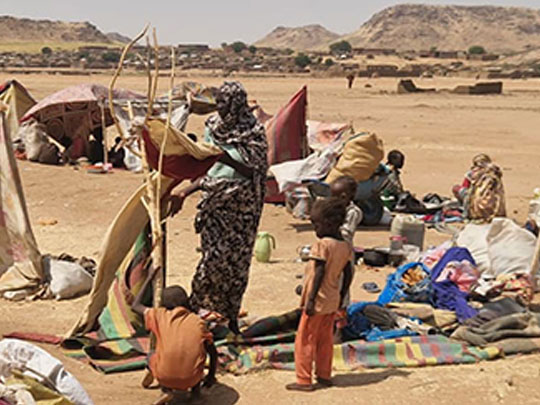
It grew into one of the world’s largest humanitarian crises, displacing millions of people and pushing parts of the country toward famine.
Repeated international efforts to broker a ceasefire failed to stop the fighting.
The coronation of King Charles III

Featured image: Wikimedia Commons — Coronation of Charles III and Camilla
On 6 May 2023, King Charles III was crowned at Westminster Abbey in London, alongside his wife, Queen Camilla.
It was the United Kingdom’s first coronation in 70 years, following the death of Queen Elizabeth II the previous September.
The ancient ceremony, conducted by the Archbishop of Canterbury, saw Charles crowned with the St Edward’s Crown, which is used only for coronations.
At 74, he became the oldest person ever to be crowned in British history.
The event drew a congregation of around 2,200 guests, including some 100 heads of state, and was watched around the world, followed by a weekend of celebrations and pageantry across the country.
The Titan submersible implosion

Featured image: Wikimedia Commons — Titan submersible
On 18 June 2023, a small submersible named Titan lost contact during a dive to the wreck of the Titanic in the North Atlantic.
The vessel, operated by the US company OceanGate, was carrying five people, including the company’s chief executive, Stockton Rush.
Also on board were British billionaire Hamish Harding, French Titanic expert Paul-Henri Nargeolet, and Pakistani businessman Shahzada Dawood along with his 19-year-old son, Suleman.
A multinational search over several days drew intense global media attention, with early hopes that the crew might be found alive.
On 22 June, officials announced that debris had been discovered near the Titanic, indicating the submersible had suffered a catastrophic implosion that killed all five.
The disaster raised serious questions about the safety of the experimental carbon-fibre craft, and OceanGate suspended its operations.
Turmoil in Russia: the Wagner mutiny
Featured image: Wikimedia Commons — Wagner Group rebellion
Russia’s war in Ukraine ground on through 2023, with a much-anticipated Ukrainian summer counteroffensive making only limited gains. The most dramatic developments, though, came from within Russia itself.
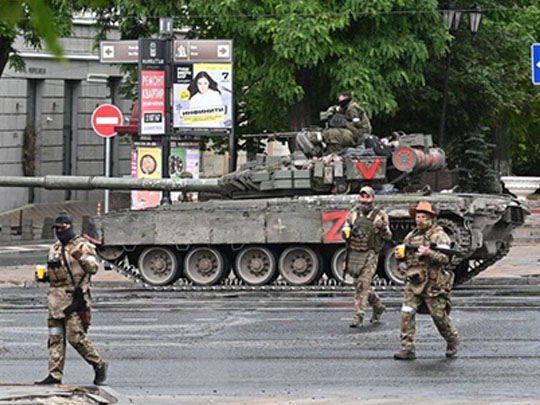
On 23 June, Yevgeny Prigozhin, head of the Wagner mercenary group, launched an armed mutiny against the country’s military leadership.
His fighters seized the army headquarters in the southern city of Rostov-on-Don and advanced to within around 200km of Moscow before abruptly halting.
The revolt — the most serious challenge to President Vladimir Putin’s rule in more than two decades — ended after a deal was brokered by the president of neighbouring Belarus.
Exactly two months later, on 23 August, Prigozhin was killed when his private jet crashed north of Moscow, along with nine others; Western officials suspected the crash was no accident.
The Maui wildfires
Featured image: Wikimedia Commons — 2023 Hawaii wildfires
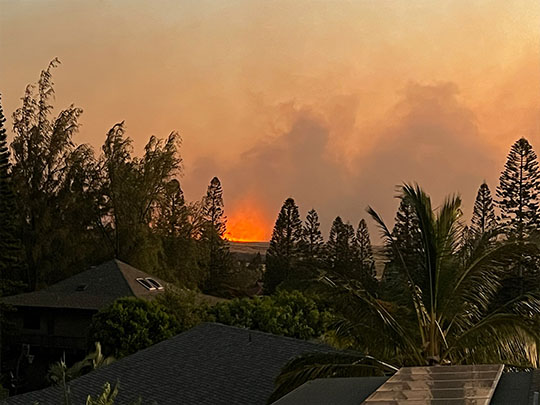
On 8 August 2023, wind-driven wildfires swept across the Hawaiian island of Maui.
Fanned by strong winds linked to a distant hurricane, the flames raced through the historic town of Lahaina, once the royal capital of the Hawaiian Kingdom.
Around 100 people were killed, making it the deadliest wildfire in the United States in more than a century.
Much of Lahaina was reduced to ash, with more than 2,000 structures destroyed; some residents were forced to flee into the ocean to escape the flames.
Damage was estimated at around $5.5 billion. The islands’ main electricity provider later faced lawsuits alleging that its power lines had helped spark the blaze.
India’s milestones: most populous nation and a Moon landing
Featured image: Wikimedia Commons — Chandrayaan-3
India passed two major milestones in 2023.
In April, United Nations figures indicated that it had overtaken China to become the world’s most populous country, with more than 1.4 billion people, even as China’s population began to fall for the first time in decades.
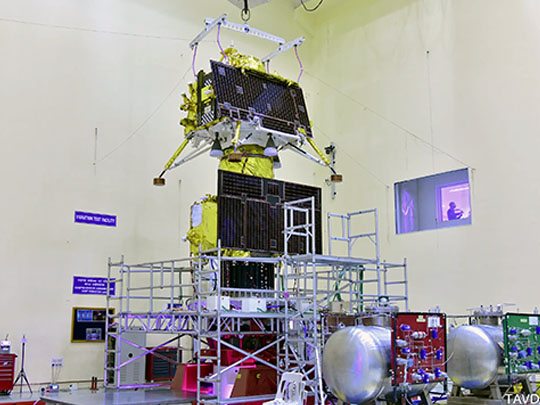
Then, on 23 August, India’s Chandrayaan-3 spacecraft touched down near the Moon’s south pole.
The landing made India the first country to reach that unexplored region, and only the fourth ever to achieve a soft landing on the Moon, after the Soviet Union, the United States, and China.
It came just days after a Russian probe aiming for the same area spun out of control and crashed.
The mission, run by the Indian space agency ISRO, was celebrated across the country with prayers and public gatherings.
Disaster in North Africa: Morocco and Libya
Featured image: Wikimedia Commons — 2023 Marrakesh–Safi earthquake
In September, two catastrophes struck North Africa within days of each other.
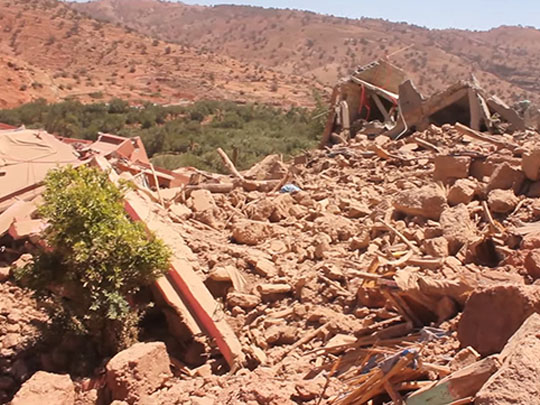
On 8 September, a magnitude-6.8 earthquake hit the High Atlas Mountains south of Marrakesh in Morocco, killing around 2,900 people and damaging historic buildings, including in Marrakesh’s old city; it was the region’s strongest quake in over a century.
Two days later, on the night of 10–11 September, the Mediterranean storm Daniel dumped torrential rain on eastern Libya.
Two dams above the city of Derna collapsed, releasing a wall of water that swept entire neighbourhoods, and thousands of people, into the sea.
Roughly a quarter of Derna was destroyed, and death-toll estimates ranged from around 6,000 to more than 11,000, with thousands more missing.
The scale of the Libyan disaster was widely attributed to years of conflict and neglected infrastructure in a country split between rival governments.
The hottest year on record
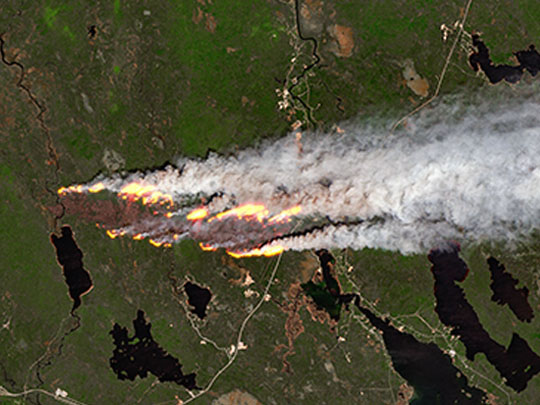
Featured image: Wikimedia Commons — 2023 Canadian wildfires
2023 was confirmed as the hottest year on record, with the global average temperature running about 1.48°C above pre-industrial levels, according to the European Union’s Copernicus climate service.
It was the first year in which every single day was more than 1°C warmer than the pre-industrial average.
The heat fuelled extremes around the world, including Canada’s worst wildfire season on record, which burned a vast area and blanketed cities across North America — including New York — in smoke.
Ocean temperatures reached record highs, and Antarctic sea ice fell to a record low.
At the COP28 climate summit, held in Dubai and concluding in mid-December, nearly 200 nations agreed for the first time to “transition away from” fossil fuels.
The agreement, which set no binding requirements, also called for tripling the world’s renewable energy capacity by 2030.