

Donald Trump Wins a Second Term as President
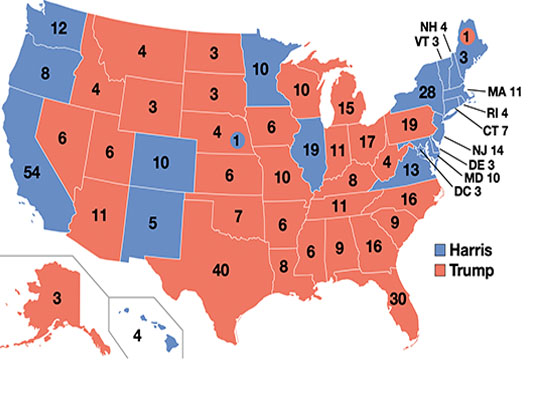
On 5 November, Donald Trump defeated Vice President Kamala Harris to win a second term as president of the United States. In May, a New York jury had found him guilty on 34 counts of falsifying business records over a hush-money payment, making him the first former US president to be convicted of a crime. On 13 July, a gunman opened fire at a Trump rally in Butler, Pennsylvania, wounding Trump in the ear and killing a firefighter in the crowd, Corey Comperatore, before he was shot dead by a Secret Service sniper.
After his performance in a debate with Trump in June raised questions about his age, President Joe Biden withdrew from the race on 21 July and endorsed Harris. Trump won all seven of the closely contested swing states, taking 312 electoral votes to Harris’s 226, and he also won the national popular vote.
He became the second president, after Grover Cleveland in the 1890s, to serve two terms that were not consecutive. He was sworn in on 20 January 2025, ten days after a New York judge gave him an unconditional discharge, which carried no penalty.
You can read more about Donald Trump’s first election in 2016 here.
A Ship Destroys the Francis Scott Key Bridge in Baltimore
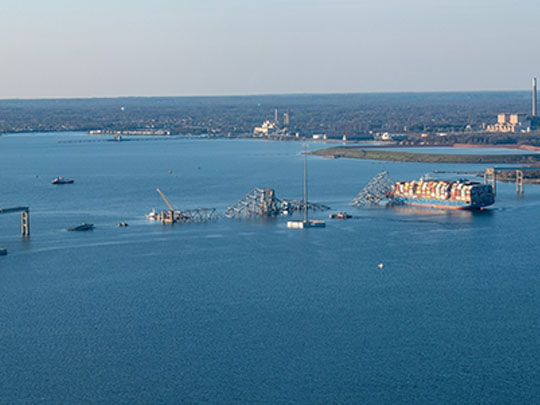
In the early hours of 26 March, the container ship Dali lost power shortly after leaving the port of Baltimore and hit a support pier of the Francis Scott Key Bridge. The 2.6 km bridge, which had opened in 1977, collapsed into the Patapsco River within seconds. Six road workers who were repairing potholes on the bridge were killed.
A mayday call from the ship allowed police to stop traffic from driving onto the bridge moments before the collision. The wreckage blocked the main shipping channel into one of the busiest ports on the US East Coast until June. In 2025, US investigators found that the ship had lost power because of a loose wire in its electrical system.
A Total Solar Eclipse Crosses North America
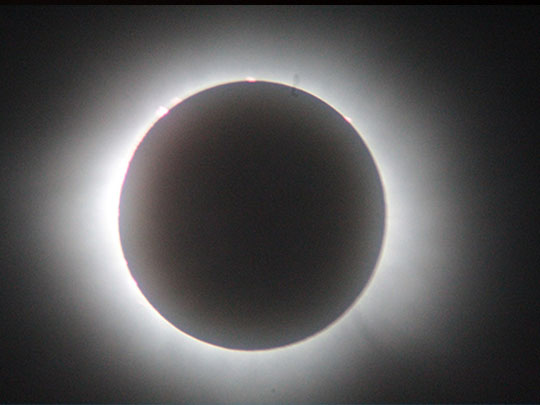
On 8 April, a total solar eclipse crossed North America, from Mexico’s Pacific coast through the United States to eastern Canada. The path of totality, where the Moon completely covered the Sun, ran from Texas to Maine, and about 32 million people in the United States lived inside it. Millions more travelled to towns along the path, and the eclipse was watched by one of the largest audiences ever for an astronomical event.
Near Torreón in Mexico, the total eclipse lasted for 4 minutes and 28 seconds. During totality, the sky darkened and the Sun’s outer atmosphere, the corona, became visible. The next total solar eclipse visible from the mainland United States, apart from Alaska, will take place in 2044.
Half the World Votes in the Biggest Year of Elections
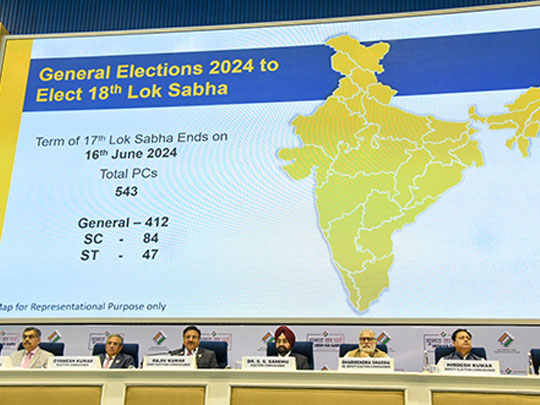
More people voted in 2024 than in any previous year, with elections held in countries that were home to about half the world’s population. India held the largest election in history over six weeks, with more than 640 million votes cast, and Narendra Modi won a third term as prime minister, although his Bharatiya Janata Party lost its majority and had to govern in coalition. In the United Kingdom, Keir Starmer’s Labour Party won 411 seats in the general election on 4 July, ending 14 years of Conservative government.
In South Africa, the African National Congress lost its majority for the first time since the end of apartheid in 1994 and formed a government of national unity. Mexico elected its first woman president, Claudia Sheinbaum, and Indonesia elected the former general Prabowo Subianto.
In the European Parliament elections in June, nationalist and far-right parties won more seats. In many countries, governments lost support as voters faced higher prices after the COVID-19 pandemic.
A Faulty Update Crashes Millions of Computers

On 19 July, a faulty software update from the US cybersecurity company CrowdStrike caused about 8.5 million computers running Microsoft Windows to crash. It was not a cyberattack but an error in a routine update to the company’s Falcon security software, and the affected computers showed the “blue screen of death”. Airlines grounded thousands of flights, and hospitals, banks, broadcasters and government services around the world were disrupted.
Many of the computers could not restart on their own and had to be repaired one by one. In the United States, Delta Air Lines cancelled about 7,000 flights over several days. The cost to Fortune 500 companies alone was estimated at $5.4 billion.
Paris Hosts the Olympic Games

The Summer Olympics were held in Paris from 26 July to 11 August, 100 years after the city last hosted the Games. For the first time, the opening ceremony was held outside a stadium, with about 6,800 athletes travelling along the River Seine on boats in heavy rain. Céline Dion sang from the Eiffel Tower, and the Olympic cauldron was lit beneath a hot-air balloon in the Tuileries Garden.
Beach volleyball was played beside the Eiffel Tower, and the equestrian events were held at the Palace of Versailles. The United States and China each won 40 gold medals, and the United States topped the table with 126 medals in total. Ireland had its most successful Games, winning four gold medals and three bronze.
Daniel Wiffen won the 800 m freestyle, Fintan McCarthy and Paul O’Donovan kept their lightweight double sculls title, and Kellie Harrington became the first Irish boxer to win two Olympic gold medals. Rhys McClenaghan won gold on the pommel horse, Ireland’s first Olympic medal in gymnastics.
Students Topple the Government of Bangladesh
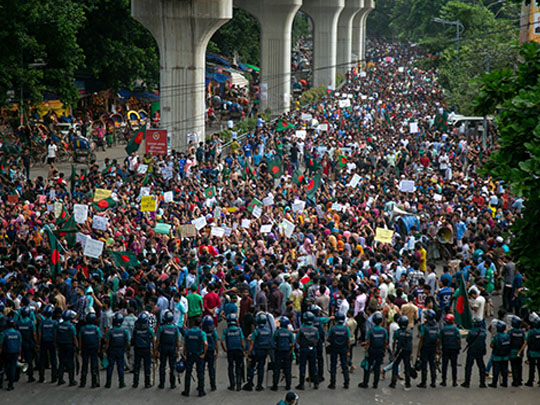
In July, students in Bangladesh began protesting against a system that reserved many government jobs for the descendants of fighters in the 1971 war of independence. The security forces cracked down on the protests, and the demonstrations grew into a nationwide movement against Prime Minister Sheikh Hasina. The United Nations later estimated that up to 1,400 people were killed.
On 5 August, Hasina resigned and fled to India by helicopter, ending 15 years in power, and crowds broke into her official residence in Dhaka. The Nobel Peace Prize winner Muhammad Yunus became head of an interim government on 8 August.
In November 2025, a court in Bangladesh sentenced Hasina to death in her absence for crimes against humanity. In February 2026, the Bangladesh Nationalist Party won the first election since the uprising, and its leader, Tarique Rahman, became prime minister.
Hurricanes Helene and Milton Strike the United States
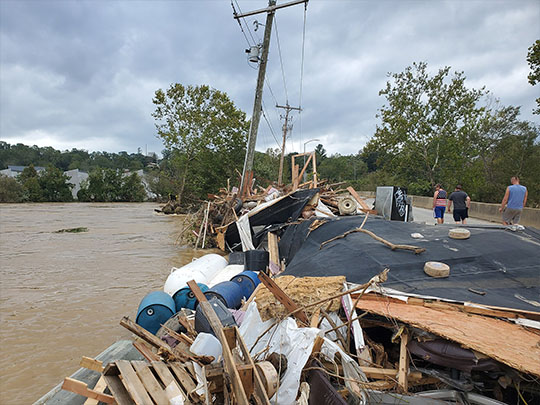
Two powerful hurricanes struck the south-eastern United States within two weeks of each other. Hurricane Helene came ashore in the Big Bend region of Florida on 26 September as a Category 4 storm and moved far inland. It caused severe flooding in the mountains of western North Carolina, around the city of Asheville.
About 250 people were killed in six states, making Helene the deadliest hurricane on the US mainland since Katrina in 2005. On 9 October, Hurricane Milton came ashore near Sarasota, Florida, and caused dozens of tornadoes. Both storms strengthened rapidly over the unusually warm Gulf of Mexico, and together they caused more than $100 billion in damage.
SpaceX Catches a Rocket Booster with Mechanical Arms
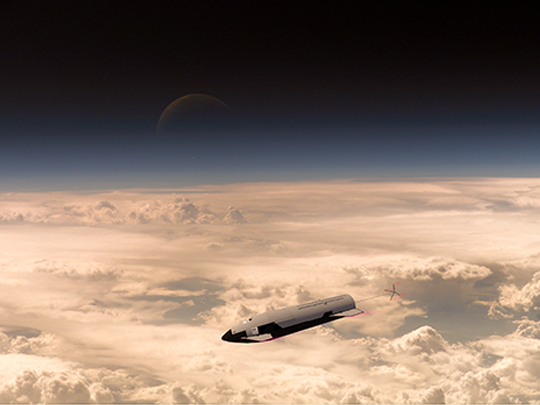
On 13 October, SpaceX launched the fifth test flight of Starship from its Starbase site in Texas. Starship, about 121 metres tall, is the largest and most powerful rocket ever built. About seven minutes after launch, the rocket’s first stage, the Super Heavy booster, flew back to the launch site.
Instead of landing on legs or in the sea, it was caught in mid-air by two giant mechanical arms on the launch tower, nicknamed “chopsticks”. It was the first time a rocket booster had been caught in this way, and it was a step towards SpaceX’s aim of making Starship fully reusable.
The upper stage flew halfway around the world and splashed down in the Indian Ocean as planned. NASA plans to use a version of Starship to land astronauts on the Moon.
South Korea’s President Declares Martial Law

On the night of 3 December, South Korea’s president, Yoon Suk Yeol, declared martial law in a television address, accusing the opposition of “anti-state” activities. It was the first declaration of martial law in South Korea since 1980, and soldiers and police were sent to the National Assembly. Members of the Assembly climbed fences and pushed past troops to reach the chamber, and all 190 members present voted to end martial law.
Yoon withdrew the order about six hours after he had declared it. The National Assembly impeached him on 14 December, and the Constitutional Court removed him from office in April 2025. In February 2026, a court in Seoul found him guilty of leading an insurrection and sentenced him to life in prison.
You can read more about the Gwangju Uprising in South Korea here.
War Spreads Across the Middle East
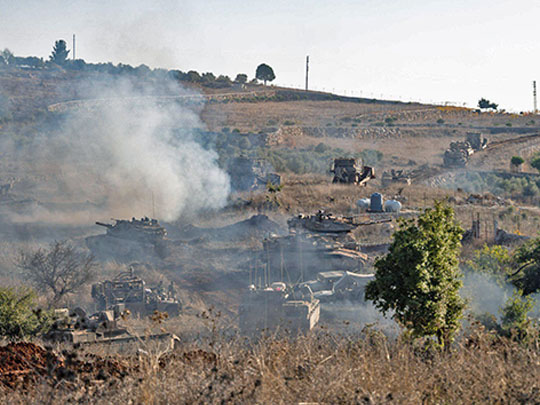
The war in Gaza continued throughout 2024, and by the end of the year more than 45,000 Palestinians had been killed, according to Gaza’s health ministry. On 13 April, Iran launched its first direct attack on Israel, firing more than 300 drones and missiles after an Israeli strike on its embassy compound in Damascus, and almost all were shot down. On 28 May, Ireland, Norway and Spain recognised the State of Palestine.
In September, thousands of pagers and walkie-talkies used by the Lebanese group Hezbollah exploded in an attack attributed to Israel, and on 27 September an Israeli air strike in Beirut killed Hezbollah’s leader, Hassan Nasrallah. Israel invaded southern Lebanon on 1 October, the same day that Iran fired about 180 ballistic missiles at Israel, and Irish soldiers serving with the UN peacekeeping force in southern Lebanon remained at their posts throughout the fighting.
On 16 October, Israeli troops killed the Hamas leader Yahya Sinwar in Rafah. In November, the International Criminal Court issued arrest warrants for Israel’s prime minister, Benjamin Netanyahu, his former defence minister and a Hamas commander, and a ceasefire between Israel and Hezbollah took effect on 27 November.
You can read more about the Hamas attack on Israel in 2023 here.
The Assad Regime Falls in Syria

On 27 November, rebel groups led by Hayat Tahrir al-Sham (HTS) launched a surprise offensive from north-western Syria. Within two weeks they captured Aleppo, Hama and Homs, meeting little resistance from the Syrian army, while Russia was fighting in Ukraine and Hezbollah had been weakened by its war with Israel. On 8 December, the rebels entered Damascus, and President Bashar al-Assad fled to Russia, which gave him asylum.
His fall ended more than 50 years of rule by the Assad family, which began when his father, Hafez al-Assad, took power in 1970. It also ended a civil war that had begun in 2011 and killed hundreds of thousands of people.
Prisoners were freed from jails including Saydnaya, near Damascus, where thousands had been held. The HTS leader, Ahmed al-Sharaa, became Syria’s interim president in January 2025.
You can read more about the start of the Syrian uprising here.
Ireland Holds a General Election
In March, Irish voters rejected two proposed amendments to the Constitution, on the definition of the family and on care in the home, by large margins. Days later, Leo Varadkar announced that he would step down, and on 9 April Simon Harris of Fine Gael became Taoiseach. At 37, Harris was the youngest person to hold the office.
In the general election on 29 November, Fianna Fáil won 48 of the 174 seats in the Dáil, Sinn Féin won 39 and Fine Gael won 38. Fianna Fáil and Fine Gael agreed to govern together again with the support of independent TDs. On 23 January 2025, Micheál Martin was elected Taoiseach for a second time, with Harris as Tánaiste.