

Wikimedia Commons / CC-BY-SA-3.0 / GFDL
Capital: Dakar
Population: 18.5 million+
Language: French, Wolof

1 – Gorée Island (also above)

Gorée Island, a short ferry ride off Dakar, was claimed by the Portuguese, held by the Dutch from 1588 and fought over by the British and French, and has been a UNESCO World Heritage Site since 1978, a memorial to the Atlantic slave trade.
At the heart of Gorée stands the Maison des Esclaves, the “House of Slaves”, built in the late 18th century, whose “Door of No Return” opens onto the ocean, though historians, starting with Philip Curtin, believe far fewer captives passed through Gorée than the millions once claimed.
Visitors to Gorée have included Nelson Mandela, Pope John Paul II and Barack Obama, and in 1782 the island’s Irish-born British governor, Joseph Wall, had soldiers flogged without trial for demanding their pay, one dying after 800 lashes, a crime for which Wall was hanged in London in 1802.
2 – Saloum Delta National Park

The Saloum Delta, where the Saloum River fans out into the Atlantic in west-central Senegal, is a vast labyrinth of mangroves, tidal channels and some 200 islands, home to Serer fishing communities and a UNESCO World Heritage Site since 2011.
The way to explore the Saloum Delta is by wooden pirogue through the mangrove channels, or bolongs, past flamingos, pelicans and quiet fishing villages, with dolphins offshore.
The greatest wonder of the Saloum Delta is made of shells, for 218 middens of discarded shellfish, some several hundred metres long, and 28 burial mounds built on them record more than 2,000 years of human life in the delta.
3 – Iles de la Madeleine

The Îles de la Madeleine, a cluster of uninhabited volcanic islands just off Dakar, form a national park of only about 45–50 ha of basalt cliffs and coves, often described as one of the smallest national parks in the world.
Sarpan, the largest of the Îles de la Madeleine, is a nesting site for red-billed tropicbirds and cormorants, while dwarf baobabs, stunted by the salt wind, cling to its rocks.
For Dakar’s Lebou fishing community, the Îles de la Madeleine are sacred, home to the protective spirit Ndoek-Daour, who is believed to guard the city.
4 – Lake Retba

Lake Retba, or Lac Rose, about 30–35 km north-east of Dakar, is a shallow lagoon that can turn strawberry pink, its colour coming from the micro-alga Dunaliella salina, which makes a red pigment to absorb sunlight.
Lake Retba is in places up to ten times saltier than the sea, and salt collectors wade in to scrape salt from its bed by hand, rubbing shea butter into their skin to protect it from the brine.
For decades the Paris–Dakar Rally traditionally ended on the shores of Lake Retba, until the 2008 race was cancelled over security threats in Mauritania and the rally moved to South America from 2009.
5 – Djoudj bird sanctuary

Djoudj National Bird Sanctuary, in the Senegal River delta in the far north of Senegal, is a UNESCO World Heritage wetland that can hold up to three million birds at the winter peak, from well over 350 species.
Boat trips at Djoudj pass great nesting colonies of white pelicans, alongside flamingos, spoonbills, herons and cormorants, in one of Africa’s great wildlife spectacles.
Djoudj owes its riches to its position, as one of the first freshwater refuges that migrating birds reach after crossing some 2,000 km of the Sahara.
6 – Saint-Louis
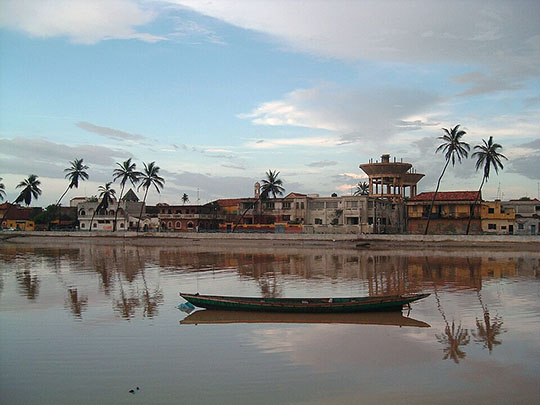

Saint-Louis, founded by the French in 1659 on an island near the mouth of the Senegal River, was one of France’s earliest footholds in West Africa, capital of French West Africa until 1902 and of Senegal until 1957, and a UNESCO World Heritage Site since 2000.
The island of Saint-Louis is reached by the Pont Faidherbe, just over 500 m of iron opened in 1897, which, despite a popular story, was not built for the Danube, and across a narrow spit lies Guet Ndar, a crowded fishing quarter where painted pirogues line the beach.
Saint-Louis was the city of the signares, Black and mixed-race women who married European traders by local custom and built fortunes in commerce, including in enslaved people, and in the 1760s the British-held town was governed by Charles O’Hara, son of the Irish peer Lord Tyrawley.
7 – Touba
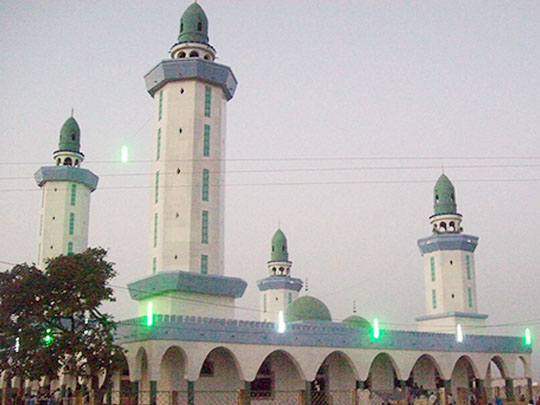

Touba, less than 200 km east of Dakar, is the holy city of the Mouride brotherhood, founded in 1887 by Cheikh Amadou Bamba, whose resistance to French rule led the colonial authorities to exile him to Gabon for seven years, from 1895 to 1902.
The Great Mosque of Touba, one of the largest in Africa, rises to a central minaret of about 87 m, with Bamba’s tomb inside and a library holding more than 30,000 copies of the Qur’an and his writings, in a city of special status where alcohol and tobacco are banned.
Each year, the Grand Magal draws crowds to Touba, widely reported in the millions, commemorating not Bamba’s birth or death but the day in 1895 when the French sent him into exile.
8 – Dakar

Dakar, the westernmost city of mainland Africa, became capital of French West Africa in 1902 and of independent Senegal in 1960, and on a hill above it stands the 49 m African Renaissance Monument, unveiled in 2010, taller than the Statue of Liberty without its pedestal.
In September 1940, British and Free French forces under de Gaulle failed to take Dakar from Vichy France, and on 1 December 1944 at nearby Thiaroye French troops fired on West African soldiers demanding back pay, killing 35 by the official count and, by some historians’ estimates, hundreds.
Senegal’s first president, the poet Léopold Senghor, hosted the First World Festival of Negro Arts in Dakar in 1966, with Duke Ellington, Josephine Baker and Langston Hughes among the performers and guests, and in 1980 he became one of the first African presidents to leave office voluntarily.