

Wikimedia Commons / CC-BY-SA-3.0 / GFDL
Capital: Victoria
Population: 115,000+
Language: Seychellois Creole, English and French

1 – La Digue Island (also above)

La Digue, a laid-back island with few cars, where people get around by bicycle, is home to Anse Source d’Argent, often called one of the most photographed beaches in the world.
The beach on La Digue is strewn with giant boulders of pink granite above shallow turquoise water and reached through L’Union Estate, while inland the Veuve Reserve protects the Seychelles paradise flycatcher, one of the country’s rarest birds.
Those boulders reveal the ancient past of La Digue, for the inner islands of Seychelles are made of granite, fragments of the supercontinent Gondwana left stranded in the Indian Ocean when India broke away around 65 million years ago.
2 – Aride Island

Aride Island, a steep wooded hump among the granite islands of Seychelles, was a private estate worked for coconuts and seabird eggs until 1973, when Christopher Cadbury of the chocolate family bought it for nature conservation.
Around a million seabirds breed on Aride, of more species than on any other island in Seychelles, among them some of the world’s largest colonies of lesser noddies and tropical shearwaters.
Aride is the only place on Earth where Wright’s gardenia grows wild, a white-flowered shrub whose scent drifts down the hillside.
3 – Cousin Island

Cousin Island, a short boat ride from Praslin, was bought in 1968 by the International Council for Bird Preservation, forerunner of BirdLife International, to save the Seychelles warbler, which had fallen to fewer than 30 birds on this one island.
The coconut plantation on Cousin was cleared and native forest returned, and the warbler recovered to thousands of birds, spreading to other islands, until it was taken off the threatened list in 2015.
The beaches of Cousin are some of the most important nesting sites in the western Indian Ocean for the critically endangered hawksbill turtle, monitored here since 1970.
4 – Aldabra

Aldabra, more than 1,000 km south-west of Mahé, is one of the world’s largest coral atolls, four low islands of ancient coral around an immense lagoon, and a UNESCO World Heritage Site since 1982.
Aldabra is home to some 100,000 Aldabra giant tortoises, the world’s largest population of giant tortoises, along with coconut crabs, the largest land arthropods on Earth, and the white-throated rail, the last flightless bird in the western Indian Ocean.
In 1874, Charles Darwin, Joseph Hooker and other scientists petitioned the governor of Mauritius to protect the tortoises of Aldabra, and in 1967 a planned British air base on the atoll was dropped after protests led by the Royal Society.
5 – Vallée de Mai
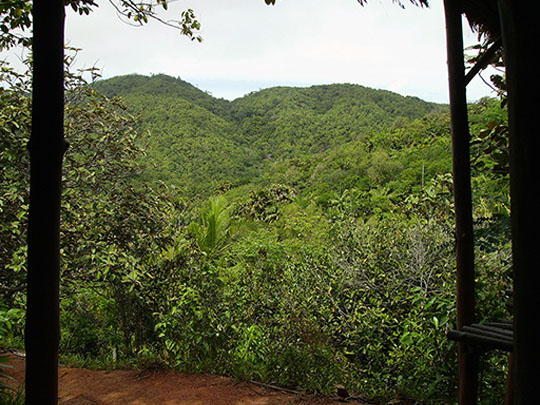
The Vallée de Mai, in the hills of Praslin, is a primeval palm forest and a UNESCO World Heritage Site since 1983, the only place where all six of Seychelles’ endemic palm species grow together.
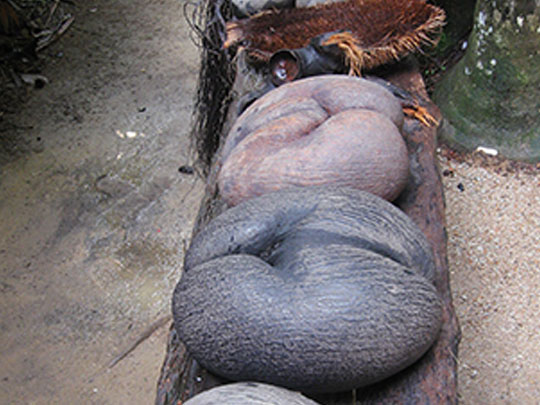
Overhead in the Vallée de Mai hang the nuts of the coco de mer, which has the largest seed in the plant kingdom, weighing up to 25 kg, while the forest is a stronghold of the Seychelles black parrot, found only on Praslin.
While serving in Mauritius in the early 1880s, General Charles Gordon visited Praslin and became convinced that the Vallée de Mai was the Garden of Eden, with the coco de mer as the Tree of Knowledge.

6 – Victoria and Mahé
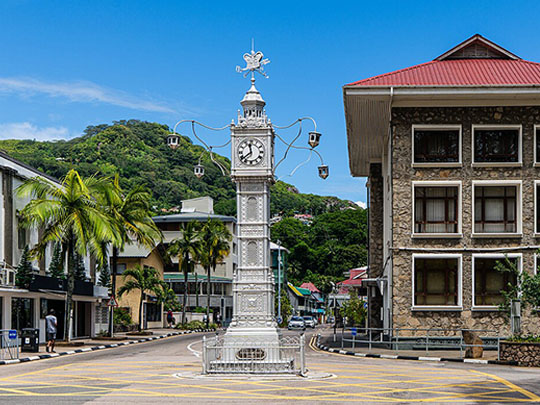
Victoria, on Mahé, the largest island and home to almost nine in ten Seychellois, is one of the world’s smallest capital cities, and from 1922 to 1927, Seychelles was governed by Sir Joseph Byrne of Derry, a former head of the Royal Irish Constabulary.
The silver clock tower of Victoria, known as Lorloz, went up in 1903 in memory of Queen Victoria, modelled on the clock on Vauxhall Bridge Road in London known as “Little Ben”.
Britain used Seychelles as a place of exile, sending Prempeh I, king of Asante, here in 1900 until his return in 1924, and Yaa Asantewaa, the warrior queen mother of Ejisu, who died here in 1921, while Archbishop Makarios of Cyprus was held above Victoria in 1956–57.
7 – Mission Lodge
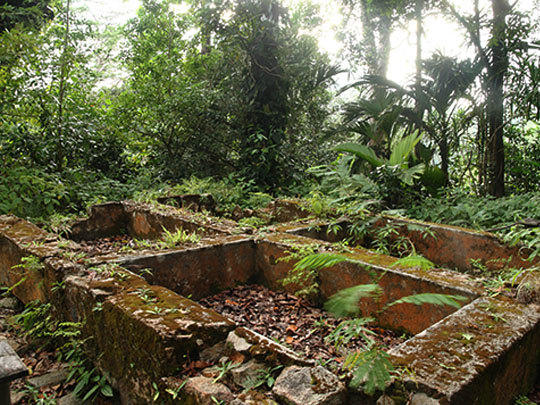
Mission Lodge, in the hills above Victoria, holds the ruins of Venn’s Town, founded in 1875 by the Church Missionary Society, which opened a boarding school here in 1876 for the children of Africans freed from slave ships by the Royal Navy.
Little is left at Mission Lodge, but stone terraces and roofless walls under great trees, beside a viewing lodge opened for Queen Elizabeth II’s visit in 1972, and the site is on Seychelles’ UNESCO Tentative List.
More than 2,500 liberated Africans were landed in Seychelles between 1861 and 1874, and the Mission Lodge school, which taught their children, closed in 1889.