
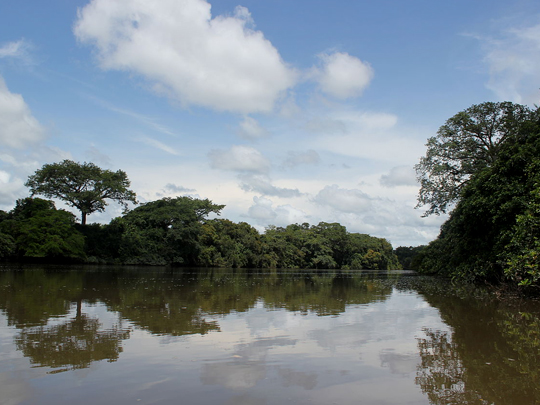
Wikimedia Commons / CC-BY-SA-3.0 / GFDL
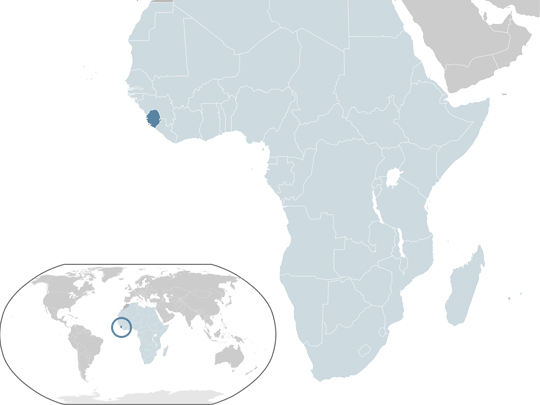
Capital: Freetown
Population: 8.9 million
Language: English/Krio
1 – Outamba-Kilimi National Park (also above)
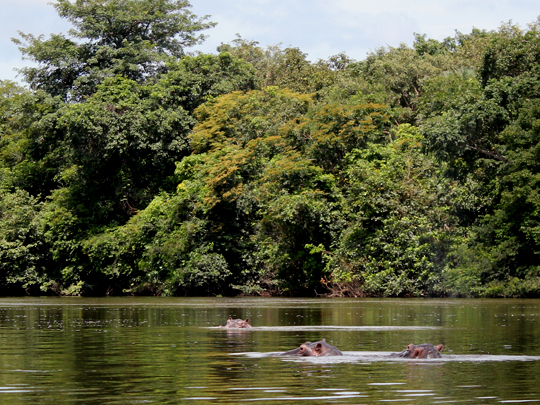
In the remote far north of Sierra Leone, hard against the border with Guinea, Outamba-Kilimi is the country’s first and largest national park — a wild, off-the-grid mosaic of rainforest, grassy savanna and slow, winding rivers, and one of West Africa’s least-visited wildernesses.
The classic way to explore it is by dugout canoe, paddling the calm Kabba River past basking crocodiles and pods of snorting hippos, while the forests around shelter troops of monkeys and one of the region’s most important populations of endangered western chimpanzees.
The park is also a pilgrimage site for birdwatchers hoping to glimpse the white-necked picathartes — a strange, ancient, bald-headed bird, prized as one of the most sought-after in Africa, which glues its mud nests to the walls of caves and boulders deep in the forest.
2 – Tingi Hills Forest Reserve
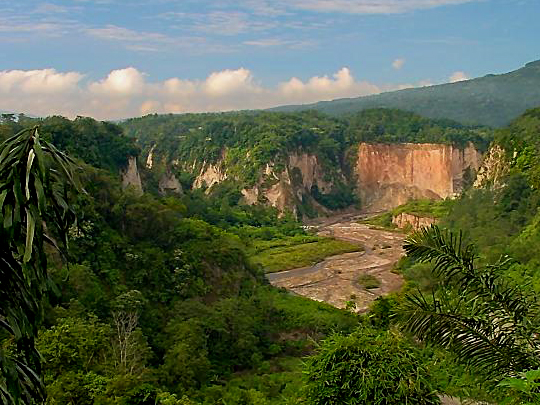
In the remote far east of Sierra Leone, near the Guinea border, the Tingi Hills rise to the twin granite peaks of Sankan Biriwa — the second-highest summit in the country, at around 1,850m — a dramatic, little-visited range of domes and cliffs looming over the forest.
A tough hike through forest and open grassland leads to the top, with sweeping views across a wilderness few outsiders ever see; the massif is often wreathed in cloud and mist, its cool heights a green “sky island” of montane grassland and gallery forest, held sacred in the traditions of the local Kono and Kuranko people.
So high and cool are these peaks that, on the coldest, driest nights of the Harmattan season, frost has even been reported on the heights of Sankan Biriwa — a startling touch of winter in the heart of tropical West Africa.
3 – Wara Wara Mountains
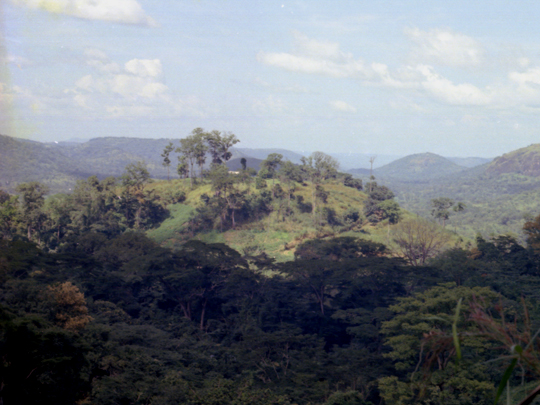
In the cool, green highlands of Sierra Leone’s far north rise the Wara Wara Mountains, looming over the laid-back town of Kabala — a refreshingly breezy escape from the heat of the lowlands, and a heartland of the Limba, one of the country’s oldest peoples, who believe they have lived among these hills since the very beginning.
The town is ringed by hills made for hiking, chief among them Gbawuria Hill, which rises straight above Kabala; a short, steep climb is rewarded with sweeping views over the rooftops and the ranges rolling away towards the Guinea border, best of all at sunset.
Every New Year, the people of Kabala turn that climb into a celebration — crowds stream up Gbawuria Hill to ring in the new year together from the summit, in a joyful ritual that draws revellers from miles around, one of the most cherished traditions in the north.
4 – Lake Sonfon
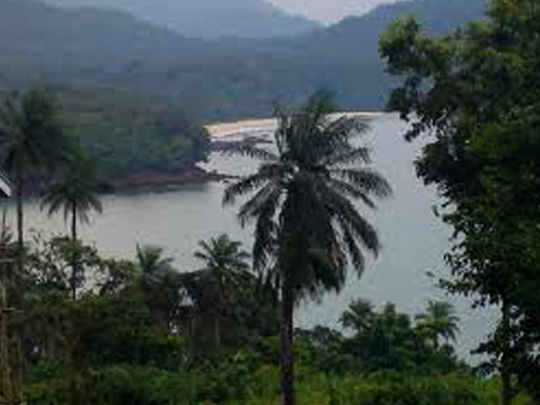
High in the remote hills of northern Sierra Leone lies Lake Sonfon, the country’s largest natural lake — a tranquil sheet of mountain water ringed by forest and savanna, so far off the beaten track that few outsiders ever reach it.
Fed by mountain streams and swelling and shrinking dramatically with the seasons, the lake is a haven for wildlife — more than a hundred kinds of bird, including the jewel-like emerald starling, along with crocodiles, and rare pygmy hippos in the hills around.
To the local people the lake is deeply sacred — believed to be the home of a powerful water spirit, or djinn — and for generations they have gathered on its shores to perform ceremonies, floating offerings of rice and food out across the water on little calabash boats to win the spirit’s blessing.
5 – Freetown
No other African capital was founded like this one: settled in 1787 and again in 1792 by freed slaves — first the Black Poor of London, then more than a thousand Nova Scotians, African-Americans who had fought for Britain in the American Revolution in exchange for their liberty, been resettled in Canada, found the promises hollow, and sailed back across the Atlantic to the continent their grandparents were stolen from; Jamaican Maroons followed in 1800, and their descendants became the Krio.
The King’s Yard Gate still stands in the middle of town, put up for the Africans that Royal Navy anti-slavery patrols landed here — more than ninety thousand of them — and inscribed with a welcome to any freed slave who walked beneath it; nearby are St John’s Maroon Church of 1820, the National Museum, and Fourah Bay College of 1827, the first Western-style university in sub-Saharan Africa.
For two centuries the city’s symbol was the Cotton Tree, the great silk-cotton under which the settlers are said to have given thanks in 1792 — until a storm brought it down in May 2023, and the nation went into mourning for a tree.
6 – Bunce Island


Twenty miles up the Sierra Leone River, on a low island in the mangroves, stand the ruins of a British slave castle that specialised in a particular trade: it supplied the rice plantations of South Carolina and Georgia, whose planters paid a premium for captives from this coast because they already knew how to grow rice.
Reached by boat from Freetown, the site has never been restored — roofless walls and gun emplacements standing in the trees, cannon lying where they fell, the graves of British agents, and the outline of the yard where people were held before shipping.
The consequence of all this is the Gullah-Geechee people of the American low country, whose speech, cooking and songs still carry words from this coast — and in one Georgia family a song was handed down for generations in a language nobody there understood, until linguists identified it as a Mende funeral hymn, and traced it back to a village a few hours from this river.
7 – River No. 2


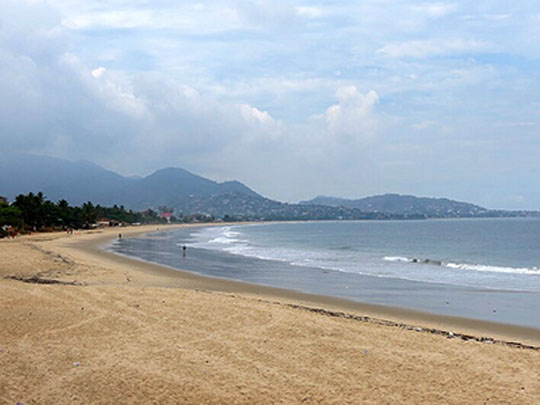
On the Freetown peninsula, a river runs out of steep forested mountains across a long crescent of white sand to meet the Atlantic — the best-known beach in a country that has a great many, and one run since the 1990s by an association the villagers set up themselves to manage it.
You cross the river mouth by boat to reach the sand, with the mountains rising green directly behind and nothing built on it but a scatter of low shelters and a kitchen serving whatever the boats brought in; Tokeh’s beach lies further round the coast, and the Banana Islands sit offshore.
This stretch of sand is said to be the beach from the Bounty chocolate adverts of the 1980s — which for a while made it one of the most familiar shorelines in Europe, without anybody watching having the least idea which country they were looking at.