

Wikimedia Commons / CC-BY-SA-3.0 / GFDL
Capital: Concord
Population: 1.4 million+
Language: English

1 – Lake Winnipesaukee (above)
Lake Winnipesaukee is New Hampshire’s largest lake, covering about 180 km² and scattered with more than 250 islands, and while its name is often romanticised as “Smile of the Great Spirit”, its Abenaki meaning is disputed, with several competing translations.
Lake Winnipesaukee’s shores hold Weirs Beach, where Endicott Rock was carved in 1652 with Governor John Endicott’s name and the survey party’s initials and may be New England’s oldest public monument, plus Castle in the Clouds, built in 1913–14 by shoe magnate Thomas Plant, who later lost his fortune, and Wolfeboro, which bills itself the oldest summer resort in America.
Lake Winnipesaukee’s cruise ship, the M/S Mount Washington, was built in 1940 from the hull of an old Lake Champlain steamer, cut into sections, shipped by rail and welded back together, and the lake’s “ice-out” is declared only when the ship can reach all five of its ports, while the film What About Bob? was set on the lake but shot in Virginia.
2 – Flume Gorge

Flume Gorge is a narrow chasm about 244 m long at the foot of Mount Liberty in Franconia Notch State Park, where granite walls 21 to 27 m high stand just 3.7 to 6 m apart, carved where a softer basalt dike eroded away, and it was reportedly found in 1808 by 93-year-old “Aunt” Jess Guernsey while she looked for a fishing spot.
Flume Gorge is explored on boardwalks clinging to its walls, leading to the 14 m Avalanche Falls, the Pool, the Flume Covered Bridge and the Sentinel Pine Bridge, built in 1939 on the trunk of a giant pine felled by the 1938 hurricane.
An egg-shaped boulder about 3 by 3.7 m once hung wedged between the walls of Flume Gorge until a storm in June 1883 swept it away, and the same storm created Avalanche Falls.
3 – Franconia Ridge

Franconia Ridge towers over Franconia Notch in the White Mountains, crowned by Mount Lafayette (1,600 m), originally called Great Haystack before it was renamed for the Marquis de Lafayette, and Mount Lincoln, with the Appalachian Trail running right along the crest.
Franconia Ridge is best tackled on the 14.3 km Falling Waters and Old Bridle Path loop, climbing about 1,190 m to an exposed walk above the treeline and back past the Appalachian Mountain Club’s Greenleaf Hut.
Across Franconia Notch from the ridge, on Cannon Cliff, stood the Old Man of the Mountain, a granite profile so beloved it was held together with cables, rods and epoxy until it collapsed overnight on 2–3 May 2003, yet it features on New Hampshire’s road signs and its 2000 state quarter, while Robert Frost lived in the town of Franconia from 1915 to 1920.
4 – Bretton Woods

Bretton Woods sits at the western foot of Mount Washington in the White Mountains, and it’s dominated by the Mount Washington Hotel, built in 1900–02 for coal broker Joseph Stickney with the help of about 250 Italian artisans.
Bretton Woods is the gateway to the Mount Washington Cog Railway, which reached the summit in 1869 and is described as the world’s first mountain-climbing cog railway, climbing to the peak where a 372 km/h gust was recorded in 1934, a world record until 1996.
Bretton Woods gave its name to the July 1944 conference at the hotel, where 730 delegates from 44 nations created the International Monetary Fund, the World Bank and a system of fixed exchange rates that lasted until the early 1970s, while one of its chief architects, US Treasury official Harry Dexter White, is thought by many historians to have passed information to the Soviets.
5 – Portsmouth

Portsmouth, at the mouth of the Piscataqua River, was settled by Europeans in the 1620s and 1630s, and in December 1774, after Paul Revere rode in with a warning, about 400 locals raided nearby Fort William and Mary, carrying off some 100 barrels of gunpowder in what is often called the first organised armed act of colonial resistance, four months before Lexington.
Portsmouth’s old streets include the Strawbery Banke Museum’s historic neighbourhood, the 1763 Moffatt-Ladd House, home of Declaration of Independence signer William Whipple, and the John Paul Jones House, where Jones rented a room in 1781–82, and the city formed a sister-city link with Carrickfergus in County Antrim in 1992.
Portsmouth lends its name to the Portsmouth Naval Shipyard and to the 1905 Treaty of Portsmouth, which ended the Russo-Japanese War and won Theodore Roosevelt the Nobel Peace Prize, but both are actually across the river in Kittery, Maine, as the US Supreme Court confirmed when it threw out New Hampshire’s claim to the shipyard in 2001.
6 – Sandwich Range

Sandwich Range stretches about 48 km across the southern White Mountains between Conway and Campton, named after the town of Sandwich, which was named in 1763 for the 4th Earl of Sandwich, the man the sandwich is named after, and much of it is protected as the Sandwich Range Wilderness, created in 1984.
Sandwich Range’s peaks include Mount Tripyramid, Mount Whiteface, Mount Passaconaway, named after a Pennacook leader, Sandwich Dome and the rocky, much-photographed summit of Mount Chocorua, about 1,060 m high.
Mount Chocorua, in the Sandwich Range, is named after a chief who, legend says, cursed the settlers before leaping from its summit around 1720, but there’s no authentic record of it, and the story owes its fame to an 1830 tale by Lydia Maria Child, written to accompany an engraving of a Thomas Cole painting, and Cole painted the peak again and again.
7 – Concord

Concord, New Hampshire’s capital on the Merrimack River, is home to the State House, built in 1816–19 from granite dressed by state-prison inmates and the oldest state capitol where both houses meet in their original chambers, and its House of Representatives has 400 members, the largest chamber of any US state legislature.
Concord’s sights include the Pierce Manse, home of Franklin Pierce, the only president from New Hampshire, and the McAuliffe-Shepard Discovery Center, named for Concord High teacher Christa McAuliffe, killed in the 1986 Challenger disaster, and Derry-born Alan Shepard, the first American in space.
Concord gave its name to the Concord coach, the classic stagecoach of the Wild West, built by the city’s Abbot-Downing company from 1827, with Wells Fargo among its biggest customers, and Concord granite went into the Library of Congress’s Jefferson Building.
8 – Conway’s Covered Bridges
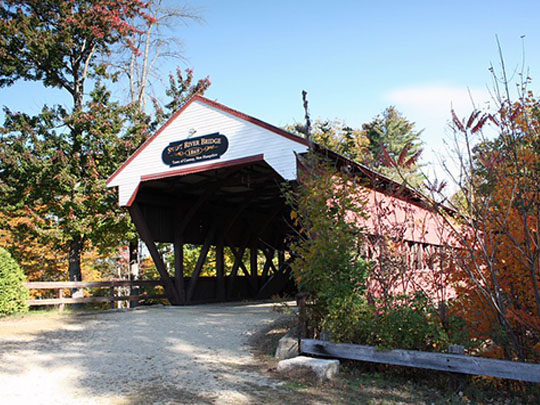
Conway’s covered bridges, in the Mount Washington Valley, include the Saco River Covered Bridge, built in 1890 and about 68 m long, the third bridge on the site, and the Swift River Covered Bridge, rebuilt in 1870 after a flood the year before.
Conway’s Swift River Covered Bridge was bypassed by a modern road bridge in 1974 and restored in 1991 for walkers, while the Saco River Covered Bridge, built by Charles and Frank Broughton, spans the river on two arched Paddleford trusses.
Conway’s bridges share a history, since in the spring flood of 1869 the Swift River bridge was swept downstream into the old Saco bridge, wrecking both, and like all covered bridges they were roofed to protect their timber trusses from the weather, not to keep snow off, since towns paid people to shovel snow onto the decks so sleighs could cross.
9 – Saint-Gaudens National Historical Park
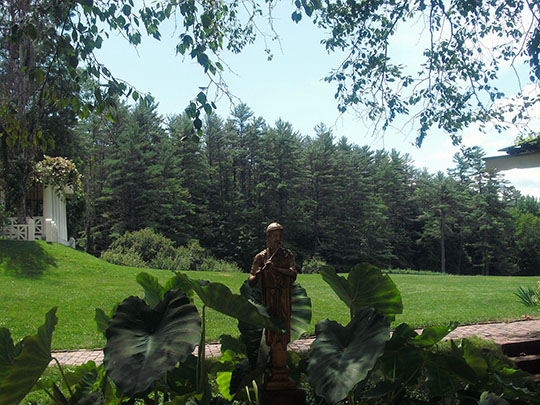
Saint-Gaudens National Historical Park in Cornish, on the Connecticut River in western New Hampshire, was the home of sculptor Augustus Saint-Gaudens, born on Charlemont Street in Dublin in 1848 to a mother from County Longford and a French shoemaker father, who summered here from 1885 and lived here year-round from 1900 until his death in 1907.
Saint-Gaudens National Historical Park keeps his house, Aspet, named after his father’s home village in France, plus his studios, gardens and bronze casts of works such as the Shaw Memorial and the Standing Lincoln, while nearby the 1866 Cornish–Windsor Covered Bridge was for many years the longest covered bridge in the US, and JD Salinger lived in Cornish from 1953 until his death.
Saint-Gaudens made the Parnell Monument on Dublin’s O’Connell Street, setting up a full-size mock-up in his Cornish grounds, though he never saw the Dublin site and died before it was unveiled in 1911, and he also designed the $20 “double eagle” gold coin for Theodore Roosevelt, often called one of the most beautiful US coins.
10 – Londonderry and Derry
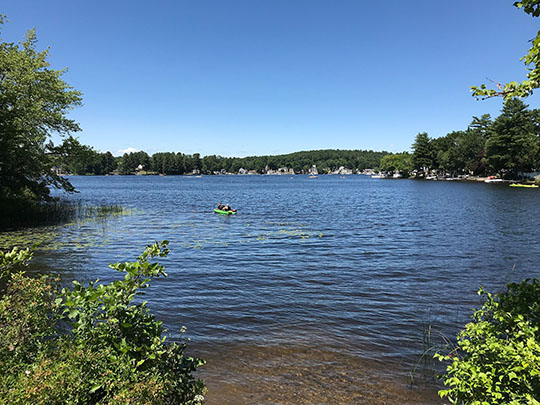
Londonderry was settled on 11 April 1719 by Ulster Scots families from Aghadowey and the Bann Valley in County Londonderry, led by their minister James McGregor, and was chartered as Londonderry in 1722, with Derry splitting off as a separate town in 1827.
Londonderry and Derry’s sights include the Robert Frost Farm in Derry, the poet’s home from 1900, where he later said the core of all his writing was probably the “five free years” he had on the farm, and Pinkerton Academy, founded in 1814, where Frost taught.
Londonderry’s settlers are often said to have brought the first potatoes to America, but potatoes reached Jamestown from Bermuda in 1621, so the fair claim is New England’s first permanent potato patches, while General John Stark, born in Londonderry in 1728 to Ulster Scots parents, gave New Hampshire its motto, “Live Free or Die”, in an 1809 toast.
11 – Peterborough
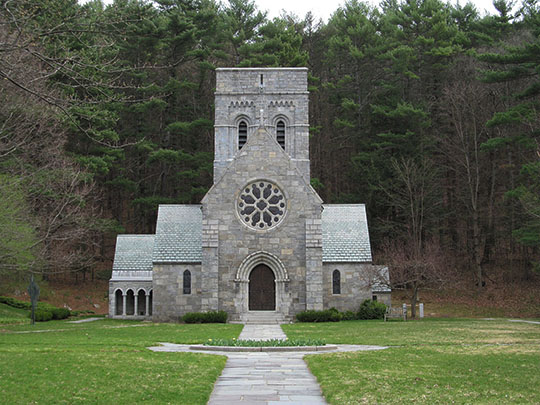
Peterborough is a mill town on the Contoocook River in the Monadnock region of south-west New Hampshire, first settled by Scotch-Irish families, and in 1833 its town meeting voted to buy books with public money, making its library widely credited as the first free public library supported by taxation.
Peterborough is home to MacDowell, founded in 1907 by composer Edward MacDowell and pianist Marian MacDowell on their farm and often called the oldest artists’ colony in the US, whose fellows have included James Baldwin, Aaron Copland and Alice Walker.
Thornton Wilder worked on Our Town during his MacDowell residencies in Peterborough, and its fictional Grover’s Corners is partly modelled on the town, though the play, which won the 1938 Pulitzer Prize for Drama, premiered not in Peterborough but in Princeton, New Jersey.
12 – Squam Lake
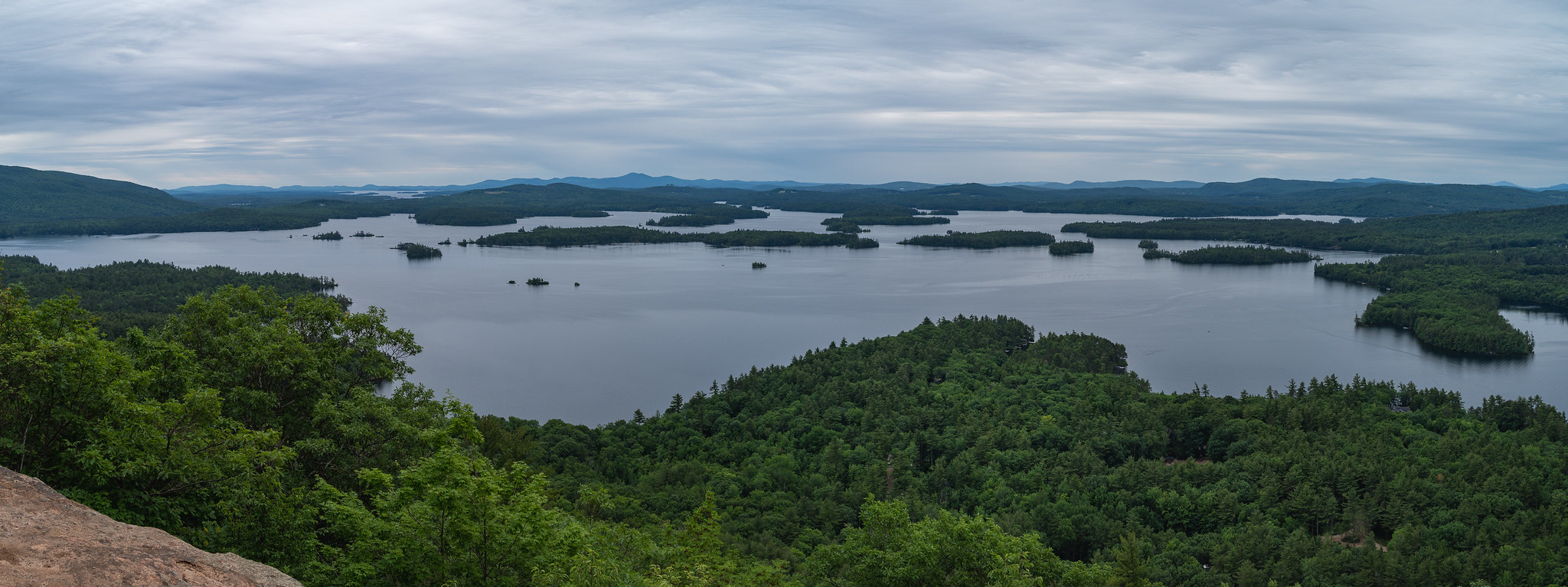
Squam Lake lies in New Hampshire’s Lakes Region and, at about 2,750 ha, is often called the second-largest lake entirely within the state.
Squam Lake is best seen from West Rattlesnake, a short climb on the Old Bridle Path to views over the islands, and on summer Sundays worshippers come by boat to the open-air chapel on Church Island, while loons nest along its quiet shores.
Squam Lake starred as the “Golden Pond” of On Golden Pond (1981), which won Henry Fonda his first competitive Oscar in his last feature film and Katharine Hepburn a record fourth acting Oscar, even though playwright Ernest Thompson based the story on Great Pond in Belgrade, Maine.
13 – Dublin
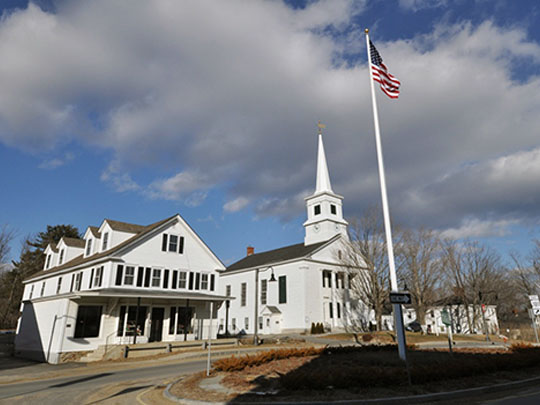
Dublin, NH is named after Dublin, Ireland, reputedly the birthplace of early settler Henry Strongman, a weaver who settled here around 1760, and at about 455 m on the northern slopes of Mount Monadnock it’s often described as the highest settled village in New England.
Dublin, NH sits beside Dublin Lake, more than 30 m deep, with Mount Monadnock rising to the south, and it’s the home of Yankee Publishing, which produces Yankee magazine and The Old Farmer’s Almanac.
Dublin, NH drew a summer colony of artists and writers, among them Mark Twain, who spent the summers of 1905 and 1906 here, dictating much of his autobiography in 1906, and painter Abbott Thayer, whose theory of countershading made him known as the “father of camouflage”.