
Wikimedia Commons / CC-BY-SA-3.0 / GFDL
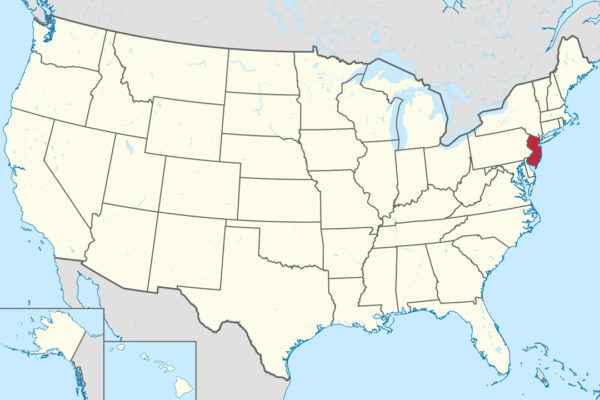
Capital: Trenton
Population: 9.5 million+
Language: English (no official language).
1 – Paterson Great Falls (also above)
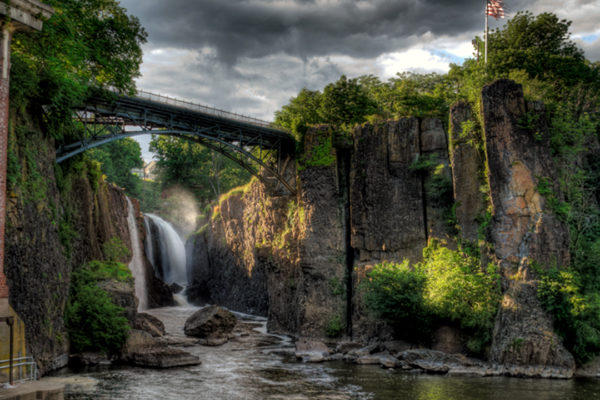
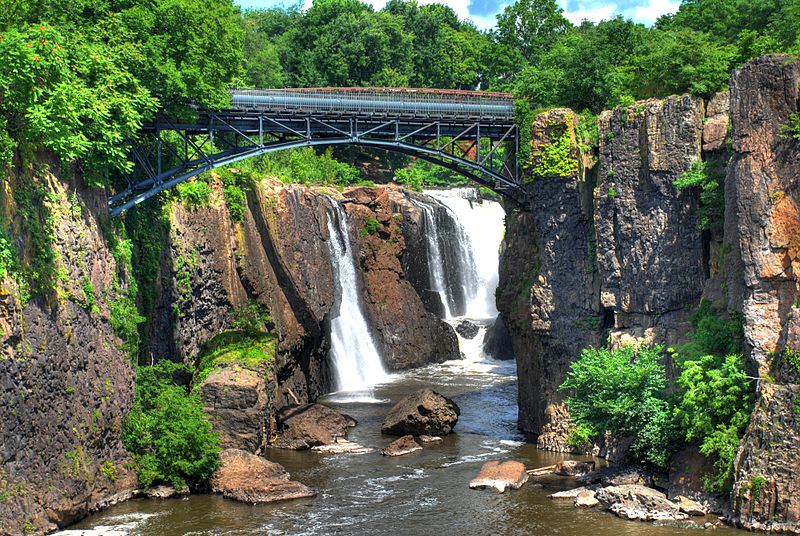
Paterson Great Falls plunges 77 feet on the Passaic River and is often described as the second-largest waterfall by volume east of the Mississippi, and after Alexander Hamilton picnicked here with George Washington and Lafayette in 1778, his Society for Establishing Useful Manufactures used its power to found Paterson in 1792, widely called the first planned industrial city in the US.
Paterson Great Falls anchors a national historical park among the mills of “Silk City”, which once processed nearly half of all American silk and where Samuel Colt first made his revolvers, while nearby Hinchliffe Stadium (1932), home to the New York Black Yankees, is one of very few surviving Negro League ballparks.
Paterson Great Falls has a strong Irish link in John Philip Holland, a teacher from Liscannor, County Clare, who tested his first submarine in the Passaic at Paterson in 1878 and built the Fenian Ram for the Fenian Brotherhood in 1881, both on show in the Paterson Museum, and whose later design became USS Holland, the US Navy’s first commissioned submarine.
2 – Liberty State Park
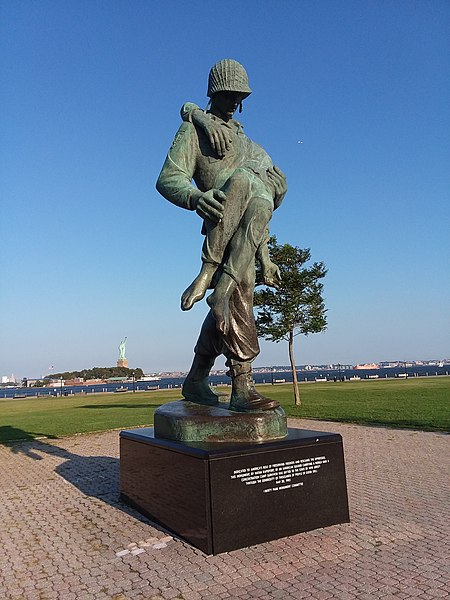
Liberty State Park lies on the Jersey City waterfront facing the Statue of Liberty and opened in 1976 for the US bicentennial, around the 1889 Central Railroad of New Jersey Terminal, where millions of immigrants processed at Ellis Island caught their first American train.
Liberty State Park’s terminal is where ferries leave for the Statue of Liberty and Ellis Island, and the park also holds “Liberation”, Natan Rapoport’s 1985 Holocaust memorial of an American soldier carrying a concentration-camp survivor.
Liberty State Park takes in the site of Black Tom Island, where German saboteurs blew up a munitions depot on 30 July 1916 in a blast felt as far away as Philadelphia, and shrapnel struck the Statue of Liberty, whose torch has been closed to visitors ever since, while Germany, ordered to pay damages in 1939, didn’t make its final payment until 1979.
3 – Teardrop Memorial, Bayonne
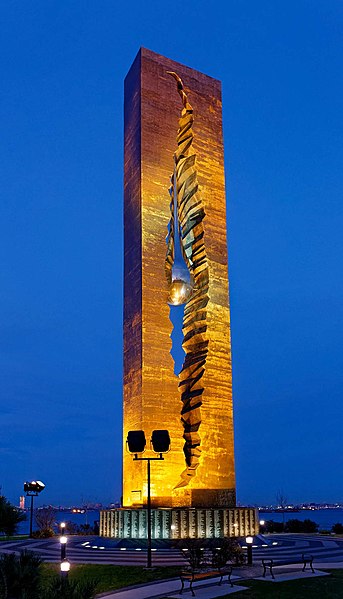
The Teardrop Memorial stands at the tip of the Peninsula at Bayonne Harbor facing Lower Manhattan, officially named “To the Struggle Against World Terrorism” and created by Georgian-born sculptor Zurab Tsereteli as a gift from Russia, with ground broken in 2005 in the presence of Vladimir Putin and a dedication on 11 September 2006 attended by Bill Clinton.
The Teardrop Memorial is a 100-foot bronze-clad tower split by a jagged crack, with a 40-foot steel teardrop hanging inside, and its base carries the names of the victims of the 9/11 attacks and the 1993 World Trade Center bombing.
The Teardrop Memorial’s plaques once bore Putin’s name and signature, until Bayonne covered them over in March 2022 after Russia invaded Ukraine, and Tsereteli’s even bigger Columbus statue was turned down by several US cities before it finally ended up in Arecibo, Puerto Rico.
4 – George Washington Bridge
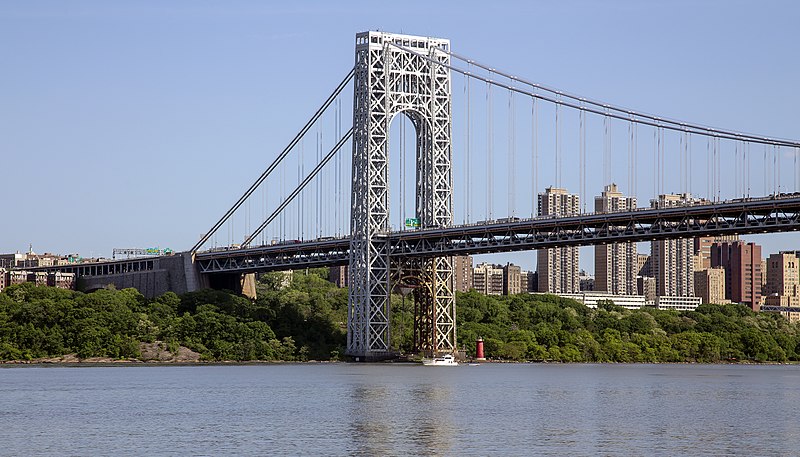
The George Washington Bridge crosses the Hudson River between Fort Lee, New Jersey, and Washington Heights in Manhattan, and when it opened in October 1931, Swiss-born engineer Othmar Ammann’s 3,500-foot main span nearly doubled the previous world record for a suspension bridge.
The George Washington Bridge gained a lower deck in 1962, giving it 14 lanes, more than any other suspension bridge, and the Port Authority bills it as the world’s busiest motor-vehicle bridge, while on holidays a vast American flag hangs from its New Jersey tower and the Little Red Lighthouse sits beneath its Manhattan end.
The George Washington Bridge’s bare steel towers were meant to be clad in concrete and granite, an idea dropped over cost and because people liked the look of the naked steel, and the bridge honours Washington because the forts at either end, Fort Lee and Fort Washington, fell to the British in November 1776.
5 – Six Flags Great Adventure

Six Flags Great Adventure in Jackson Township opened in 1974 as Great Adventure, the dream of restaurateur Warner LeRoy, with a 350-acre safari of around 1,200 animals, and Six Flags bought it in 1977, though in 1984 a fire in its Haunted Castle attraction killed eight teenagers and led New Jersey to tighten fire-safety rules.
Six Flags Great Adventure combines a theme park full of roller coasters with its safari, and from 2005 until its demolition in 2025 it was home to Kingda Ka, at 456 feet the world’s tallest roller coaster.
Six Flags Great Adventure belongs to a chain named after its first park, Six Flags Over Texas, which took its name from the six nations whose flags have flown over Texas: Spain, France, Mexico, the Republic of Texas, the US and the Confederacy.
6 – Princeton
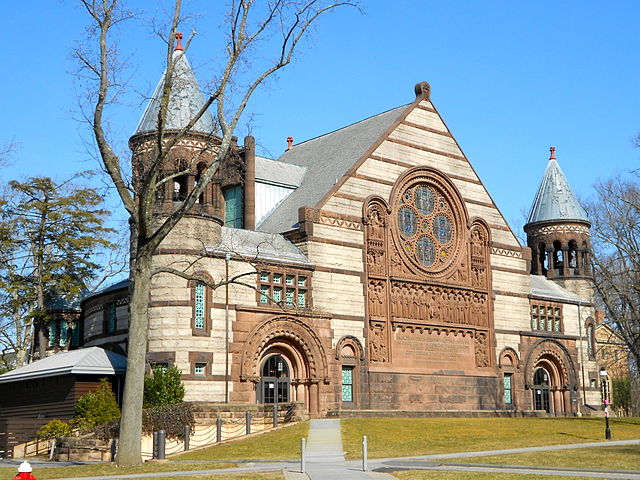
Princeton is where George Washington won the Battle of Princeton on 3 January 1777, retaking Nassau Hall from the British, and in 1783 the hall hosted the Congress of the Confederation for four months, making Princeton briefly the nation’s capital, with Congress’s Irish-born secretary, Charles Thomson of Maghera, County Londonderry, recording its business there.
Princeton is dominated by Princeton University, chartered in 1746 as the College of New Jersey and settled in Nassau Hall in 1756, plus Princeton Battlefield State Park and Albert Einstein’s home on Mercer Street, where he lived from 1935 until his death in 1955, while A Beautiful Mind was filmed partly on campus.
Nassau Hall in Princeton bears a real cannonball scar, but the tale that Alexander Hamilton’s shot beheaded a portrait of George II inside can’t be proved, though the king’s portrait was destroyed in the battle and its frame was later reused for a portrait of George Washington.
7 – Cape May
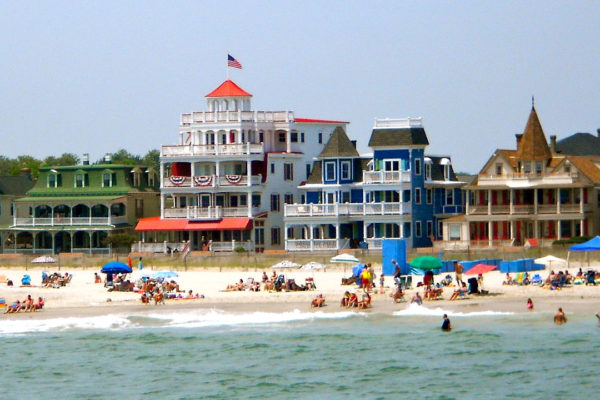
Cape May sits at New Jersey’s southern tip, named after Dutch captain Cornelius Jacobsen Mey, who charted the coast in the early 1600s, and after a fire destroyed about 30 blocks in 1878 it was rebuilt in Victorian style, and the whole town has been a National Historic Landmark district since 1976.
Cape May’s highlights include its gingerbread-trimmed Victorian streets, Congress Hall, where Presidents Pierce and Buchanan stayed and Benjamin Harrison kept a Summer White House, the 1859 Cape May Lighthouse with its 199-step spiral staircase, and Sunset Beach, where “Cape May diamonds”, clear quartz pebbles carried down the Delaware River, wash ashore.
Cape May calls itself the nation’s oldest seaside resort, a claim even local historians call marketing, and off Sunset Beach lie the remains of the SS Atlantus, a First World War concrete ship finished too late for the war that broke free in a 1926 storm and ran aground.
8 – Atlantic City

Atlantic City grew up on Absecon Island after the railroad arrived in 1854, and in 1870 it opened a boardwalk, widely credited as America’s first, built to keep sand out of the train carriages and hotels.
Atlantic City’s Boardwalk is lined with casinos, piers and saltwater taffy shops, and the city launched the Miss America pageant in 1921 as a way to keep tourists in town after Labor Day.
Atlantic City’s streets gave Monopoly its board, but Charles Darrow, sold to the public as its inventor, didn’t invent it: Lizzie Magie patented The Landlord’s Game in 1904, Atlantic City Quakers renamed its squares after local streets, and Darrow learned their version before selling it to Parker Brothers in 1935, while the tale that saltwater taffy got its name when a flood soaked a candy shop is probably just legend.
9 – Beach Island
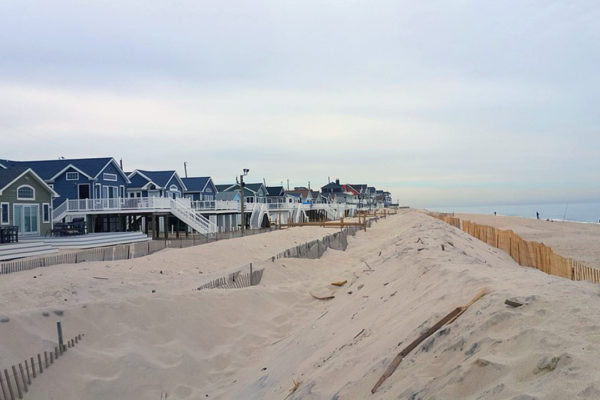
Long Beach Island is a slender barrier island off the Ocean County coast, guarded at its northern tip by Barnegat Lighthouse, “Old Barney”, first lit in 1859 and designed by George Meade, the future Union commander at Gettysburg.
Long Beach Island is all beaches and seaside towns, and just across Barnegat Inlet lies Island Beach State Park, a largely undeveloped barrier beach bought from the Phipps family estate by the state in 1953.
Long Beach Island saw the first of the Jersey Shore shark attacks of 1916, when Charles Vansant was killed at Beach Haven on 1 July, the start of 12 days in which four people died, some in a creek miles inland, and while the attacks are often linked to Jaws, Peter Benchley said his real starting point was a great white caught off Montauk.
10 – Ellis Island
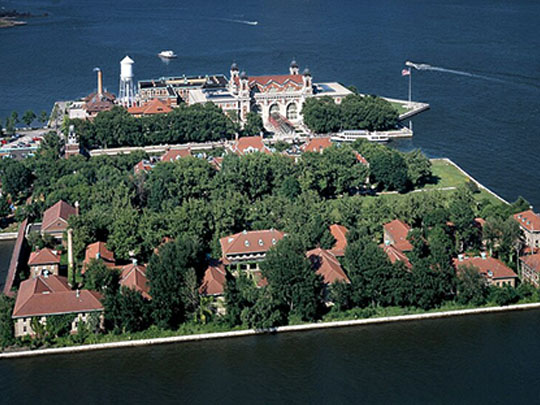
Ellis Island sits in Upper New York Bay just off Jersey City, where the immigration station opened on 1 January 1892 and processed about 12 million immigrants before closing in 1954, its original wooden buildings burning down in 1897 and the grand Main Building opening in 1900.
Ellis Island’s Main Building houses the immigration museum, opened in 1990, around the Great Hall where arrivals were inspected, and since about 2% were turned away it earned the nickname “Island of Tears”, while in 1998 the US Supreme Court ruled that most of the island’s land, built up by landfill, belongs to New Jersey, not New York.
Ellis Island’s first immigrant was Annie Moore, a 17-year-old from Cork who sailed from Queenstown (Cobh) with her two younger brothers and has statues at both ends of her journey, and the popular story that officials changed newcomers’ names here is a myth, since inspectors simply checked passengers against ship manifests drawn up in Europe.
11 – Trenton
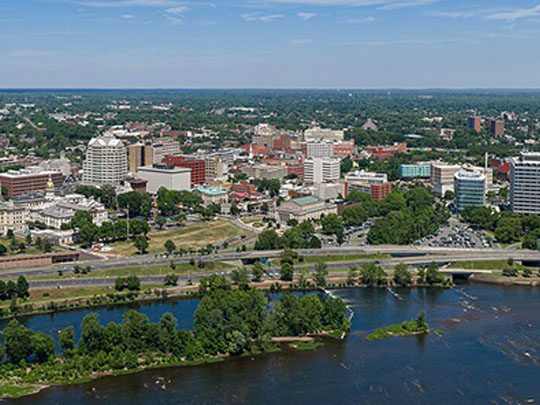
Trenton, New Jersey’s capital on the Delaware River, is where George Washington’s army struck on the morning of 26 December 1776 after crossing the river overnight in a sleet-filled nor’easter, capturing about 900 Hessians and mortally wounding their commander, Johann Rall, without losing a man in the fighting, with one column led by John Sullivan, son of Irish immigrants.
Trenton’s sights include the Old Barracks, built in 1758–59 for the French and Indian War and used by the Hessians in 1776, the 1792 State House, one of the oldest still in use, whose gold dome was partly paid for by schoolchildren’s “Dimes for the Dome”, and the “Trenton Makes, The World Takes” sign on the bridge over the Delaware, from a 1910 slogan contest.
Emanuel Leutze’s famous painting of Washington crossing the Delaware to Trenton was made in Düsseldorf and gets plenty wrong, showing a flag that didn’t yet exist and a small rowing boat at dawn, when the real crossing happened at night in larger cargo boats.
12 – Morristown
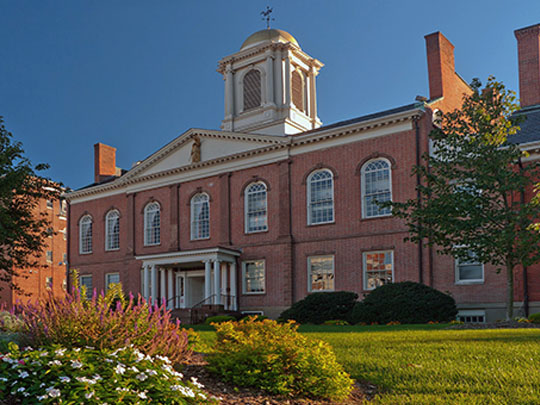
Morristown National Historical Park became the first national historical park in the US in 1933, preserving the place where George Washington wintered with 10,000 to 12,000 soldiers in 1779–80, a winter of 28 snowstorms that was harsher than Valley Forge, though far fewer men died.
Morristown’s sights include the Ford Mansion, Washington’s headquarters, the Jockey Hollow encampment, Fort Nonsense, where the story that it was built only to keep idle troops busy is called “very unlikely” by the park service, and the house where Alexander Hamilton courted Elizabeth Schuyler, while at nearby Speedwell, Samuel Morse and Alfred Vail demonstrated the telegraph in 1838.
Morristown is where Washington issued a general order on 16 March 1780 giving his troops a holiday on St Patrick’s Day, in tribute to the Irish Parliament’s push against British trade restrictions, the army’s only holiday of that brutal winter.
13 – Pine Barrens
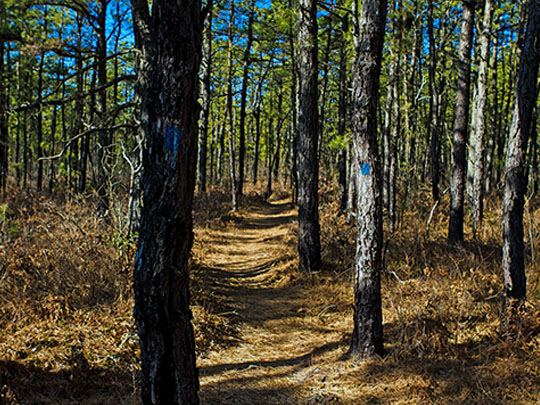
The Pine Barrens cover about 1.1 million acres, roughly 22% of New Jersey, protected since 1978 as the Pinelands National Reserve, the first national reserve in the US, with tea-coloured streams running over an aquifer holding some 17 trillion gallons of water.
The Pine Barrens’ sights include Batsto Village, whose ironworks, built by 1766 from local bog iron, supplied the Continental Army, and Whitesbog, where Elizabeth Coleman White and USDA botanist Frederick Coville developed the cultivated highbush blueberry, harvesting the first commercial crop in 1916.
The Pine Barrens are home to the Jersey Devil, said to be Mother Leeds’s cursed 13th child, born around 1735, though historians argue the legend grew out of years of attacks on the Leeds almanac family, including Benjamin Franklin’s feud with Titan Leeds, and The Sopranos’ famous “Pine Barrens” episode was actually filmed in New York.
14 – Sandy Hook Lighthouse
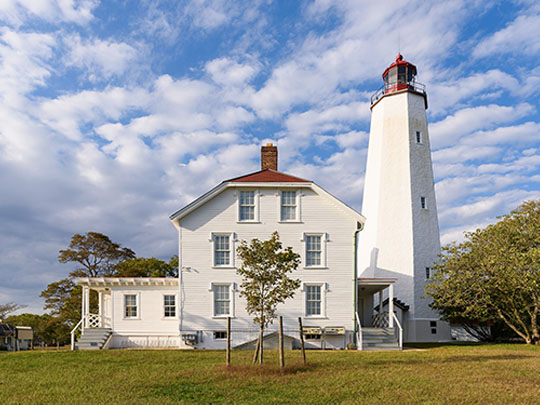
Sandy Hook Lighthouse stands on the Sandy Hook peninsula at the entrance to New York Harbor, first lit on 11 June 1764 and paid for by lotteries, and the US Coast Guard calls it the oldest original lighthouse tower still standing and in use in the US.
Sandy Hook Lighthouse sits within Gateway National Recreation Area beside Fort Hancock, an Army post from 1895 to 1974, and the old Sandy Hook Proving Ground, where the Army tested its guns out to sea from 1874 until it moved to Aberdeen, Maryland, in 1919.
Sandy Hook Lighthouse was built a few hundred feet from the tip of the Hook, but shifting sand has left it about 1.5 miles inland, and in 1776 patriots stripped out its lamps and fired on it to deny it to the British, who held it for most of the war anyway.
15 – Lakehurst
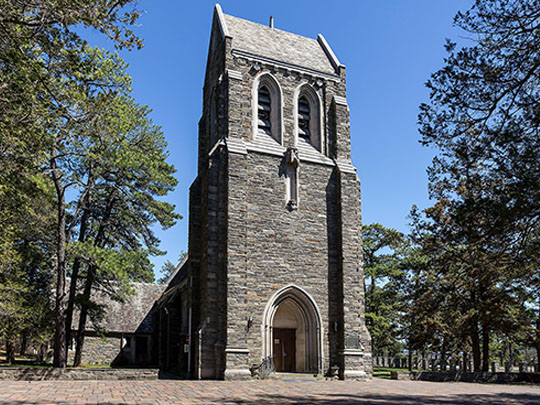
Lakehurst, in Ocean County, is where the German airship Hindenburg burst into flames while landing at the naval air station on 6 May 1937, killing 36 people, 13 passengers, 22 crew and one ground crewman, while 62 of the 97 on board survived, with hydrogen ignited by a static spark the most likely cause.
Lakehurst’s Hangar No. 1, completed in 1921 and 966 feet long, housed all four of the US Navy’s rigid airships and the Hindenburg itself, and the spot where the Hindenburg’s gondola came down is marked by a memorial dedicated in 1987.
Herbert Morrison’s anguished “Oh, the humanity!” report from Lakehurst wasn’t broadcast live but recorded and aired the next day, while Sam Shere’s photo of the burning Hindenburg, redrawn by George Hardie, became the cover of Led Zeppelin’s 1969 debut album.