
Wikimedia Commons / CC-BY-SA-3.0 / GFDL
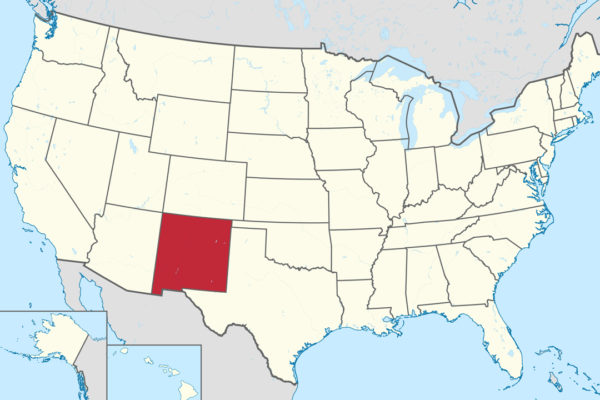
Capital: Santa Fe
Population: 2.1 million+
Language: English, Spanish (no official language).
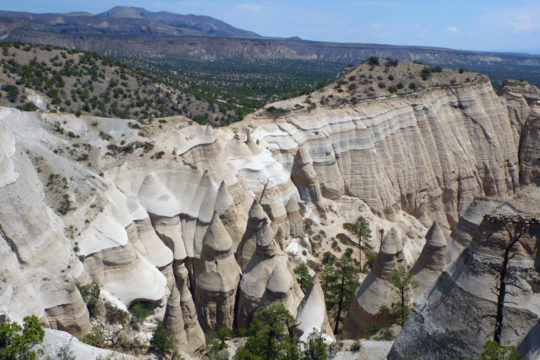
1 – Tent Rocks (above)
Tent Rocks, officially Kasha-Katuwe Tent Rocks National Monument, lies about 40 miles south-west of Santa Fe near Cochiti Pueblo, became a national monument in 2001, and takes its name from the Keresan words for “white cliffs”.
Tent Rocks is a forest of cone-shaped hoodoos up to 90 feet tall, carved from pumice and tuff left by volcanic eruptions six to seven million years ago, and a 1.5-mile slot canyon trail squeezes between them before climbing about 630 feet to the mesa top.
Many of the Tent Rocks cones wear a hard boulder cap that shields the soft rock beneath, and once a cap falls off the cone below starts to wear away, while the monument is run jointly by the Bureau of Land Management and Cochiti Pueblo.
2 – Aztec Ruins National Monument
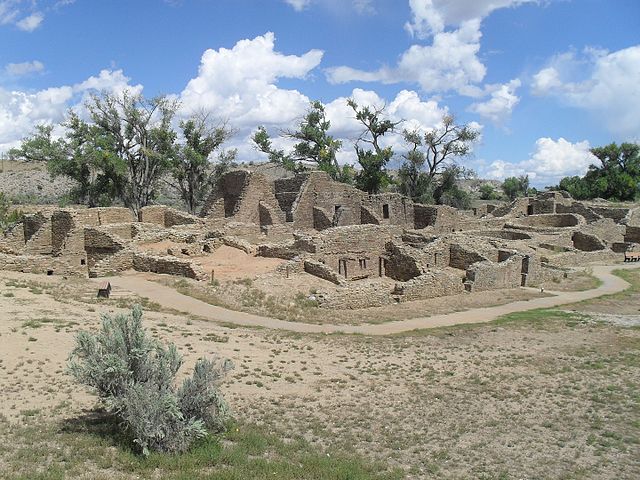
Aztec Ruins National Monument sits beside the Animas River in north-west New Mexico, where Ancestral Puebloans began a great house around 1110, its timbers cut between 1111 and 1115, under the influence of Chaco Canyon about 55 miles to the south, and it’s part of the Chaco Culture World Heritage Site.
Aztec Ruins National Monument’s West Ruin holds roughly 400 rooms or more, with T-shaped doorways and some original roof beams and ceilings still in place, plus a Great Kiva rebuilt by archaeologist Earl Morris in 1933–34, believed to be the only fully reconstructed great kiva in the Southwest.
The Aztecs had nothing to do with Aztec Ruins, which got its name from 19th-century Euro-Americans who credited them with building it, and when anthropologist Lewis Henry Morgan visited in 1878 he reckoned settlers had already carried off about a quarter of the stone.
3 – Pecos
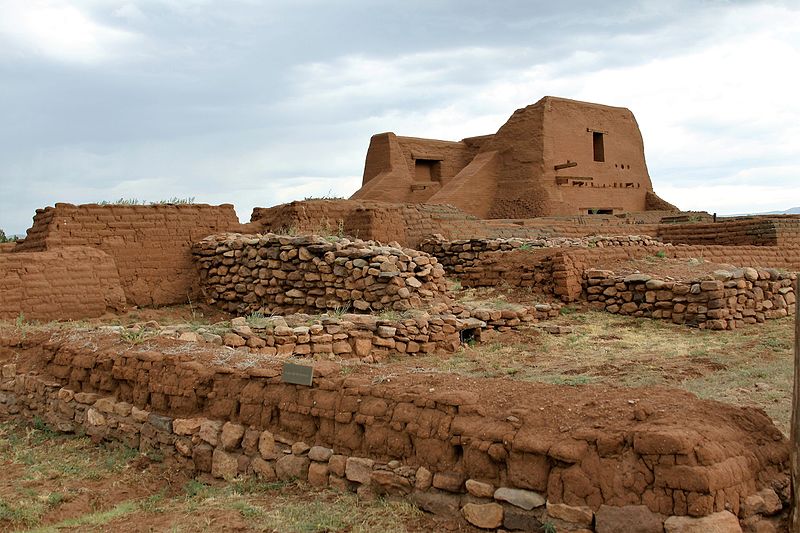
Pecos National Historical Park, about 17 miles south-east of Santa Fe, protects the ruins of Pecos Pueblo, home to about 2,000 people at its height in the 1400s and reached by the Coronado expedition in 1540–41, until its last 17 or so residents left for Jemez Pueblo in 1838.
Pecos National Historical Park’s sights include the ruins of a Spanish mission church, a smaller 1717 church built on the rubble of the big church burned in the 1680 Pueblo Revolt, and Glorieta Pass, often called the “Gettysburg of the West”, where Union troops destroyed a Confederate supply train in March 1862 and ended the Confederate invasion of New Mexico.
Pecos has an Irish link through its Forked Lightning Ranch, owned by Hollywood star Greer Garson and her husband Buddy Fogelson, since Garson, though born in London, had a mother from County Cavan and family roots in Castlewellan, County Down, and she sold the ranch to a conservation group, which gave the land to the park in 1991.
4 – Gila Cliff Dwellings
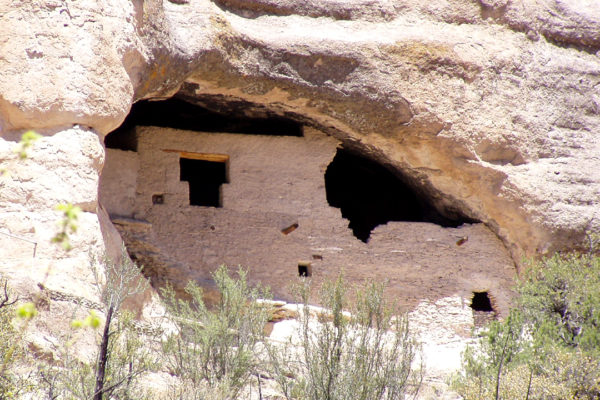
Gila Cliff Dwellings National Monument sits deep in the Gila Wilderness, about 44 miles north of Silver City, set aside in 1924 at the urging of conservationist Aldo Leopold and widely regarded as the world’s first designated wilderness area, while the dwellings themselves were protected by Theodore Roosevelt in 1907.
Gila Cliff Dwellings fill five caves in a canyon wall with some 40-odd rooms built by the Mogollon people from timbers cut between 1276 and 1287, most of their walls original, and a T-shaped doorway hints at ties with the Ancestral Puebloans to the north.
The builders of the Gila Cliff Dwellings stayed only a generation or two, about 20 to 30 years, before leaving around 1300, and centuries later the Apache leader Geronimo was born near the headwaters of the Gila River.
5 – Santa Fe
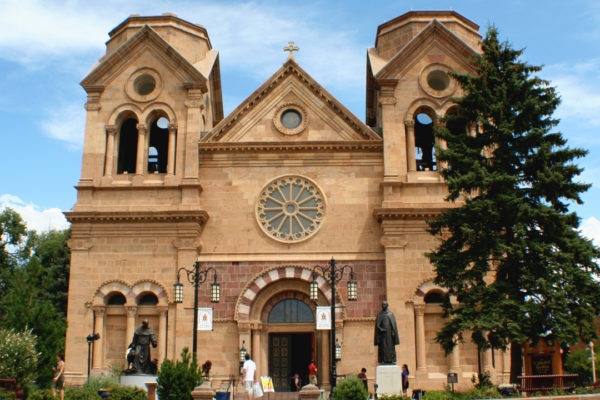
Santa Fe has been a capital since 1610, when Governor Pedro de Peralta made it the seat of Spanish New Mexico, making it the oldest state capital in the US and, at about 7,000 feet, the highest, though the 1680 Pueblo Revolt drove the Spanish out for 12 years until Diego de Vargas returned in 1692.
Santa Fe’s sights include the Palace of the Governors, which the National Park Service calls the oldest continuously occupied public building in the US and where Lew Wallace finished Ben-Hur, San Miguel Chapel, often called the oldest church in the US, and an adobe townscape protected by a 1957 rule requiring Pueblo or Territorial styles.
Santa Fe’s Loretto Chapel has a spiral staircase that makes two full 360-degree turns with no central support, said in legend to be the work of a mysterious carpenter who appeared after the nuns prayed to St Joseph and left without being paid, though historians have proposed a French carpenter, François-Jean Rochas.
6 – Bandelier National Monument
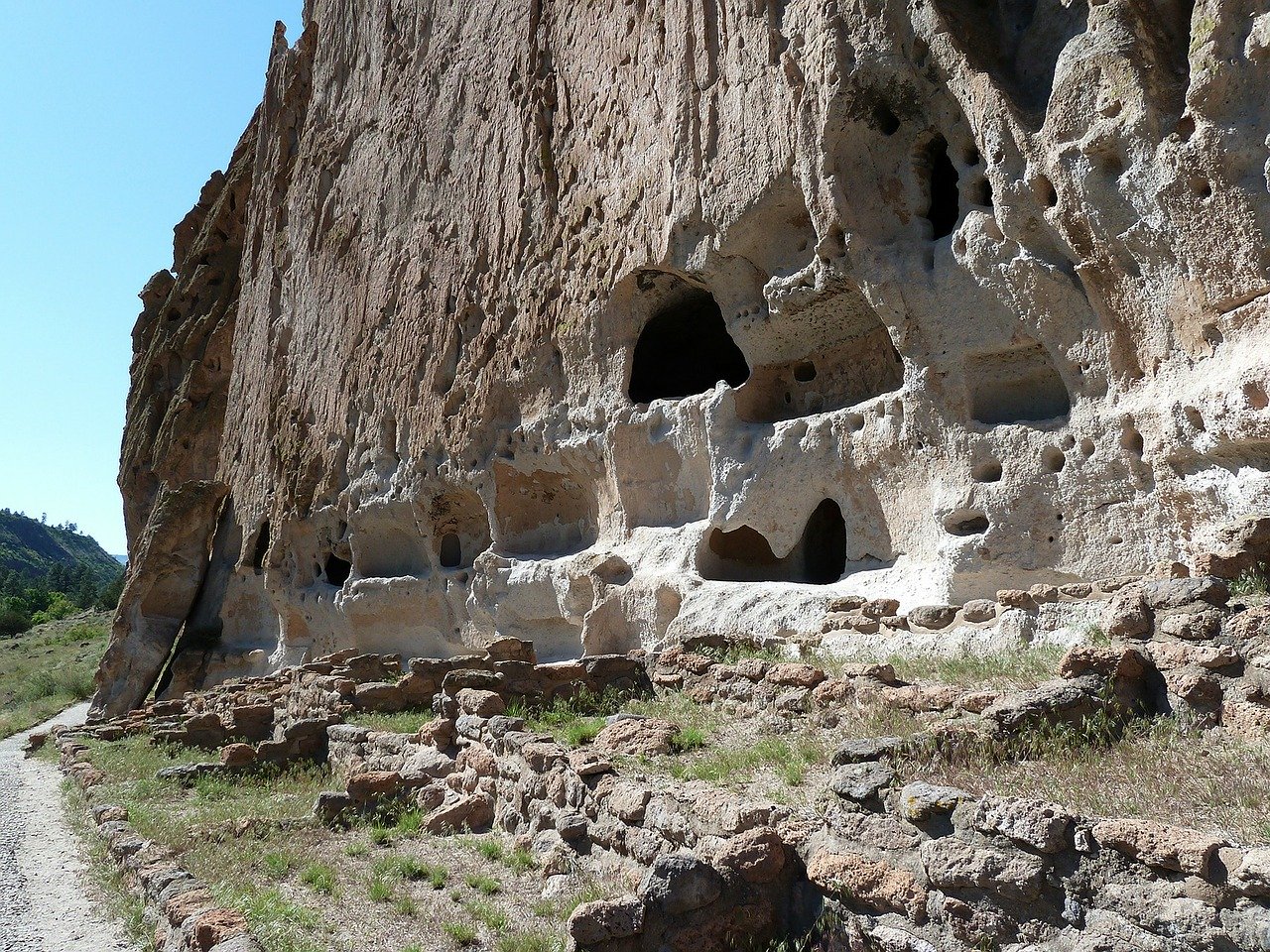
Bandelier National Monument lies in Frijoles Canyon on the Pajarito Plateau, where Ancestral Puebloans lived from about 1150 to the mid-1500s, whose descendants live at Cochiti and San Ildefonso pueblos, and it’s named after Swiss-born anthropologist Adolph Bandelier, guided here by men from Cochiti in 1880.
Bandelier’s homes include cavates, rooms carved into soft volcanic tuff from Valles Caldera eruptions more than a million years ago, the circular Tyuonyi pueblo with up to about 400 rooms, and Alcove House, 140 feet above the canyon floor and reached by four wooden ladders.
Adolph Bandelier set his 1890 novel The Delight Makers in Frijoles Canyon, and the monument’s visitor buildings, put up by the Civilian Conservation Corps in 1934–41, form the largest collection of CCC-built buildings at any National Park Service site.
7 – Albuquerque
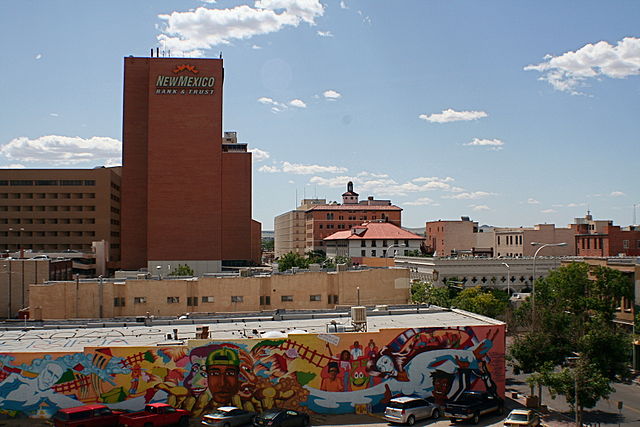
Albuquerque was founded in 1706 as La Villa de Alburquerque on the Rio Grande, named after the Duke of Alburquerque, then viceroy of New Spain, which is why it’s nicknamed “the Duke City”, though nobody knows exactly why it lost its first “r”.
Albuquerque’s highlights include Old Town plaza and its San Felipe de Neri Church (1793), the 1927 KiMo Theatre, a Pueblo Deco picture palace whose name comes from a Tiwa word, and the International Balloon Fiesta, which began with 13 balloons in 1972 and is widely billed as the world’s largest balloon festival.
Albuquerque is where Bill Gates and Paul Allen founded Microsoft in 1975 before moving to the Seattle area in 1979, where Bugs Bunny first said he “should’ve taken that left turn at Albuquerque” in 1945, and where Breaking Bad was both set and filmed.
8 – Carlsbad Caverns
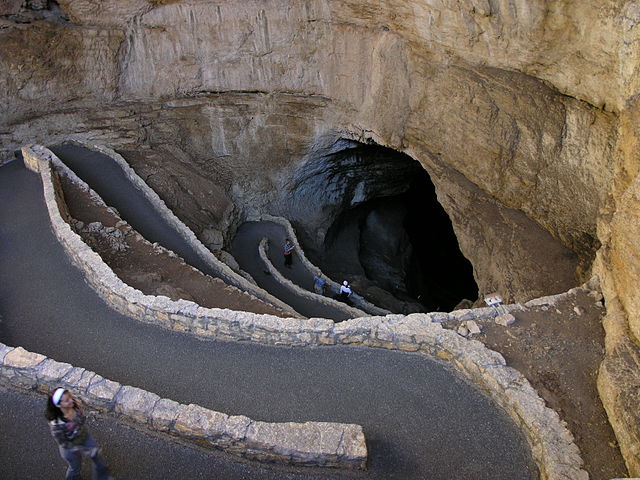
Carlsbad Caverns lies in the Guadalupe Mountains of south-east New Mexico, carved into the fossil Capitan Reef, laid down some 260 to 265 million years ago, and it became a national monument in 1923 and a national park in 1930.
Carlsbad Caverns’ sights include the Big Room, at 8.2 acres the largest readily accessible cave chamber in North America according to the park service, the switchback trail down through the natural entrance, a 750-foot elevator shaft, and summer evening flights of hundreds of thousands of Brazilian free-tailed bats.
Carlsbad Caverns was dissolved not by ordinary rainwater but by sulfuric acid, formed when hydrogen-sulfide-rich water met oxygen-rich water, and while teenage cowhand Jim White gets credit for exploring it from 1898, pictographs at the entrance show Native people knew the cave long before.
9 – Los Alamos
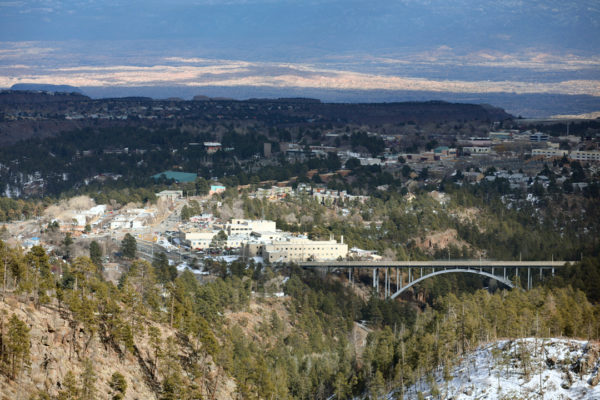
Los Alamos sits on the Pajarito Plateau, where a boys’ ranch school was chosen in late 1942 by J. Robert Oppenheimer, who knew the area from his ranch in the Pecos Valley, and General Leslie Groves as the secret laboratory that built the first atomic bombs.
Los Alamos’s sights include Fuller Lodge, the ranch school’s 1928 log dining hall designed by John Gaw Meem, the Bradbury Science Museum, and sites of the Manhattan Project National Historical Park, created in 2015 with Oak Ridge and Hanford.
During the war the whole town of Los Alamos shared a single mailing address, P.O. Box 1663, Santa Fe, and the 2023 film Oppenheimer shot scenes at Fuller Lodge but rebuilt the 1940s town at Ghost Ranch, since the real one had changed too much.
10 – Petroglyph National Monument
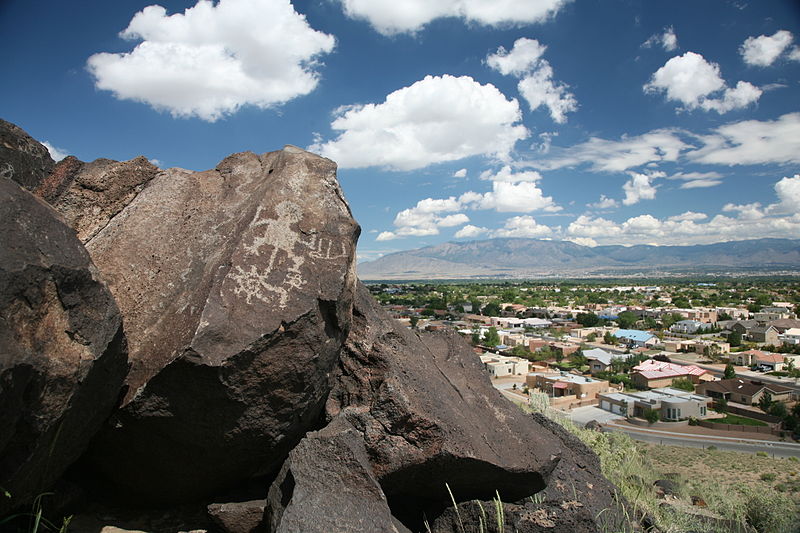
Petroglyph National Monument stretches along the western edge of Albuquerque, protecting about 24,000 images carved into dark volcanic boulders, most by Ancestral Puebloans between about 1300 and the late 1600s, with the earliest going back to around 2000 BC.
Petroglyph National Monument’s trails wind among the boulders of a long volcanic escarpment, formed by lava flows more than 100,000 years ago, where ancient animals, people and symbols share the rock with crosses, livestock brands and initials added by Spanish settlers.
Petroglyph National Monument lost part of its land in 1998, when Congress cut an 8.5-acre corridor out of it for the Paseo del Norte road, which was finished in 2007 after boulders were moved aside.
11 – White Sands
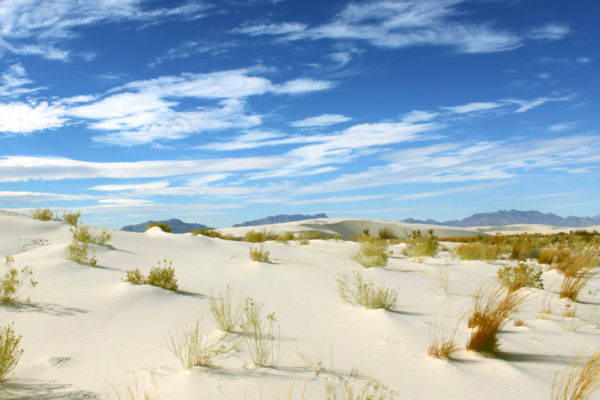
White Sands National Park lies in the Tularosa Basin of southern New Mexico and protects part of the world’s largest gypsum dunefield, about 275 square miles of brilliant white sand, and it became a national park in 2019 after 86 years as a national monument.
White Sands is best explored along Dunes Drive and across the dunes on foot, where the gypsum sand stays surprisingly cool underfoot even in summer, and the park is ringed by the White Sands Missile Range, home to the Trinity Site, where the first atomic bomb was tested in 1945.
White Sands holds fossil human footprints that scientists dated in 2021 to around 21,000 to 23,000 years ago, far earlier than people were long believed to have reached the Americas, and a 2023 follow-up study using different methods backed up the dates.
12 – Sandia Peak Tramway

Sandia Peak Tramway climbs from Albuquerque’s north-east edge to the crest of the Sandia Mountains, opened on 7 May 1966 and built by Bell Engineering of Lucerne, Switzerland.
Sandia Peak Tramway runs 2.7 miles and rises 3,819 feet to 10,378 feet, billed as the longest aerial tramway in the US, with views across the Rio Grande valley from the top.
The Sandia Mountains take their name from the Spanish word for watermelon, popularly said to describe the pink glow they turn at sunset, though nobody knows for sure how the name arose.
13 – Lincoln
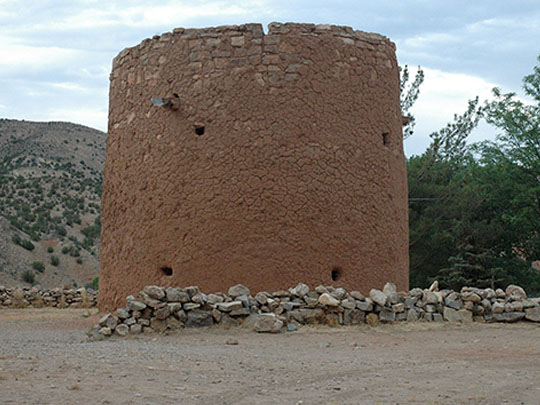
Lincoln sits in the Rio Bonito valley of south-central New Mexico, settled in the 1850s as La Placita del Río Bonito and renamed in 1869, and in 1878 it was the main battleground of the Lincoln County War between the Murphy–Dolan faction, known as “the House”, and the allies of English rancher John Tunstall and Alexander McSween.
Lincoln is preserved as Lincoln Historic Site, with sights including the courthouse in the old Murphy–Dolan store, the Tunstall Store with 19th-century goods on its original shelves, the round stone Torreón built for defence against Apache raids, and the Wortley Hotel.
Lincoln’s feud had a strong Irish flavour, since the House was run by Wexford-born Lawrence Murphy and Galway-born James Dolan, and Sheriff William Brady, gunned down on the main street in 1878, was born in Cavan, while in 1881 Billy the Kid escaped from the courthouse two weeks before his hanging date, killing both his guards, though the bullet hole shown in the wall is probably not genuine.
14 – Taos Pueblo
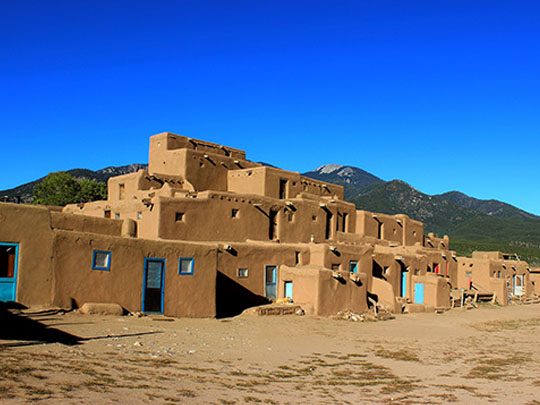
Taos Pueblo stands just north of the town of Taos at the foot of the Sangre de Cristo Mountains, home of Tiwa-speaking people who have lived in the valley for more than 1,000 years, though archaeologists date the present buildings to around the 1300s and 1400s, and it has been a World Heritage Site since 1992.
Taos Pueblo centres on two multi-storey adobe complexes, Hlauuma, the north house, and Hlaukwima, the south house, either side of the Rio Pueblo de Taos, which flows down from sacred Blue Lake, plus the 1850 San Geronimo Chapel and the ruins of an older church, and electricity and running water aren’t allowed inside the old village walls.
Taos Pueblo is where Po’pay planned the 1680 Pueblo Revolt, and in 1847 US troops shelled its old church during the Taos Revolt, killing about 150 people, but in 1970 President Nixon returned Blue Lake, taken in 1906 for a national forest, in what’s described as the first return of land to a tribe because of its religious significance.
15 – Fort Sumner
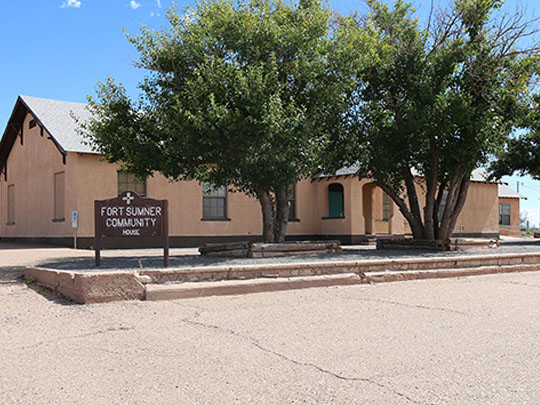
Fort Sumner lies on the Pecos River in eastern New Mexico, where in the 1860s the Bosque Redondo reservation held more than 8,500 Navajo, many forced there on the Long Walk of over 350 miles, and nearly 500 Mescalero Apache at its peak, with thousands dying before a treaty signed at the fort on 1 June 1868 let the Navajo return home.
Fort Sumner’s sights include the Bosque Redondo Memorial, designed by Navajo architect David Sloan to echo a hogan and a tepee, and the grave of Billy the Kid, shot dead by Pat Garrett in Pete Maxwell’s bedroom near midnight on 14 July 1881 and buried beside his pals Tom O’Folliard and Charlie Bowdre.
Fort Sumner’s Irish links include Lucien Maxwell, son of an Irish immigrant, who bought the fort in 1870, and O’Folliard, son of Irish immigrants, while nobody knows where Billy lies, since floods washed away the markers, and his headstone was stolen in 1950, found in Texas in 1976 and stolen again in 1981, before being shackled in an iron cage.