
Wikimedia Commons / CC-BY-SA-3.0 / GFDL
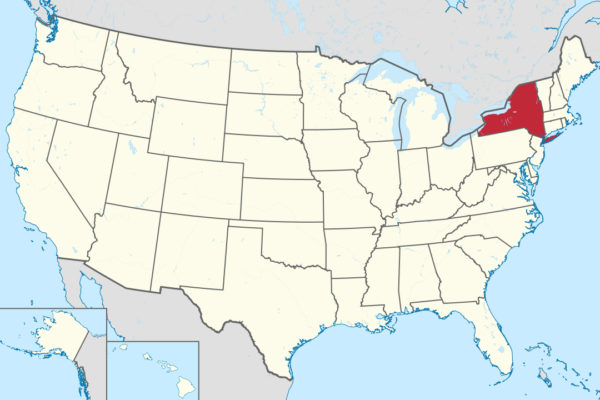
Capital: Albany
Population: 20 million+
Language: English
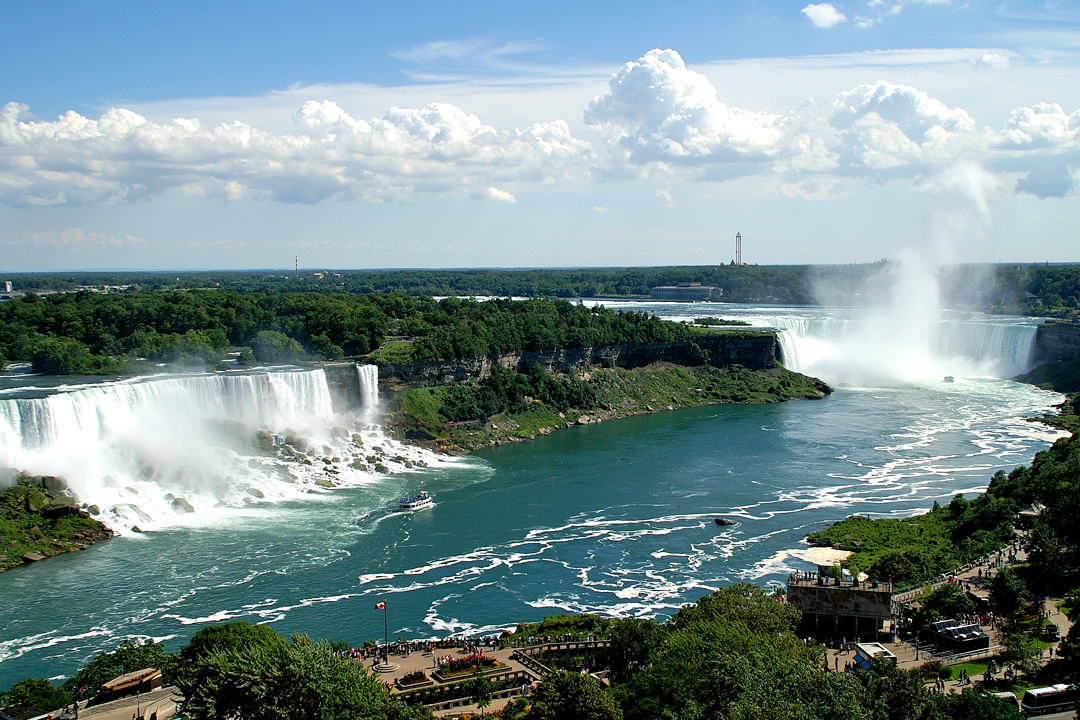
1 – Niagara Falls (above)
Niagara Falls State Park, on the New York side of the Niagara River, opened on 15 July 1885 and is billed as the oldest state park in the US, the fruit of the “Free Niagara” campaign backed by landscape architect Frederick Law Olmsted to stop private landowners charging visitors just to see the falls.
Niagara Falls State Park gives access to the American and Bridal Veil Falls, Goat Island, the Cave of the Winds walkways and the Maid of the Mist boats, which began in 1846 as a ferry across the river before switching to sightseeing trips.
Niagara Falls was partly switched off in 1969, when engineers dammed the American Falls dry for about five months, and the falls never freeze solid in winter, while Dublin-born Oscar Wilde’s famous jibe in 1883 was that the falls must be the “first” disappointment in American married life, not the “second”, as the line is usually misquoted.
2 – Statue of Liberty
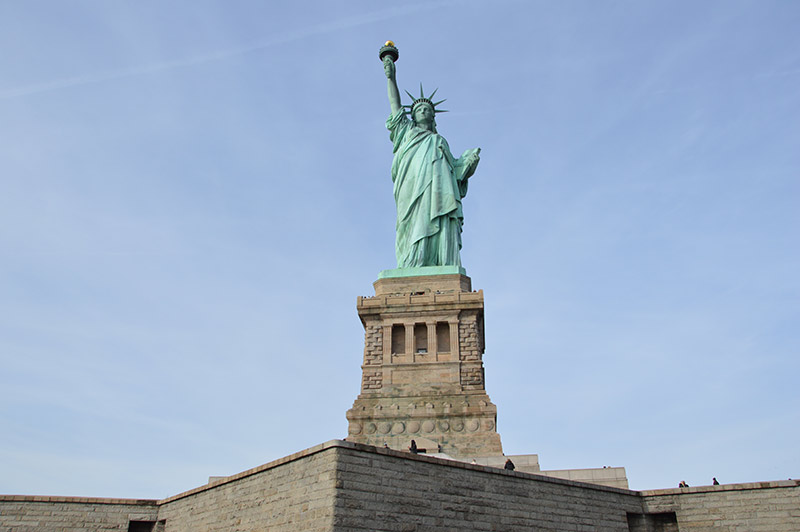
The Statue of Liberty stands on Liberty Island, called Bedloe’s Island until 1956, which is New York territory under an 1834 agreement despite sitting on the New Jersey side of the harbour, and it was dedicated on 28 October 1886 as a gift from France, sculpted by Frédéric Auguste Bartholdi around an iron frame engineered by Gustave Eiffel’s firm.
The Statue of Liberty rises 151 feet, or 305 feet with its pedestal, holding a gold-leafed torch and a tablet inscribed July IV MDCCLXXVI, with a broken shackle and chain at her feet, and the pedestal was paid for by more than 120,000 donors after an appeal by Joseph Pulitzer’s newspaper, the World.
The Statue of Liberty was copper-coloured at first and had turned fully green by about 1906, when plans to paint it were dropped after public protest, and Emma Lazarus’s poem “The New Colossus”, with its “huddled masses”, was written in 1883 to raise money for the pedestal but went up on a plaque only in 1903.
3 – Central Park, New York

Central Park covers 843 acres in the middle of Manhattan, laid out to Frederick Law Olmsted and Calvert Vaux’s Greensward Plan, which won an 1858 design contest, on land that included Seneca Village, a community of about 225 people, roughly two-thirds African American and one-third Irish, cleared by eminent domain in 1857.
Central Park’s highlights include Bethesda Fountain, crowned by Emma Stebbins’s 1873 Angel of the Waters, the first major public art commission for a woman in New York City, and Strawberry Fields, dedicated to John Lennon on what would have been his 45th birthday, with an Imagine mosaic given by the city of Naples.
Central Park looks natural but is almost entirely man-made, built by about 20,000 workers using, it’s often said, more gunpowder than was fired at Gettysburg, though its rocky outcrops are real bedrock scraped by glaciers and its lakes were made by damming natural springs and streams.
4 – Times Square, New York
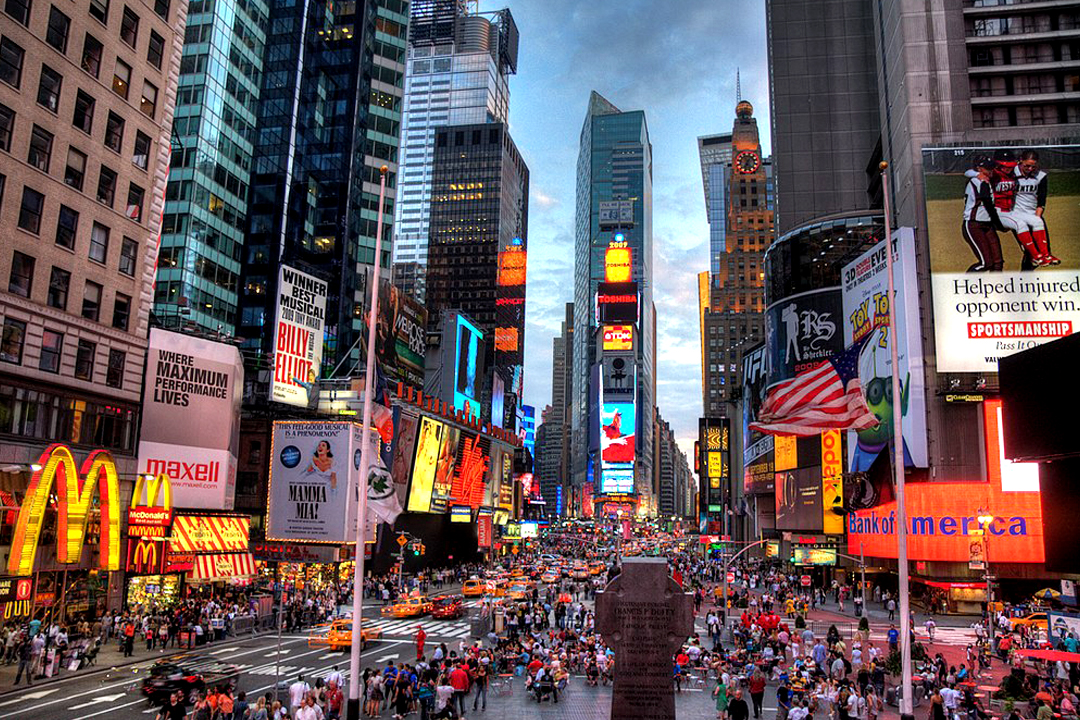
Times Square, where Broadway crosses Seventh Avenue in Midtown Manhattan, was called Longacre Square, after London’s Long Acre carriage district, until April 1904, when it was renamed for the New York Times, which had just moved into a tower there.
Times Square’s northern end, Duffy Square, holds the TKTS discount-ticket booth and statues of Father Francis Duffy, chaplain of New York’s “Fighting 69th” regiment in the First World War, and Broadway showman George M. Cohan, son of Irish parents.
Times Square’s New Year’s Eve ball first dropped on 31 December 1907, and since the millennium its crystals have come from Waterford Crystal, while the woman in the famous 1945 V-J Day kiss photo, most likely Greta Zimmer Friedman, was a dental assistant, not a nurse.
5 – Ellis Island

Ellis Island takes its name from merchant Samuel Ellis, who owned it in the 1770s, after earlier names including Gibbet Island, from the pirates hanged there, and in 1892 it took over from Castle Garden at the Battery, America’s first official immigration depot, with an estimated third or more of Americans having an ancestor who passed through.
Ellis Island’s museum shows how doctors chalked letters on suspect arrivals’ coats, such as E for eyes and X for suspected mental defect, and flipped back eyelids with a buttonhook to check for trachoma, while the abandoned hospital complex on the south side, where about 350 babies were born, opened to guided tours in 2014.
Ellis Island’s first arrival, Annie Moore from Cork, was confused for decades with a woman who died in Texas, until research led by genealogist Megan Smolenyak showed in 2006 that the real Annie stayed in New York, married a Fulton Fish Market salesman, had 11 children and lay in an unmarked grave in Queens, which got a headstone in 2008.
6 – Albany
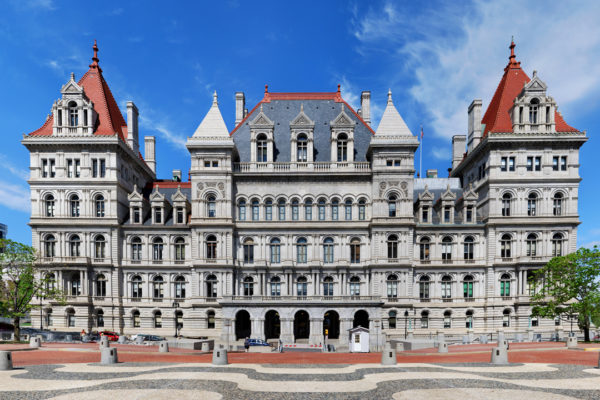
Albany, on the Hudson River, began as the Dutch West India Company’s Fort Orange in 1624, became the village of Beverwijck in 1652 and was renamed Albany by the English in 1664, and the New York State Museum calls it the oldest continuously occupied European settlement in the US north of Virginia, while it has been the state capital since 1797.
Albany’s centrepiece is the New York State Capitol, built between 1867 and 1899 for $25 million and said to be the most expensive government building of its time, with a “Million Dollar Staircase” carved with 77 faces, beside the Empire State Plaza, built under Governor Nelson Rockefeller between 1965 and 1978.
Albany’s Irish-Catholic neighbourhoods and the Democratic machine run by Dan O’Connell from 1921 to 1977 fed the novels of Albany-born William Kennedy, descended from Irish immigrants, whose Ironweed won the 1984 Pulitzer Prize and became a 1987 film starring Jack Nicholson.
7 – Buffalo
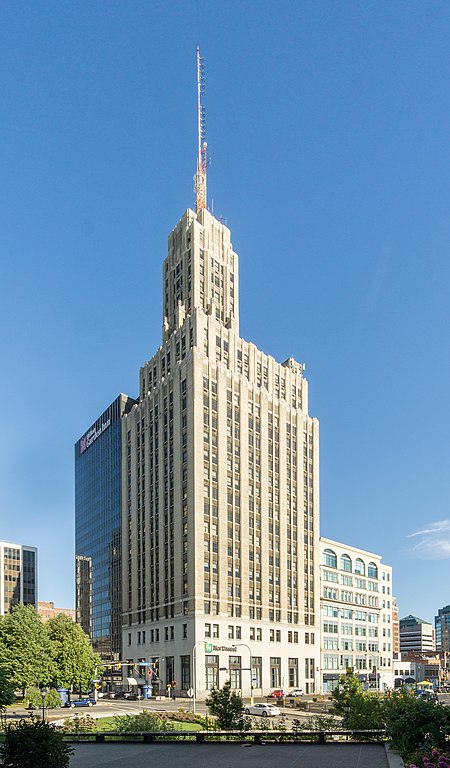
Buffalo sits at the eastern end of Lake Erie where the Niagara River begins, was burned by British forces on 30 December 1813 during the War of 1812, and boomed after 1825 as the western end of the Erie Canal, much of it dug by Irish labourers.
Buffalo’s landmarks include the 1929 Rand Building, the city’s tallest for 43 years, Louis Sullivan’s 1896 Guaranty Building and the 1931 Art Deco City Hall, while its waterfront is where Joseph Dart built the world’s first steam-powered grain elevator in 1842.
Buffalo’s name has nothing to do with the French “beau fleuve”, a story the Buffalo History Museum rates as unlikely, and on 1 June 1866 hundreds of Irish Fenians, many of them Civil War veterans, crossed the Niagara River from Buffalo to invade Canada under Monaghan-born John O’Neill, beating Canadian militia at the Battle of Ridgeway the next day.
8 – New York City
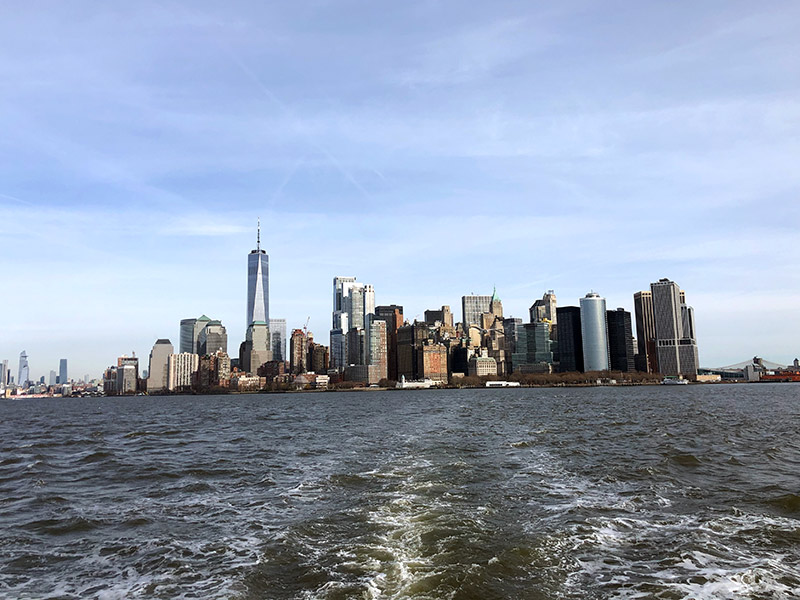
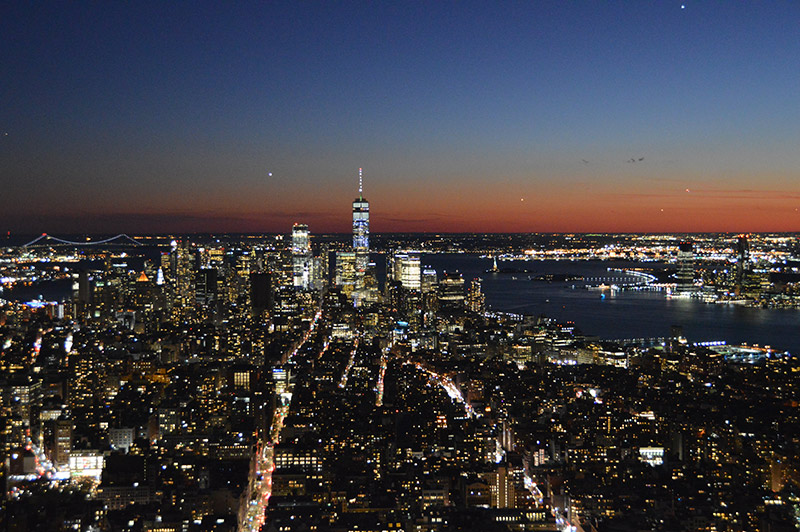
New York City began as the Dutch trading post of New Amsterdam on Lenape land in the 1620s, was taken by the English in 1664, and served as the first capital of the United States, where George Washington took the oath of office at Federal Hall on 30 April 1789.
New York City’s landmarks include Grand Central Terminal, opened in 1913, whose starry ceiling runs backwards, most likely through a copying error, the Empire State Building, begun on St Patrick’s Day 1930 and opened just over a year later, and St Patrick’s Cathedral, begun in 1858 by Tyrone-born Archbishop John Hughes.
New York City’s Manhattan was never “bought for $24 of beads”, since the only record, a 1626 Dutch letter, mentions trade goods worth 60 guilders, turned into $24 by 19th-century historians, and the Lenape probably didn’t see it as a permanent sale, while the city’s St Patrick’s Day parade, first marched in 1762 by Irish soldiers in the British Army, is older than the United States.
9 – Thousand Islands
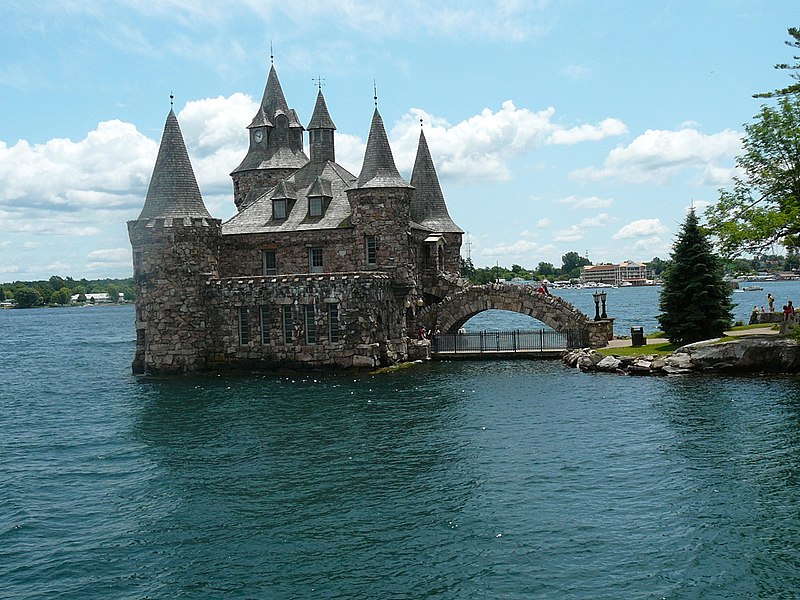
The Thousand Islands are scattered along the St Lawrence River on the US–Canada border, a Gilded Age retreat for the rich, and the Thousand Islands Bridge linking the two countries was dedicated in 1938 by Franklin D. Roosevelt and Canadian prime minister Mackenzie King.
The Thousand Islands’ best-known sight is Boldt Castle on Heart Island, begun in 1900 by German-born hotelier George Boldt for his wife Louise and abandoned when she died in 1904, then left empty for 73 years until the Thousand Islands Bridge Authority bought it for $1 in 1977 and began restoring it.
The Thousand Islands number 1,864 by the usual definition, which counts only rocks above water all year with at least a square foot of land and two living trees, and the “world’s shortest international bridge” on Zavikon Island is a myth, since both islands it links are in Canada, while nobody really knows who invented Thousand Island dressing.
10 – East Hampton & Montauk

East Hampton, settled by the English in 1648 near the eastern end of Long Island, takes in Montauk at the island’s tip, where the Montauk Point Lighthouse, authorised under George Washington in 1792 and finished in 1796, was the first lighthouse built in New York State.
East Hampton’s sights include Montauk’s lighthouse on its eroding bluff, the Pollock-Krasner House in Springs, where Jackson Pollock painted, and the Home Sweet Home Museum, though songwriter John Howard Payne, whose song gave it its name, never actually lived there.
Montauk was the original setting and working title of Stranger Things, inspired partly by the “Montauk Project” conspiracy theory about secret experiments at nearby Camp Hero, and Montauk shark fisherman Frank Mundus is widely regarded as the model for Quint in Jaws.
11 – McKinley Monument Buffalo
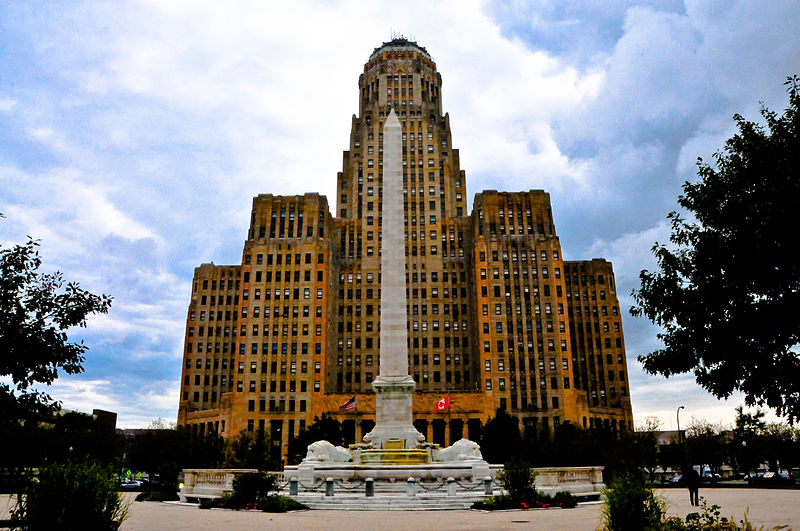
The McKinley Monument is a marble obelisk nearly 100 feet tall in Niagara Square, in front of Buffalo City Hall, dedicated in September 1907 to President William McKinley, who was shot on 6 September 1901 at Buffalo’s Pan-American Exposition by anarchist Leon Czolgosz and died eight days later.
The McKinley Monument was designed by Carrère and Hastings, architects of the Pan-American Exposition, and is guarded by four sleeping lions by sculptor Alexander Phimister Proctor, symbols of strength, and turtles, emblems of eternal life.
The McKinley Monument recalls an exposition famous for its electric lights, yet the hospital where McKinley was operated on had none, so mirrors reflected sunlight into the wound, and an X-ray machine on show at the fair was never used to look for the bullet, which was never found, while Theodore Roosevelt was sworn in as president at a Buffalo house.
12 – Ground Zero Memorial
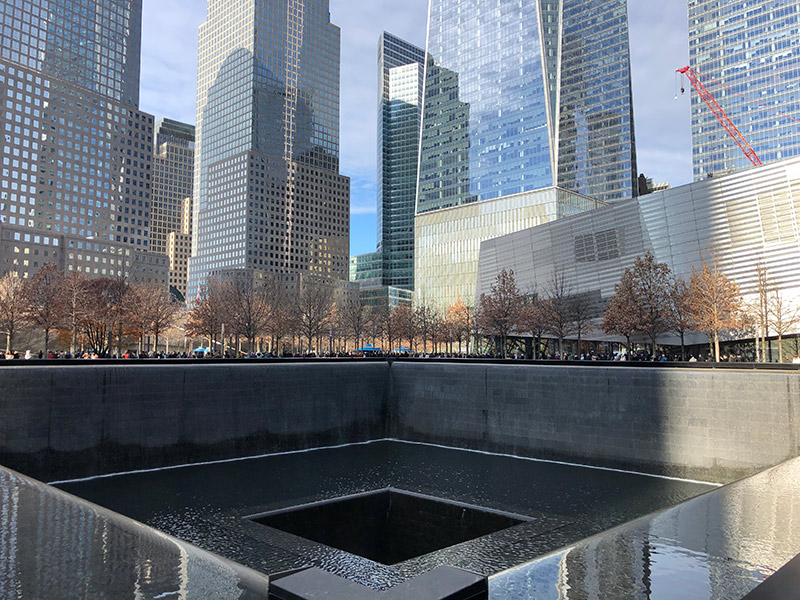
Ground Zero in Lower Manhattan is where the Twin Towers of the World Trade Center stood until 11 September 2001, and its memorial, “Reflecting Absence” by Michael Arad and Peter Walker, was dedicated on the tenth anniversary of the attacks.
Ground Zero’s memorial sets two pools in the footprints of the towers, ringed by bronze panels bearing the names of the dead, alongside the 9/11 Museum, the Survivor Tree, a Callery pear pulled from the rubble and nursed back to health, and One World Trade Center, which at 1,776 feet is ranked the tallest building in the Western Hemisphere.
At Ground Zero a white rose is placed on each victim’s name on their birthday, and among the names is FDNY chaplain Father Mychal Judge, son of immigrants from County Leitrim and the first victim certified by the medical examiner, while two blocks away the Irish Hunger Memorial holds a cottage brought from County Mayo and stones from all 32 counties.
13 – Brooklyn
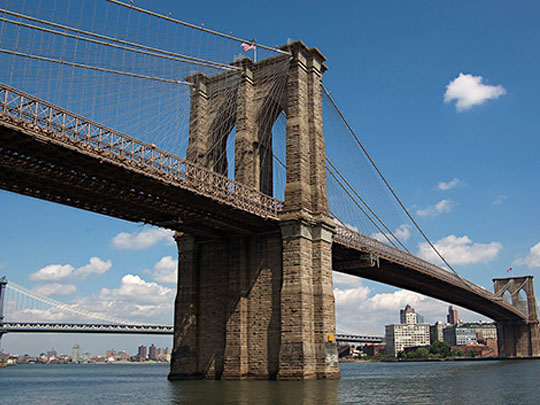
Brooklyn, across the East River from Manhattan, saw the Battle of Long Island in August 1776, by most counts the largest battle of the Revolutionary War, after which Washington slipped his army across the river in a single night, and it stayed an independent city until 1 January 1898, when it merged into New York City in what local papers called the “Great Mistake”.
Brooklyn’s sights include the Brooklyn Bridge, the first bridge to use steel for its cable wire, Coney Island’s 1927 Cyclone roller coaster and Nathan’s hot dogs, sold since 1916, and Vinegar Hill, named after the 1798 battle near Enniscorthy to attract Irish settlers and long nicknamed “Irishtown”.
The Brooklyn Bridge’s designer, John Roebling, died of tetanus in 1869 after a boat crushed his toes, and when his son Washington was crippled by the bends, Washington’s wife Emily carried his orders to the site and rode first across the finished bridge in 1883, while the next year P.T. Barnum marched 21 elephants over it to prove it was safe.
14 – Hudson Valley
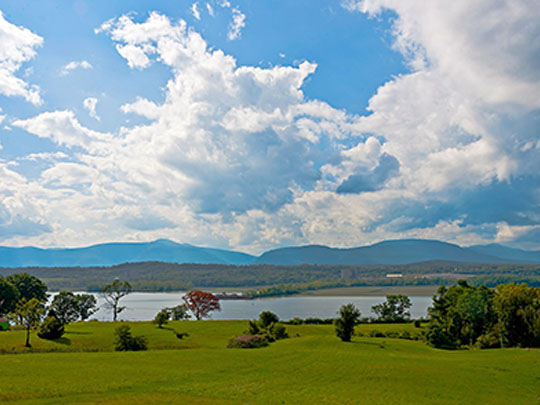
The Hudson Valley follows the Hudson River north from New York City, named after Englishman Henry Hudson, who sailed up it in 1609 for the Dutch East India Company, though Giovanni da Verrazzano had entered New York Bay 85 years earlier, and the river is a tidal estuary as far as Troy, its current reversing with the tide.
The Hudson Valley’s sights include West Point, the US Military Academy since 1802, where pieces of the Great Chain stretched across the river in 1778 are on show, Franklin D. Roosevelt’s home and library at Hyde Park, Frederic Church’s Persian-style mansion Olana, and Sleepy Hollow, where Washington Irving is buried.
The Hudson Valley’s West Point was the prize in Benedict Arnold’s 1780 plot to hand the fort to the British, foiled when Major John André was captured, while Irish-born General Richard Montgomery, killed attacking Quebec in 1775, is remembered at Montgomery Place, the riverside estate his widow built, and North Tarrytown renamed itself Sleepy Hollow in 1996 to draw tourists.
15 – Seneca Falls

Seneca Falls, in the Finger Lakes, hosted the first women’s rights convention at the Wesleyan Chapel on 19–20 July 1848, organised by Elizabeth Cady Stanton, Lucretia Mott and others, where 100 people, 68 women and 32 men, signed the Declaration of Sentiments.
Seneca Falls’ sights include Women’s Rights National Historical Park, set up in 1980 around what’s left of the Wesleyan Chapel, and the National Women’s Hall of Fame, founded in 1969 and housed in an 1844 knitting mill.
Seneca Falls’ call for women’s right to vote was the only resolution that didn’t pass unanimously, carried after Frederick Douglass spoke for it, and Charlotte Woodward, the only signer still alive when American women won the vote in 1920, was too ill to cast a ballot, while the town’s claim to be the model for Bedford Falls in It’s a Wonderful Life is unproven.
16 – Saratoga
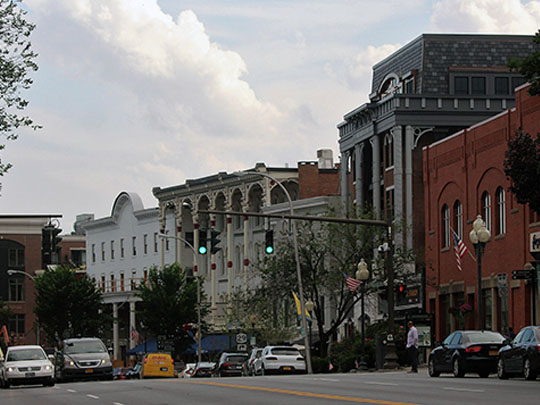
Saratoga, north of Albany, is where American forces won the Battles of Saratoga in September and October 1777, forcing British general John Burgoyne to surrender on 17 October, a turning point that persuaded France to join the war.
Saratoga National Historical Park’s sights include the battlefield and the Boot Monument, which honours the wounded leg of “the most brilliant soldier of the Continental Army” without naming him, since he was Benedict Arnold, who later turned traitor, while the nearby 155-foot Saratoga Monument leaves one niche empty for him.
Saratoga Springs’ race course began in 1863 under Tipperary-born John Morrissey, a former street fighter, boxing champion and congressman who also built the town’s casino, and it’s nicknamed the “Graveyard of Champions”, where Man o’ War suffered his only defeat in 1919, while the story that George Crum invented the potato chip there in 1853 is a myth.
17 – Lake Placid / Adirondacks
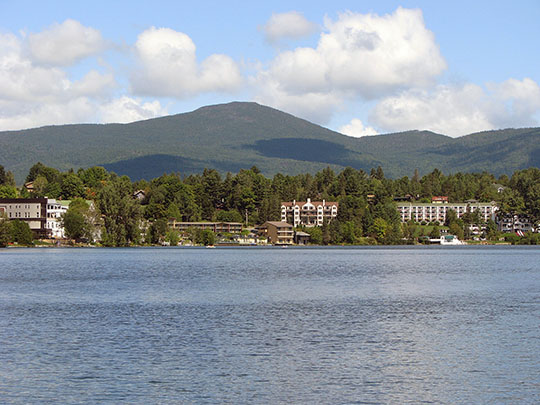
The Adirondacks fill north-east New York, where the Adirondack Park, created in 1892, covers about 6 million acres, which the park agency says is bigger than Yellowstone, Everglades, Glacier and Grand Canyon national parks combined, and its state-owned Forest Preserve has been protected as “forever wild” in the state constitution since 1894.
Lake Placid, in the heart of the Adirondacks, hosted the Winter Olympics in 1932 and 1980, and nearby sights include Mount Marcy, at 5,344 feet the highest point in New York, and John Brown’s farm, where the anti-slavery raider was buried in 1859 after his hanging.
Lake Placid’s “Miracle on Ice”, the US hockey team’s 4–3 win over the Soviet Union on 22 February 1980, wasn’t the gold-medal game, since the Americans still had to beat Finland two days later, while at the same Games speed skater Eric Heiden won all five of his events, and the Lake Placid Club, founded by Melvil Dewey of the Dewey Decimal system, barred Jews.
18 – Woodstock (Bethel)
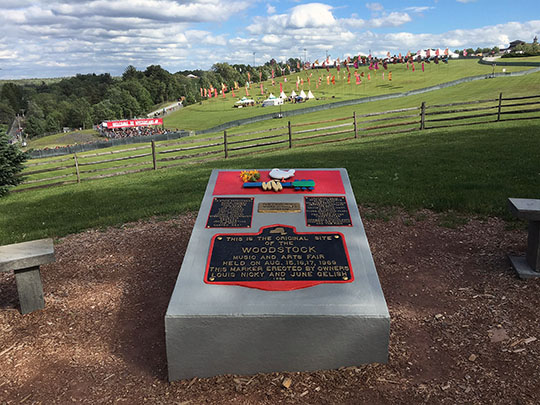
The Woodstock festival of 15–18 August 1969 took its name from the town of Woodstock, where organiser Michael Lang lived and had planned a recording studio, but it was held about 60 miles away on Max Yasgur’s dairy farm in Bethel after the town of Wallkill blocked it.
Woodstock’s festival site in Bethel is home to the Bethel Woods Center for the Arts, with a concert pavilion opened in 2006 and a museum opened in 2008, beside the field where some 400,000 people gathered and the event went free once organisers couldn’t collect tickets.
Woodstock’s most famous resident, Bob Dylan, skipped the festival, leaving for England the day it began to headline the Isle of Wight Festival two weeks later, while Jimi Hendrix, the closing act, played “The Star-Spangled Banner” on the Monday morning to a crowd of only a few tens of thousands.