
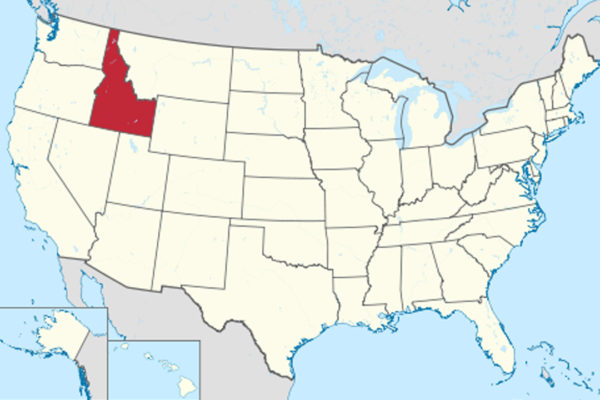
Wikimedia Commons / CC-BY-SA-3.0 / GFDL
Capital: Boise
Population: 2.0 million+
Language: English
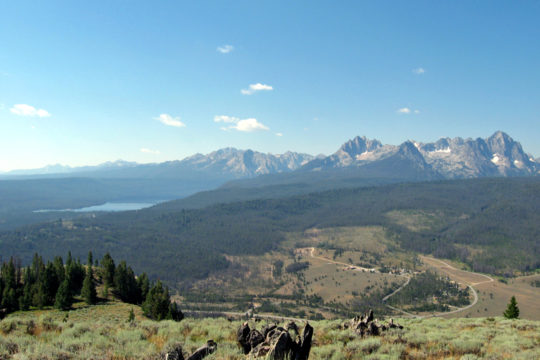
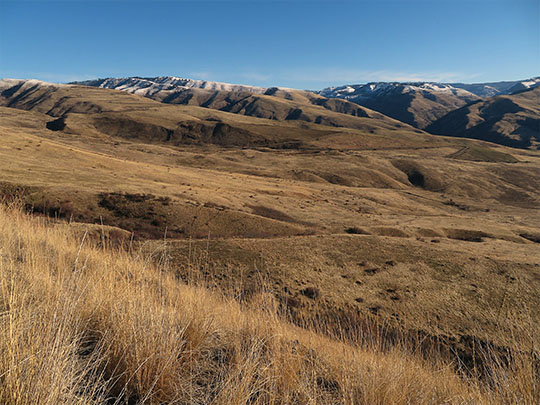
1 – Sawtooth Valley (above)
Sawtooth Valley, in the mountains of central Idaho, lies beneath the Sawtooth Range, with 57 peaks over 3,000 m, and the first outsider known to have seen it was the Scottish fur trader Alexander Ross in 1824, while a silver rush built the mining towns of Sawtooth City and Vienna in 1878–79, both deserted by 1888.
Sawtooth Valley is seen at its best from the overlook at Galena Summit, 2,652 m up, and the Sawtooth National Recreation Area takes in nearly 400 lakes in the Sawtooth Wilderness and the Sawtooth Fish Hatchery, whose young Chinook salmon swim some 1,450 km to the Pacific.
The Sawtooth National Recreation Area was created in 1972 after a fight over a planned open-pit molybdenum mine at Castle Peak in the nearby White Cloud Mountains, which helped elect Cecil Andrus governor in 1970, and the White Clouds became wilderness in 2015, named after Andrus in 2018, while Clint Eastwood filmed Pale Rider in the Boulder Mountains in 1984.
2 – Shoshone Falls
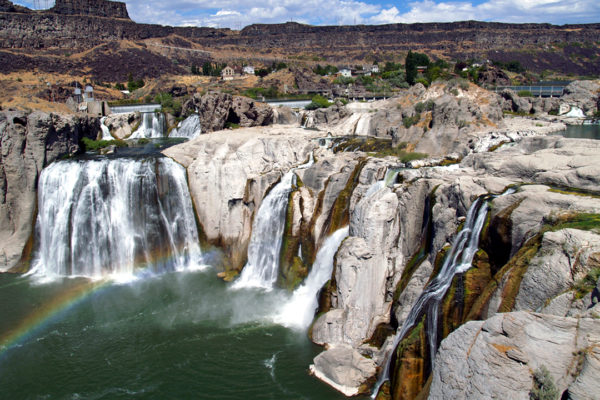
Shoshone Falls drops 65 m over a horseshoe of basalt about 275 m wide on the Snake River at Twin Falls, in southern Idaho, higher than Niagara, and it was the natural upstream limit for salmon, carved by the Bonneville Flood near the end of the last ice age.
Shoshone Falls Park has viewing platforms on the canyon rim, with the falls at their best in spring, and nearby the Perrine Bridge, 148 m above the river, is a rare place where BASE jumping is legal all year without a permit.
When Milner Dam upstream closed its gates in 1905, Shoshone Falls went dry, and irrigation can slow it to a trickle in late summer, while just to the west Evel Knievel’s Skycycle failed to clear the Snake River Canyon on 8 September 1974, its parachute opening early, but Eddie Braun made the jump in 2016 in a rocket by the son of Knievel’s designer.
3 – Coeur d’Alene
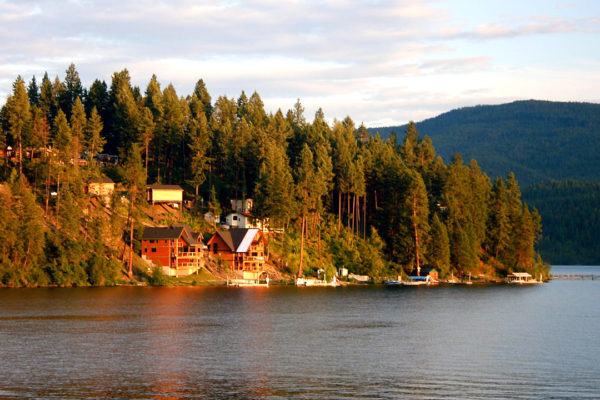
Coeur d’Alene, in the Idaho Panhandle on a lake 40 km long, takes its name from the French for “heart of an awl”, traditionally said to describe the Schitsu’umsh people as sharp traders, and in 2001 the US Supreme Court confirmed that the bed of the southern part of the lake is held in trust for the Coeur d’Alene Tribe.
Coeur d’Alene has Tubbs Hill, the resort’s floating boardwalk, billed as the world’s longest, its floating golf green and wintering bald eagles, and to the east is the Old Mission at Cataldo, built in 1850–53 by Jesuit missionaries and Coeur d’Alene people without nails, Idaho’s oldest standing building.
East of Coeur d’Alene, the silver mines of the Silver Valley saw labour wars in 1892 and 1899, when miners hijacked a train and blew up the Bunker Hill company’s mill with some 1,400 kg of dynamite, while a union leader born in County Donegal, Ed Boyce, jailed after the 1892 strike, later became president of the Western Federation of Miners.
4 – Upper Mesa Falls

Upper Mesa Falls drops 35 m across the Henrys Fork of the Snake River in eastern Idaho, near Ashton and Yellowstone, over a layer of volcanic rock called the Mesa Falls Tuff, laid down about 1.3 million years ago by the second of Yellowstone’s three giant caldera eruptions.
At Upper Mesa Falls a short walkway leads to viewing points beside the falls, about 60 m wide, and the Big Falls Inn of the early 1900s, once a hotel and dance hall on the road to Yellowstone, is the visitor centre, with Lower Mesa Falls, 20 m high, just downstream on the Mesa Falls Scenic Byway.
The Forest Service calls Upper and Lower Mesa Falls the last major undisturbed falls in the Columbia River system, never dammed or diverted, though a dam upstream at Island Park regulates the river, and the Big Falls Inn is on the National Register of Historic Places.
5 – McCall
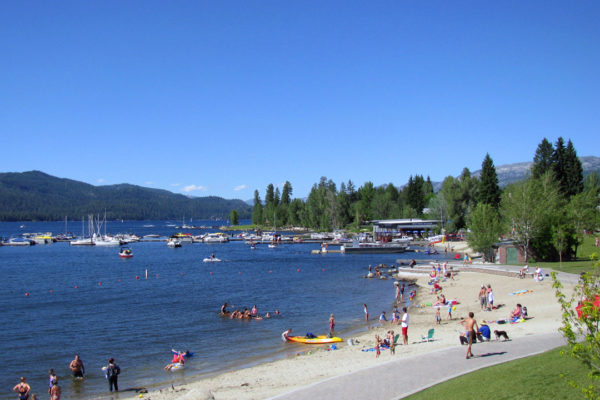
McCall, on Payette Lake in the mountains of west-central Idaho, was settled around 1889 by Tom McCall, who traded a wagon and team for a squatter’s claim to 65 ha by the lake, and it was a logging town for most of the 20th century, until its sawmill, by then Boise Cascade’s, closed in 1977.
McCall has skiing at Brundage Mountain, the lakeside peninsula of Ponderosa State Park and, in February, a Winter Carnival with giant snow sculptures, which grew from a sports carnival of 1924 and was revived in 1965, while smokejumpers have been based here since 1943.
McCall’s lake monster, reported by settlers from around 1920 and covered by Time in 1944 as “Slimy Slim”, was renamed Sharlie in a 1954 newspaper contest, after a radio catchphrase, “Vas you dere, Sharlie?”, and the teacher-astronaut Barbara Morgan taught in McCall’s schools before flying on Endeavour in 2007.
6 – Clearwater National Forest
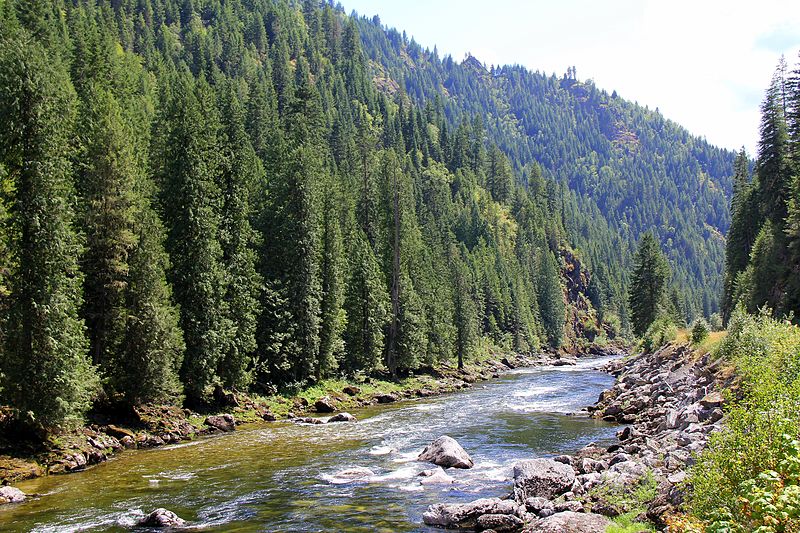
Clearwater National Forest, in the mountains of north-central Idaho, was set up in 1908, and in September 1805 Lewis and Clark struggled across it on the Lolo Trail, starving, until Clark reached Weippe Prairie, where the Nez Perce fed them buffalo meat, dried salmon, berries and roots.
Clearwater National Forest has the Lolo Motorway, a rough dirt road built in 1925–34 along the ridgetop route of the old trail, the giant cedars of the Bernard DeVoto Memorial Grove and a way into the Selway-Bitterroot, one of the first wilderness areas protected in 1964.
On the Lolo Trail Lewis and Clark ate colts, a coyote, crayfish and “portable soup”, naming Colt Killed Creek after one meal, and listed 9 kg of candles among their provisions, though no journal says they ate them, while in 1877 the Nez Perce bands who had fed them fled the US Army along the same trail.
7 – Boise
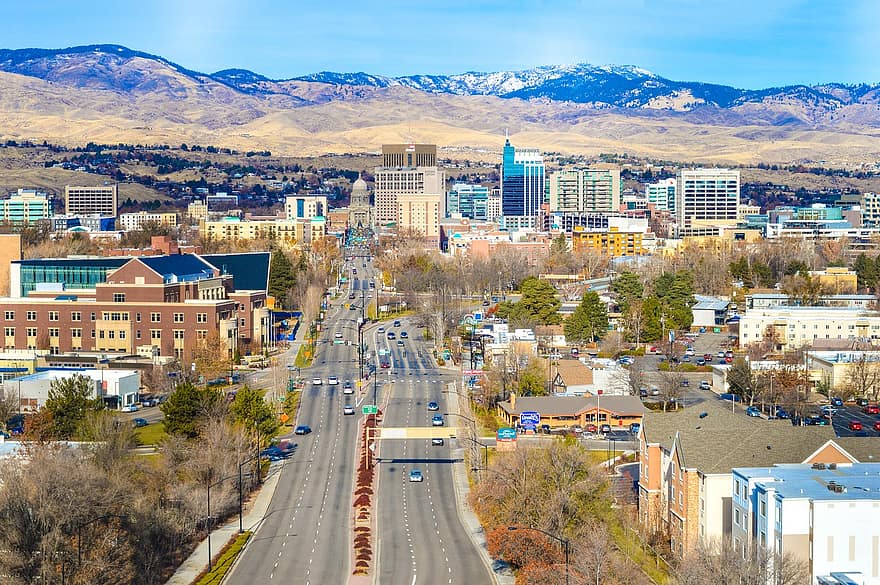
Boise, on the Boise River in southwest Idaho, takes its name from la rivière boisée, “the wooded river”, the name French-Canadian trappers gave it, probably not from explorers crying “Les bois!”, and it grew from an army fort of 1863 to take the capital from Lewiston in December 1864, along with the territorial seal, stolen as Lewiston tells it.
Boise’s sights include the Idaho State Capitol of 1905–20, which its commission says is the only US capitol heated by geothermal water, the Basque Block, heart of one of the largest Basque communities in the US, the Boise River Greenbelt and the blue turf at Boise State’s stadium, in 1986 the world’s first non-green artificial field.
Boise’s oldest family home is a log cabin built in 1863 by John O’Farrell, a miner from County Tyrone, for his wife, Mary Ann Chapman, from County Cork, and it was also the town’s first place of Catholic worship, standing near its original site on Fort Street.
8 – Craters of the Moon National Monument

Craters of the Moon National Monument and Preserve covers a vast field of lava flows and cinder cones on the Snake River Plain of central Idaho, formed along a crack in the earth called the Great Rift in eight eruptive periods from 15,000 to about 2,100 years ago, and protected since 1924.
Craters of the Moon has an 11 km Loop Road, the climb up Inferno Cone, spatter cones and lava tubes such as Indian Tunnel, open with a free permit, and it is an International Dark Sky Park, while near the gateway town of Arco is EBR-I, the first power plant to make usable electricity from nuclear fission, in 1951.
The Apollo 14 crew, Alan Shepard and Edgar Mitchell, with their backups, Joe Engle and Gene Cernan, came to Craters of the Moon in August 1969 to learn volcanic geology, and the US Geological Survey says another eruption on the Great Rift might be expected within the next thousand years.
9 – Sandpoint and Schweitzer
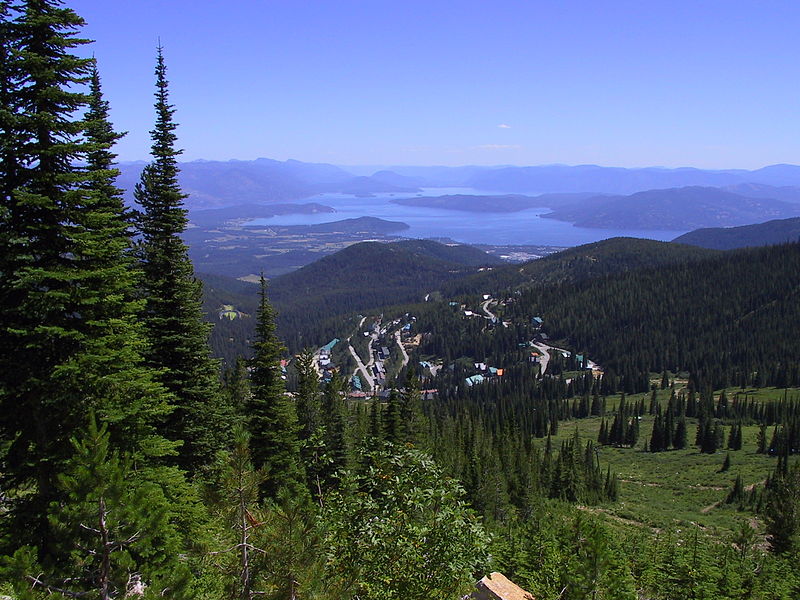
Sandpoint stands on Lake Pend Oreille in the Idaho Panhandle, Idaho’s largest lake, 350 m deep, and takes its name from the “point of sand” noted by the explorer David Thompson in 1809, when he built Kullyspell House on the lake, the first documented trading post in what became Idaho.
Sandpoint and Schweitzer pair lake and mountain, as Schweitzer Mountain Resort, opened above the town in 1963 and said to be named after a Swiss hermit, has some 1,170 ha of skiing, while City Beach is the place to swim, sail or fish.
During the Second World War, more than 293,000 recruits trained at the Farragut Naval Training Station at the south end of Lake Pend Oreille, the world’s second-largest naval training centre, which became Farragut State Park in 1966, and the US Navy tests large-scale submarine models in the lake’s deep, quiet water.
10 – Bald Mountain, Sun Valley
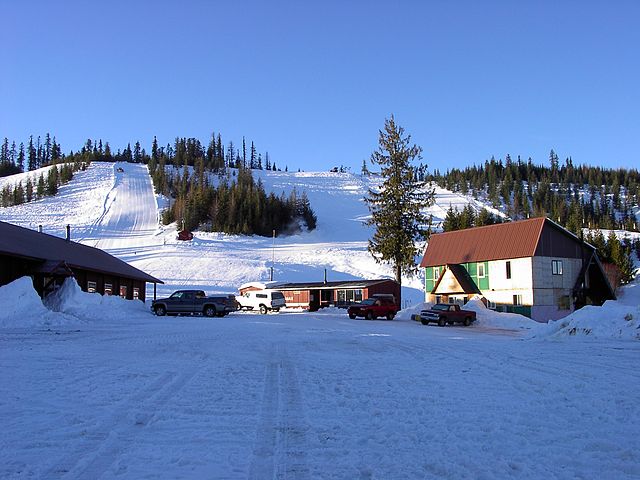
Bald Mountain, “Baldy”, rises to 2,789 m above Ketchum in central Idaho, and Sun Valley was built in 1936 by the Union Pacific chairman Averell Harriman, after an Austrian count, Felix Schaffgotsch, passed over Mount Hood, Yosemite and Jackson Hole and chose the old ranch here, while Baldy’s own lifts opened in 1939.
Bald Mountain has about 1,035 m of skiing from the summit down to Ketchum, where Ernest Hemingway, who died at his home there on 2 July 1961, is buried in Ketchum Cemetery, and the Sun Valley Lodge opened in December 1936.
Sun Valley opened the world’s first chairlifts in December 1936, designed by a Union Pacific engineer, James Curran, the son of Irish immigrants, who adapted banana-handling conveyors, and Hemingway worked on For Whom the Bell Tolls in Suite 206 of the Lodge in 1939, though he didn’t finish it until 1940.
11 – Stanley

Stanley, a village of just over a hundred people on the Salmon River beneath the Sawtooth Range in central Idaho, is named after Captain John Stanley, leader of a party of 23 gold prospectors who came through the basin in 1863.
Stanley is the base for whitewater rafting on the Salmon, for Redfish Lake Lodge and for the trails of the Sawtooths, and about 19 km downstream, near where the Yankee Fork joins the river, are the remains of the Sunbeam Dam.
The Sunbeam Dam, built around 1910 to power a gold mill, ran for only about a year and was blasted open in 1934 to let the salmon through, reputedly the only dam ever built on the main Salmon, while Stanley’s record low is −48°C, set in December 1981, and a magnitude 6.5 earthquake nearby in March 2020 was Idaho’s second strongest on record.
12 – Old Idaho State Penitentiary

The Old Idaho State Penitentiary, on the eastern edge of Boise, held more than 13,000 prisoners between 1872 and 1973, inside walls of sandstone the inmates quarried themselves, and it closed in December 1973, after riots that year and in 1971.
The Old Idaho State Penitentiary has its cell blocks, the Women’s Ward of 1920 and the Gallows Room, where Raymond Snowden was hanged in 1957, the only execution carried out there, and the last of ten at the prison.
The Old Pen’s most famous inmate, Harry Orchard, killed the former governor Frank Steunenberg with a bomb in 1905 and confessed to the Pinkerton detective James McParland, from County Armagh, who had earlier infiltrated the Molly Maguires in Pennsylvania, while the union leader Big Bill Haywood, defended by Clarence Darrow, was acquitted in 1907, and Orchard died in the prison in 1954.
13 – Silver Valley and Wallace
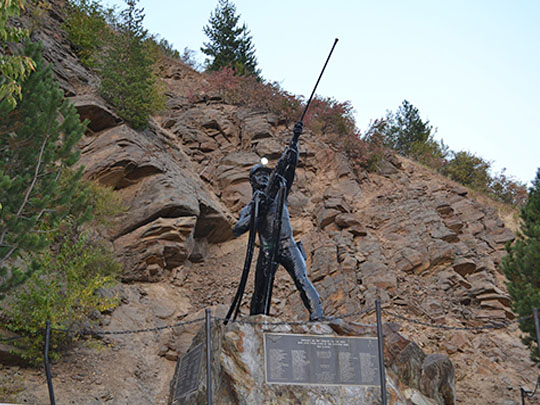

The Silver Valley, in the mountains of the Idaho Panhandle along Interstate 90, one of the world’s richest silver districts, has produced more than a billion ounces since 1884, and on 2 May 1972 a fire in the Sunshine Mine killed 91 miners, the worst US hard-rock mining disaster since 1917.
The Silver Valley and Wallace, its old mining capital, are rich in history, with Wallace’s whole historic downtown on the National Register, listed in 1979 to stop Interstate 90 being bulldozed through it, and museums including the Northern Pacific Depot, the Wallace District Mining Museum and the Oasis Bordello Museum, a brothel until 1988.
Wallace had the last traffic light on Interstate 90 between Seattle and Boston, until a viaduct opened in 1991 and the light was given a funeral with a horse-drawn hearse, while in 2004 its mayor declared the town the “Center of the Universe” in defiance of the EPA, and Lana Turner was born here in 1921.
14 – Hells Canyon
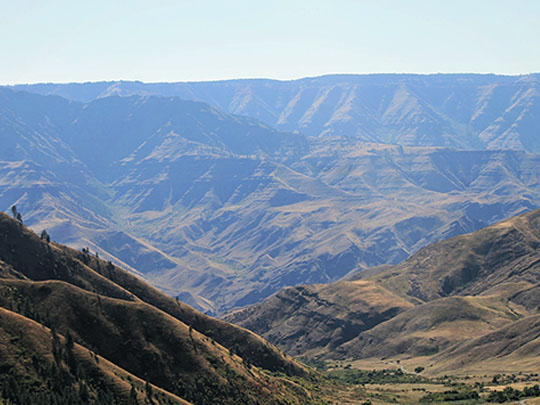
Hells Canyon carries the Snake River along the border of Idaho and Oregon and, at 2,436 m, is North America’s deepest river gorge, and on 31 May 1877 the Nez Perce crossed the flooded river at Dug Bar on rafts of horsehide pulled by swimming horses.
Hells Canyon National Recreation Area, created in 1975, covers more than 2,600 km², explored by jetboat through the rapids or on the weekly mail boat that serves the canyon’s remote ranches, while three Idaho Power dams, built from 1958 to 1967, hold back the river further up.
In May 1887, up to 34 Chinese gold miners were murdered at Deep Creek, on the Oregon side of Hells Canyon, by a gang of horse thieves, some of them teenagers, three of whom were acquitted in 1888, but the court papers turned up in an old safe in 1995, and a memorial in English, Chinese and Nez Perce went up in 2012.
15 – Snake River Canyon
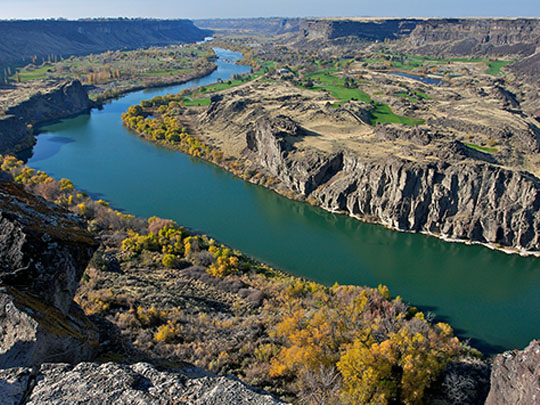
Snake River Canyon cuts through the lava plain of southern Idaho at Twin Falls, and upstream at Caldron Linn, on 28 October 1811, John Jacob Astor’s overland expedition to the Pacific wrecked a canoe, drowning a voyageur, Antoine Clappine, and after scouting the gorge below, which they called the “Devil’s Scuttle Hole”, they gave up on the river.
Snake River Canyon has the Canyon Rim Trail at Twin Falls, Perrine Coulee Falls, about 60 m high, with a path behind the falling water, the original Twin Falls, a single fall since one was diverted for power in 1935, and downstream the Thousand Springs pouring from the canyon wall.
Snake River Canyon’s farms began with Ira Perrine, who arrived in 1884 and farmed on the canyon floor before pushing for the Milner Dam that watered Twin Falls, and downstream at Hagerman, the rancher Elmer Cook found the bones in 1928 of a horse 3 to 4 million years old, Idaho’s state fossil since 1988.
16 – Nez Perce National Historical Park
Nez Perce National Historical Park, set up in 1965, links 38 sites across Idaho, Oregon, Washington and Montana that tell the story of the Nez Perce, or Nimiipuu, whose treaty of 1863, signed by only some bands and known to the Nimiipuu as the “Thief Treaty”, cut their land from about 30,000 km² to about 3,000.
Nez Perce National Historical Park has its headquarters at Spalding, near Lapwai, on the site of the mission founded in 1836 by Henry and Eliza Spalding, whose press, the first in Oregon Country, printed a reader in the Nez Perce language in 1839, and it includes Heart of the Monster at Kamiah and White Bird Battlefield.
The first battle of the Nez Perce War was fought at White Bird Canyon on 17 June 1877, when 34 US soldiers were killed, and at Big Hole in Montana that August one of the officers killed was Captain William Logan from County Louth, while historians argue over how much of Chief Joseph’s “I will fight no more forever” surrender speech was his own.