
Wikimedia Commons / CC-BY-SA-3.0 / GFDL
Capital: Springfield
Population: 12.7 million+
Language: English
From 1923 the official language was “American”, pushed by Irish-American politicians as a protest against British policy in Ireland.

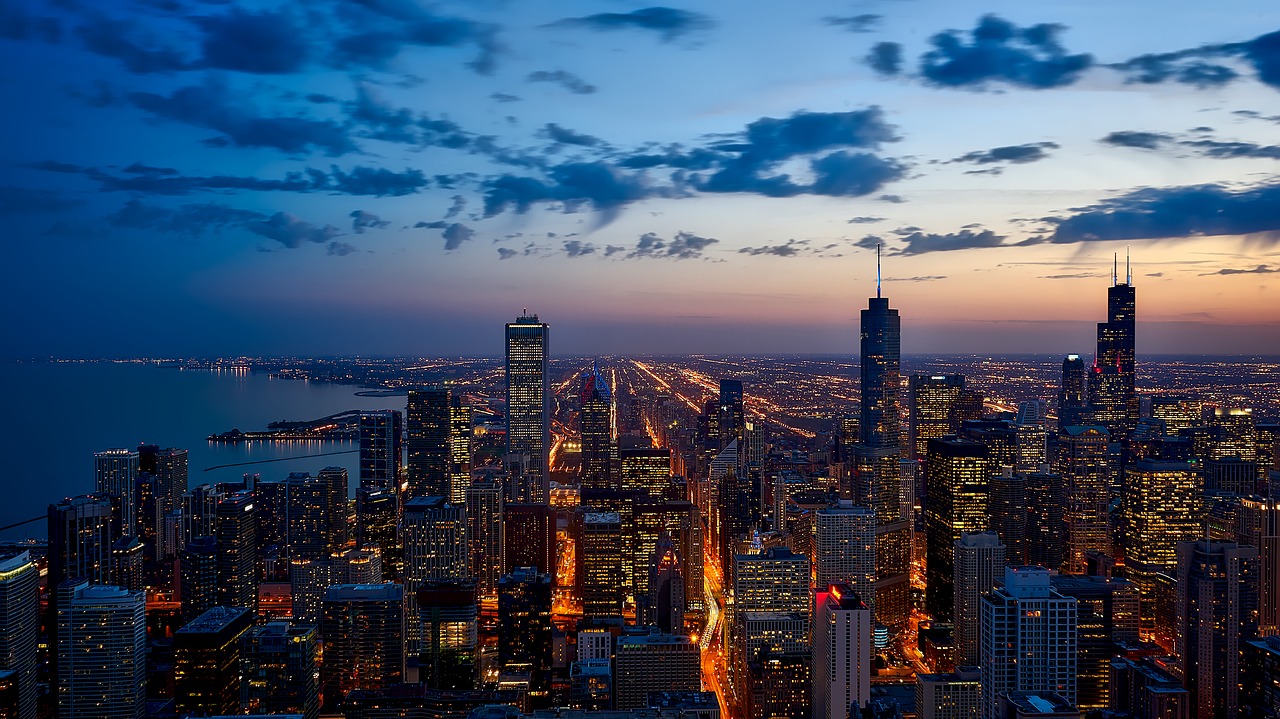
1 – Chicago (also above)
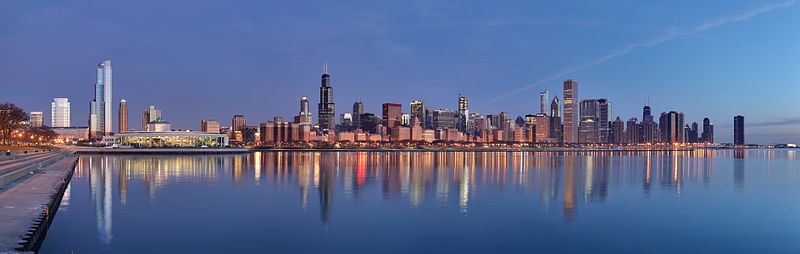
Chicago, on the southwest shore of Lake Michigan, takes its name from the Miami-Illinois word šikaakwa, the striped skunk, also used for the wild leek, and its first permanent non-Native settler was Jean Baptiste Point du Sable in the 1780s, while the Great Fire of 8–10 October 1871 killed about 300 people and left some 90,000 homeless.
In Chicago you can take an architecture cruise along the river past the skyscrapers that began with the Home Insurance Building of 1885, often called the first, see the Water Tower that survived the fire, and the river itself flows backwards, reversed in 1900 to carry the city’s sewage away from the lake.
Mrs Catherine O’Leary, an Irish immigrant, was blamed for the fire because her cow supposedly kicked over a lantern, until a reporter, Michael Ahern, admitted he’d made it up and the city council formally cleared her in 1997 — and Chicago has dyed its river green for St Patrick’s Day since 1962, after a plumbers’ union boss noticed green-stained overalls.
2 – Cloud Gate Sculpture – Chicago
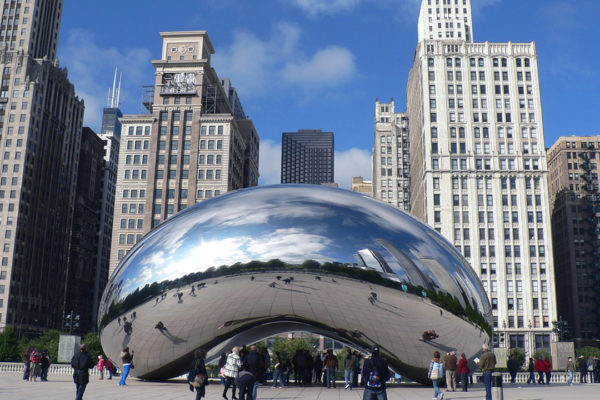
Cloud Gate is Anish Kapoor’s mirrored sculpture in Millennium Park, in the heart of downtown Chicago, and the park itself, built over old Illinois Central rail yards, opened in 2004, four years late and at $475 million against a $150 million budget, while Cloud Gate was dedicated in May 2006.
At Cloud Gate you can walk under the arch into the curved chamber beneath, which Kapoor calls the “omphalos”, see the skyline warped in its 168 welded stainless-steel plates, 110 tons in all with no visible seams, and nearby find the Crown Fountain’s giant video faces and Frank Gehry’s Pritzker Pavilion.
Cloud Gate was inspired by liquid mercury, and its cost rose from an estimated $6 million to $23 million, all of it paid by private donors — Kapoor first called the nickname “the Bean” “completely stupid”, and in 2018 he sued the National Rifle Association for using it in an advert, which removed the footage.
3 – Springfield
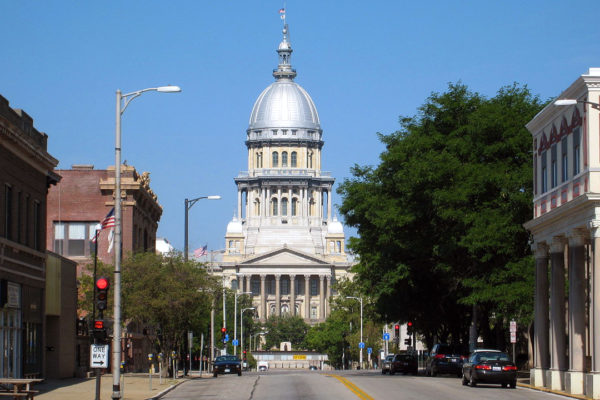
Springfield, in the farmland of central Illinois, has been the state capital since 1839, after the young Abraham Lincoln helped push the move from Vandalia, and Lincoln lived here from 1837 until 1861 — and a race riot here in 1908 helped spur the NAACP’s founding.
In Springfield you can tour the Lincoln Home, the only house Lincoln ever owned, the Old State Capitol where he gave his “House Divided” speech in 1858, the Presidential Library and Museum, and his tomb in Oak Ridge Cemetery, then stop on Route 66 at the Cozy Dog Drive-In, whose founder’s son inspired the van Fillmore in Pixar’s Cars.
On election night in 1876 a gang hired by an Irish-American crime boss, Big Jim Kinealy, tried to steal Lincoln’s body from his tomb to ransom it for a jailed engraver’s release, but the Secret Service was waiting — and because Illinois had no law against grave-robbing, the two men caught got a year each for stealing a $75 coffin, which is why Lincoln now lies under 4,000 pounds of cement.
4 – Galena
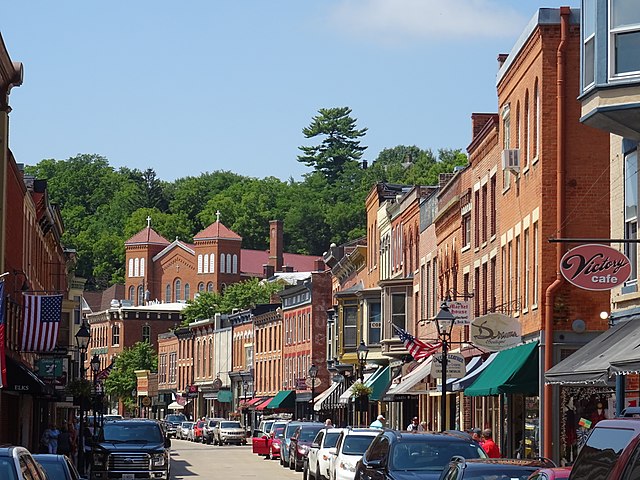
Galena, in the hills of northwest Illinois near the Mississippi, takes its name from galena, the ore of lead, and in 1845 its county produced about 80% of America’s lead, when the town briefly outshone a still-small Chicago — until the mines faded, the river silted up and the railways went elsewhere, leaving it frozen in the 19th century.
In Galena you can walk the curving Main Street of brick shopfronts, most of the town lying within a historic district, stay at the DeSoto House Hotel of 1855, from whose balcony Lincoln made a speech in 1856, and walk past the floodgates of 1951 that protect the town from the river.
Galena is famous for sending nine generals to the Civil War, though only three held the full rank during the war, and one was Ely Parker, a Seneca from New York, who wrote out the official copy of the surrender terms that Grant and Lee signed at Appomattox in 1865.
5 – Wrigley Field – Chicago
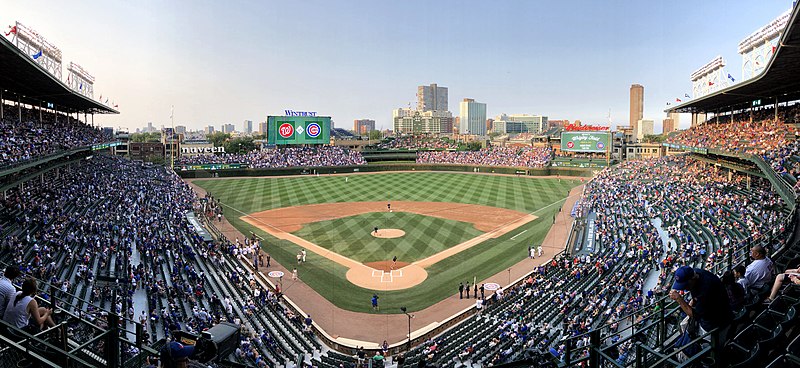
Wrigley Field, on Chicago’s North Side, opened on 23 April 1914 for a Federal League team, became home of the Chicago Cubs in 1916 and was named after the chewing-gum tycoon William Wrigley Jr. in 1926, and it’s the second-oldest ballpark in Major League Baseball, after Boston’s Fenway Park.
At Wrigley Field you can watch a Cubs game in front of ivy-covered brick walls and the hand-turned scoreboard of 1937, from the bleachers or the rooftops across the street — and lights only came in 1988, when the first night game was rained out.
In 1945 a tavern owner’s goat named Murphy was turned away from the World Series, launching the “Curse of the Billy Goat” that seemed to hold until the Cubs won the 2016 World Series, their first in 108 years, while the ivy was planted by a local nursery, not by Bill Veeck as the legend says — and 1060 West Addison, Elwood’s fake address in The Blues Brothers, is the ballpark.
6 – Monks Mound
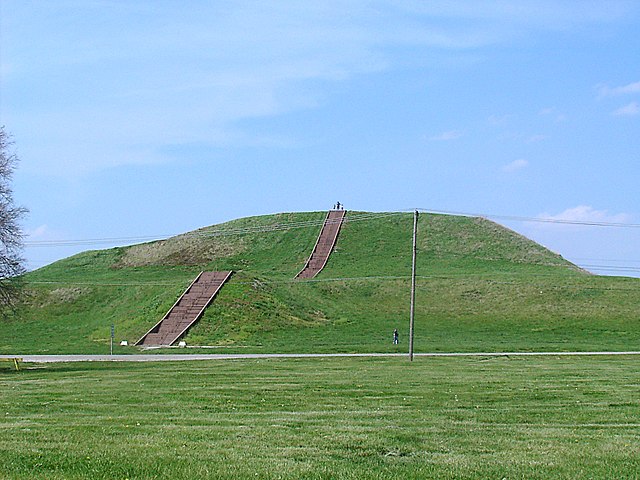
Monks Mound is the centrepiece of Cahokia Mounds State Historic Site, across the Mississippi from St. Louis, and at about 100 feet high, with a base roughly the size of the Great Pyramid of Giza’s, it’s the largest prehistoric earthwork in the Americas, built by a city of perhaps 10,000 to 20,000 people at its peak around 1050–1150 — a World Heritage Site since 1982.
At Cahokia Mounds you can climb the steps to the top of Monks Mound for a view of the St. Louis skyline, see Woodhenge, a rebuilt circle of posts thought to have marked the sunrise at the solstices and equinoxes, and visit the Interpretive Center, partly reopened in June 2026 after four years of repairs.
Monks Mound is named after French Trappist monks who lived on a smaller mound nearby from 1809 to 1813, and the name Cahokia comes from a later Illinois people, not the builders — while the claim that Cahokia was bigger than London holds only for around 1100, not the 1250 often quoted.
7 – Starved Rock State Park
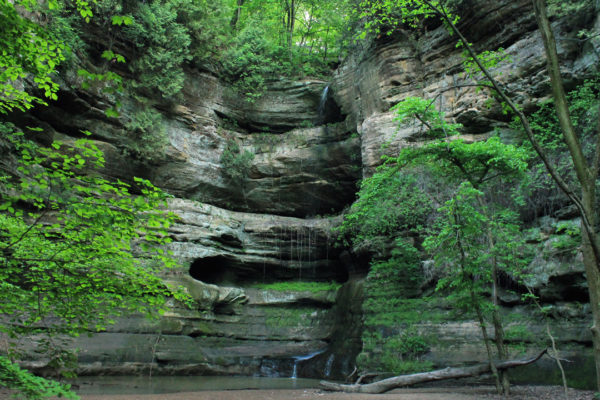
Starved Rock State Park lies on the Illinois River near Utica, in north-central Illinois, where La Salle and Tonti built Fort St. Louis on the rock itself in 1682–83, across from the Grand Village of the Illinois, where Father Marquette founded a mission in 1675 — and it became Illinois’s second state park in 1911.
At Starved Rock you can hike to waterfalls in 18 sandstone canyons, best in spring, stay at the 1930s lodge built by the Civilian Conservation Corps, and watch bald eagles in winter at the lock and dam, and it drew 2.4 million visitors in 2024, the most of any Illinois state park.
Starved Rock is named for a legend that after an Illinois man killed the Ottawa leader Pontiac in 1769, a band of Illinois took refuge on the rock and starved under siege — though the park says there’s no evidence for it — and nearby LaSalle, at the end of the Illinois and Michigan Canal, was nearly half Irish and still holds “Diggers Day” for the men who dug it.
8 – Ulysses S. Grant House
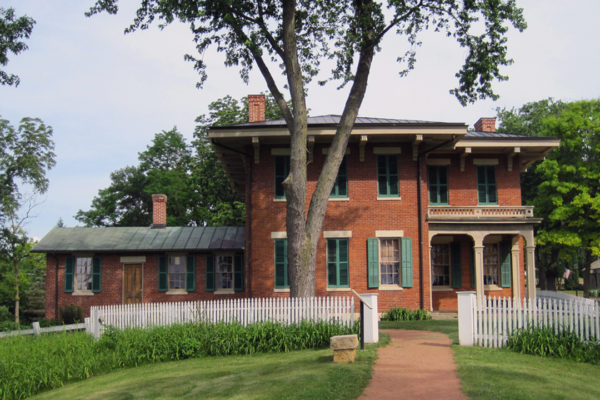
The Ulysses S. Grant Home is an Italianate brick house in Galena that local Republicans presented to Grant on 18 August 1865, when he came home a hero from the Civil War — before the war he’d been a struggling former army officer, clerking in his father’s leather store and renting a smaller house in town for $100 a year.
At the Ulysses S. Grant Home, a state historic site restored in the 1950s, you can tour rooms filled with many of the Grant family’s own furnishings, given to the town by his son Frederick in 1904.
Grant didn’t hear he’d won the presidency in 1868 here but in the library of his friend Elihu Washburne’s house nearby, and when he visited Ireland in January 1879 he received the freedom of Dublin, while Cork’s council declined to welcome him — his mother’s family, the Simpsons, came from Dergenagh in Co. Tyrone, where their homestead is open to visitors.
9 – Illinois and Michigan Canal
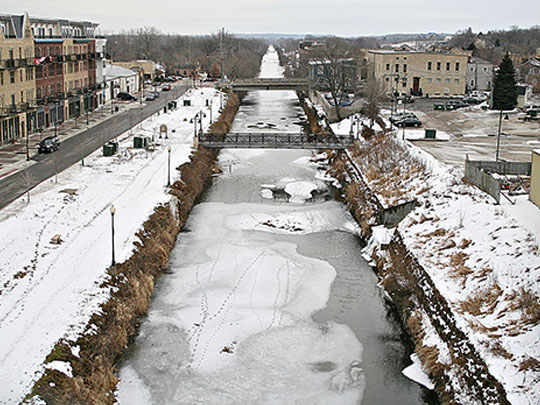

The Illinois and Michigan Canal ran 96 miles from Bridgeport on the Chicago River to LaSalle on the Illinois River, built in 1836–48 to join the Great Lakes to the Mississippi — a link the explorer Louis Jolliet is reported to have suggested in 1673 — and it made Chicago, which grew from 4,470 people in 1840 to nearly 30,000 by 1850.
Along the Illinois and Michigan Canal you can walk or cycle about 62 miles of the old towpath, see the locks, visit the Gaylord Building of 1838, the canal’s warehouse in Lockport, and stop in Ottawa, where Lincoln and Douglas held the first of their debates in 1858 — the first National Heritage Corridor in the US, from 1984.
The Illinois and Michigan Canal was dug mostly by Irish immigrants, for about a dollar a day or less and many who died of fever lie at St. James at Sag Bridge, a parish they founded in 1833 — while Bridgeport, where the diggers settled, went on to produce five Chicago mayors, including both Daleys.
10 – Nauvoo and Carthage
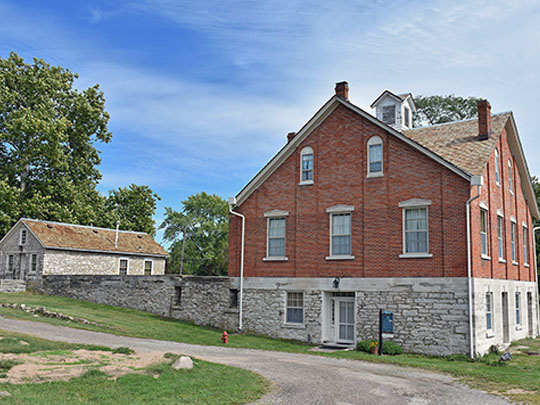

Nauvoo, on a bend of the Mississippi in western Illinois, was founded in 1839 by Latter-day Saints, who renamed the village of Commerce with a Hebrew word for “beautiful”, and by 1844 it had about 12,000 people, rivalling Chicago — until on 27 June 1844 a mob with blackened faces shot Joseph Smith and his brother Hyrum in the jail at nearby Carthage.
In Historic Nauvoo you can visit more than 30 restored buildings see the temple rebuilt in 2002 on the site of the original, burned in 1848, and tour Joseph Smith’s homestead and Mansion House, bought from the Community of Christ by the Latter-day Saint church in 2024, and in Carthage the jail where Smith died.
Brigham Young led the Saints out of Nauvoo in February 1846, mostly by ferry, not across a frozen Mississippi as the story goes — five men tried for the killings were acquitted — and in 1849 French utopian socialists, the Icarians, bought the burned temple and moved into the empty town, starting the vineyards whose cellars later aged Nauvoo blue cheese.
11 – Lincoln’s New Salem
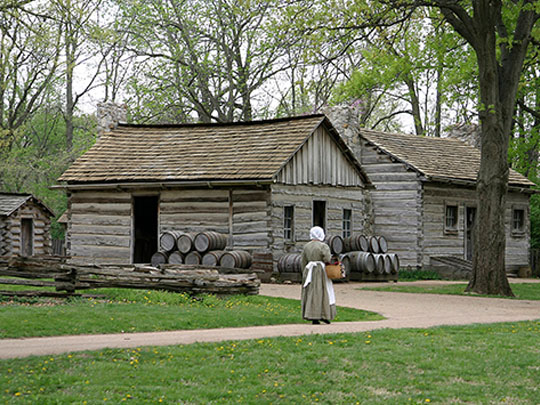

Lincoln’s New Salem, on a bluff above the Sangamon River near Petersburg in central Illinois, is the village where Abraham Lincoln lived from 1831 to 1837, between the ages of 22 and 28, working as a shop clerk, postmaster and surveyor, being elected captain of his militia company in the Black Hawk War of 1832 and winning his first election, to the state legislature, in 1834.
At Lincoln’s New Salem you can walk among 22 timber buildings, shops and the tavern, rebuilt by the Civilian Conservation Corps in the 1930s on the original foundations, though only the Onstot cooper shop is original, brought back from Petersburg in 1922.
Lincoln left New Salem with about $1,100 of debt from a failed store, and his famous wrestling match with the local strongman Jack Armstrong probably ended in a draw, while the story of his romance with Ann Rutledge, who died in 1835, is still argued over — Henry Fonda played the young Lincoln in John Ford’s Young Mr. Lincoln (1939).