

Wikimedia Commons / CC-BY-SA-3.0 / GFDL
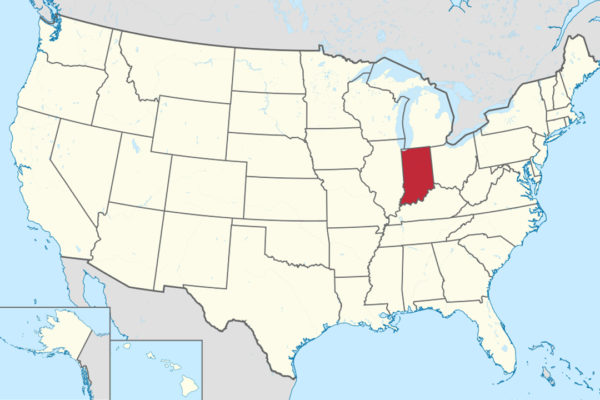
Capital: Indianapolis
Population: 7 million+
Language: English
1 – Indiana World War Memorial Plaza (also above)

Indiana World War Memorial Plaza covers about 24 acres across five blocks of downtown Indianapolis, and it exists because in 1919 the city beat Washington DC by 361 votes to 323 to become home of the new American Legion, promising to build it a headquarters and a memorial to the First World War — the Legion’s national headquarters is still here.
The plaza’s centrepiece, the Indiana World War Memorial, is a 210-foot building modelled on the Mausoleum at Halicarnassus, begun in 1926 and not finished inside until 1965, with a free military museum and the Shrine Room, where a huge American flag hangs above the Altar of Consecration under a Swedish-crystal chandelier called the “Star of Destiny”.
On the Canal Walk nearby, a memorial lists the crew of the cruiser USS Indianapolis, torpedoed on 30 July 1945 after delivering parts of the atomic bomb, when 879 of its 1,195 men died, many in the water — and Quint’s famous speech about it in Jaws gets the date and the numbers wrong.
2 – Indianapolis Motor Speedway
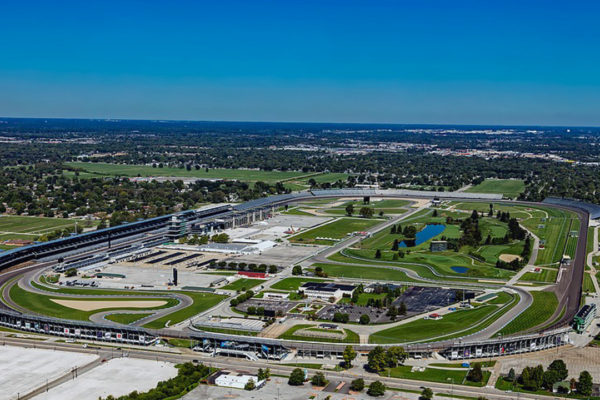
The Indianapolis Motor Speedway, in the town of Speedway, surrounded by Indianapolis, was opened in 1909 by Carl Fisher and his partners and paved that year with 3.2 million bricks, which gave it the name “the Brickyard”, and the first Indianapolis 500 was won on 30 May 1911 by Ray Harroun.
At the Indianapolis Motor Speedway you can see the strip of original bricks at the start-finish line, which winners kiss, tour the museum, reopened in 2025, and take in the scale of the world’s biggest sports venue, with crowds of around 350,000 on race day and an infield of 253 acres.
Harroun’s car is often said to have had the first rear-view mirror, but he took the idea from a horse-drawn vehicle and it shook too much to use, and the winner’s bottle of milk began with Louis Meyer drinking buttermilk in 1936 — while Derek Daly, from Dublin, raced in six Indy 500s, and his son Conor set the fastest lap in 2026, the closest finish in the race’s history.
3 – Fort Wayne

Fort Wayne, in northeast Indiana, stands where the St. Joseph and St. Marys rivers meet to form the Maumee, the site of Kekionga, the capital of the Miami people, where they defeated a US army in 1790, and General Anthony Wayne’s troops built the fort that gave the city its name in 1794.
In Fort Wayne you can see the Old Fort, a replica of the fort of 1815, catch a show at the Embassy Theatre of 1928, saved from demolition in 1972, walk the riverside Promenade Park, and visit the grave of Johnny Appleseed, who died here in 1845, in the park named after him.
Work on the Wabash and Erie Canal, often called the longest canal built in North America, began at Fort Wayne in 1832, and in July 1835 hundreds of its Irish labourers, Corkonians against Fardowns, armed themselves for a pitched battle near Lagro, until the militia was called out and the ringleaders arrested.
4 – Spring Mill State Park
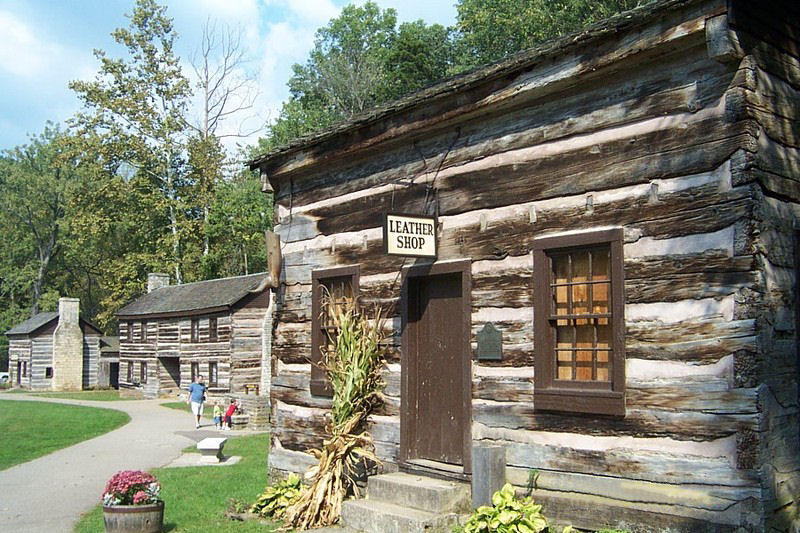
Spring Mill State Park lies in the limestone cave country of southern Indiana near Mitchell, and its pioneer village grew up around a three-storey stone gristmill built in 1817, driven by water carried from a cave along a flume — the village faded not because the railway bypassed it, as often said, but because nearby railways brought cheaper coal and grain.
At Spring Mill you can watch the mill grinding cornmeal from spring to autumn, wander the village restored in the 1930s, including the 1830 Leather Shop, take a boat into Twin Caves, stay at the Spring Mill Inn of 1939, and visit the Grissom Memorial, with the astronaut’s Gemini 3 capsule.
Gus Grissom, born in Mitchell in 1926, named his Gemini 3 capsule Molly Brown, after the musical The Unsinkable Molly Brown, as a joke about his first capsule sinking, and the park’s caves are home to the blind Hoosier cavefish, a species defined in 2014 from a fish caught in the park’s Bronson Cave.
5 – South Bend


South Bend, in northern Indiana, stands at the southernmost bend of the St. Joseph River, where La Salle crossed overland to the Kankakee River in December 1679, and it grew rich making Studebaker wagons and then cars, while the University of Notre Dame was founded just to the north in 1842 by a French priest, Edward Sorin.
In South Bend you can visit the Studebaker National Museum and then cross to Notre Dame to see the Golden Dome, the Grotto modelled on Lourdes, the Basilica of the Sacred Heart, and the mural of Christ on the library that faces the football stadium, known as “Touchdown Jesus”.
Notre Dame’s “Fighting Irish” name started as a jibe and was adopted officially only in 1927, and the team has played Navy in Dublin three times, at Croke Park in 1996 and the Aviva Stadium in 2012 and 2023 — while Studebaker’s closure in South Bend in 1963 left thousands of workers without pensions and helped bring about the US pensions law of 1974.
6 – Indianapolis
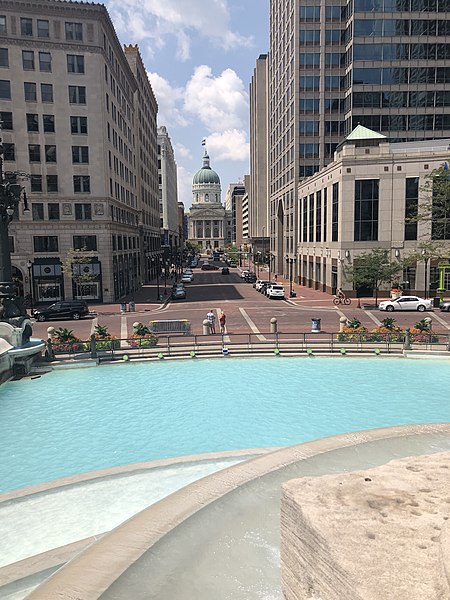
Indianapolis was chosen in 1820 as a new capital on the White River in the middle of the state, given its name — Indiana plus the Greek polis, city — in 1821, and laid out as a mile-square grid around a central circle by Alexander Ralston, a Scot who had helped L’Enfant plan Washington, before the government moved here from Corydon in 1825.
In Indianapolis you can climb the 284-foot Soldiers’ and Sailors’ Monument on Monument Circle, visit the Statehouse of 1888, walk or cycle the Cultural Trail, see the Kurt Vonnegut Museum in the writer’s home town, and visit Crown Hill Cemetery, where John Dillinger and President Benjamin Harrison are buried.
On 4 April 1968 Robert Kennedy broke the news of Martin Luther King’s murder to a crowd here, and the city stayed calm while others rioted, though local activists also deserve credit — and one of its mayors, from 1895 to 1901, was Thomas Taggart, born in Emyvale, Co. Monaghan, who went on to chair the Democratic Party and sit in the US Senate.
7 – Conner Prairie
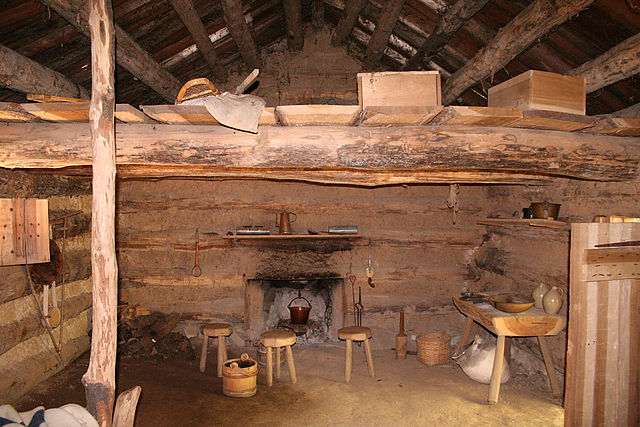
Conner Prairie, on the White River at Fishers, just north of Indianapolis, is built around the brick house of 1823 of the fur trader William Conner, whose Lenape wife, Mekinges, left with their six children in 1820 when her people were moved west — Conner remarried that November.
At Conner Prairie, a living-history museum of more than 1,000 acres, you can walk into 1836 Prairietown, where costumed villagers go about their work, tour the Conner House, and visit the Museum Experience Center, reopened in April 2026, which tells the story of the Lenape and Conner families.
The pharmaceutical heir Eli Lilly bought the Conner estate in 1934 and later gave it to Earlham College, and the museum’s balloon ride recalls 17 August 1859, when John Wise flew 25 miles from Lafayette with 123 letters, the first airmail in the US — he’d been aiming for New York.
8 – Marengo Cave
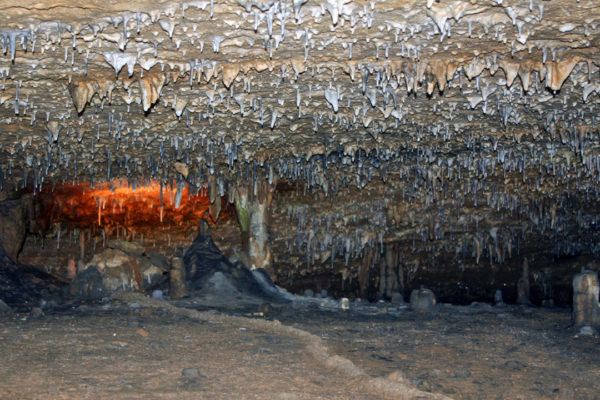
Marengo Cave lies under the hills of Crawford County in southern Indiana, and it was discovered on 6 September 1883 by two children, Blanche and Orris Hiestand, aged 15 and 11, and opened to visitors that same year, at 25 cents a head — it’s been a National Natural Landmark since 1984.
At Marengo Cave you can take the Crystal Palace tour, about 40 minutes, or the mile-long Dripstone Trail, past stalactites, stalagmites and flowstone at a steady 52°F, and then try gemstone mining, mini-golf or camping above ground.
Marengo Cave has been privately owned since 1973 by a group of cavers, and it’s appeared in films including the horror film Abby (1974).
9 – Lincoln Boyhood National Memorial
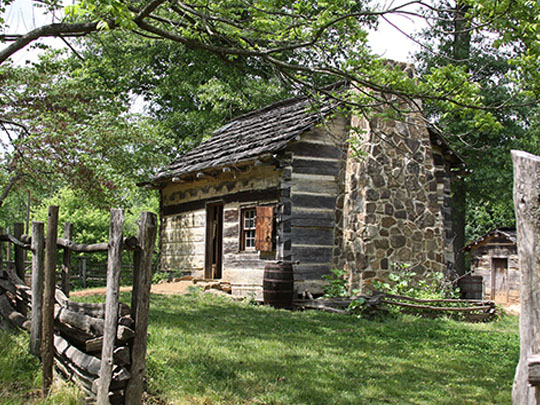

Lincoln Boyhood National Memorial, near Lincoln City in the hills of southern Indiana, is where Abraham Lincoln’s family arrived from Kentucky in December 1816, as Indiana became a state, and where he lived from the age of 7 to 21, until they left for Illinois in 1830 — his mother, Nancy, died here of milk sickness in 1818, and his sister, Sarah, in childbirth in 1828.
At Lincoln Boyhood National Memorial you can see the limestone Memorial Building with its five carved panels of Lincoln’s life, the bronze marking the hearth and sill logs of the family cabin, Nancy Hanks Lincoln’s grave and, from late April to October, the Living Historical Farm, worked as it would have been in the 1820s.
Lincoln later wrote that southern Indiana “was a wild region, with many bears and other wild animals still in the woods”, adding simply, “There I grew up”, and milk sickness, which killed his mother, is now known to come from drinking the milk of cows that have eaten white snakeroot.
10 – Vincennes
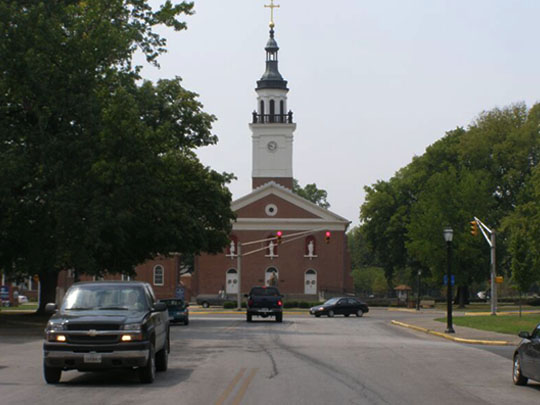
Vincennes, on the Wabash River in southwest Indiana, was founded in 1732 as a French fort by François-Marie Bissot, Sieur de Vincennes, who was burned to death by the Chickasaw four years later, and it’s the oldest town in Indiana — and the capital of the Indiana Territory from 1800 to 1813, under William Henry Harrison.
In Vincennes you can visit the George Rogers Clark Memorial, a classical rotunda of 1931–33 with seven giant murals, dedicated by Franklin Roosevelt in 1936, the Old Cathedral, Indiana’s oldest Catholic church, begun in 1826, Harrison’s mansion, Grouseland, and the museum of the comedian Red Skelton, born here in 1913.
In February 1779 George Rogers Clark led about 170 men, nearly half of them French, some 180 miles across flooded country from Kaskaskia to take Fort Sackville from the British governor Henry Hamilton, whom Clark branded “the Hair Buyer” — though historians have found no evidence that Hamilton ever paid for American scalps.
11 – Levi Coffin House
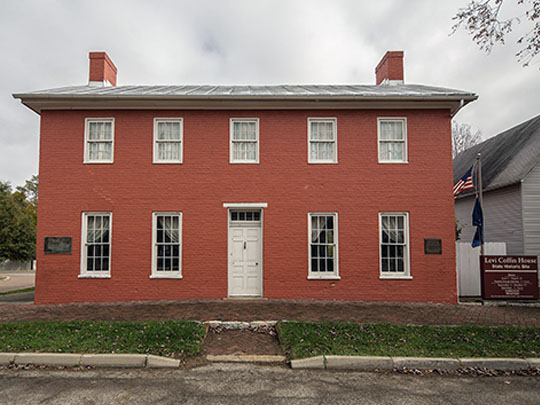

The Levi Coffin House stands in Fountain City, formerly Newport, in eastern Indiana near the Ohio border, where the Quakers Levi and Catharine Coffin sheltered people escaping slavery from 1826 until 1847 — some 2,000 of them by Coffin’s own count, though, since the work was illegal, they kept no records.
At the Levi Coffin House, a brick house of 1839, you can see the small door in an upstairs bedroom wall, once hidden behind a bed, that opens into a crawlspace under the eaves, and the spring-fed well in the basement, and there’s an interpretive centre, opened in 2016.
Slave-catchers grumbled that Levi Coffin was “the president” of the Underground Railroad, and he put it in the title of his memoir — but the popular label “Grand Central Station of the Underground Railroad” can’t be his, as Grand Central only got that name around 1900, long after his death in 1877.
12 – Indiana Dunes National Park
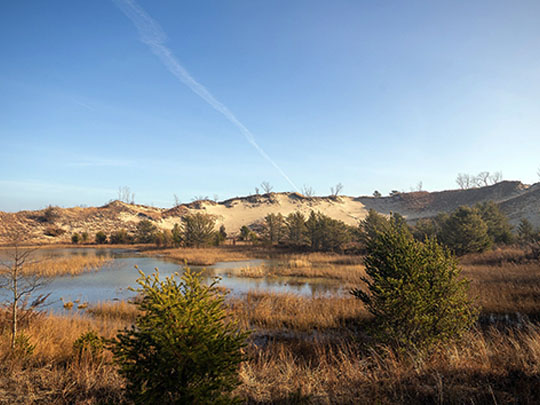
Indiana Dunes National Park stretches along the southern shore of Lake Michigan in northwest Indiana, protected as a national lakeshore in 1966 after a long campaign by the Save the Dunes Council and made a national park in February 2019, and it was here in the 1890s that Henry Cowles studied how plants colonise sand, making it a birthplace of American ecology.
At Indiana Dunes you can swim from the beaches, take a ranger-led hike up the moving dune of Mount Baldy, and see the houses brought by barge from the 1933 Chicago World’s Fair to Beverly Shores, including the glass-walled House of Tomorrow, under restoration in 2026 — all within sight of the steel mills next door.
In July 2013, Mount Baldy swallowed a six-year-old boy, Nathan Woessner, who was dug out alive after three hours buried 11 feet down, probably in a hole left by a rotted buried tree, and in 1896 Octave Chanute tested gliders on the dunes — though, at 64, he left the flying to his younger assistants.