
Wikimedia Commons / CC-BY-SA-3.0 / GFDL
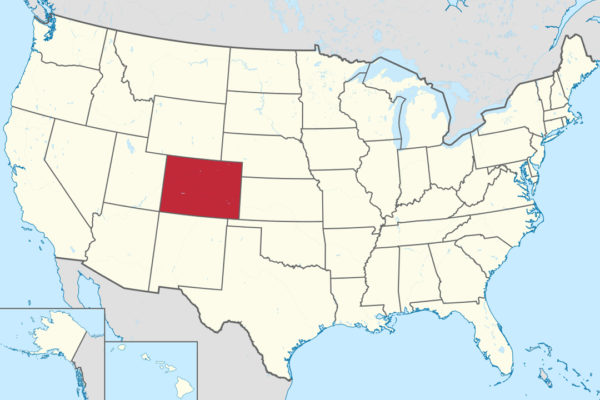
Capital: Denver
Population: 6 million+
Language: English
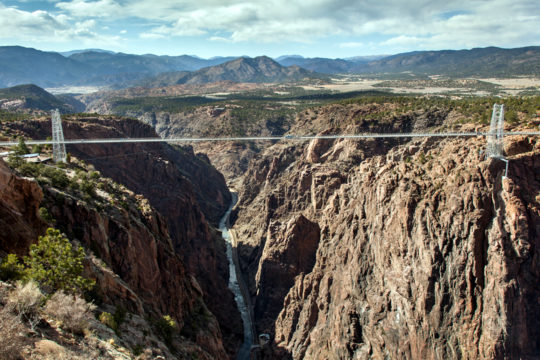
1 – Royal Gorge Bridge (above)
The Royal Gorge Bridge spans a granite canyon near Cañon City in south-central Colorado, carved by the Arkansas River over about three million years to some 1,250 feet deep and as little as 30 feet wide at the bottom, and Zebulon Pike camped in it in the winter of 1806.
Around the Royal Gorge Bridge you can ride the aerial gondolas across the canyon, try a zip line billed as America’s highest, take the Royal Gorge Route Railroad along the river far below, or raft the Arkansas, and in nearby Cañon City visit the Museum of Colorado Prisons, beside a state prison that has been working since 1871.
At the narrowest point down in the Royal Gorge, there was no room for the railway, so in 1879 engineers hung a 175-foot bridge from girders wedged into the canyon walls — the Hanging Bridge, still used by trains today — and the Stegosaurus that’s now the reference specimen for the whole genus was dug up in 1885–86 in the hills just north of Cañon City.
2 – Garden of the Gods

Garden of the Gods is a park of red sandstone fins standing on end at the foot of Pikes Peak in Colorado Springs, laid down around 300 million years ago and tilted up when the Rockies rose, and a place the Ute regarded as sacred long before it got its name.
Garden of the Gods is free to enter, with paved trails among the rock fins, Balanced Rock and the Kissing Camels, a visitor centre with views to Pikes Peak, and climbing on the sandstone with a permit.
When two surveyors came across Garden of the Gods in 1859, one said it would make “a capital place for a beer garden” and the other that it was “a fit place for the Gods to assemble” — and when railway boss Charles Perkins’s children gave it to the city in 1909, the deed said it must stay free forever and that alcohol could never be sold there.
3 – Aspen
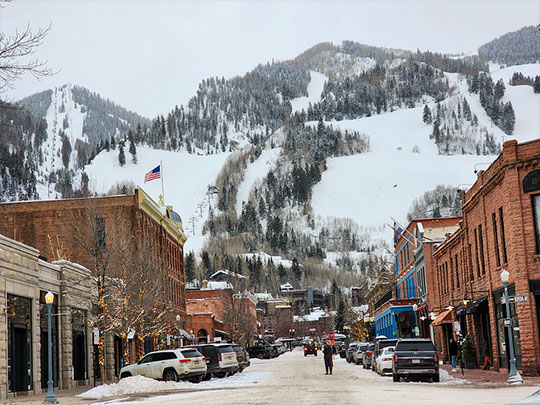
Aspen, high in the Elk Mountains of west-central Colorado, was founded as the silver camp of Ute City in 1879, boomed to perhaps 10,000 or more people by 1893, then crashed when the US stopped buying silver that year, falling to just 705 people by 1930.
Aspen today is ski town and summer festival town, with Aspen Mountain rising straight out of the streets, the Wheeler Opera House and Hotel Jerome of 1889, Buttermilk’s Winter X Games, and the Aspen Music Festival and the Aspen Institute.
Aspen was rescued by Chicago industrialist Walter Paepcke and his wife Elizabeth, who launched the ski company in 1946 and the 1949 Goethe festival that grew into the Aspen Institute, and in 1970 Hunter S. Thompson ran for sheriff on the “Freak Power” ticket and lost — while the “Aspen” in Dumb and Dumber was mostly filmed in Breckenridge.
4 – Seven Falls
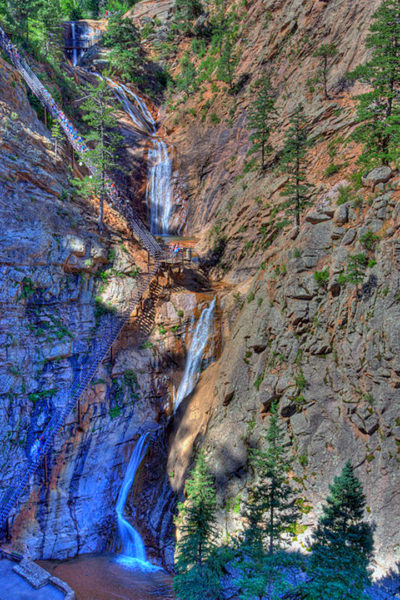
Seven Falls is a chain of seven waterfalls dropping a total of 181 feet in South Cheyenne Cañon on the edge of Colorado Springs, and it’s been a paid attraction since 1882, when James Hull bought it and charged ten cents at a barbed-wire gate.
You climb Seven Falls on a 224-step staircase beside the water to trails above, or take the lift through the rock to the Eagle’s Nest viewing platform, and the falls are lit up at night — though after the 2013 flood they were closed until The Broadmoor hotel bought and reopened them in 2015.
The writer Helen Hunt Jackson, Emily Dickinson’s lifelong friend, was buried above Seven Falls in 1885 at her own wish, but so many visitors tramped up to her grave and damaged the canyon that in 1891 she was moved to a cemetery in town.
5 – Hanging Lake

Hanging Lake is a small turquoise lake perched on a cliff in Glenwood Canyon, in western Colorado, formed when a patch of valley floor dropped along a fault and rimmed in travertine left by mineral-rich water, a National Natural Landmark since 2011.
The trail to Hanging Lake climbs about 1,200 feet in just over a mile, past Bridal Veil Falls to a boardwalk around the water and Spouting Rock above, and you need a timed permit, about $12 in summer, with daily numbers capped and no dogs.
Hanging Lake is so fragile that swimming, touching the water and standing on its famous fallen log are all banned, and after the 2020 Grizzly Creek Fire and the floods that followed, the trail wasn’t fully rebuilt and reopened until June 2026, with seven new bridges and 325 tons of rock moved by hand.
6 – Mesa Verde
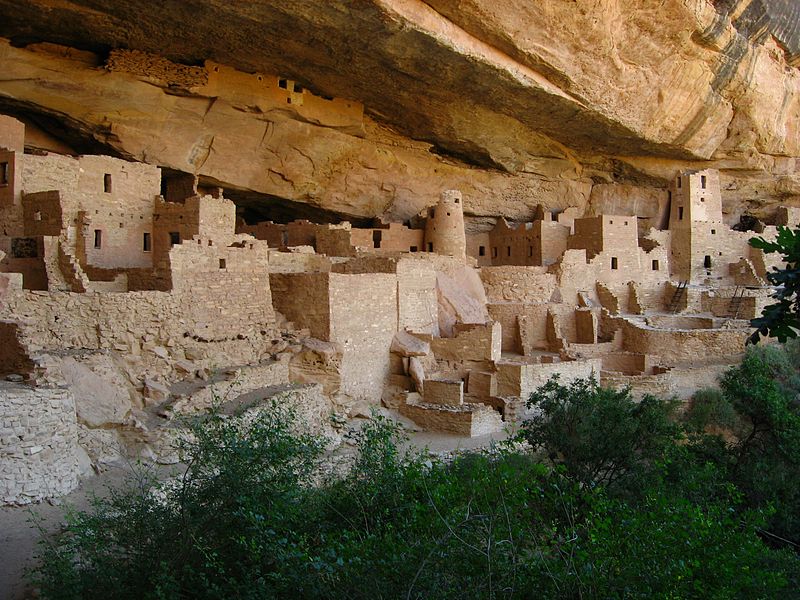
Mesa Verde National Park, in Colorado’s far southwest corner, was created by Theodore Roosevelt in 1906 as the first national park set up to protect “the works of man”, and in 1978 it was one of the first 12 World Heritage Sites on Earth, protecting nearly 5,000 archaeological sites, including 600 cliff dwellings.
Mesa Verde’s cliff dwellings were built by Ancestral Puebloans in the 1190s–1270s, and you can see Cliff Palace, with 150 rooms and 23 kivas, and Balcony House on ranger-led tours, with more from the Mesa Top Loop overlooks — Spruce Tree House has been closed since 2015 because of falling rock.
The people of Mesa Verde didn’t vanish, as was long said — they moved south around 1300, after a great drought, and two dozen modern pueblos and tribes trace their ancestry to them — and in 2020 human remains taken by a Swedish collector in 1891 came home from Finland to be reburied.
7 – Denver

Denver was founded in November 1858 during the Pikes Peak gold rush where Cherry Creek meets the South Platte River, and named to flatter James W. Denver, governor of Kansas Territory — who, it turned out, had already resigned.
In Denver you can visit the State Capitol, whose dome is covered in Colorado gold leaf, the Denver Art Museum, Union Station and Larimer Square, and tour the Denver Mint, which stamps a “D” on its coins — and where in 1922 robbers held up a truck outside and got away with $200,000.
Denver’s “mile high” has moved four times: a step on the Capitol was first marked at 5,280 feet in 1909, the mark was shifted in 1969 and 2003, and in 2026 a new survey moved it a few steps up again — and the city’s Cathedral Basilica was paid for by flour magnate John Kernan Mullen, born in Ballinasloe, Co. Galway.
8 – The Maroon Bells

The Maroon Bells are two peaks of about 14,160 and 14,020 feet in the Elk Mountains near Aspen, made of sedimentary mudstone some 300 million years old, coloured deep red by iron oxide, and reflected in Maroon Lake below — often called Colorado’s most photographed scene.
From Maroon Lake you can walk to Crater Lake beneath the Maroon Bells, and in season private cars are barred during the day, so you book a shuttle bus from Aspen Highlands or a timed parking reservation.
Climbers call the Maroon Bells “the Deadly Bells” — the nickname dates from 1965, when eight people died in five accidents — because the rock is loose and rotten, and a Forest Service sign warns that it “kills without warning”.
9 – Bishop Castle
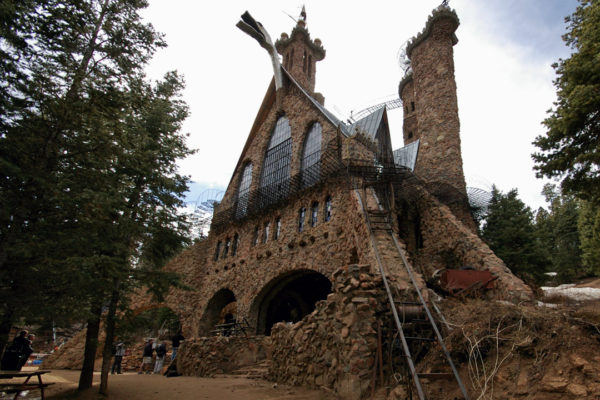
Bishop Castle is a stone-and-iron castle in the Wet Mountains of southern Colorado, near Rye, built almost single-handedly over more than 50 years by Jim Bishop, who bought the land aged 15 in 1959 for $450 and began building in 1969 with no plans.
Bishop Castle is free to visit, with stairs and iron walkways climbing the towers to about 160 feet, and a dragon’s head on the front made from cafeteria warming trays, which breathes fire through a burner taken from a hot-air balloon.
Jim Bishop died in November 2024, aged 80, after years of rows with the Forest Service over the rock he took from the national forest, and in summer 2026 a wildfire came within 200 yards of Bishop Castle, which survived.
10 – Red Rocks Amphitheatre
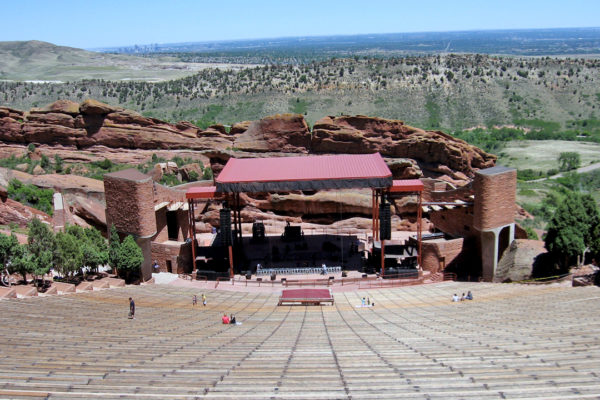
Red Rocks Amphitheatre sits between two huge sandstone monoliths, Ship Rock and Creation Rock, in the foothills at Morrison, west of Denver, and was built by the Civilian Conservation Corps between 1936 and 1941, though concerts were held among the rocks as early as 1906.
Red Rocks seats about 9,500 people in a natural bowl with famous acoustics, has an outdoor concert season from spring to autumn, an Easter sunrise service held since 1947, and the Colorado Music Hall of Fame in the old Trading Post.
U2’s concert at Red Rocks on 5 June 1983, played in pouring rain to about 4,400 people, became the film Live at Red Rocks: Under a Blood Red Sky — though only two tracks on the album of the same name come from Red Rocks — and after a riot at a Jethro Tull show in 1971, Denver banned rock concerts here until 1976.
11 – Colorado Springs
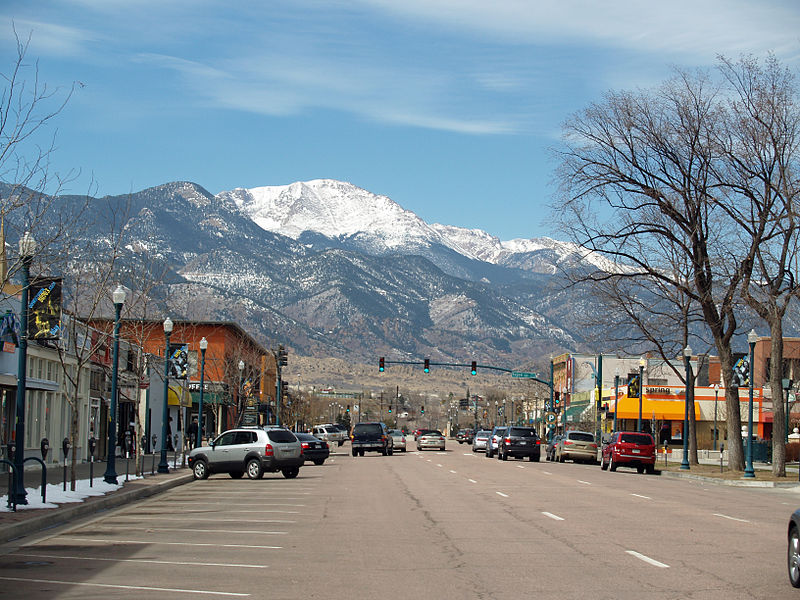
Colorado Springs, at the foot of Pikes Peak, was founded in 1871 by railway general William Jackson Palmer as a genteel resort, nicknamed “Little London”, and every deed banned alcohol on pain of losing the property — a rule only killed off by the courts in 1963.
From Colorado Springs you can ride the Pikes Peak Cog Railway, rebuilt and reopened in 2021, to the 14,115-foot summit, visit the US Olympic and Paralympic Museum and the US Air Force Academy, and walk Old Colorado City, the earlier gold-rush town.
Katharine Lee Bates wrote “America the Beautiful” after reaching the top of Pikes Peak in 1893 — and in 1899 Nikola Tesla set up a laboratory in Colorado Springs, where he claimed to have made artificial lightning, before leaving in 1900 with unpaid bills.
12 – Durango and Silverton Railroad
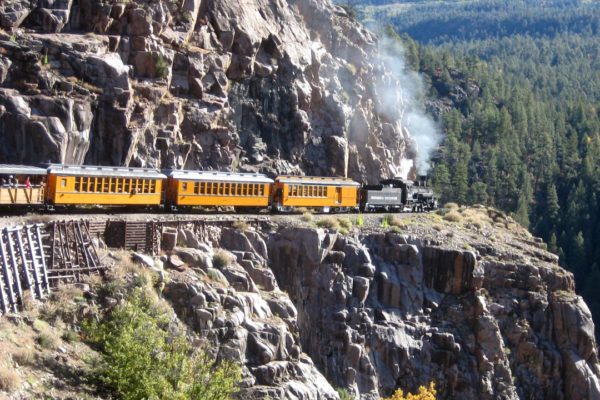
The Durango and Silverton Narrow Gauge Railroad runs 45 miles through the San Juan Mountains of southwest Colorado, built by the Denver & Rio Grande in 1881–82 to haul silver and gold out of the mines at Silverton, and it has been steam-hauled ever since — a National Historic Landmark since 1961.
The Durango and Silverton train climbs from Durango alongside the Animas River, through a narrow canyon with cliff-edge track, to Silverton, an old mining town more than 9,000 feet up, with a few hours to explore before the ride back.
Paul Newman and Robert Redford rode the line in Butch Cassidy and the Sundance Kid (1969), and after the 2018 416 Fire, which the US government blamed on the train, the railroad paid $20 million without admitting liability and switched its steam engines from coal to oil.
13 – Molly Brown House
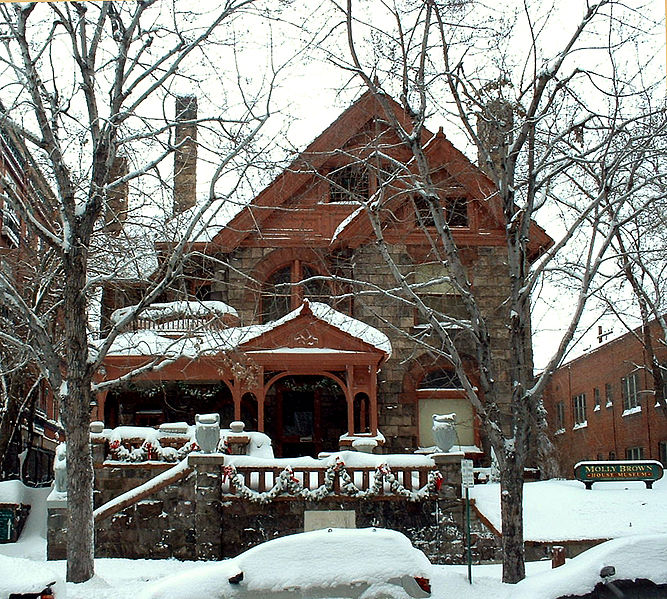
The Molly Brown House, in Denver’s Capitol Hill, was the home from 1894 of Margaret Tobin Brown, born in Hannibal, Missouri, in 1867 to Irish parents — her father, John Tobin, from Co. Cork — who married J. J. Brown, the son of an Irish immigrant, a mining engineer made rich by a gold strike at Leadville.
The Molly Brown House is a museum furnished as it was in her day, saved from demolition in 1970 by a group of locals that became Historic Denver, and tells her story beyond the Titanic — including her 1914 run for the US Senate, six years before American women won the vote nationally.
She survived the Titanic in Lifeboat 6, arguing with the quartermaster to go back for survivors, and raised almost $10,000 for poorer survivors before the rescue ship even reached New York — but she was never called “Molly” in her life, a name invented after her death in 1932 and made famous by the musical The Unsinkable Molly Brown.
14 – Leadville
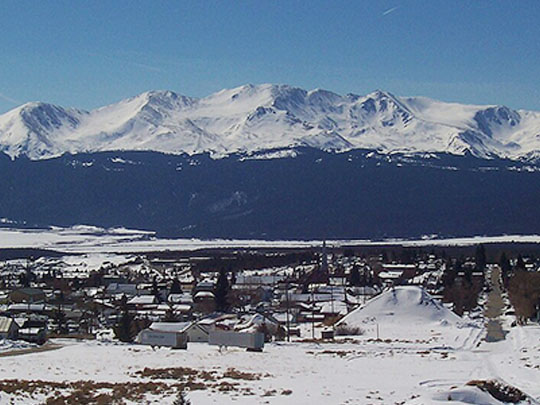
Leadville, high in the Rockies at 10,152 feet, is the highest incorporated city in the US, and boomed from 1877 when prospectors realised the heavy black sand clogging their gold pans was silver-bearing lead ore — and about one in ten people here in 1880 were Irish, a third of them from the copper-mining parish of Allihies, Co. Cork, now its twin town.
In Leadville you can visit the Tabor Opera House of 1879, the Matchless Mine and the cabin where Baby Doe Tabor, once among the richest women in the West, was found frozen to death in 1935, the National Mining Hall of Fame, and the Irish Miners’ Memorial in Evergreen Cemetery, unveiled in 2023 and part-funded by the Irish government.
Oscar Wilde lectured at the Tabor Opera House in April 1882 and went down a mine in a bucket, where, he wrote, he had supper — “the first course being whisky, the second whisky and the third whisky” — while the Irish miners buried in Leadville’s unmarked graves died at an average age of just 23.
15 – Sand Creek Massacre site
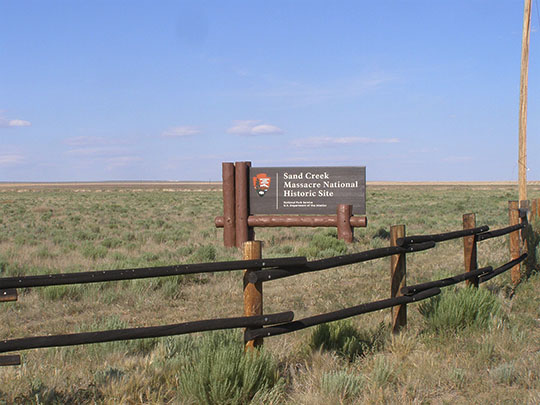
Sand Creek Massacre National Historic Site, on the plains of southeast Colorado near Eads, marks where on 29 November 1864 US volunteer cavalry under Colonel John Chivington attacked a peaceful camp of Cheyenne and Arapaho, killing around 230 people, by the Park Service’s count, well over half of them women and children.
At Sand Creek you walk a trail to an overlook above the site of the village, which is itself closed to visitors out of respect, past a repatriation area where remains returned from museums have been reburied, and rangers give talks twice a day.
The camp’s leader, Black Kettle, was flying a US flag he’d been given in 1860, and two officers, Captain Silas Soule and Lieutenant Joseph Cramer, ordered their men not to fire — Soule testified against Chivington and was murdered in Denver in 1865, and since 1999 a three-day Spiritual Healing Run has carried the memory of Sand Creek to Denver every year.
16 – Ludlow
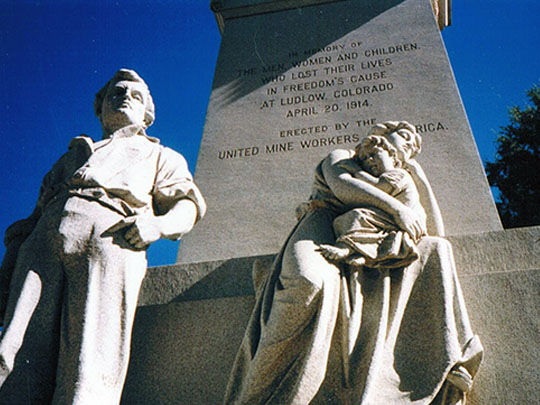
Ludlow, in the coalfields of southern Colorado north of Trinidad, is where on 20 April 1914 the Colorado National Guard attacked and burned a tent colony of about 1,200 striking miners and their families, in a strike against Colorado Fuel & Iron, whose main shareholder was John D. Rockefeller Jr.
At Ludlow, the United Mine Workers have kept a granite memorial on the site since 1918, restored after vandals beheaded its statues in 2003, beside the “death pit”, the cellar beneath a tent where eleven children and two women died when the tents above were set on fire — a National Historic Landmark since 2009.
The miners had been organised by the Cork-born Mother Jones, who had been jailed and forced out of Colorado before the massacre, and what followed changed America: ten days of open warfare in the coalfields, a pioneering public-relations campaign to rescue Rockefeller’s name, and Woody Guthrie’s song “Ludlow Massacre”.
17 – Rocky Mountain National Park
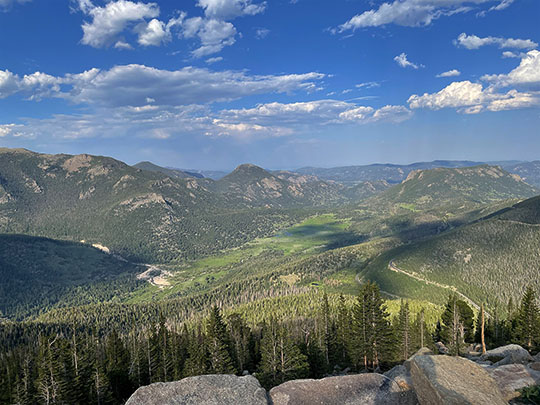
Rocky Mountain National Park straddles the Continental Divide northwest of Denver, about 415 square miles, a third above the tree line, protected since 26 January 1915 after a campaign led by the naturalist Enos Mills, with more than 4 million visitors a year.
Rocky Mountain National Park’s Trail Ridge Road, opened in 1932, climbs to 12,183 feet, the highest continuous paved road in the US, past alpine tundra and herds of elk, and you can walk to Bear Lake and the lakes around it, cross to Grand Lake on the west side, or climb Longs Peak, at 14,259 feet the park’s only fourteener.
The Irish earl of Dunraven, from Adare, Co. Limerick, tried to turn the Estes Park valley at the park’s gate into his private hunting reserve in the 1870s, collecting thousands of acres through dozens of homestead claims filed by frontmen, in what historians call one of Colorado’s biggest land grabs, before selling up to F. O. Stanley of the Stanley Hotel.