
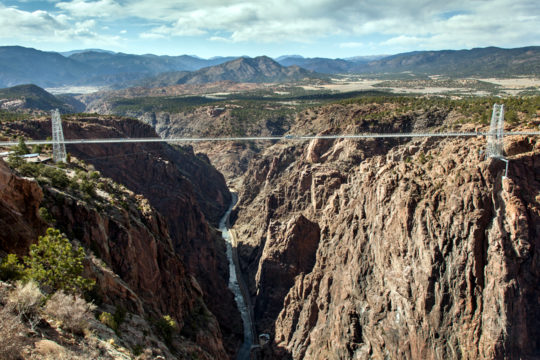
Wikimedia Commons / CC-BY-SA-3.0 / GFDL
Capital: Denver
Population: 6 million+
Language: English
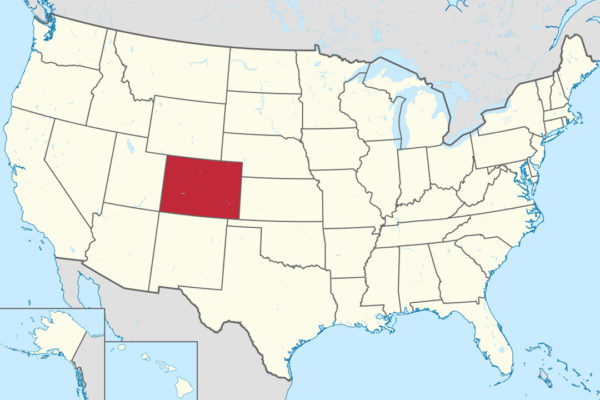
1 – Royal Gorge Bridge (above)
The Royal Gorge Bridge spans a granite canyon near Cañon City in south-central Colorado, carved by the Arkansas River over about three million years to some 381 m deep and as little as 9 m wide at the bottom, and Zebulon Pike struggled through it in the winter of 1806–07.
Around the Royal Gorge Bridge are aerial gondolas across the canyon, a zip line billed as America’s highest, the Royal Gorge Route Railroad along the river far below and rafting on the Arkansas, while nearby Cañon City has the Museum of Colorado Prisons, beside a prison opened in 1871.
At the narrowest point of the gorge there was no room for the railway, so in 1879, during the “Royal Gorge War” between rival railroads, engineers hung a 53 m bridge from girders anchored in the canyon walls, the Hanging Bridge, and the Stegosaurus specimen that defines the genus was dug up in 1885–86 just north of Cañon City.
2 – Garden of the Gods

Garden of the Gods is a park of red sandstone fins standing on end at the foot of Pikes Peak in Colorado Springs, laid down nearly 300 million years ago and tilted up when the Rockies rose, and a place of spiritual importance to the Ute long before it got its name.
Garden of the Gods has paved trails among the rock fins, Balanced Rock and the Kissing Camels, a visitor centre with views to Pikes Peak, and climbing on the sandstone with a permit, while a dinosaur skull found here in 1878 was named Theiophytalia kerri in 2006.
When two surveyors found Garden of the Gods in 1859, one said it would make “a capital place for a Biergarten” and the other that it was “a fit place for the Gods to assemble”, and when railway boss Charles Perkins’s children gave it to the city in 1909, the deed said it must stay free forever, with no alcohol ever sold there.
3 – Aspen
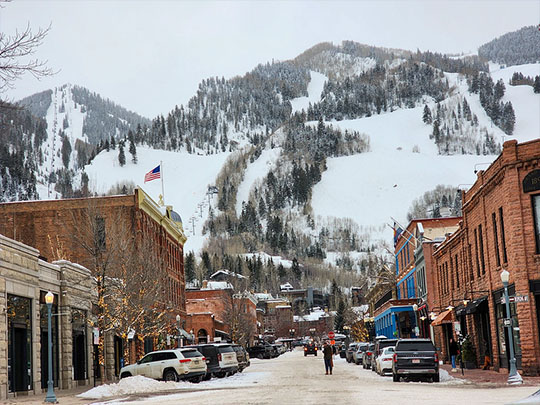
Aspen, high in the Elk Mountains of west-central Colorado, was founded as the silver camp of Ute City in 1879, boomed to perhaps 10,000 or more people by 1893, then crashed when the US stopped buying silver that year, and yet in 1894 its Smuggler Mine produced the largest silver nugget ever found in the US.
Aspen is a ski town and summer festival town, with Aspen Mountain rising straight out of the streets, the Wheeler Opera House and Hotel Jerome of 1889, the Aspen Music Festival and the Aspen Institute.
Aspen was rescued by the Chicago industrialist Walter Paepcke and his wife Elizabeth, who launched the ski company in 1946 and the 1949 Goethe festival that grew into the Aspen Institute, in 1970 Hunter S. Thompson lost a run for county sheriff on the “Freak Power” ticket, while the “Aspen” in Dumb and Dumber was mostly filmed in Breckenridge.
4 – Seven Falls
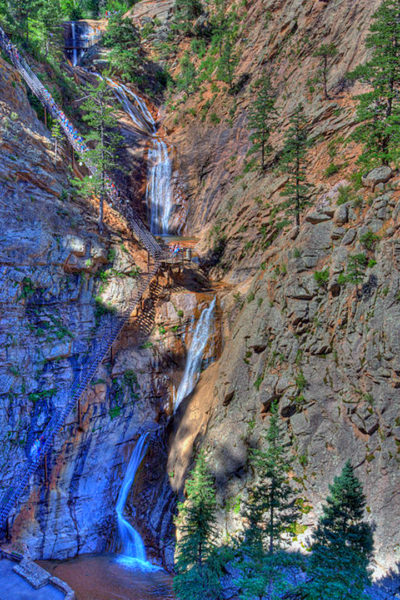
Seven Falls is a chain of seven waterfalls dropping a total of 55 m in South Cheyenne Cañon on the edge of Colorado Springs, and it became a paid attraction in 1883, when James Hull, who had bought it the year before, began charging ten cents at a barbed-wire gate.
Seven Falls is climbed on a 224-step staircase beside the water to trails above, or by a lift cut into the mountain up to the Eagle’s Nest viewing platform, and after the 2013 flood The Broadmoor hotel bought the falls in 2014 and reopened them in 2015.
The writer Helen Hunt Jackson, a friend of Emily Dickinson from their home town of Amherst, was buried above Seven Falls in 1885 at her own wish, but so many visitors tramped up to her grave and damaged the canyon that in 1891 she was moved to a cemetery in town.
5 – Hanging Lake

Hanging Lake is a small turquoise lake perched on a cliff in Glenwood Canyon, in western Colorado, formed when a patch of valley floor dropped along a fault and was rimmed in travertine left by mineral-rich water, and it became a National Natural Landmark in 2011.
The trail to Hanging Lake climbs about 366 m in 1.9 km to a boardwalk around the water, fed by Bridal Veil Falls, with Spouting Rock some 60 m above it.
Hanging Lake is so fragile that swimming, touching the water and standing on its famous fallen log are all banned, while after the 2020 Grizzly Creek Fire and the debris flows of 2021 wrecked the trail, it was rebuilt with seven new bridges and more than 1,000 stone steps laid largely by hand.
6 – Mesa Verde
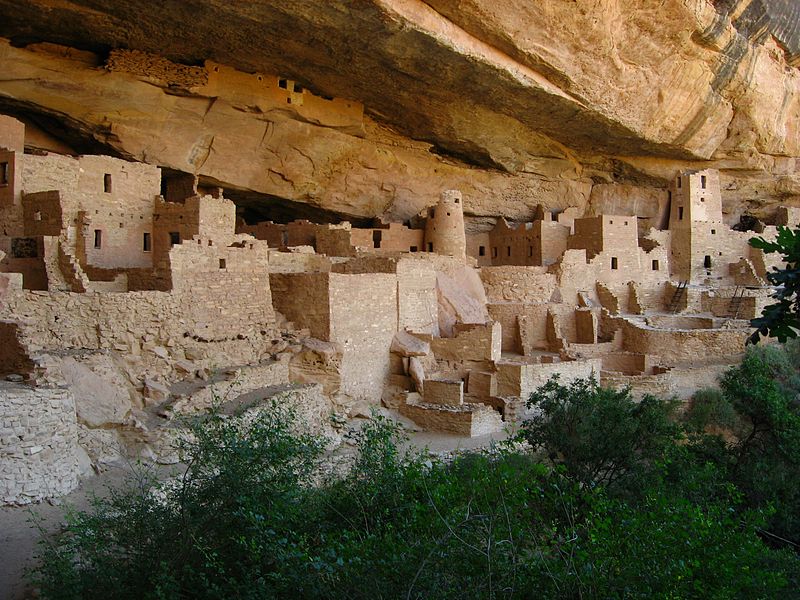
Mesa Verde National Park, in Colorado’s far southwest corner, was created in 1906 as the first national park set up to protect “the works of man”, and in 1978 it was one of the first 12 World Heritage Sites on Earth, protecting nearly 5,000 archaeological sites, including 600 cliff dwellings.
Mesa Verde’s cliff dwellings were built by Ancestral Puebloans, from the late 1100s to the late 1200s, and Cliff Palace, with 150 rooms and 23 kivas, and Balcony House are seen on ranger-led tours, with more from the Mesa Top Loop overlooks.
The people of Mesa Verde did not vanish, as was long said, but moved south around 1300 amid drought and unrest, and 24 modern pueblos and tribes trace their ancestry to them, while in 2020 remains taken by the Swedish collector Gustaf Nordenskiöld in 1891 came home from Finland for reburial.
7 – Denver

Denver was founded on 22 November 1858 during the Pikes Peak gold rush where Cherry Creek meets the South Platte River, and named to flatter James W. Denver, governor of Kansas Territory, who, it turned out, had already resigned.
In Denver are the State Capitol, whose dome was first gilded in 1908 with Colorado gold, the Denver Art Museum, Union Station and Larimer Square, and the Denver Mint, outside which robbers held up a bank truck in 1922 and got away with $200,000.
The “mile high” step on Denver’s Capitol has moved more than once since the first mark of 1909, as surveyors refined the 1,609 m line, and the city’s Cathedral Basilica, dedicated in 1912, owed most to its great benefactor, the flour magnate John Kernan Mullen of Ballinasloe, County Galway.
8 – Maroon Bells

The Maroon Bells are two peaks of about 4,317 m and 4,273 m in the Elk Mountains near Aspen, made of mudstone some 300 million years old, coloured deep red by iron, and reflected in Maroon Lake below, in what is often called Colorado’s most photographed scene.
From Maroon Lake a trail of about 2.9 km leads to Crater Lake beneath the Maroon Bells, and in summer most visitors arrive by shuttle bus from Aspen Highlands, as private cars are restricted on the valley road by day.
The Forest Service nicknamed the Maroon Bells “the Deadly Bells” after eight climbers died in five separate accidents in 1965, because the rock is loose and rotten, and a sign warns that it “kills without warning”.
9 – Bishop Castle
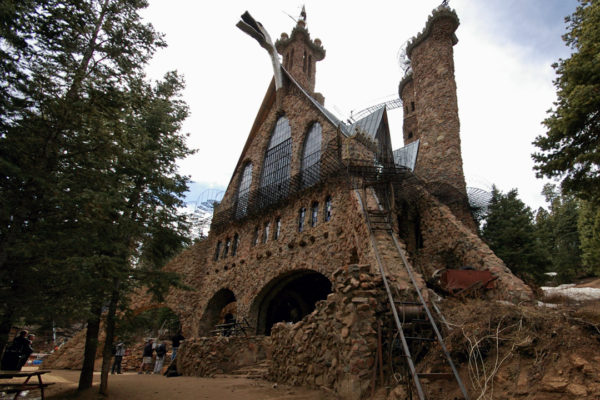
Bishop Castle is a stone-and-iron castle in the San Isabel National Forest of southern Colorado, near Rye, built almost single-handedly over more than 50 years by Jim Bishop, who bought the land aged 15 in 1959 and began building in 1969.
Bishop Castle has stairs and iron walkways climbing its towers to about 49 m, and a dragon’s head on the front made from hospital cafeteria warming trays, which breathes fire through a burner from a hot-air balloon.
Jim Bishop died in November 2024, aged 80, after decades of rows with officials, and in July 2026 the Aspen Acres Fire burned close to Bishop Castle, which survived.
10 – Red Rocks Amphitheatre
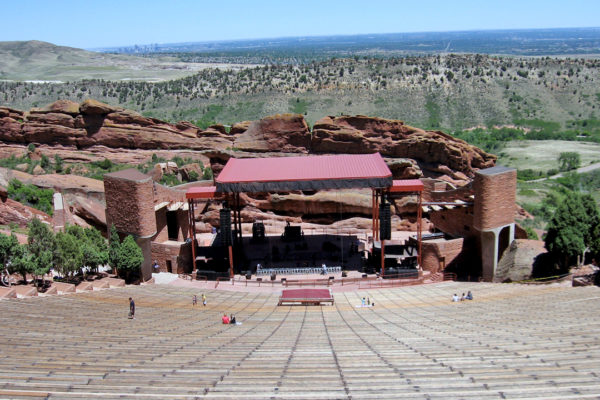
Red Rocks Amphitheatre sits between two huge sandstone monoliths, Ship Rock and Creation Rock, in the foothills at Morrison, west of Denver, and was built by the Civilian Conservation Corps and dedicated in 1941, though a brass band played among the rocks as early as 1906.
Red Rocks seats about 9,500 people in a natural bowl famous for its acoustics, which the opera singer Mary Garden praised in 1911 as more perfect than any opera house, and an Easter sunrise service was first held here in 1947.
U2’s concert at Red Rocks on 5 June 1983, played in pouring rain to about 4,400 people, became the film Live at Red Rocks: Under a Blood Red Sky, though only two tracks on the album of the same name come from Red Rocks, and after a riot at a Jethro Tull show in 1971, Denver banned rock concerts here until 1976.
11 – Colorado Springs
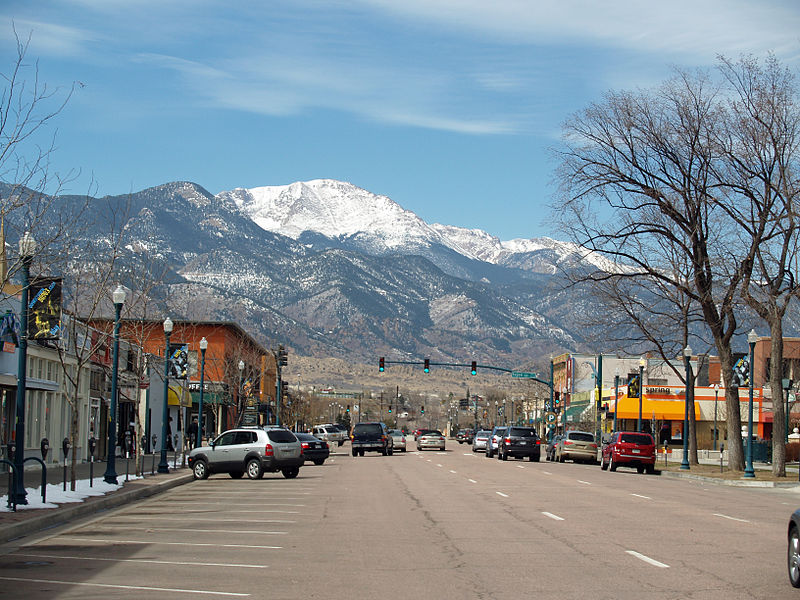
Colorado Springs, at the foot of Pikes Peak, was founded in 1871 by the railway general William Jackson Palmer as a genteel resort, nicknamed “Little London”, and its early deeds banned alcohol on pain of losing the property, a clause the state’s Supreme Court declared unenforceable only in 1963.
From Colorado Springs the Pikes Peak Cog Railway, first opened in 1891 and rebuilt in 2021, climbs to the 4,302 m summit, while the city has the US Olympic and Paralympic Museum, the US Air Force Academy, and Old Colorado City, the earlier gold-rush town.
Katharine Lee Bates wrote “America the Beautiful” after reaching the top of Pikes Peak in 1893, and in 1899 Nikola Tesla set up a laboratory in Colorado Springs, where he said his experiments repeatedly burned out the dynamos at a power station 10 km away, before leaving in 1900 with unpaid bills.
12 – Durango and Silverton Railroad
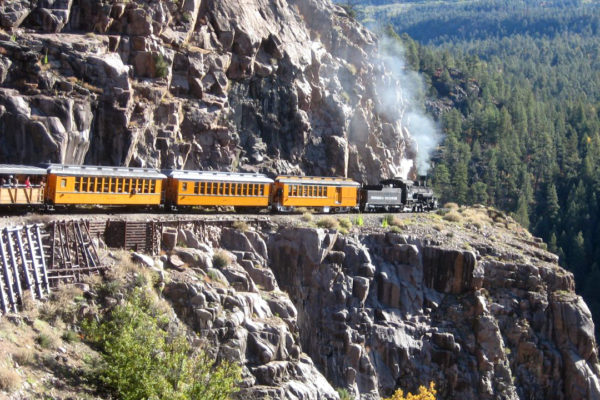
The Durango and Silverton Railroad, officially the Durango and Silverton Narrow Gauge Railroad, runs 72 km through the San Juan Mountains of southwest Colorado on a line the Rio Grande railway built in 1881–82 to haul ore from the mines at Silverton, a National Historic Landmark since 1961.
The train climbs from Durango alongside the Animas River, through a narrow canyon with cliff-edge track, to Silverton, an old mining town at 2,840 m, where the first passenger train arrived on 8 July 1882.
The train-robbery scenes of Butch Cassidy and the Sundance Kid (1969) were filmed on the line, and after the 2018 416 Fire, which investigators blamed on a cinder from a coal-burning engine, the railroad paid $20 million without admitting liability and began converting its steam engines to burn oil.
13 – Molly Brown House
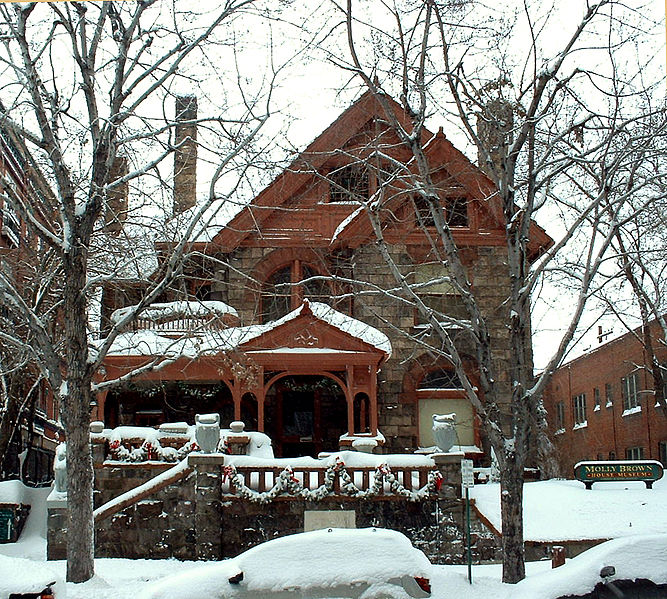
The Molly Brown House, in Denver’s Capitol Hill, was the home from 1894 of Margaret Tobin Brown, born in Hannibal, Missouri, in 1867 to Irish immigrant parents, and her husband J. J. Brown, also the son of Irish immigrants, a mining engineer made rich by a gold strike at Leadville in 1893.
The Molly Brown House is a museum furnished as in her day, saved from demolition in 1970 by a group of locals that became Historic Denver, and it tells her story beyond the Titanic, from her help for the families of the Ludlow strikers to her 1914 bid for the US Senate, six years before American women won the vote nationally.
She survived the Titanic in Lifeboat 6, arguing with the quartermaster to go back for survivors, and raised almost $10,000 for poorer survivors before the Carpathia reached New York, but she was never called “Molly” in her life, a name popularised after her death in 1932 and made famous by the musical The Unsinkable Molly Brown.
14 – Leadville
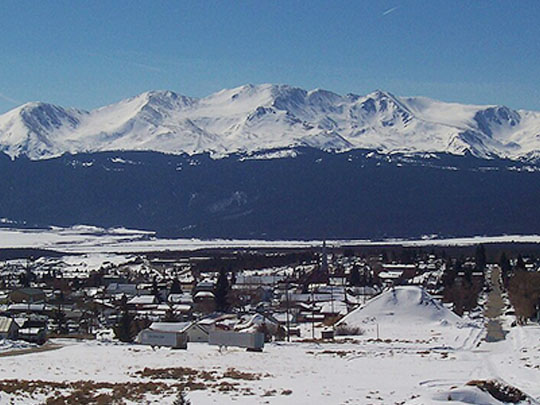
Leadville, high in the Rockies at 3,094 m, is the highest incorporated city in the US, and boomed from 1877 after prospectors realised the heavy black sand clogging their gold pans was silver-bearing lead ore, and by 1880 nearly one in ten people here were Irish-born, two in five of them from Allihies, County Cork, which became its twin town in 2022.
In Leadville are the Tabor Opera House of 1879, the Matchless Mine and the cabin where Baby Doe Tabor, once one of the West’s richest women, was found frozen to death in 1935, the National Mining Hall of Fame and the Irish Miners’ Memorial in Evergreen Cemetery, completed in 2023 with nearly half its cost paid by the Irish government.
Oscar Wilde lectured at the Tabor Opera House in April 1882 and went down a mine in a bucket, where, he wrote, he had supper, “the first course being whisky, the second whisky and the third whisky”, while the Irish buried in Leadville’s unmarked graves, half of them children, died at an average age of just 23.
15 – Sand Creek Massacre
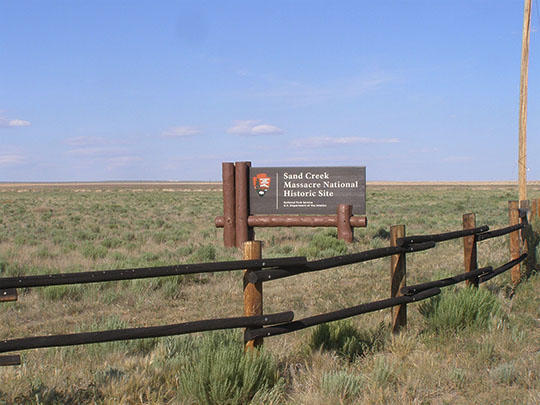
Sand Creek Massacre National Historic Site, on the plains of southeast Colorado near Eads, marks where on 29 November 1864 about 675 Colorado volunteer cavalry under Colonel John Chivington attacked a peaceful camp of Cheyenne and Arapaho, killing around 230 people by the Park Service’s count, well over half of them women and children.
At Sand Creek a trail leads to an overlook above the site of the village, near a repatriation area where remains returned from museums and private collections have been reburied since 2008.
The camp’s leader, Black Kettle, was flying a US flag given to him by a government commissioner, while Captain Silas Soule and Lieutenant Joseph Cramer kept their men out of the attack, and Soule, who testified against Chivington, was murdered in Denver in 1865, and since 1999 the Spiritual Healing Run has carried the memory of Sand Creek some 320 km to Denver.
16 – Ludlow
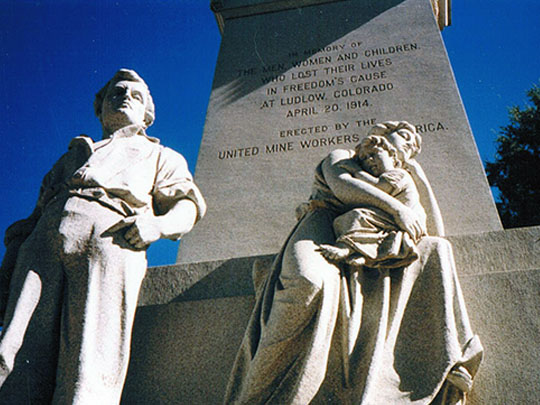
Ludlow, in the coalfields of southern Colorado north of Trinidad, is where on 20 April 1914 the Colorado National Guard, with company guards, attacked and burned a tent colony of about 1,200 striking miners and families, in a strike against Colorado Fuel and Iron, controlled by John Rockefeller Jr.
At Ludlow, a granite memorial put up by the United Mine Workers around 1918, restored after vandals beheaded its statues in 2003, stands beside the “death pit”, the cellar beneath a tent where 11 children and two women died when the tents above were set on fire, and the site became a National Historic Landmark in 2009.
The Cork-born Mother Jones, who had rallied the strikers, was jailed and forced out of Colorado before the massacre, and what followed changed America: ten days of open warfare in the coalfields, a pioneering public-relations campaign to rescue Rockefeller’s name, and Woody Guthrie’s song “Ludlow Massacre”.
17 – Rocky Mountain National Park
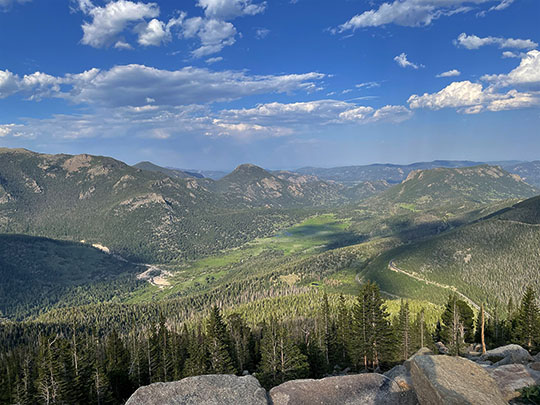
Rocky Mountain National Park straddles the Continental Divide northwest of Denver, covering about 1,076 km², a third of it alpine tundra, and has been protected since 26 January 1915 after a campaign led by the naturalist Enos Mills.
Rocky Mountain National Park’s Trail Ridge Road, which reached Fall River Pass in 1932, climbs to 3,713 m, the highest continuous paved road in the US, past alpine tundra and herds of elk, while trails lead to Bear Lake, Grand Lake on the west side and up Longs Peak, at 4,346 m the park’s highest point.
The Irish Earl of Dunraven, born at Adare, County Limerick, tried to turn the Estes Park valley at the park’s gate into his private hunting reserve in the 1870s, controlling about 6,000 ha through dozens of homestead claims filed by frontmen in a notorious land grab, before selling up to the Stanley Hotel’s founder, Freelan Stanley, and a partner.