
Wikimedia Commons / CC-BY-SA-3.0 / GFDL
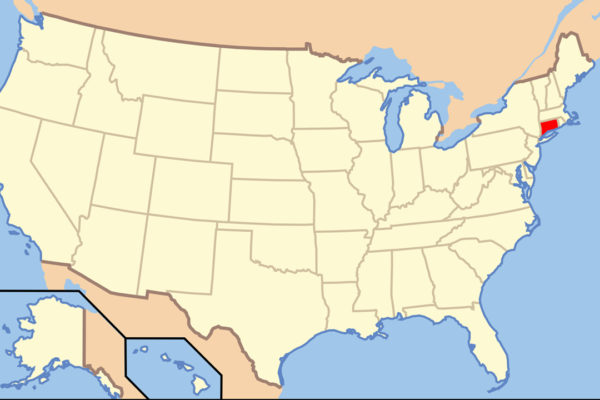
Capital: Hartford
Population: 3.6 million+
Language: English – Connecticut has no official language.
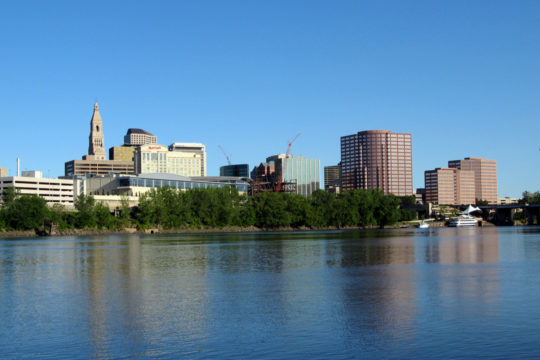
1 – Hartford (above)
Hartford, on the Connecticut River, was founded in 1636 by the Puritan minister Thomas Hooker and his congregation, and in 1639 its settlers drew up the Fundamental Orders, often called the first written constitution — the source of Connecticut’s nickname, the Constitution State, though historians dispute the claim.
In Hartford you can see the gold-domed State Capitol of 1879, the Wadsworth Atheneum, the oldest continuously operating public art museum in the US, Bushnell Park, approved by a vote of the townspeople in 1854, with its Corning Fountain and memorial arch, and the blue onion dome of Samuel Colt’s armoury, now a national historical park.
Hartford’s most famous legend is the Charter Oak, where in 1687 Captain Joseph Wadsworth supposedly hid the colony’s charter from a royal governor, though recent research suggests it never happened — and Connecticut’s first Catholic parish was founded here in 1829 by Irish labourers who’d come to dig the canals.
2 – The Lover’s Leap Bridge
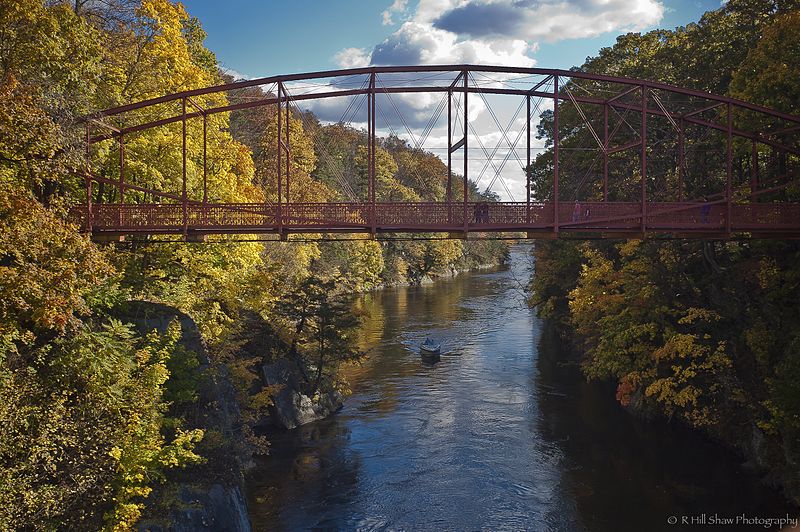
The Lover’s Leap Bridge crosses the Housatonic River gorge in New Milford, in western Connecticut, a wrought-iron lenticular truss built in 1895 by the Berlin Iron Bridge Company, its lens-shaped trusses making it one of only four of its kind left in the state.
Closed to cars since 1977, the Lover’s Leap Bridge now carries walkers into Lover’s Leap State Park, with trails along the cliffs above the gorge and views over Lake Lillinonah, the reservoir made when the Shepaug Dam was built in 1955.
The name comes from the story of Lillinonah, said to be the daughter of the Native leader Waramaug, who paddled over the falls here with her white lover leaping after her — a tale with no traceable early source, which even its tellers can’t agree on, and which follows the pattern of “lovers’ leaps” all over America.
3 – Chapman Falls
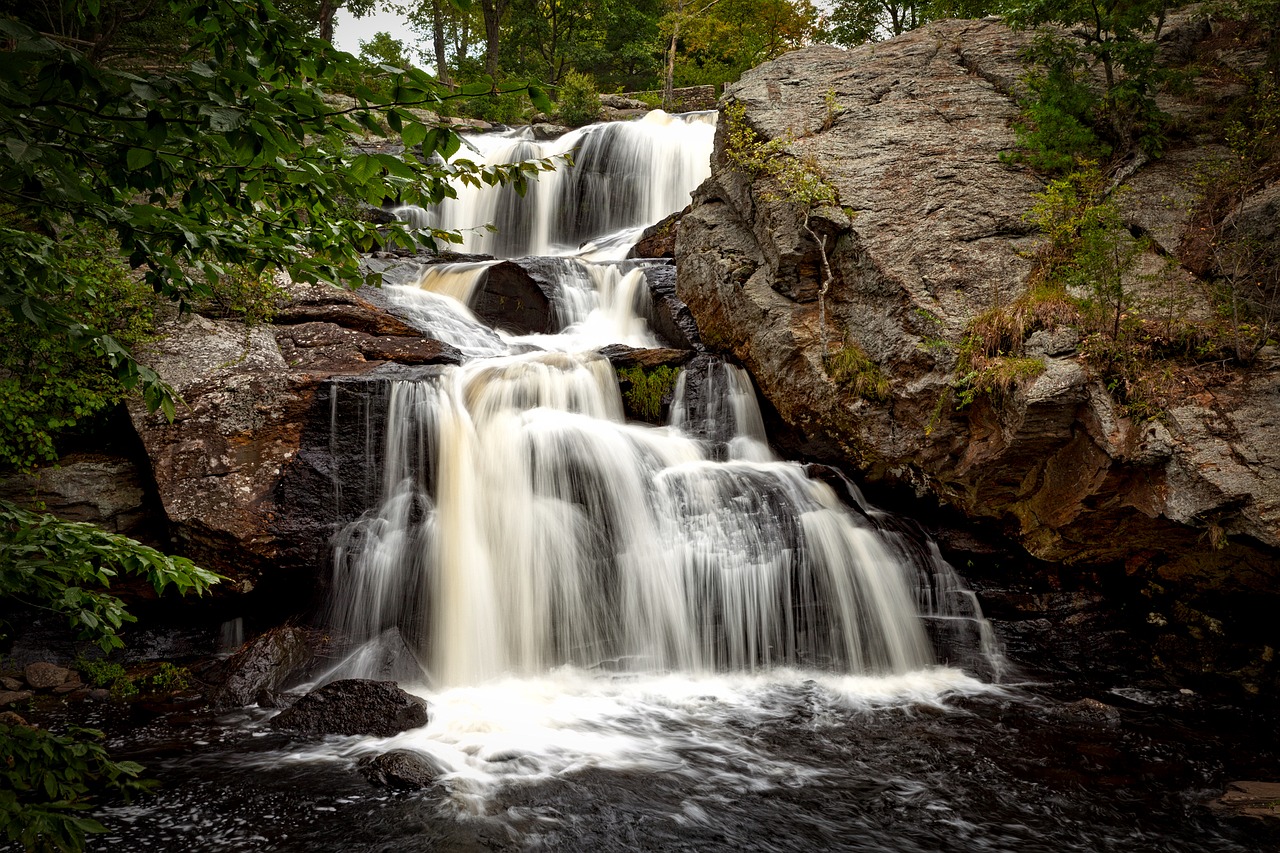
Chapman Falls tumbles more than 60 feet down a staircase of schist on the Eightmile River in Devil’s Hopyard State Park, East Haddam, in the hills above the lower Connecticut River, protected since 1919 and a federally designated Wild and Scenic River since 2008.
Devil’s Hopyard’s trails lead from Chapman Falls through hemlock and oak woods along the river, with campsites and riverside picnic spots, and the falls are at their fullest in spring after the snow melts.
The round potholes in the rock below Chapman Falls are, according to local legend, burn marks from the Devil’s hooves after he got his tail wet — they were actually ground out by stones whirling in the current — and nobody really knows where the name “Devil’s Hopyard” came from.
4 – New Haven
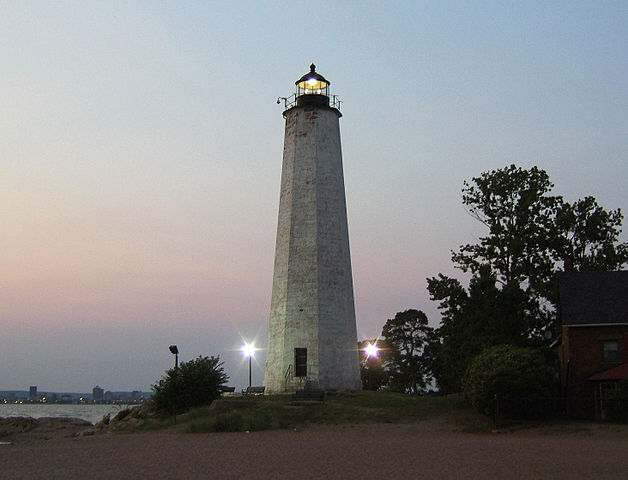
New Haven, on the shore of Long Island Sound, was founded in 1638 by Puritans who laid it out on a nine-square grid, one of the first planned towns in America, and the Africans of the slave ship Amistad were jailed here in 1839, where a memorial now stands on the jail site outside City Hall.
New Haven’s sights include the central Green, the Yale campus and “apizza”, the coal-fired pizza of Wooster Street, and out on the harbour mouth, the 1847 Five Mile Point Lighthouse stands in Lighthouse Point Park, near where 2,600 British troops landed to raid the city in July 1779.
The world’s first commercial telephone exchange opened in New Haven in January 1878, with 21 subscribers, and in 1882 Father Michael McGivney, son of Irish immigrants, founded the Knights of Columbus at St Mary’s Church here, as a help for widows and orphans — it’s still based in New Haven, and he was beatified in 2020.
5 – Mark Twain House
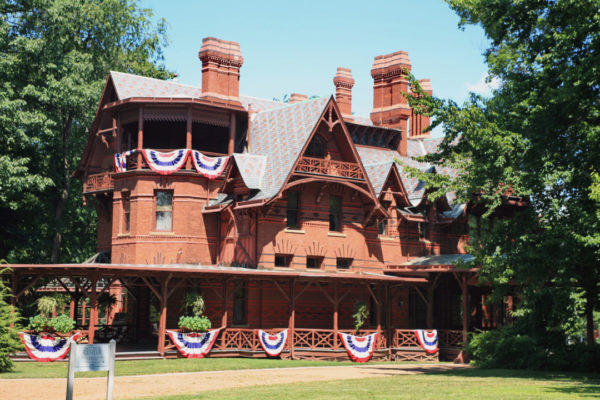
The Mark Twain House stands on Farmington Avenue in Hartford, where Samuel Clemens and his family lived from 1874 to 1891 and where he wrote Tom Sawyer, Huckleberry Finn, The Prince and the Pauper and A Connecticut Yankee in King Arthur’s Court.
The Mark Twain House is a gabled red-brick fantasy of turrets and balconies with interiors decorated by Louis Comfort Tiffany’s firm in 1881, and it also holds the only surviving Paige Compositor, the typesetting machine Twain sank about $300,000 into, ruining himself.
The family’s coachman for more than 30 years was Patrick McAleer from Co. Tyrone, the best-paid of the household staff, who lived with his family above the carriage house, and Twain wrote that he was “just as brisk” as when he’d first started — and Twain never lived here again after his daughter Susy died in the house in 1896.
6 – Yale – New Haven
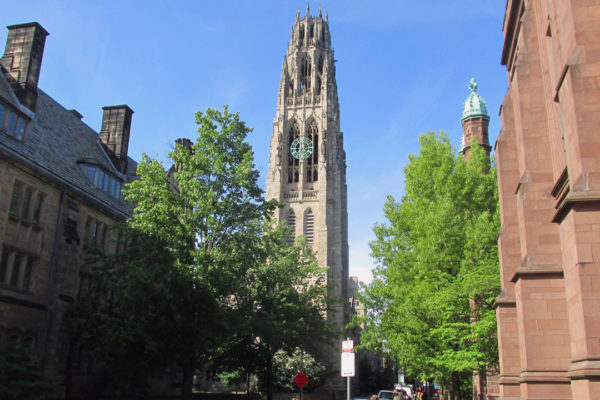
Yale, in the centre of New Haven, began in 1701 as the Collegiate School, moved here in 1716 and in 1718 took the name of Elihu Yale, a Boston-born merchant who made his fortune running the East India Company’s base at Madras, left America at the age of three and never went back, and is buried in Wrexham, Wales.
At Yale you can visit the Yale University Art Gallery, the oldest university art museum in the Western Hemisphere, with Van Gogh’s Night Café, the newly renovated Peabody Museum of natural history, the Beinecke Library’s marble-walled Gutenberg Bible and the Gothic Harkness Tower, and the art gallery and the Peabody are free.
In 2024 Yale formally apologised for its early ties to slavery, after research found more than 200 enslaved people connected to its founders and early leaders — and its bulldog, Handsome Dan, has been around since 1889, often called the first live college mascot in the US.
7 – Gillette Castle
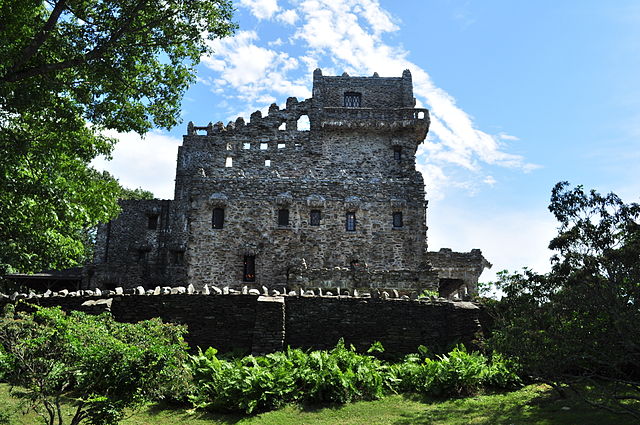
Gillette Castle stands on a hilltop above the Connecticut River at East Haddam, built from local fieldstone between 1914 and 1919 by the Hartford-born actor William Gillette, who made his fortune playing Sherlock Holmes on stage some 1,300 times.
Gillette Castle has 24 rooms and 47 doors, each with its own hand-carved wooden latch, hidden mirrors that let Gillette spy on his guests in the great hall, trails along the old bed of his three-mile miniature railway, and below the hill the Chester–Hadlyme ferry, which has crossed the river since 1769.
Gillette gave Sherlock Holmes his curved pipe and wrote the line “Oh, this is elementary, my dear fellow”, which grew into the famous “Elementary, my dear Watson” — never said in Conan Doyle’s stories — and his will forbade his castle passing to “some blithering saphead”, so the state bought it in 1943.
8 – Mystic
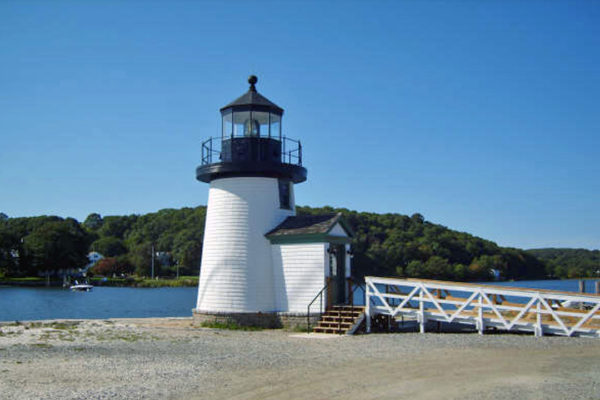
Mystic is a seafaring village on the Mystic River near the Rhode Island line, split between the towns of Groton and Stonington, which built more than 600 ships from the 18th century on, and nearby in 1637 English soldiers and their Native allies burned a Pequot fort, killing an estimated 400 to 700 people.
Mystic Seaport Museum, which describes itself as the largest maritime museum in the US, recreates a 19th-century waterfront with historic ships, and Mystic Aquarium, the 1922 Bascule Bridge over the river, and a main street of ship-captains’ houses complete the village.
The star at Mystic Seaport is the Charles W. Morgan, launched in 1841, the last wooden whaleship in the world and the oldest commercial ship still afloat in the US, which sailed again on a 38th voyage in 2014 — and the 1988 film Mystic Pizza, an early role for Julia Roberts and Matt Damon’s debut, was inspired by a real pizzeria here.
9 – Milford

Milford, on Long Island Sound between New Haven and Bridgeport, was settled in 1639 by Puritans, among them Robert Treat, who went on to found Newark, New Jersey, in 1666 — and wanted to call it Milford.
Milford’s town Green, a public space since at least the 1640s and billed as the second-longest in New England, is lined with churches and old houses, while at Silver Sands State Park you can walk out to Charles Island at low tide on a sandbar.
Charles Island is supposed to hide Captain Kidd’s treasure, but the story rests on an 1889 article quoting a 1699 letter nobody has ever found, and the treasure Kidd really did bury was on Gardiners Island, New York — where it was dug up and handed over that same year.
10 – Harriet Beecher Stowe House – Hartford
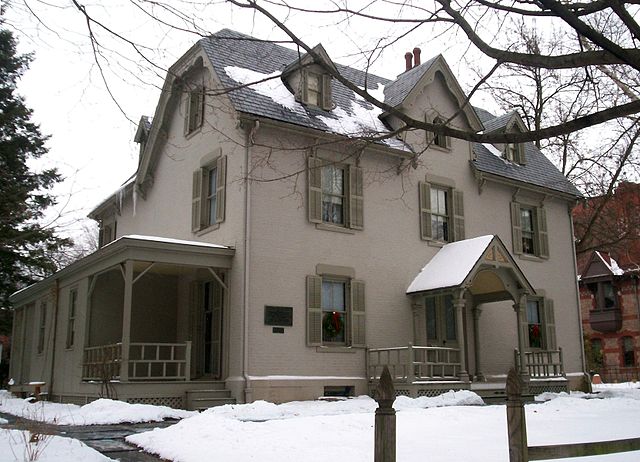
The Harriet Beecher Stowe House is the Hartford home where the author of Uncle Tom’s Cabin lived from 1873 until she died there in 1896, in the Nook Farm neighbourhood, next door to Mark Twain, with her sister, the suffragist Isabella Beecher Hooker, nearby.
The Harriet Beecher Stowe House, renamed the Stowe Center for Literary Activism in 2024, is shown on guided tours that look at her life and the abolitionist cause, and it gives an annual Stowe Prize for writing on social justice.
Uncle Tom’s Cabin was the best-selling novel of the 19th century, after the Bible, but it wasn’t written here — Stowe wrote it in Brunswick, Maine, in 1851–52 — and Lincoln’s supposed greeting, “So you’re the little woman who wrote the book that started this great war”, first appeared in print in 1896, 34 years after they met.
11 – Farmington
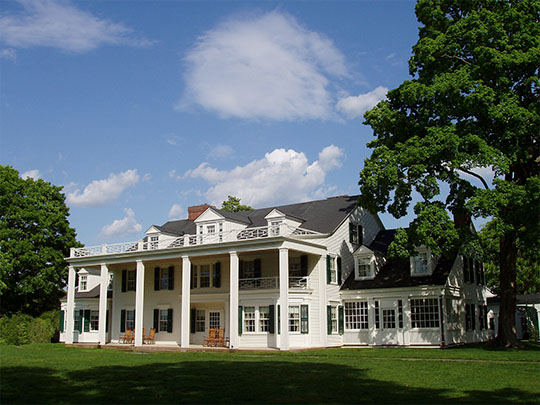
Farmington, a colonial town on the Farmington River west of Hartford, settled in 1640, sheltered the Mende Africans of the slave ship Amistad for eight months in 1841 after the Supreme Court freed them, while they raised money for their passage home to Sierra Leone.
In Farmington you can see the 1771 First Church of Christ, where the Africans attended services, the Austin Williams carriage house, which likely holds the dormitory built for them, and Hill-Stead, a colonial-revival house with Impressionist paintings by Monet, Degas, Manet and Cassatt, which its founder’s will forbids anyone to move, lend or sell.
Hill-Stead was designed by Theodate Pope Riddle, one of America’s first women architects, who survived the sinking of the Lusitania off the Old Head of Kinsale in 1915, pulled from the sea unconscious and laid among the dead before she came round — and the Farmington Canal, where one of the Amistad men, Foone, drowned that summer, was partly dug by Irish labourers.
12 – USS Nautilus, Groton
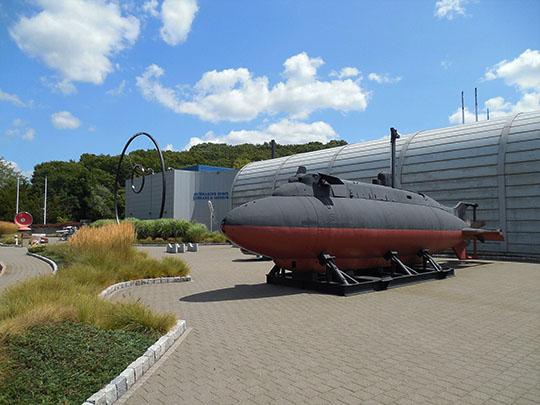
USS Nautilus, the world’s first nuclear-powered submarine, was built at Electric Boat in Groton, on the Thames River opposite New London, launched in January 1954, and in August 1958 became the first vessel to reach the North Pole, sailing beneath the Arctic ice.
You can walk through USS Nautilus, moored at the Submarine Force Library and Museum, the US Navy’s official submarine museum, past the torpedo room, the attack centre and the crew’s bunks, and admission is free.
Electric Boat, still building the Navy’s submarines at Groton, grew out of the company of John Philip Holland, born in Liscannor, Co. Clare, in 1841, a former Christian Brothers teacher whose first experiments were funded by the Fenians, and whose Holland became the US Navy’s first commissioned submarine in 1900 — he’s often called the father of the modern submarine.
13 – The Prudence Crandall Museum
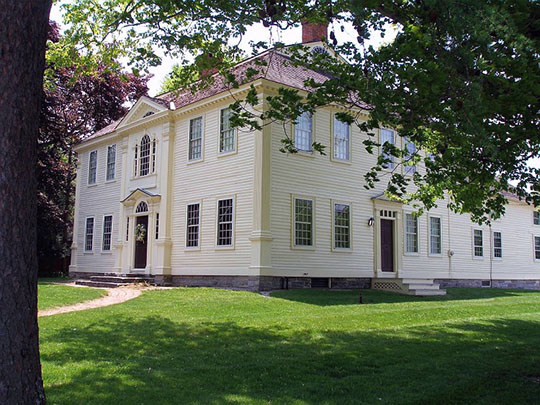

The Prudence Crandall Museum is the house in Canterbury, in rural eastern Connecticut, where in 1833 a young Quaker teacher, Prudence Crandall, turned her girls’ school into one for Black girls, after admitting Sarah Harris, daughter of a local Black farmer — Connecticut’s state heroine since 1995.
The Prudence Crandall Museum, a National Historic Landmark, shows the restored house and tells the story of the school through guided tours, open seasonally from spring to late October.
The town fought back: the state passed a “Black Law” banning such schools, Crandall was jailed and prosecuted twice before her conviction was overturned, her well was fouled and a mob smashed some 90 windows in September 1834, closing the school — and in 1857 Chief Justice Taney cited the judge’s ruling in her case, that free Black people weren’t citizens, in the Dred Scott decision.
14 – The Mashantucket Pequot Museum
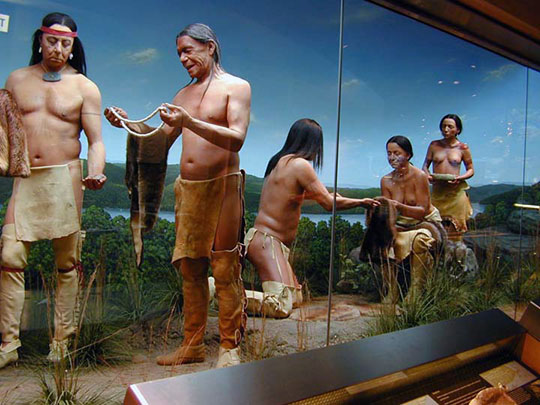

The Mashantucket Pequot Museum and Research Center, near Ledyard in southeast Connecticut, was opened in 1998 by the Mashantucket Pequot Tribal Nation, whose people were nearly destroyed in the Pequot War of 1637 and whose very name was banned by the Treaty of Hartford in 1638, with survivors enslaved, some shipped to the West Indies.
The Mashantucket Pequot Museum, one of the largest Native American museums anywhere, at 308,000 square feet, leads you through a recreated glacial crevasse to a life-size 16th-century Pequot village of 22,000 square feet, with a 185-foot observation tower above the forest.
By the 1970s only a handful of Pequots lived on the reservation, but the tribe won federal recognition in 1983, opened the Foxwoods casino nearby in 1992, and used its income to build a museum telling the story of the 1637 war and its survivors from the Pequot side.