
Wikimedia Commons / CC-BY-SA-3.0 / GFDL
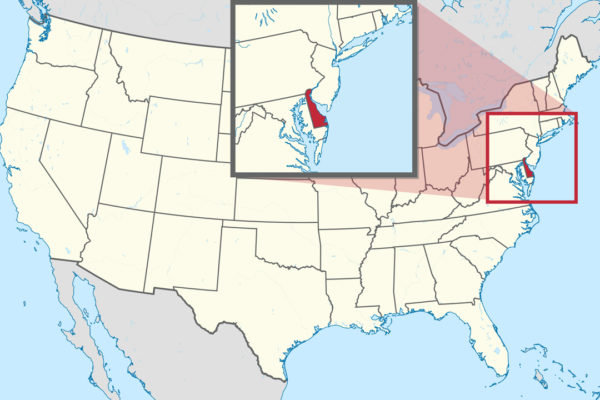
Capital: Dover
Population: 1.05 million+
Language: English – Delaware has no official language.
Delaware is “the First State”, for being first to ratify the Constitution on 7 December 1787. It was also the last state to get a National Park Service unit, in 2013.
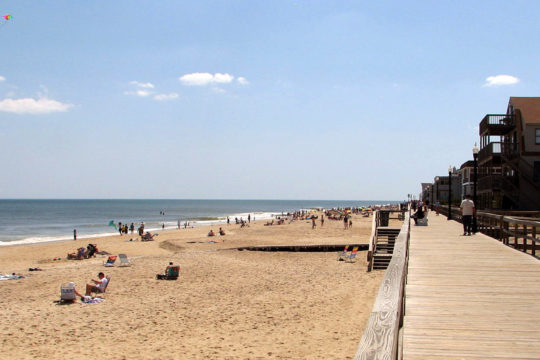
1 – Bethany Beach (above)
Bethany Beach is a small resort on Delaware’s Atlantic coast, founded as a church retreat by members of the Christian Church (Disciples of Christ) from Washington and Pennsylvania, whose tabernacle was dedicated in July 1901, and named in a national contest whose winner got a beachfront lot as his prize.
Bethany Beach and its neighbours, South Bethany and Fenwick Island, are known as the “Quiet Resorts”, with a short boardwalk and a family beach, and a few miles south is the 1859 Fenwick Island Lighthouse, beside the stone marking the Transpeninsular Line, the boundary with Maryland surveyed in 1750–51.
At the entrance to Bethany Beach stands a carved wooden figure called “Chief Little Owl”, often wrongly called a totem pole, honouring the Nanticoke people — part of Peter Toth’s “Whispering Giants”, one in every US state, and the third version here, after the 1976 original fell in high winds in 1992.
2 – Wilmington
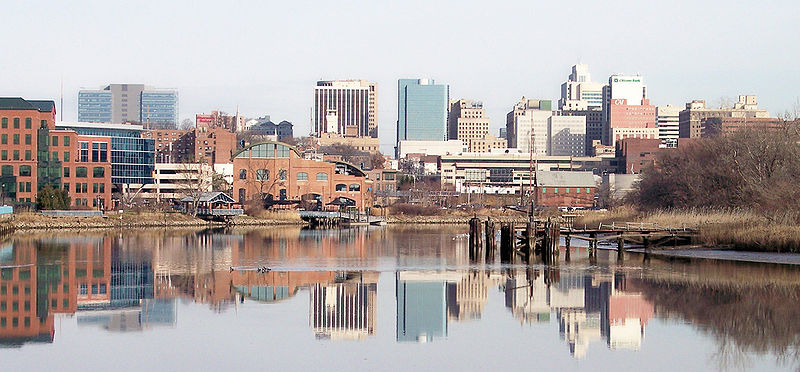
Wilmington, Delaware’s largest city, at the meeting of the Christina River and Brandywine Creek, began in 1638 as Fort Christina, the first permanent European settlement in the Delaware Valley, built by Swedes, before the Dutch took it in 1655 and the English in 1664.
In Wilmington you can see Old Swedes Church of 1698–99, one of the oldest churches in the US still in use, the replica Swedish ship Kalmar Nyckel, the Riverfront, and the Tubman-Garrett Riverfront Park, honouring the Quaker Thomas Garrett, who by his own count helped about 2,700 people escape slavery.
About two-thirds of Fortune 500 companies are legally incorporated in Delaware, many of them on paper in Wilmington, and its railway station has been named after Joe Biden since 2011, for the more than 7,000 round trips he made to Washington as a senator — his ancestors came from Ballina, Co. Mayo, and the Cooley Peninsula in Co. Louth.
3 – Fort Delaware

Fort Delaware is a pentagonal granite fort on Pea Patch Island in the Delaware River, built between 1848 and 1860 to guard Philadelphia, which became a Union prison camp in the Civil War, holding about 12,600 Confederate prisoners at its peak and about 33,000 over the war, of whom about 2,400 died, mostly of disease.
You reach Fort Delaware by a summer ferry from Delaware City, and inside the walls costumed interpreters show daily life in the prison and garrison, with cannon firings, while the rest of Pea Patch Island is one of the largest nesting grounds for herons and egrets on the East Coast.
In August 1864, 600 Confederate officers were taken from Fort Delaware to South Carolina and held under the fire of their own side’s guns in retaliation for the shelling of Union prisoners, becoming known as the “Immortal 600” — and the island’s name, so the story goes, comes from a ship full of peas that ran aground here and sprouted.
4 – Brandywine Creek State Park

Brandywine Creek State Park lies along the Brandywine just north of Wilmington, on land that was part of the du Pont family’s Winterthur estate and its dairy farm before it became a state park in 1965, near where Washington lost the Battle of Brandywine on 11 September 1777 — one of the largest battles of the American Revolution.
Brandywine Creek State Park has open meadows crossed by old dry-stone walls, Tulip Tree Woods and the Freshwater Marsh, Delaware’s first two nature preserves, trails along the creek, tubing on the river and a hilltop where birdwatchers count hawks migrating in autumn.
Nobody knows for sure where the name Brandywine comes from — theories include the Dutch brandewijn, brandy, a brandy ship said to have sunk in the creek, and a miller called Brandwyn — and the Lenape called it Wawaset, while the Swedes called it “Fish Creek”.
5 – Hagley Museum and Library
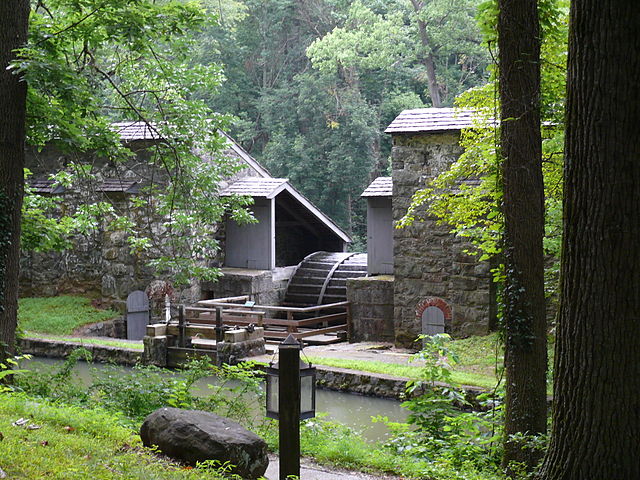
Hagley Museum and Library preserves the gunpowder mills that Éleuthère Irénée du Pont, a French émigré who had studied under the chemist Lavoisier, founded on the Brandywine near Wilmington in 1802, the beginning of the DuPont company, which made black powder here until 1921.
At Hagley you can walk the powder yard along the creek, with its water wheels and stone mills, visit Eleutherian Mills, the du Pont family home of 1803, and see the patent-model exhibition that includes US Patent No. 1, from 1790.
The mills were built with three thick stone walls and a light wooden roof facing the river, so that blasts went out over the water, but 288 explosions still killed 228 people, and many of those workers were Irish — DuPont paid their passages, and they called being killed “going across the creek”, while the du Ponts built the church of St Joseph on the Brandywine for them in 1841, where Joe Biden’s son Beau is buried.
6 – Nemours Mansion and Gardens
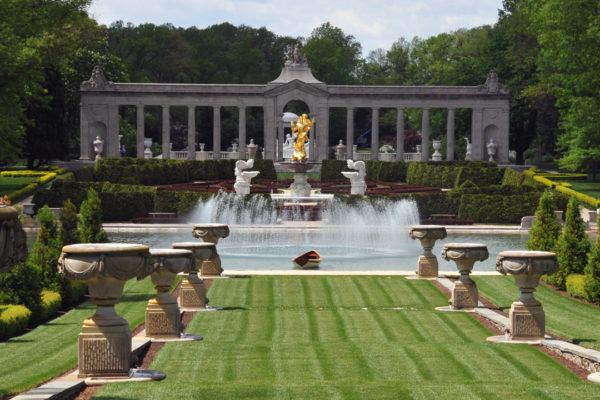
Nemours, now called the Nemours Estate, is the Louis XVI-style château built in 1909–10 north of Wilmington by Alfred I. du Pont, named after Nemours, the French town his family came from, and given to his second wife, Alicia.
Nemours has 77 rooms of furnishings and art, and gardens modelled on Versailles, with a long tree-lined vista, a reflecting pool of 157 jets, a maze garden and a Temple of Love — among the largest French formal gardens in North America.
Alfred I. du Pont was the black sheep of the family: he married his second cousin, demolished his first wife’s house, lost a lawsuit against his cousins over control of the company, and ringed Nemours with a stone wall topped with broken glass — which, he reportedly joked, was to keep out the other du Ponts.
7 – Rehoboth Beach
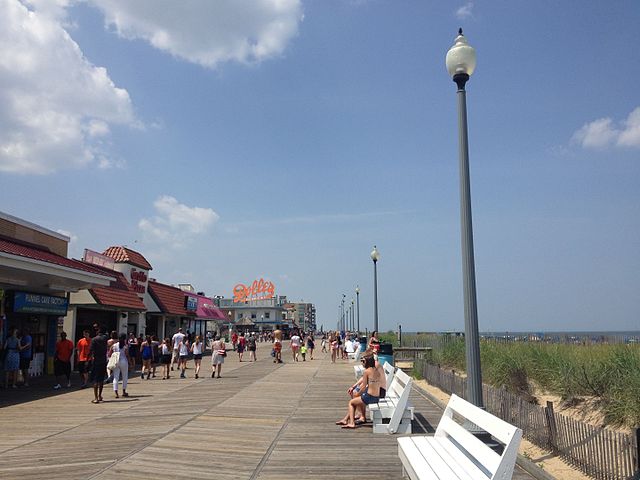
Rehoboth Beach, on Delaware’s Atlantic coast near Cape Henlopen, was founded in 1873 as a Methodist camp-meeting resort by a Wilmington preacher, and its name is the Hebrew for “broad spaces” — the town was first incorporated as Henlopen City.
Rehoboth Beach has a mile-long boardwalk first laid in 1873, the family amusement park Funland, run by the same family since 1962, saltwater taffy and tax-free shopping, and next door, Cape Henlopen State Park, with the World War II gun batteries of Fort Miles, where the surrender of a German U-boat was formally received in May 1945.
Rehoboth Beach was nicknamed “the Nation’s Summer Capital” after a paved highway arrived in 1925 and brought Washington’s politicians and diplomats for the summer, and since at least the 1990s it has also been one of the East Coast’s best-known LGBTQ resorts.
8 – New Castle
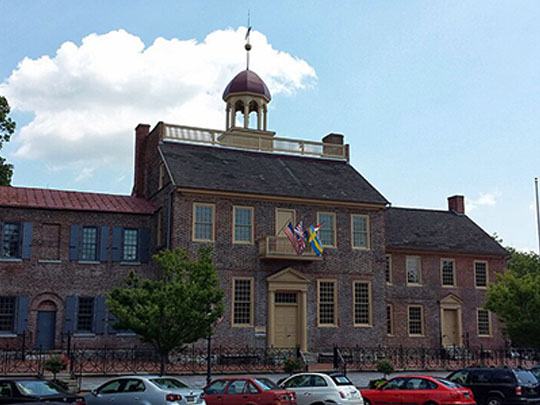

New Castle, on the Delaware River south of Wilmington, began in 1651 as the Dutch Fort Casimir, was taken by the Swedes in 1654, retaken by Peter Stuyvesant in 1655 and seized by the English in 1664, and it was Delaware’s capital until 1777 — and the place where William Penn first set foot in the New World, on 27 October 1682.
New Castle’s old town is often called one of the best-preserved colonial towns in America, with the cobbled Strand along the river, the Old Dutch House of around 1700, the Read House and Gardens, Immanuel Episcopal Church on the Green, and the New Castle Court House of 1732, part of First State National Historical Park.
The cupola of the New Castle Court House is the centre of the Twelve-Mile Circle, which gives Delaware its curved border with Pennsylvania, and one of the town’s lawyers, George Read, who signed both the Declaration of Independence and the Constitution, was the son of a Dublin-born father.
9 – Dover
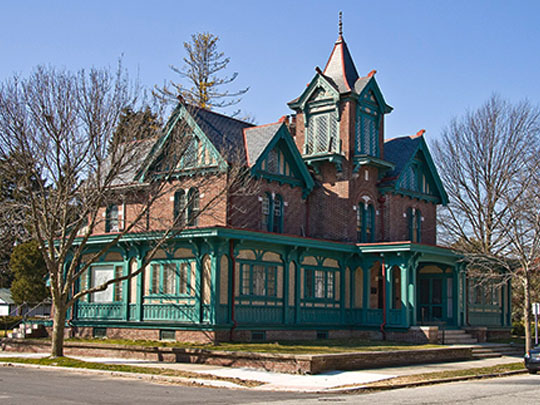
Dover, Delaware’s capital since 1777, was proposed by William Penn in 1683 and laid out in 1717 around a central green, and it was at the Golden Fleece Tavern on the Green that on 7 December 1787 Delaware’s convention voted unanimously to become the first state to ratify the US Constitution.
In Dover you can tour the Old State House of 1791, restored to how it looked in its early years, Legislative Hall, the Johnson Victrola Museum, the Air Mobility Command Museum at Dover Air Force Base, and the Dover Motor Speedway, known to NASCAR fans as the “Monster Mile”.
Dover’s hero is Caesar Rodney, who rode some 80 miles through thunder and rain on 1–2 July 1776 to cast Delaware’s deciding vote for independence — despite a cancer on his face that he is said to have hidden behind a green scarf — and Dover Air Force Base runs the military’s only mortuary in the continental US, where many of America’s war dead are brought home.
10 – Lewes and Zwaanendael
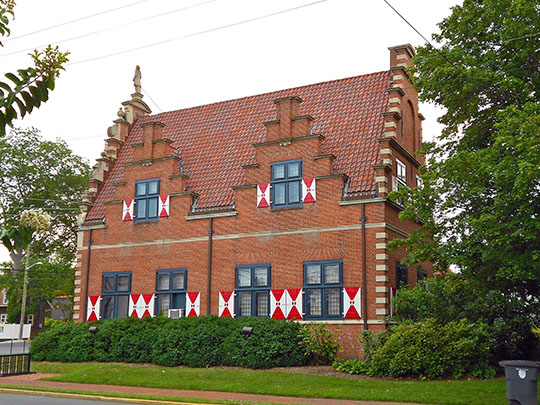
Lewes stands at Cape Henlopen, where Delaware Bay meets the Atlantic, and calls itself “the First Town in the First State” because the Dutch founded the whaling settlement of Zwaanendael here in 1631 — destroyed within a year by local Native people after a quarrel over a tin plate bearing the Dutch coat of arms, with all the settlers killed.
In Lewes you can visit the Zwaanendael Museum, built in 1931 in the style of the town hall in Hoorn in the Netherlands, walk the historic district and its old sea captains’ houses, see the Cannonball House, hit during a British bombardment in April 1813, and take the Cape May–Lewes Ferry across the bay.
Zwaanendael lasted barely a year but decided who owns Delaware: Maryland’s charter covered only land not yet settled, so in 1685 the English Crown ruled that because the Dutch had been here in 1631, before Maryland’s charter, Delaware went to William Penn instead.
11 – John Dickinson Plantation
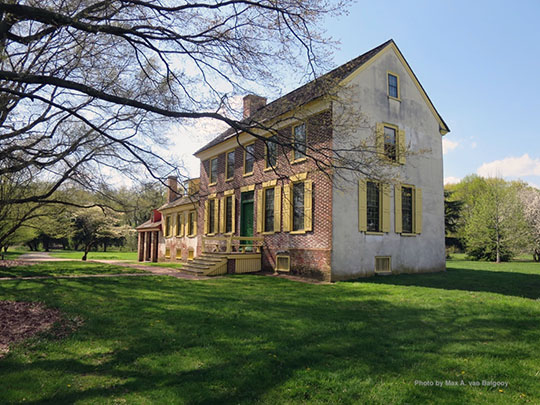

The John Dickinson Plantation, on the flat farmland southeast of Dover near the Delaware Bay shore, was the boyhood home of John Dickinson, “the Penman of the Revolution”, whose Letters from a Farmer in Pennsylvania (1767–68) rallied the colonies against British taxes.
At the John Dickinson Plantation you can tour Poplar Hall, the family’s brick mansion of 1740, rebuilt after a fire in 1804, along with a reconstructed log dwelling and farm buildings, and the site, part of First State National Historical Park, tells the story of the enslaved and free Black people who worked the land.
Dickinson argued against independence in July 1776 and stayed away from the vote, then went off to fight as a militia soldier, drafted the Articles of Confederation and had his name signed on the Constitution by George Read — and in 1777 he began freeing the 37 people he enslaved, freeing them all unconditionally in 1786.