
Wikimedia Commons / CC-BY-SA-3.0 / GFDL
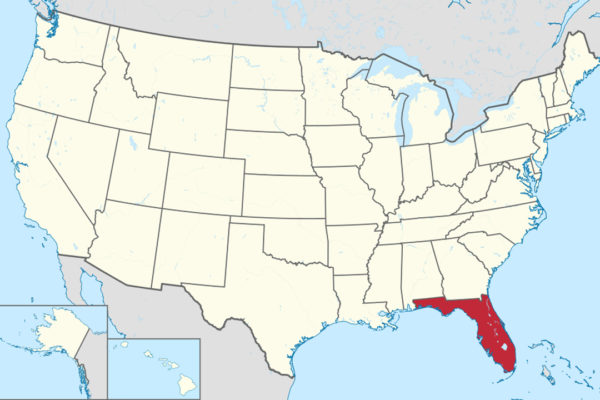
Capital: Tallahassee
Population: 23.5 million+
Language: English
1 – Miami
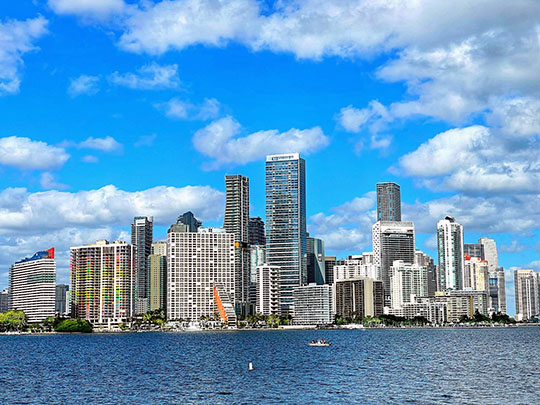
Miami, at the southeastern tip of the Florida peninsula on Biscayne Bay, was incorporated on 28 July 1896, a few months after Henry Flagler’s railway arrived, and is often called the only major US city founded by a woman — Julia Tuttle, who persuaded Flagler to come.
In Miami you can eat your way down Calle Ocho in Little Havana, built by Cubans who arrived after 1959 and in the Mariel boatlift of 1980, see the 1916 Italianate villa of Vizcaya, the street art of Wynwood, and cross the causeway to Miami Beach, a separate city whose Art Deco district of some 800 buildings was listed in 1979 — by its preservationists’ account the first 20th-century urban district on the US National Register.
The story everyone tells is that Tuttle sent Flagler a sprig of orange blossom after the great freeze of 1894–95 to prove Miami’s oranges had survived — but a 1913 local booklet already called that “completely untrue”, and what really convinced him were his own agents’ reports and the land she offered.
2 – Walt Disney World
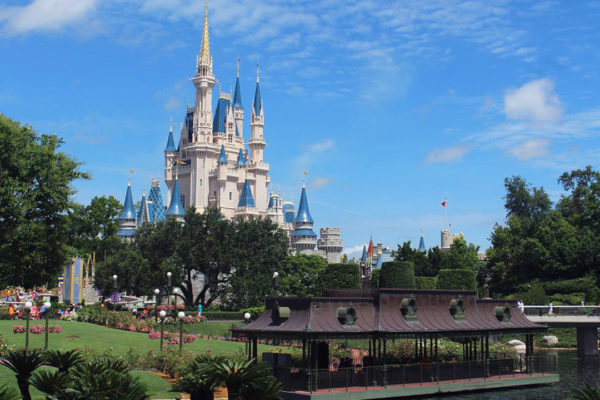
Walt Disney World covers about 27,000 acres southwest of Orlando, in Bay Lake and Lake Buena Vista, bought in secret in 1964–65 through shell companies at an average of about $180 an acre, and the Magic Kingdom opened on 1 October 1971, five years after Walt Disney’s death.
Walt Disney World has four theme parks — the Magic Kingdom, the world’s most visited theme park, with about 17.8 million visitors in 2024, EPCOT, Hollywood Studios and Animal Kingdom — and the “tunnels” under the Magic Kingdom are really at ground level, with the park built a storey up on top of them.
The names of the shell companies that bought the land, including the Ayefour Corporation, a pun on Interstate 4, are painted on the upstairs windows of Main Street, U.S.A., and Walt’s great-grandfather, Arundel Elias Disney, emigrated from Co. Kilkenny in 1834 — Walt called himself “half-Irish” when promoting Darby O’Gill and the Little People in 1959.
3 – Orlando
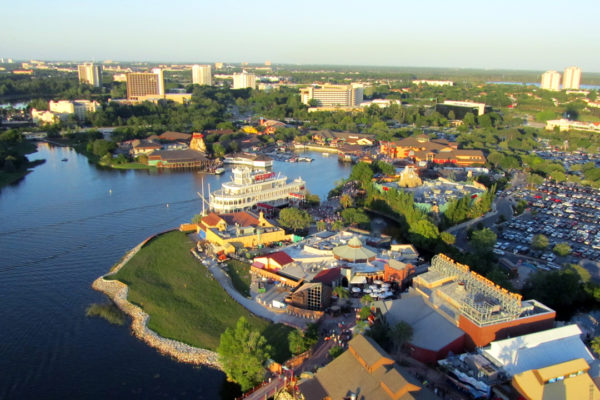
Orlando, in the lakes of central Florida, grew from Fort Gatlin, built in 1838 during the Second Seminole War, and was a citrus town until the freezes of December 1894 and February 1895 killed the fruit and then the trees — then the arrival of Disney turned it into a tourist capital.
In Orlando you can stroll around Lake Eola, with its fountain and swans, visit the Orange County Regional History Center and the museums of Loch Haven Park, and use the city as a base for the theme parks, which Visit Orlando says drew a record 76.7 million visitors to the region in 2025.
Nobody knows for sure where Orlando’s name comes from — the favourite story is Orlando Reeves, a soldier said to have been killed by the Seminoles beside Lake Eola, where he has a plaque, but no record of him has ever been found, and the rivals are a planter called Orlando Rees and a judge who loved Shakespeare’s As You Like It.
4 – Key West
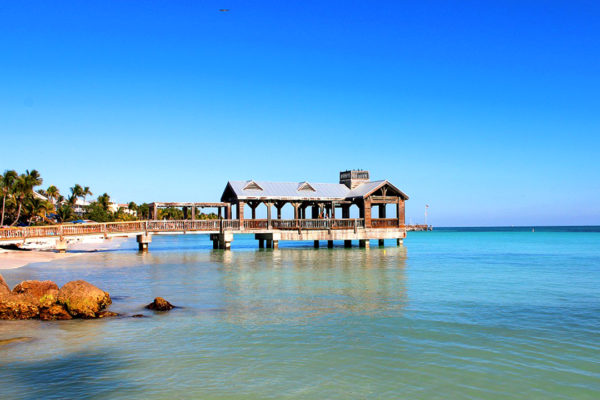
Key West is the last island on the Overseas Highway at the end of the Florida Keys, about 95 miles from Cuba, probably named from the Spanish Cayo Hueso, “bone island”, and by some accounts it was among the richest towns per head in America in the mid-1800s, on salvage from shipwrecks on the reefs.
In Key West you can walk Duval Street, watch the sunset from Mallory Square, see Truman’s Little White House, and pose at the Southernmost Point buoy — which isn’t the southernmost point, as Navy land nearby and Ballast Key, nine miles west, both lie further south.
On 23 April 1982 Key West briefly “seceded” from the United States as the Conch Republic in protest at a Border Patrol roadblock, its mayor surrendering a minute later and asking for $1 billion in aid, and some of its best Victorian buildings, including the Convent of Mary Immaculate of 1878, were built by the Irish-born architect William Kerr.
5 – Fort Zachary Taylor
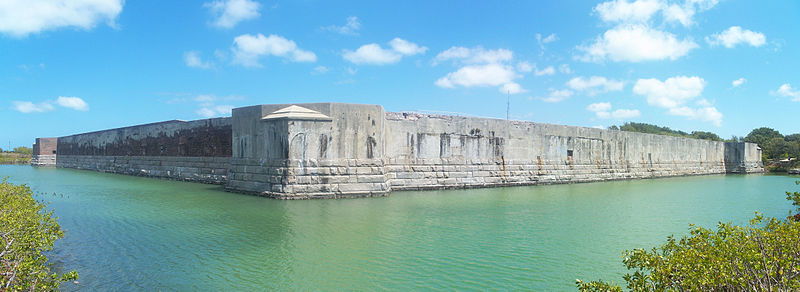
Fort Zachary Taylor, at the southwest tip of Key West, was built between 1845 and 1866 and named after President Zachary Taylor, and when Florida left the Union in January 1861, its captain moved his men into the fort at midnight without orders, keeping Key West in Union hands for the whole Civil War.
Fort Zachary Taylor Historic State Park has the brick fort, with Civil War re-enactments on the third weekend of each month, and a beach on the island’s southern shore with snorkelling, picnic tables and shade.
When the fort was cut down and modernised in 1898, its old guns were dumped inside the walls as fill, and from 1968 a volunteer, Howard England, dug out cannon and thousands of shells — the park says it’s the largest collection of Civil War cannon in the US, most of them still buried in the walls.
6 – Castillo de San Marcos
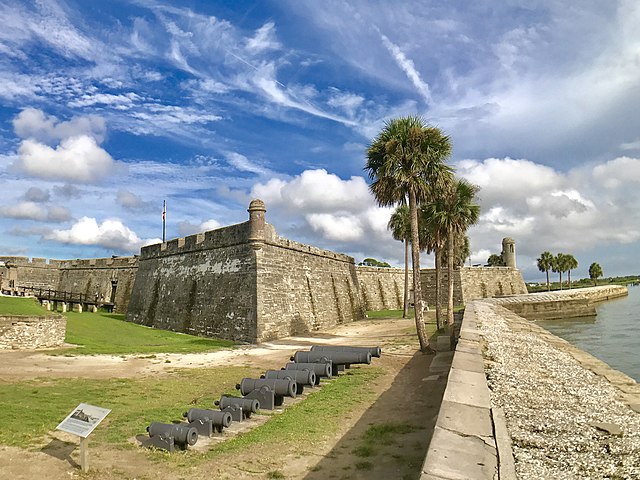
Castillo de San Marcos guards the harbour at St Augustine, founded by the Spanish on 8 September 1565 and the oldest continuously occupied European-founded city in the continental US, and the fort, built from 1672 to 1695, is the oldest masonry fort in the continental US.
Castillo de San Marcos is made of coquina, a stone of compacted shells that absorbed cannonballs rather than shattering, so it was never taken by force — though in 1861 the Confederates took it without a shot from its lone Union caretaker, who asked for a receipt — and as Fort Marion it held Osceola in 1837 and later Plains and Apache prisoners.
St Augustine’s records hold the oldest recorded St Patrick’s Day celebration in the Americas — a procession paid for in 1600, organised by the parish priest, Ricardo Artur, from Limerick — and the Spanish governor of East Florida from 1796 to 1811 was Enrique White, born in Dublin.
7 – Ernest Hemingway House Key West
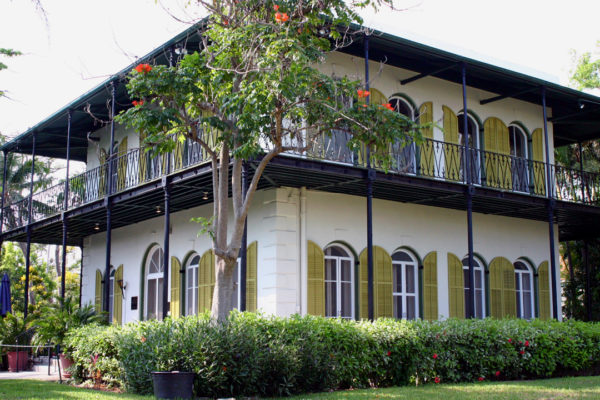
The Ernest Hemingway Home and Museum is a stone house of 1851 on Whitehead Street, Key West, bought for Hemingway and his second wife, Pauline, by her uncle in 1931 for $8,000, and Hemingway lived there until 1939, writing Green Hills of Africa, “The Snows of Kilimanjaro” and To Have and Have Not.
At the Hemingway Home you can see his writing studio over the carriage house, the pool of 1937–38, which cost two and a half times the price of the house, a trough made from a Sloppy Joe’s bar urinal, and around 60 cats, about half of them six-toed.
The museum says its cats descend from Hemingway’s own six-toed cat, but his widow, Mary, said in 1972 that he never kept animals at the Key West house, and his son Patrick said the cats in old photos belonged to the neighbours — the story seems to begin with the owner who opened the house in 1964 and sold six-toed kittens.
8 – Universal Studios
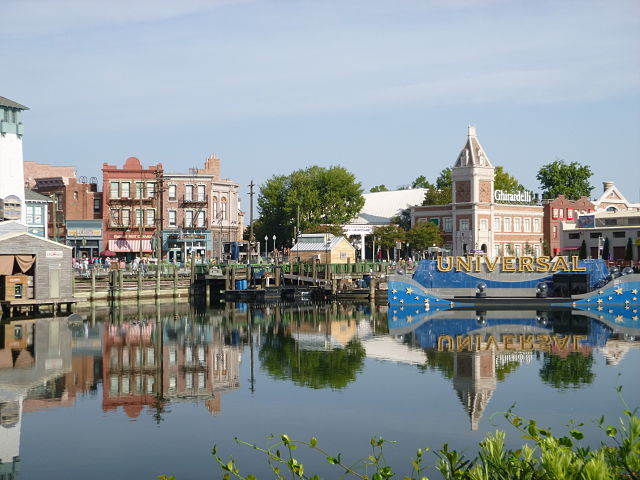
Universal Studios Florida opened in Orlando on 7 June 1990 as a working film studio and theme park, with Steven Spielberg as creative consultant, but on opening day Jaws, Kongfrontation and Earthquake all broke down, and visitors were handed free return tickets.
Universal Studios is now one of three theme parks at Universal Orlando, along with Islands of Adventure and Epic Universe, which opened on 22 May 2025, the first major new theme park in Orlando in a quarter of a century, and its streets are lined with sets based on New York, San Francisco and Hollywood.
Universal’s great success was the Wizarding World of Harry Potter — Hogsmeade opened at Islands of Adventure in 2010 and Diagon Alley here in 2014, with the Hogwarts Express running between the two parks, so you need a ticket for both to ride it.
9 – Everglades
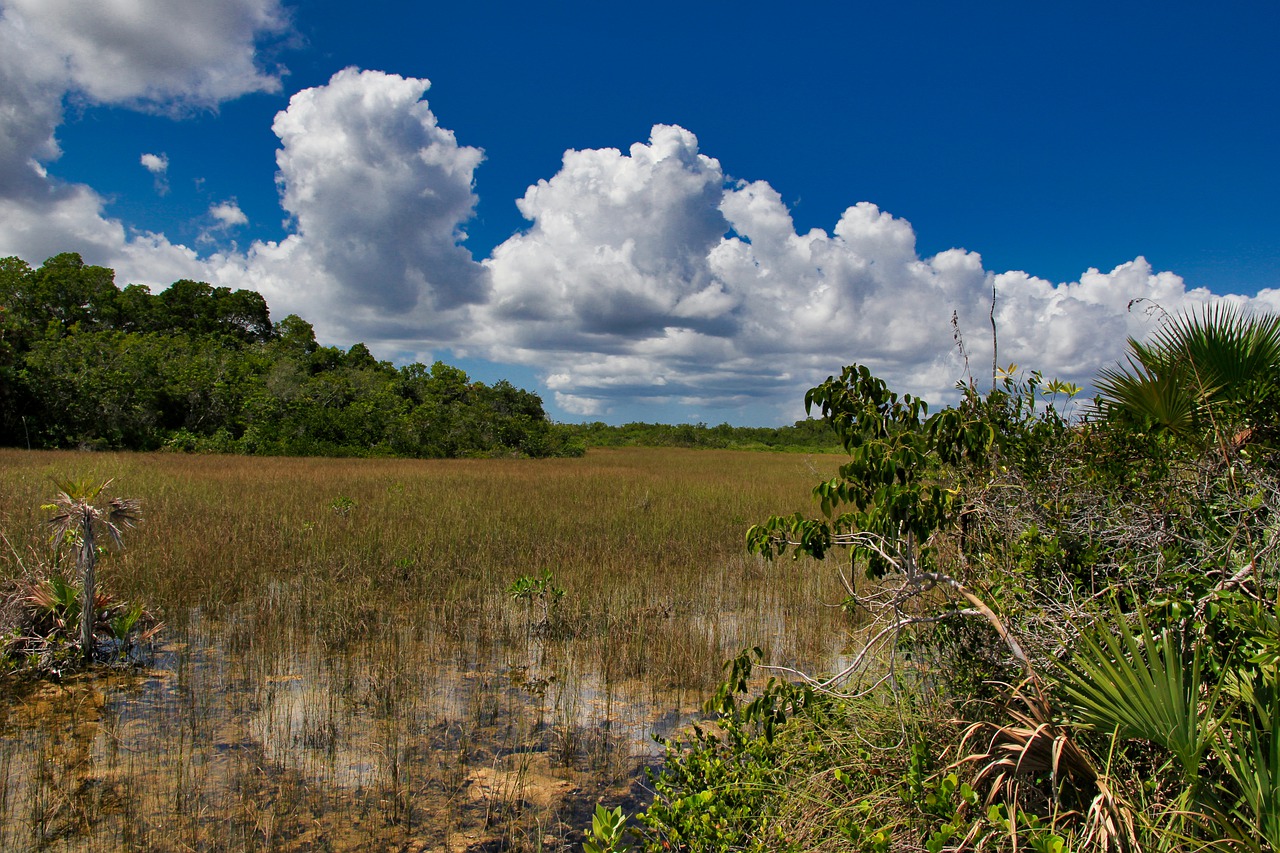
Everglades National Park covers 1.5 million acres of the southern tip of Florida, a slow-moving sheet of water through sawgrass that Marjory Stoneman Douglas called a “river of grass” in her book published in November 1947, a month before Harry Truman dedicated the park, and it’s been a World Heritage Site since 1979.
In the Everglades you can see alligators from the Anhinga Trail or the tram at Shark Valley, paddle the mangrove channels of the Ten Thousand Islands from Everglades City, or take an airboat just outside the park, and it’s the only place on Earth where American alligators and crocodiles share the same waters.
The Everglades’ biggest threat now is Burmese pythons, released or escaped pets — nearly 28,000 have been removed in Florida since 2000, and in the 2026 Florida Python Challenge the winner caught 96, all of them in the park — and the park has been on UNESCO’s list of World Heritage in Danger since 2010.
10 – Kennedy Space Center
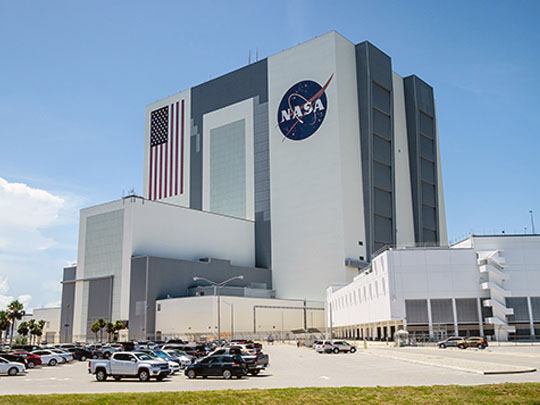
Kennedy Space Center sits on Merritt Island beside Cape Canaveral on Florida’s Atlantic coast, set up in 1962 and renamed for John F. Kennedy days after his assassination in November 1963, and it’s where Apollo 11 left for the Moon in July 1969 and Artemis II, the first crewed Moon mission in more than 50 years, launched in April 2026.
At the Kennedy Space Center Visitor Complex you can see the shuttle Atlantis, walk under a real Saturn V built from test and unflown stages, visit the Forever Remembered memorial to the Challenger and Columbia crews, and take the bus tour past the Vehicle Assembly Building, 160 metres tall with a US flag painted on its side.
Kennedy Space Center shares its land with the Merritt Island National Wildlife Refuge, home to alligators, manatees and more than 300 kinds of bird, and in 2025 Florida’s Space Coast passed 100 rocket launches in a year for the first time.
11 – St Augustine
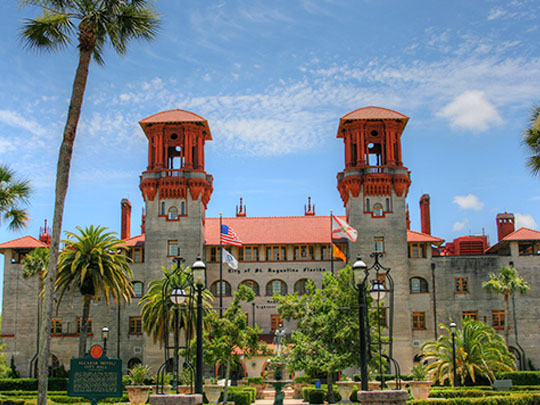
St Augustine, on Florida’s northeast coast, began with blood: within weeks of its founding in 1565, Pedro Menéndez de Avilés had the French Huguenots of nearby Fort Caroline executed on the beach at Matanzas Inlet — matanzas means “slaughters” — where a small Spanish watchtower of 1742 now stands as Fort Matanzas National Monument.
In St Augustine you can walk St George Street through the old Spanish town, visit the Fountain of Youth Archaeological Park, the Father O’Reilly House, home of the town’s Irish-born priest from the 1780s, and Henry Flagler’s Hotel Ponce de León of 1888, with its Tiffany interiors, now Flagler College.
Ponce de León never went looking for a fountain of youth — the legend was attached to him decades after his death, and the St Augustine attraction was built up from 1904 by a showwoman nicknamed “Diamond Lil” — and in June 1964 Martin Luther King Jr was arrested here, a week before a motel owner poured acid into his pool while Black and white protesters were swimming in it.
12 – Fort Mose
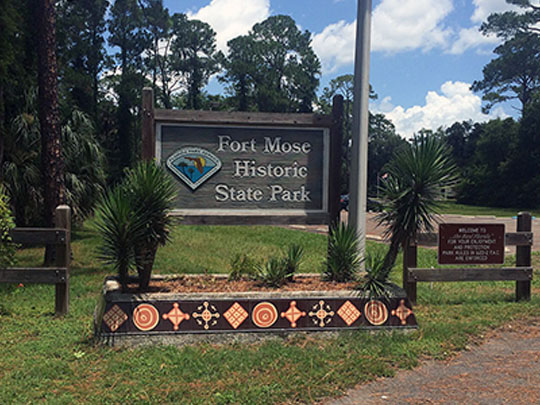
Fort Mose, two miles north of St Augustine, was founded in 1738 by the Spanish governor as a free town for people who had escaped slavery in the British Carolinas, accepted Catholicism and joined the militia — the first legally sanctioned free Black settlement in what is now the United States.
Fort Mose Historic State Park has a boardwalk over the salt marsh to the site, a museum and, since May 2025, a full-size reconstruction of the 1738 earthwork fort, about 39 feet high and surrounded by a moat.
Fort Mose’s militia was led by Captain Francisco Menéndez, a Mandinka man born in West Africa who had escaped slavery in Carolina, and in June 1740 he and Spanish troops overran a British force there in the Battle of Bloody Mose, helping end Oglethorpe’s siege of St Augustine — and when Britain took Florida in 1763, the people of Mose left for Cuba.
13 – Pensacola
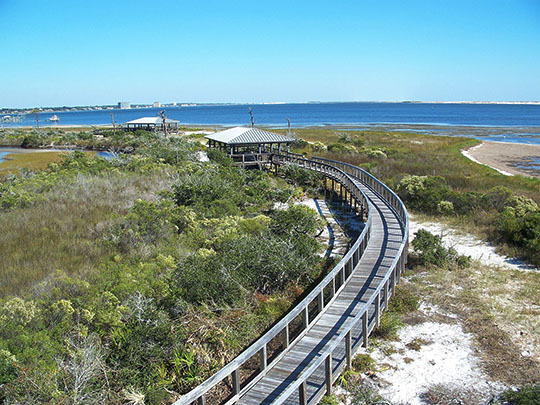
Pensacola, on Florida’s western Panhandle near the Alabama border, was where Tristán de Luna landed his colonists in 1559, the first multi-year European settlement in what is now the US, until a hurricane wrecked his fleet within weeks and the colony was abandoned in 1561.
In Pensacola you can visit the National Naval Aviation Museum at the “Cradle of Naval Aviation”, home of the Blue Angels, explore Fort Pickens, where the Apache leader Geronimo was held in 1886–88 and visited by tourists, and walk the beaches of white quartz sand on Santa Rosa Island.
In 1781 Spain took Pensacola from the British after a two-month siege, with the Irish Hibernia Regiment of the Spanish army in the attack, and its commander, Arturo O’Neill, born in Co. Tyrone, became governor of Spanish West Florida until 1793.