
Wikimedia Commons / CC-BY-SA-3.0 / GFDL
Capital: Gibraltar
Population: 38,000+
Language: English
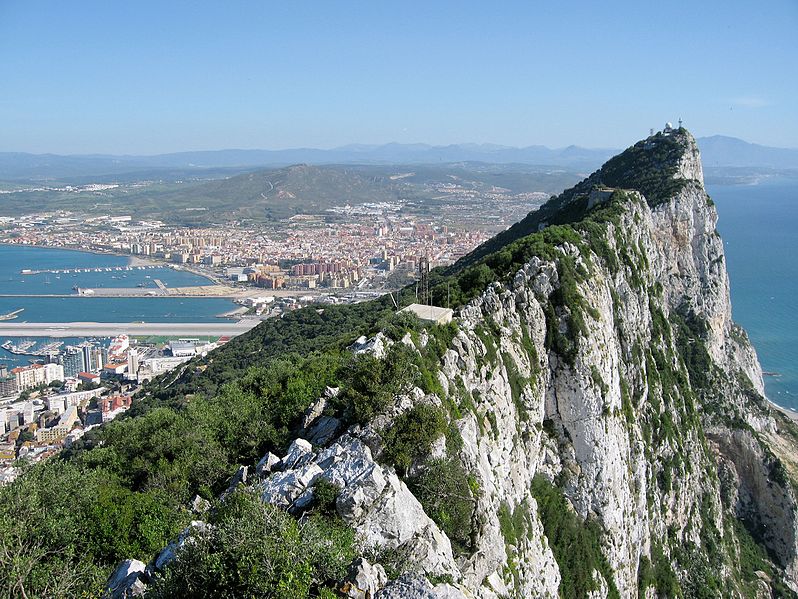
1 – Rock of Gibraltar (above)
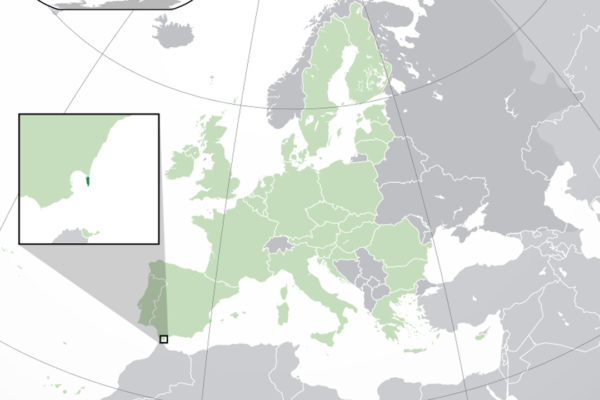
The Rock of Gibraltar is a 426-metre limestone peak at the gateway to the Mediterranean, named Jabal Tariq after Tariq ibn Ziyad, who landed there in 711, and after Moorish and Spanish rule it was captured by an Anglo-Dutch force in 1704 and ceded to Britain by the Treaty of Utrecht in 1713, making it a British Overseas Territory that Spain claims.
Below the Rock of Gibraltar, explore the Moorish Castle, whose Tower of Homage is the highest Islamic-era tower in Iberia, and walk across the airport runway, which pedestrians cross on foot.
Gibraltar voted overwhelmingly to keep its link with Britain in referendums in 1967 and 2002, John Lennon married Yoko Ono there in 1969, and Molly Bloom in Joyce’s Ulysses was born on the Rock, which her famous closing monologue remembers.
2 – Upper Rock

The Upper Rock is the nature reserve covering the top of the Rock of Gibraltar, home to about 300 Barbary macaques, Europe’s only wild monkeys, and during World War II, as most civilians were evacuated, engineers dug about 30 miles of tunnels into it.
On the Upper Rock, explore St Michael’s Cave, a natural cavern used as a concert hall, and the Great Siege Tunnels, hacked out by hand from 1782 during the Great Siege of 1779–83, then walk through the World War II tunnels.
Legend says Britain will keep Gibraltar as long as the Upper Rock’s apes remain, so when numbers fell during World War II Churchill ordered the colony made up to 24, and in 1942 Eisenhower directed the Allied invasion of North Africa from inside the Rock’s tunnels.
3 – Europa Point
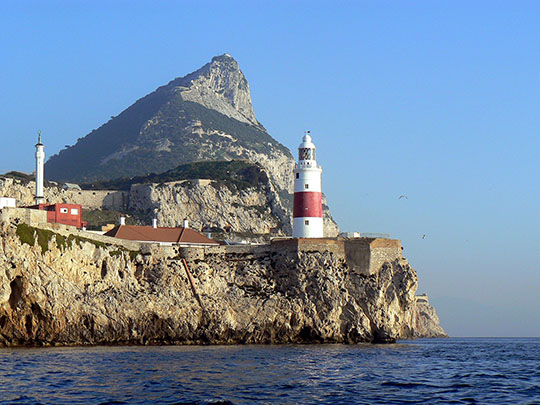

Europa Point is the southern tip of Gibraltar, where the Mediterranean meets the Strait, and the Rock above it was the northern of the two Pillars of Hercules in ancient legend.
At Europa Point, see the lighthouse built in 1838–41, the Ibrahim-al-Ibrahim Mosque, a gift from King Fahd of Saudi Arabia, and the Shrine of Our Lady of Europe.
On a clear day from Europa Point you can see across to Ceuta and the Rif Mountains of Morocco, and in 1943 the Polish leader General Władysław Sikorski was killed when his plane crashed on take-off from Gibraltar, a crash whose cause has never been settled.
4 – Gorham’s Cave Complex
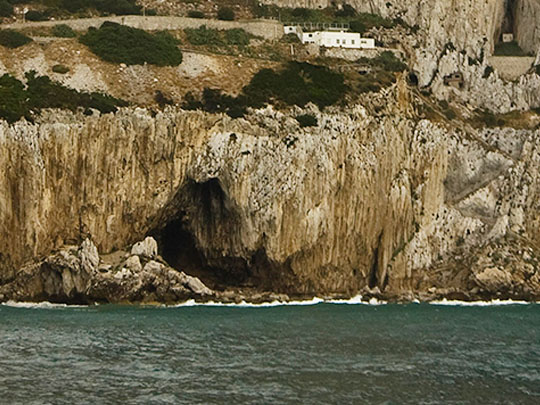
Gorham’s Cave Complex is a group of four sea caves on the east face of the Rock of Gibraltar, where Neanderthals lived for tens of thousands of years, and it’s one of the last known Neanderthal sites, though how late they survived there is debated.
At Gorham’s Cave Complex, Gibraltar’s UNESCO World Heritage Site since 2016, look down on the caves from the viewing platform on Europa Advance Road, or book one of the limited guided tours run by the Gibraltar National Museum.
Gorham’s Cave is named after Captain A. Gorham of the Royal Munster Fusiliers, an Irish regiment, who found it in 1907 and signed his name on the wall, and inside it Neanderthals scratched a criss-cross “hashtag” into the rock at least 39,000 years ago, though some researchers question who made it.
5 – Main Street and Grand Casemates Square
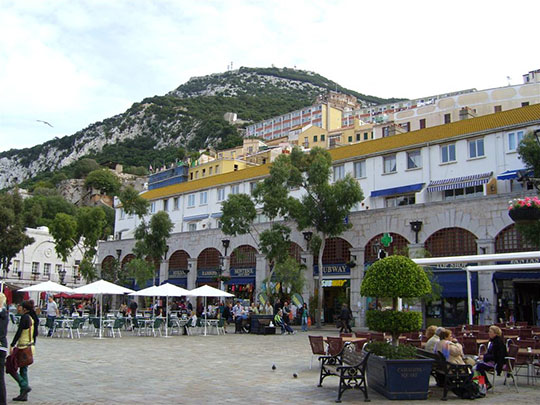
Main Street runs about 1 km through Gibraltar’s town, from Grand Casemates Square to Southport Gates, along a route dating back to the 14th century, and its buildings mix Genoese, Portuguese, Andalusian, Moorish and British styles after the Great Siege of 1779–83 left most of them as shells.
Along Main Street, see the Convent, the Governor’s residence in a former Franciscan friary, the Cathedral of St Mary the Crowned, built on the site of the main mosque, and the Parliament building, then step through Landport Gate off Grand Casemates Square.
Grand Casemates Square is named after the bomb-proof barracks finished there in 1817 and was once the scene of public hangings, and the Gibraltar Chronicle, printed just off Main Street, was the first newspaper to report Nelson’s victory and death at Trafalgar.