
Wikimedia Commons / CC-BY-SA-3.0 / GFDL
Capital: Athens
Population: 10.4 million+
Language: Greek

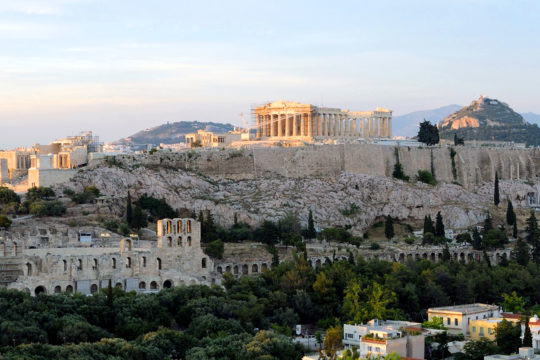
1 – Athens (also above)
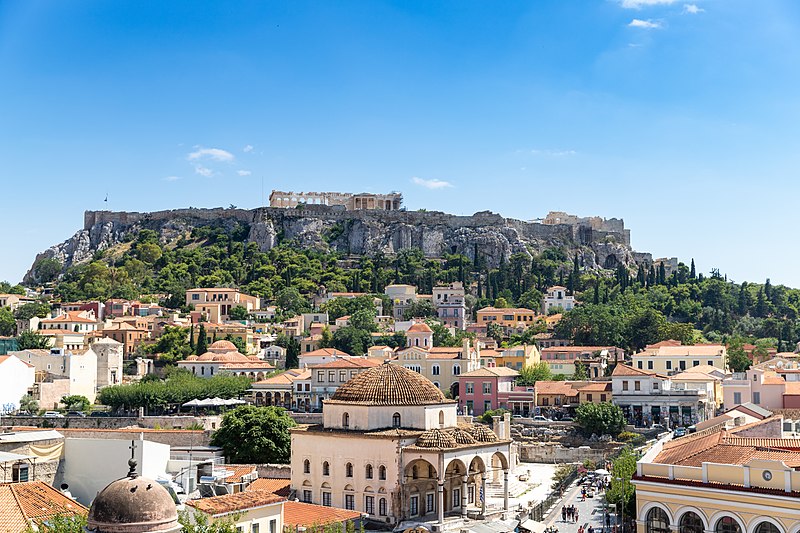
Athens is the capital of Greece, where Pericles rebuilt the Acropolis after the defeat of Persia and crowned it with the Parthenon in 447–432 BC, and on the night of 30 May 1941, under German occupation, two students, Manolis Glezos and Apostolos Santas, tore the swastika flag down from the Acropolis.
In Athens, climb the Acropolis, a UNESCO World Heritage Site, to see the Parthenon, the Propylaia, the Erechtheion and the little Temple of Athena Nike.
Athens’ Parthenon was wrecked in 1687 when a Venetian shell set off gunpowder the Ottomans had stored inside, and about half its surviving sculptures were removed by Lord Elgin’s agents in the early 1800s and are in the British Museum, though Greece seeks their return.
2 – Delphi
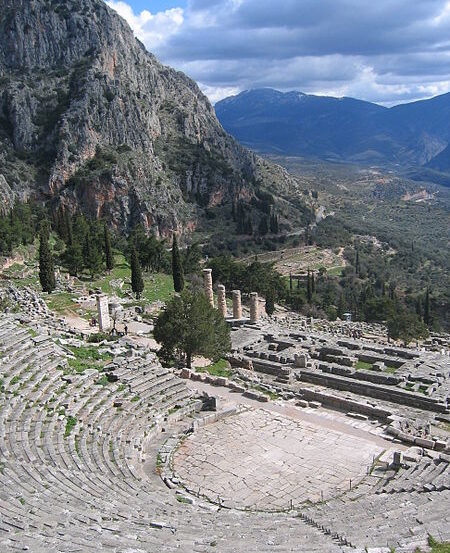
Delphi, on the slopes of Mount Parnassus, was the sanctuary of Apollo and home of the ancient world’s most famous oracle, and myth says Zeus released two eagles from opposite ends of the earth that met here, marking it as the navel of the world.
At Delphi, walk the Sacred Way past the Athenian Treasury to the Temple of Apollo, then climb to the theatre and the stadium, all part of a UNESCO World Heritage Site.
Delphi’s priestess, the Pythia, may have been inspired by gases rising from a fault beneath the temple, a disputed theory, and in June 1944 SS troops killed 218 villagers at nearby Distomo in reprisal.
3 – Meteora

Meteora is a cluster of sandstone and conglomerate pillars in Thessaly, rising more than 400 metres above the plain, where monks built monasteries on the summits from the 14th century, with 24 at their peak.
At Meteora, visit the six functioning monasteries, including Great Meteoron and Varlaam, part of a UNESCO World Heritage Site.
For centuries, Meteora’s monks and pilgrims were hauled up the cliffs in nets and baskets on ropes or climbed removable ladders, with pilgrims at Varlaam hoisted up a 373-metre drop.
4 – Cape Sounion
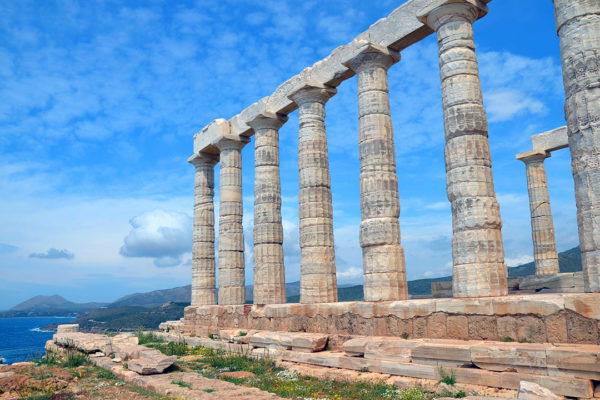
Cape Sounion is the southern tip of Attica, crowned by the Temple of Poseidon, built around 444–440 BC to replace an earlier temple destroyed by the Persians in 480 BC.
At Cape Sounion, walk among the temple’s surviving marble columns high above the Aegean and stay for the sunset over the sea.
Legend says King Aegeus leapt to his death from Cape Sounion when he saw black sails on his son Theseus’s returning ship, giving the Aegean its name, and Lord Byron reportedly carved his own name into the temple.
5 – Agia Triada Monastery, Crete
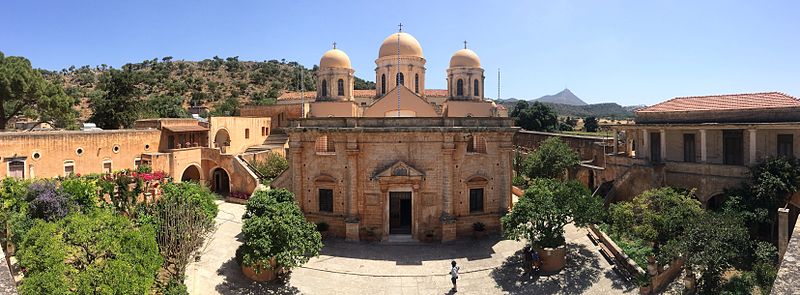
Agia Triada is a monastery on the Akrotiri peninsula near Chania, on Crete, founded in the early 17th century by Jeremiah and Laurentios, Orthodox monks from the Venetian-Cretan Tzagarolon family.
At Agia Triada, admire the Venetian-style façade with its Corinthian columns, then see the museum’s icons and manuscripts and the old wine cellar and olive presses.
Agia Triada’s monks make wine and olive oil and sell them at the monastery, and the building was left unfinished when the Ottomans took Chania in 1645.
6 – Crete
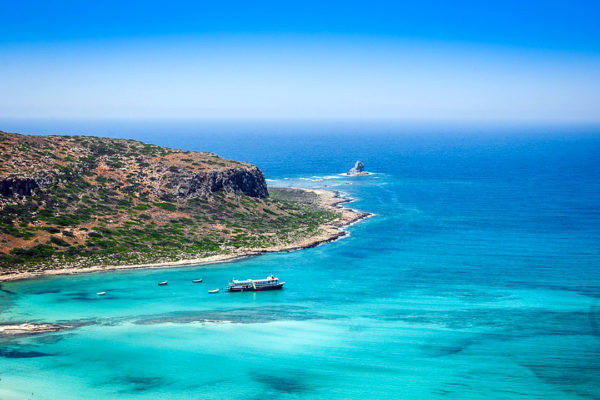
Crete is Greece’s largest island and the heart of the Bronze Age Minoan civilisation, named by Arthur Evans after the legendary King Minos, and after centuries of Venetian and Ottoman rule it joined Greece in 1913.
In Crete, explore the palace of Knossos, partly rebuilt by Evans in reinforced concrete, hike the Samaria Gorge, and take a boat to Spinalonga, the former leper colony made famous by Victoria Hislop’s novel The Island.
In May 1941 Germany invaded Crete in a mainly airborne assault, with the Cork-born George Beamish as the senior RAF officer on the island, Cretan civilians fought back and suffered harsh reprisals, and in 1944 Patrick Leigh Fermor and Cretan partisans kidnapped the German general Heinrich Kreipe.
7 – Vikos Gorge

Vikos Gorge cuts through the mountains of Epirus in north-west Greece to a depth of around 900 metres, and Guinness World Records has listed it as the deepest gorge in proportion to its width.
At Vikos Gorge, hike the gorge, then explore the stone villages of Zagori, linked by arched stone bridges and cobbled mule paths and listed by UNESCO in 2023.
The stone villages and bridges around Vikos Gorge were largely paid for by money that emigrants sent home in the 18th and 19th centuries.
8 – Thessaloniki
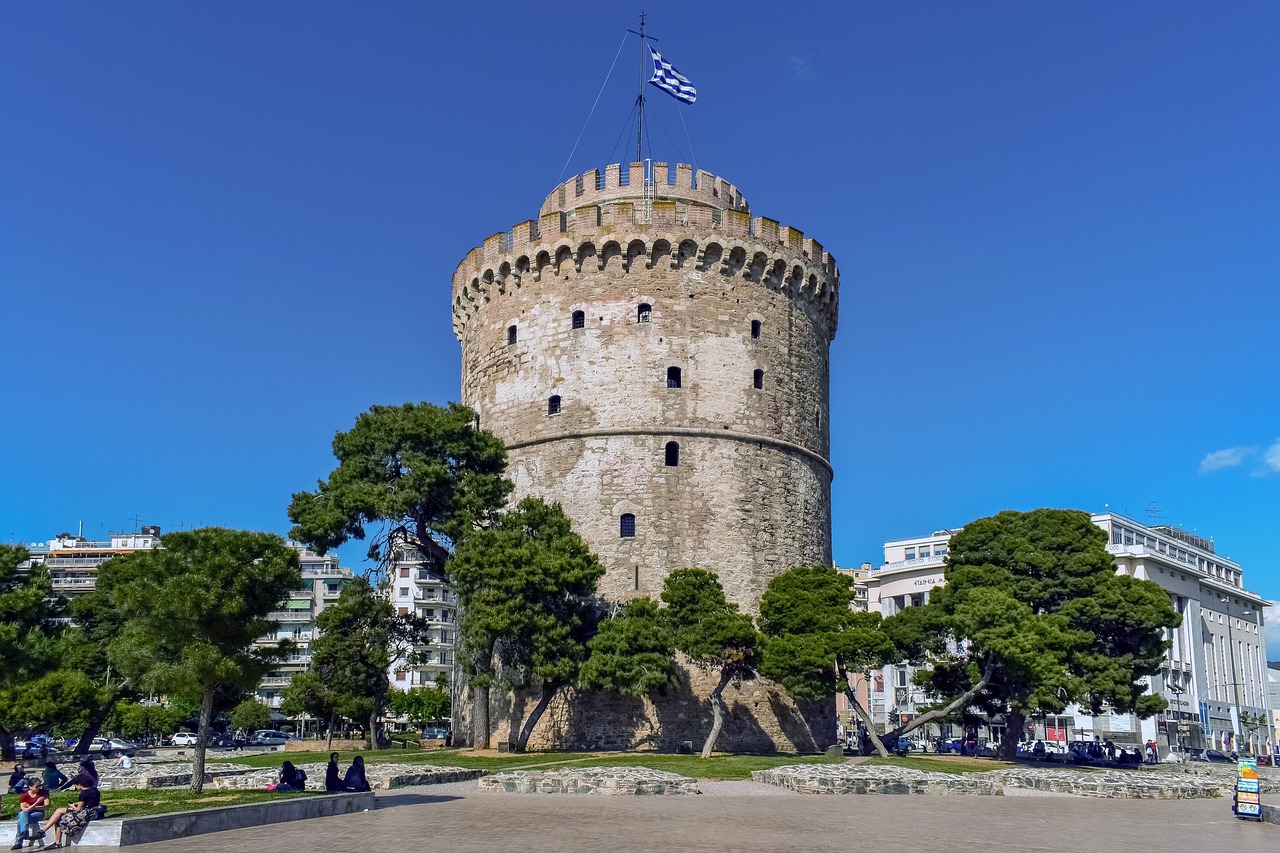
Thessaloniki was founded around 315 BC by Cassander, king of Macedon, who named it after his wife Thessalonike, Alexander the Great’s half-sister, and it was ruled by the Ottomans from 1430 until 1912.
In Thessaloniki, see the Rotunda, the churches of Agios Demetrios and Agia Sophia and the city walls, part of a UNESCO World Heritage Site, and the house where Atatürk was born in 1881.
Thessaloniki’s large Sephardic Jewish community was destroyed in 1943, when more than 45,000 of its Jews were deported to Auschwitz-Birkenau, according to the USHMM, and in 1915 the 10th (Irish) Division landed there to open the Salonika front of World War I.
9 – Oia, Santorini
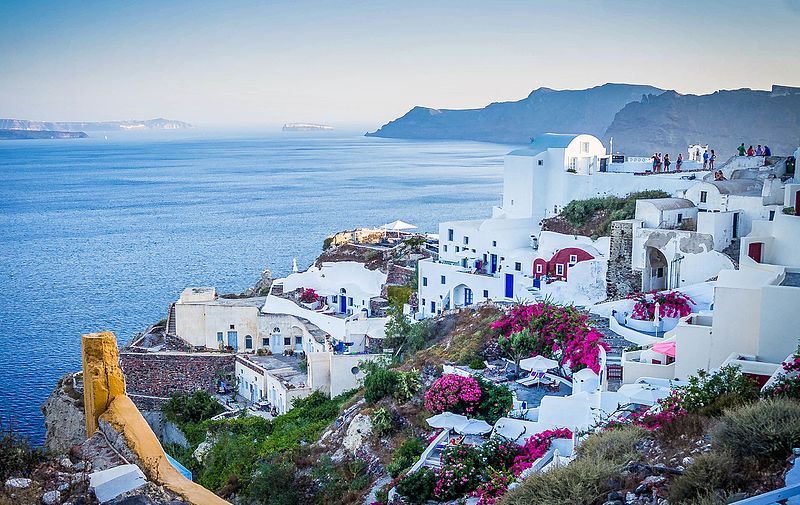
Oia sits on the northern rim of Santorini’s caldera, formed when the island’s volcano collapsed in the huge Minoan eruption of the 17th or 16th century BC.
In Oia, wander past the blue-domed churches, cave houses and sea captains’ mansions, visit the Maritime Museum, then stay for the famous sunset.
Oia’s Bronze Age neighbour Akrotiri was buried by the same eruption, which preserved its frescoes, and the eruption has been suggested as an inspiration for the Atlantis legend, though archaeology doesn’t support the story.
10 – Peloponnese

The Peloponnese is the large peninsula of southern Greece, home to Olympia, where the ancient Olympic Games began in 776 BC, and to Mycenae, Sparta and Nafplio, the first capital of modern Greece.
In the Peloponnese, see the Lion Gate at Mycenae, the theatre at Epidaurus, famous for its acoustics, the Byzantine ruins of Mystras and the rock town of Monemvasia.
The Olympic flame is lit with a mirror at Olympia in the Peloponnese, Greece’s first head of state, Ioannis Kapodistrias, was assassinated in Nafplio in 1831, and in December 1943 German troops shot about 500 men and boys at Kalavryta.
11 – Halkidiki
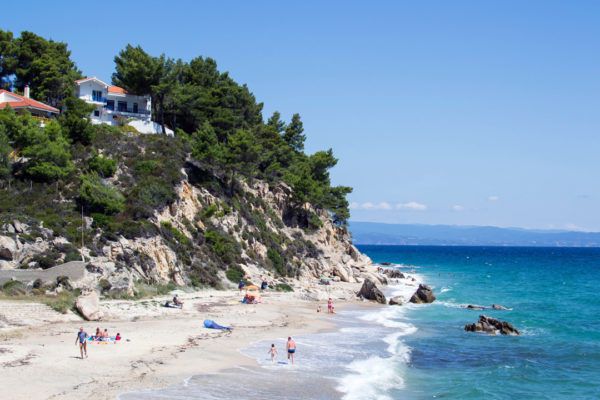
Halkidiki is a region of northern Greece with three peninsulas reaching into the Aegean, Kassandra, Sithonia and Athos, and the philosopher Aristotle was born at Stagira on its coast.
In Halkidiki, swim off the beaches of Kassandra and Sithonia, visit ancient Stagira, and look out to Mount Athos, a UNESCO-listed monastic republic of 20 monasteries.
Women have been barred from Halkidiki’s Mount Athos for around a thousand years, and around 480 BC the Persian king Xerxes had a canal dug across the Athos isthmus so his fleet could avoid the dangerous cape.
12 – Delos
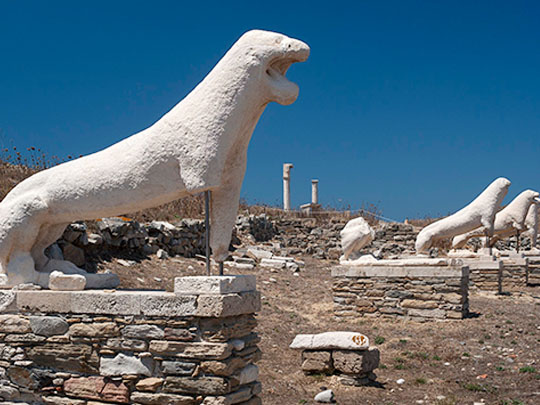
Delos is a tiny island in the Cyclades that Greek myth names as the birthplace of Apollo and Artemis, and it was one of the great sanctuaries of the ancient world and the first treasury of the Athenian-led Delian League, until Athens moved the money to the Acropolis in 454 BC.
On Delos, walk the Sacred Way past the Terrace of the Lions, whose marble guardians on site are copies, to the sanctuary of Apollo, all part of a UNESCO World Heritage Site.
In 426 BC Athens purified Delos by removing its tombs and banning anyone from being born or dying on the island, and under Rome it became a free port and slave market before being sacked in 88 BC.
13 – Rhodes Old Town
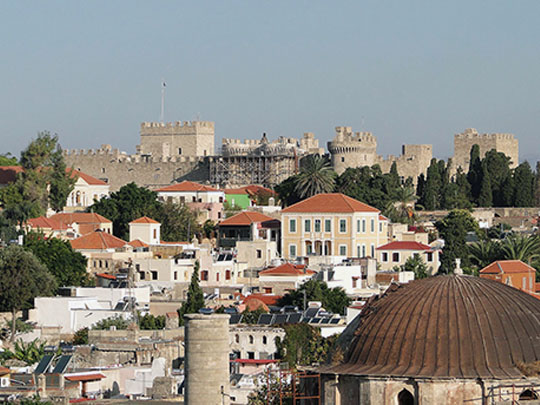
Rhodes Old Town is the walled medieval city of the Knights Hospitaller, who ruled Rhodes from 1309 until Sultan Suleiman the Magnificent’s six-month siege forced them out at the start of 1523, and it’s a UNESCO World Heritage Site.
In Rhodes Old Town, walk the Street of the Knights past the inns of each national “tongue”, see the Great Hospital and the Palace of the Grand Master, rebuilt by the Italians in the 1930s as a residence for their king and Mussolini, and visit the Mosque of Suleiman.
Rhodes Old Town has an Irish link in Sir John Rawson, Prior of Kilmainham, who is listed among the knights at the 1522 siege, and in July 1944 the Germans deported more than 1,600 of the island’s Jews to Auschwitz, where only about 150 survived.
14 – Patmos
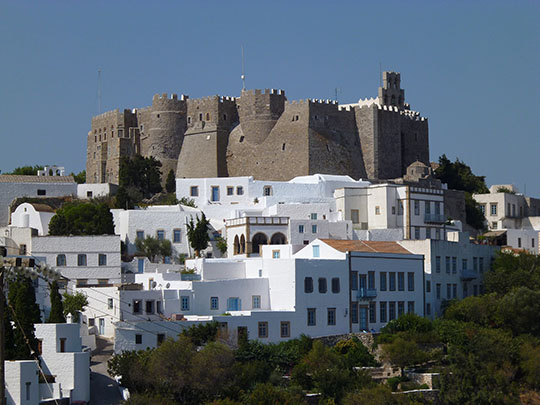

Patmos is a small island in the Dodecanese where, by tradition, St John, exiled under the Roman emperor Domitian, received the visions of the Book of Revelation.
On Patmos, visit the Cave of the Apocalypse and the fortified Monastery of St John the Theologian above the white houses of Chora, together a UNESCO World Heritage Site.
Patmos’ monastery was founded in 1088 by Hosios Christodoulos on an island granted to him by the Byzantine emperor Alexios I Komnenos, and tradition says John dictated Revelation in the cave to his disciple Prochoros.
15 – Corfu Old Town
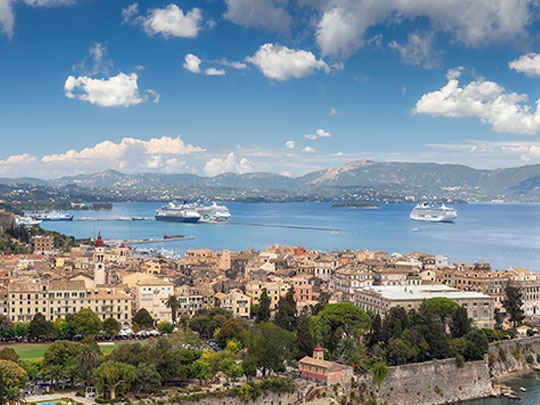
Corfu Old Town grew up between two great fortresses on the east coast of Corfu, ruled by Venice from 1386 to 1797, and it held off repeated Ottoman attacks, including the siege of 1716, making Corfu the only Ionian island the Ottomans never took.
In Corfu Old Town, explore the Old and New Fortresses and the arcaded Liston, and head out to the Achilleion, the palace built for Empress Elisabeth of Austria, whose casino scene appears in the Bond film For Your Eyes Only.
Corfu Old Town joined Greece in 1864 after half a century as a British protectorate, and in World War II German incendiary bombs destroyed its theatre, the Ionian Academy and much of the Jewish quarter in September 1943, before about 1,800 of its Jews were deported to Auschwitz in June 1944.