

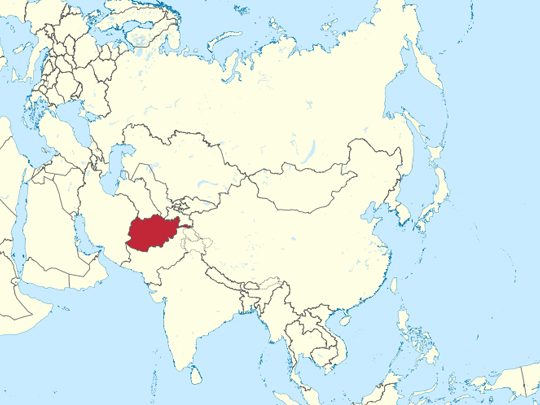
Central Intelligence Agency / Wikimedia Commons / CC-BY-SA-3.0 / GFDL
Capital: Kabul
Population: 36–43 million (estimates vary, no full census since 1979)
Language: Dari and Pashto. Also Uzbek, Turkmen, Balochi, Pashayi, Nuristani and Pamiri.
1 – Band-e Amir National Park (also above)

Band-e Amir National Park holds a chain of six lakes at about 2,900 m in the Hindu Kush of Bamyan Province, held back by natural dams of travertine, a rare mineral deposit left by calcium-rich water, and in 2009 it became Afghanistan’s first national park, having been set aside in the 1970s without ever gaining legal status.
From west to east, the lakes of Band-e Amir are Gholaman, Qambar, Haibat, Panir, Pudina and Zulfiqar, with Band-e Haibat, the largest and deepest, walled in by travertine terraces about 10–12 m high, with a small shrine to Ali on its shore, the Prophet’s cousin and son-in-law.
The name Band-e Amir means “Dam of the Amir”, widely taken to mean Ali, and local legend says he built the dams by miracles while disguised as a slave, which is why pilgrims come to bathe in the icy water of Band-e Haibat in the hope of healing.
2 – Bamiyan Valley
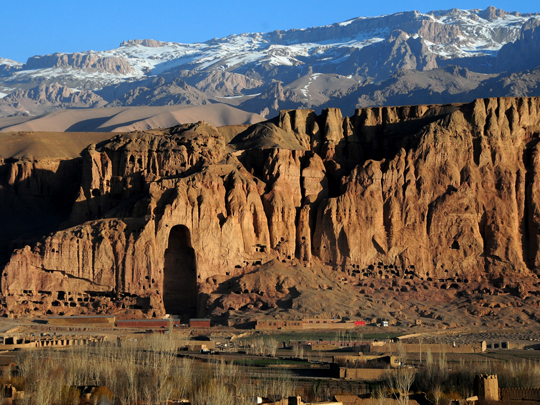
Bamiyan Valley lies about 130 km northwest of Kabul at around 2,500 m on the old Silk Road routes, where Buddhist monks carved two giant standing Buddhas, 55 m and 38 m tall, into the cliff face, radiocarbon-dated to the 6th and early 7th centuries AD and described by the Chinese pilgrim Xuanzang in about 630.
The two empty niches at Bamiyan are flanked by a honeycomb of monks’ caves, while Shahr-e Zohak, the Red City, guards the valley entrance, and Shahr-e Gholghola, the City of Screams, is the citadel Genghis Khan razed in 1221 after his favourite grandson, Mutukan, was killed by an arrow during the siege.
The Taliban destroyed the Bamiyan Buddhas over several weeks from 2 March 2001, with artillery and then explosives, and in 2008 scientists found that murals in the caves behind them had been painted with walnut or poppy-seed oil in the mid-7th century, thought to be among the earliest known oil paintings.
3 – Panjshir Valley
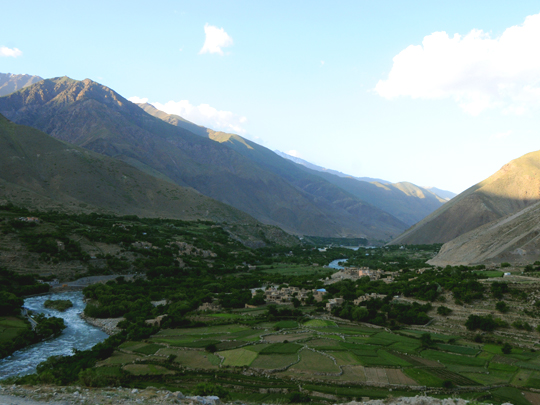
Panjshir Valley runs north-east of Kabul, entered through a narrow gorge, and in the 1980s Ahmad Shah Massoud, the Lion of Panjshir, used that terrain to fight off about nine Soviet offensives, before leading the anti-Taliban Northern Alliance from the valley in the late 1990s.
Massoud’s domed tomb stands on a hilltop at Bazarak, while the wrecks of Soviet armour were left along the Panjshir valley floor, and in the 9th–10th centuries the valley’s silver mines, with their own mint, were among the richest in the eastern Islamic world.
Massoud was killed on 9 September 2001, two days before the attacks of 11 September, by two al-Qaeda suicide bombers posing as journalists, with explosives hidden in their video camera as they began an interview at his base at Khwaja Bahauddin, far to the north of the Panjshir Valley.
4 – Herat Citadel
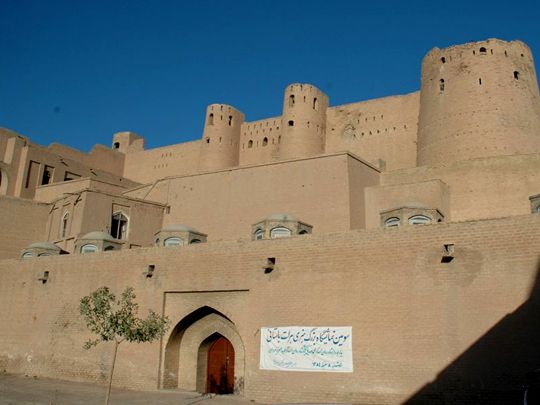
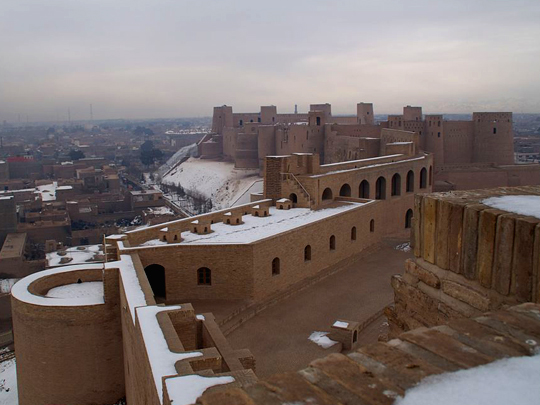
Herat Citadel, or Qala Ikhtiyar al-Din, rises from a mound in the centre of Herat near the Iranian border, where a fortress is believed to have first stood after Alexander the Great’s siege in 330 BC, and it was flattened by Genghis Khan in 1222 and by Timur in 1381 before Shah Rukh rebuilt it from 1415.
The 18 towers of Herat Citadel rise from walls up to 2 m thick and about 16 m high, restored by the Aga Khan Trust for Culture by 2011, while across the city only a handful of minarets survive from Gawhar Shad’s Musalla complex, levelled in 1885 by Amir Abdur Rahman, with British backing, to deny cover to a feared Russian advance.
In 1837–38, Herat held out against a Persian siege of almost a year, a defence helped by Eldred Pottinger of County Down, a young officer of the East India Company’s army who had arrived in the city in disguise and became known as “the hero of Herat”.
5 – Minaret of Jam
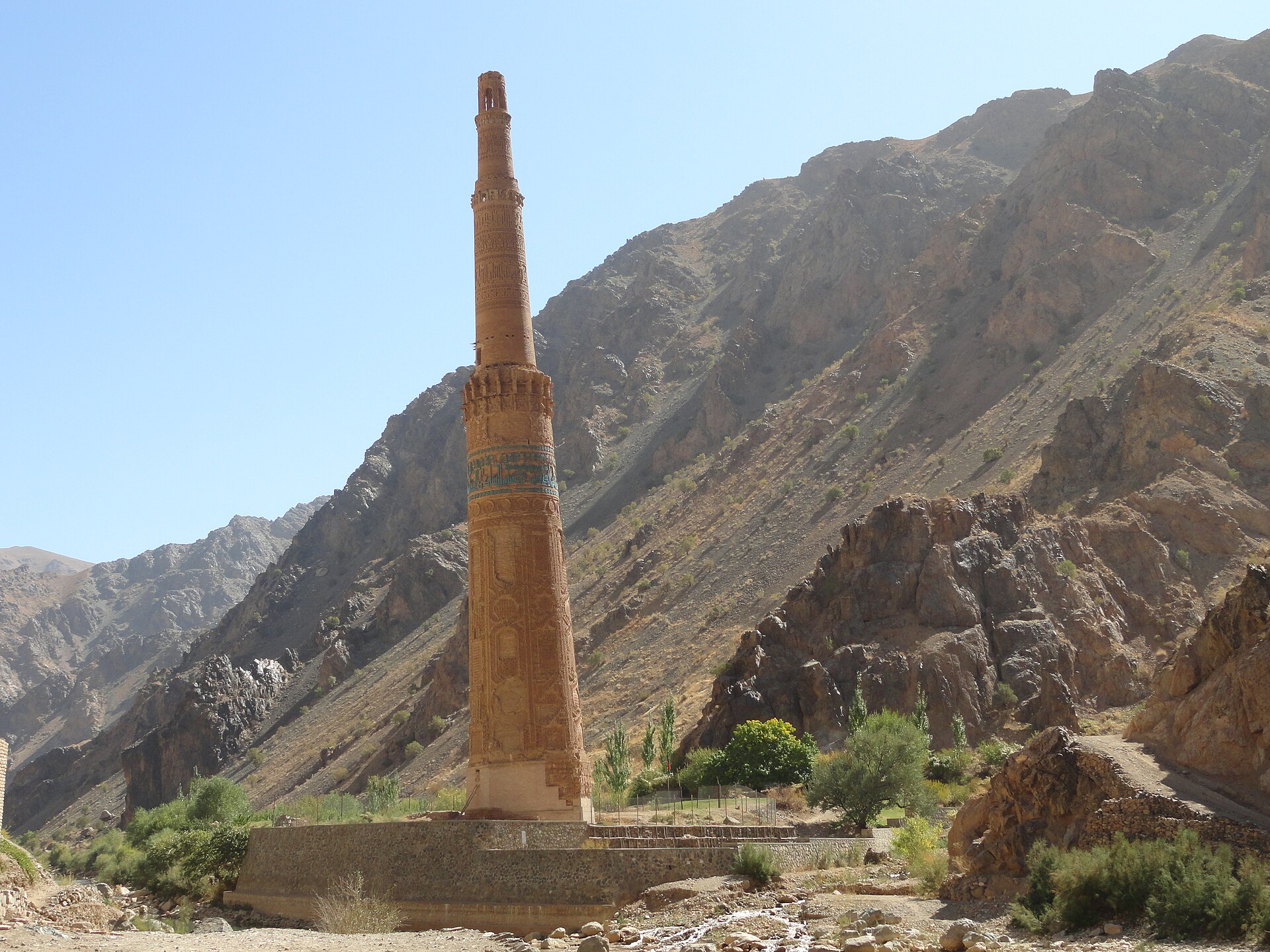

The Minaret of Jam rises about 65 m from a remote gorge in Ghor Province, where the Jam river meets the Hari Rud about 215 km east of Herat, built by the Ghurid sultan Ghiyath al-Din Muhammad in the late 12th century and probably marking the lost Ghurid capital of Firuzkuh, destroyed by Genghis Khan’s Mongols in 1222.
The fired-brick shaft of the Minaret of Jam tapers in tiers from an octagonal base, covered in geometric brickwork with a turquoise Kufic band of the Quran’s Surah Maryam near the top and two spiral staircases inside, while nearby stones carry Hebrew inscriptions of the 11th–12th centuries, thought to mark a Jewish cemetery.
The Minaret of Jam is the second-tallest surviving medieval minaret, after Delhi’s Qutb Minar, begun in 1199 by a Ghurid general, and in 2002 it became Afghanistan’s first World Heritage Site, placed on the List of World Heritage in Danger the same year.
6 – The Blue Mosque, Mazar-i-Sharif
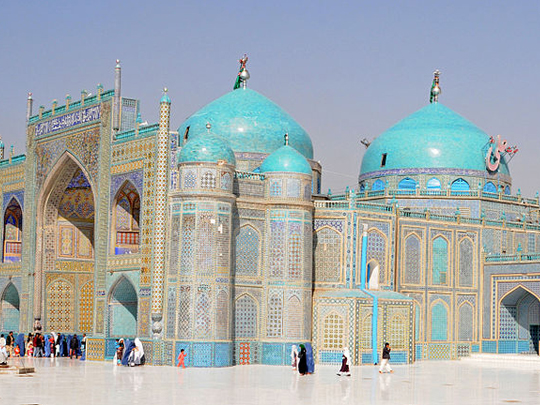
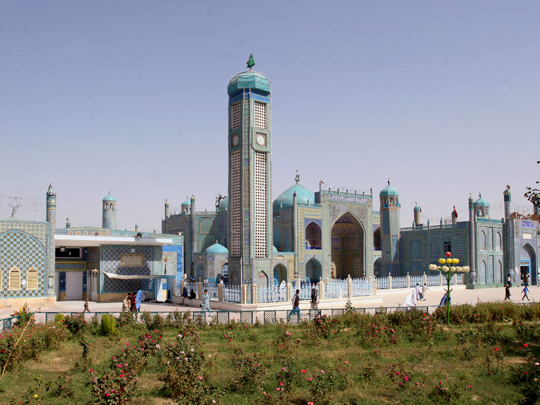
The Blue Mosque, the Shrine of Ali at the heart of Mazar-i-Sharif in northern Afghanistan, gave the city its name, roughly “Tomb of the Exalted”, and tradition holds that Ali’s followers carried his body east on a white camel after his death in 661, though most Muslims believe he lies in Najaf, in Iraq.
The first shrine on the site of the Blue Mosque was built by the Seljuk sultan Ahmad Sanjar in the 12th century after a dream revealed the grave, and after Genghis Khan’s Mongols destroyed it, the Timurid sultan Husayn Bayqara raised the complex in the late 15th century, with twin blue domes and walls of glazed tilework.
Each Nowruz crowds gather at the Blue Mosque for the Jahenda Bala, the raising of a sacred banner, and its courtyard is home to flocks of white doves, with a legend that any coloured dove that settles here soon turns pure white.
7 – Balkh
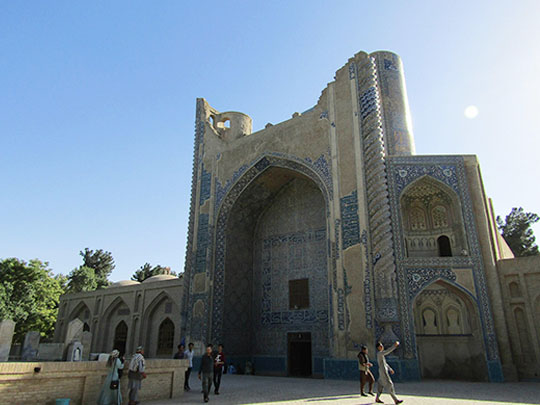

Balkh, about 20 km west of Mazar-i-Sharif, was the capital of ancient Bactria, which Alexander the Great took in 329 BC, and tradition holds that Zoroaster taught here, while the Arabs later called Balkh Umm al-Bilad, the “Mother of Cities”.
Balkh’s sights include Timurid ramparts up to about 18 m high on far older foundations, the Noh Gumbad mosque, often dated to the 9th century and thought to be the oldest surviving mosque in Afghanistan, as well as the 15th-century Green Mosque, the shrine of Khwaja Abu Nasr Parsa, and the tomb of the 10th-century poet Rabia Balkhi.
Genghis Khan destroyed Balkh in 1220, leaving it in ruins for about a century, so that Marco Polo passed through a broken city in the 1270s, and Rumi’s family were known as “Balkhi”, though many scholars place the poet’s birth at Wakhsh, in present-day Tajikistan.
8 – Kabul
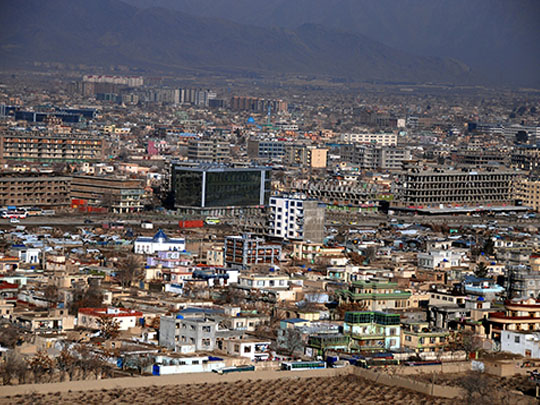

Kabul, in a high valley of the Hindu Kush, holds Bagh-e Babur, the 11-hectare garden of 15 terraces where Babur, founder of the Mughal Empire, was reburied from Agra by about 1544, said to be at his own wish, and where his descendant Shah Jahan added a white marble mosque in 1645.
Kabul’s National Museum lost much of its collection to rockets and looting in the civil war of the 1990s, and to Taliban demolition crews in 2001, but staff had hidden the Bactrian gold of Tillya Tepe in a vault beneath the Presidential Palace, revealed in 2003, under the museum’s motto, “A nation stays alive when its culture stays alive”.
In Kabul on 23 December 1841, the Ulster-born British envoy Sir William Hay Macnaghten was killed by Akbar Khan, and the retreat that followed in January 1842 left about 16,000 soldiers and civilians killed, missing or captured, with Dr William Brydon reaching Jalalabad, at the time thought to be the only survivor.
9 – Kandahar
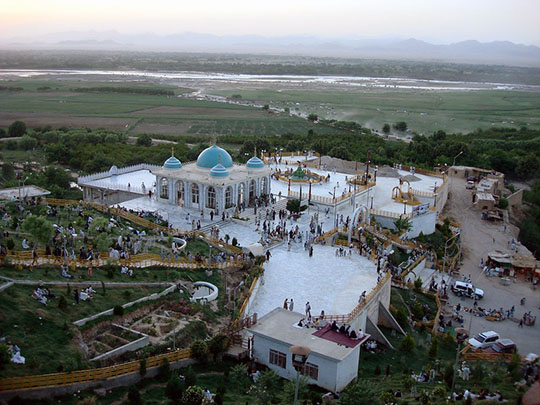
Kandahar, in southern Afghanistan, is said to have been Alexandria in Arachosia, one of the cities founded or refounded by Alexander the Great, and in 1747 Pashtun elders there chose Ahmad Shah Durrani as their leader, making Kandahar the first capital of the Durrani Empire until his son Timur Shah moved it to Kabul.
Kandahar’s mausoleum of Ahmad Shah Durrani, who died in 1772, stands beside the Shrine of the Cloak, which holds a garment believed to have been worn by the Prophet Muhammad, brought from Central Asia in 1768, while a 1958 dig near the Chehel Zina, the Forty Steps, uncovered a Greek and Aramaic edict of the Indian emperor Ashoka from about 260 BC.
After the British defeat at Maiwand on 27 July 1880, the British commander Frederick Roberts, born in India to a County Waterford family, marched about 10,000 troops some 500 km from Kabul to Kandahar in about three weeks, defeating Ayub Khan outside the city on 1 September 1880.