
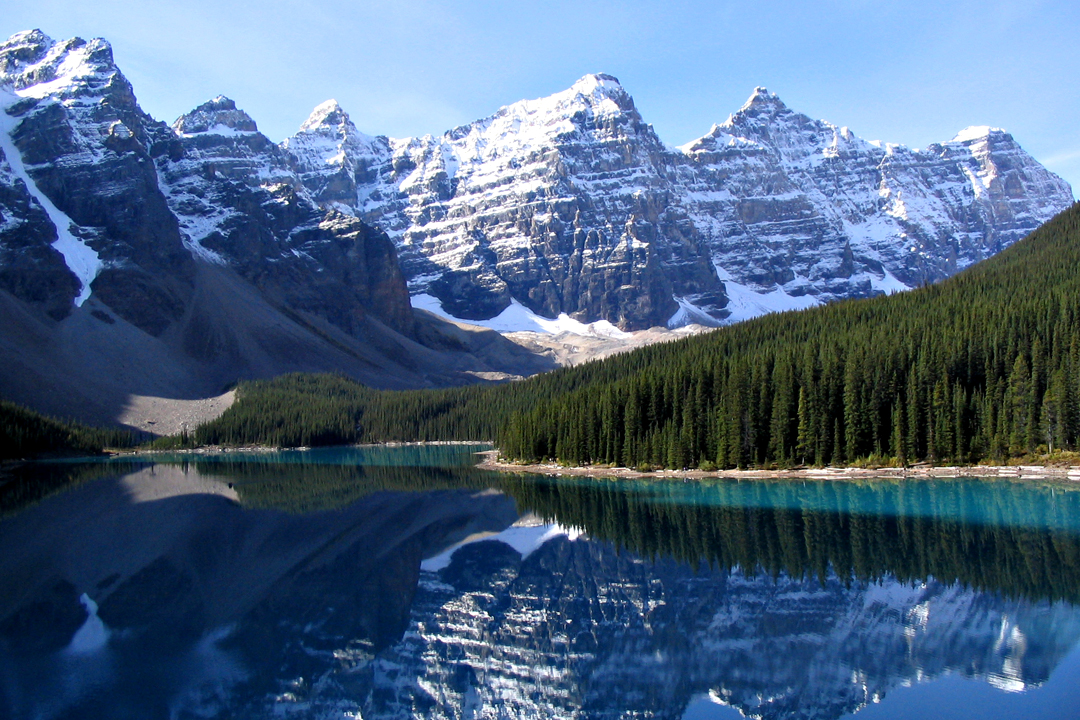
Wikimedia Commons / CC-BY-SA-3.0 / GFDL
Capital: Edmonton
Population: 5.1 million+
Language: English, Cree and Blackfoot.
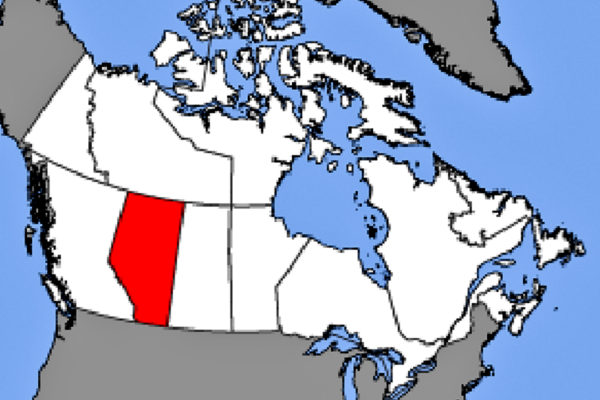
1 – Banff National Park (also above)
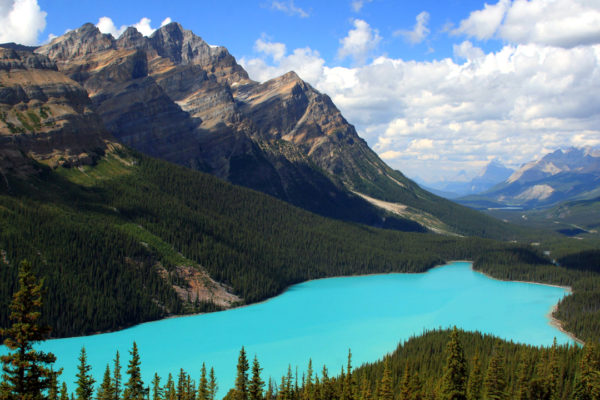
Banff National Park, Canada’s first, runs up the Bow Valley in the Rockies west of Calgary, and its town takes its name from Banffshire in Scotland, home county of Canadian Pacific Railway president George Stephen, whose railway opened the Banff Springs Hotel here in 1888.
Beyond the Peyto Lake view pictured, Banff’s classics are Lake Louise, shown to railway packer Tom Wilson by the Stoney guide Edwin Hunter in 1882, and Moraine Lake, on the back of Canada’s $20 note from 1970 to 1993 and now reachable only by shuttle or tour bus — named for a rockpile now generally reckoned a rockslide, not a moraine.
In 1915–17 more than 600 men classed as “enemy aliens”, many of them Ukrainian immigrants, were held in Banff National Park’s internment camps at Castle Mountain and the Cave and Basin and made to build the road that is now the Bow Valley Parkway, a history the park only began telling on site in 2013.
2 – Waterton Lakes National Park
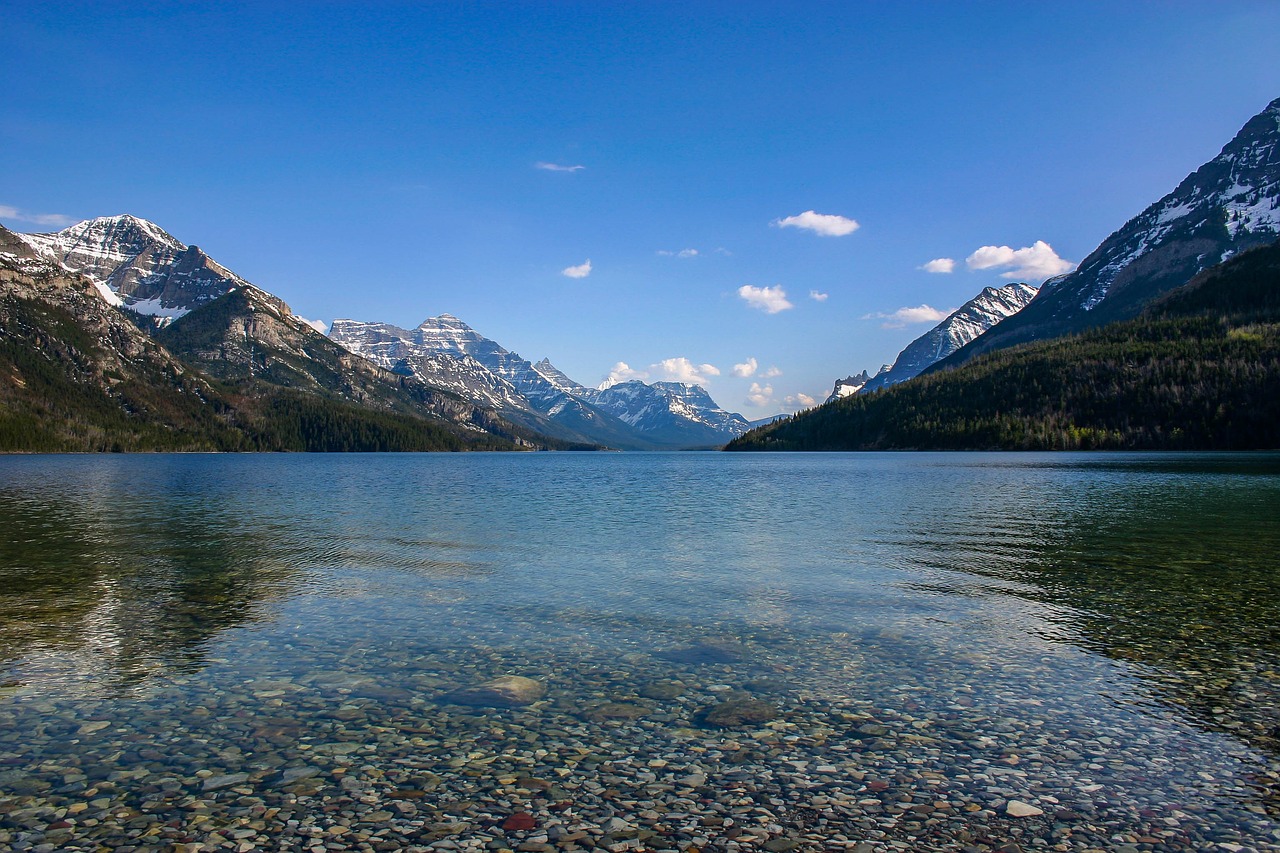
In Alberta’s south-west corner, where the Rockies rise straight off the prairie with no foothills in between, Waterton Lakes National Park was protected in 1895 and joined with Montana’s Glacier National Park in 1932 as the first officially declared international peace park — a World Heritage Site since 1995.
Take the boat down Upper Waterton Lake, at 148 metres the deepest in the Canadian Rockies, to the US ranger station at Goat Haunt, hike to Crypt Lake by way of a steel ladder and a 30-metre crawl through a rock tunnel, and finish at the Prince of Wales Hotel, opened in 1927.
The man who pushed hardest for Waterton’s protection, John George “Kootenai” Brown, was born in Ennistymon, County Clare, and became the park’s first official in 1911 — and in September 2017 the Kenow wildfire burned 38% of the park but stopped short of the townsite and the hotel.
3 – Edmonton
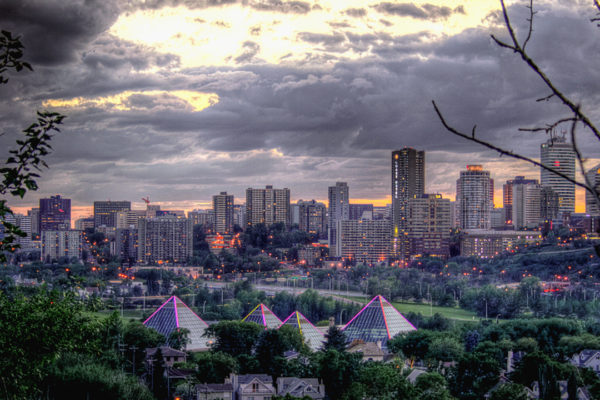
On the North Saskatchewan River, Edmonton grew from the Hudson’s Bay Company’s Edmonton House of 1795 — which moved five times before settling on the bluff where the Alberta Legislature, opened in 1912, now stands — and became the provincial capital in 1905.
Edmonton’s river valley is the largest continuous stretch of urban parkland in Canada, with trails running for kilometres either side of downtown, and West Edmonton Mall, the biggest in the world from 1981 until 2004, still keeps a waterpark, an indoor rollercoaster and an ice rink under one roof.
In 1897–98 Edmonton sold itself as the “All-Canadian Route” to the Klondike, and of the roughly 1,600 gold-seekers who set off overland from here, fewer than half ever reached the goldfields, some of them after 18 months on the trail.
4 – Canmore

Just outside Banff National Park’s eastern gate, Canmore was a coal town from the 1880s until its last mine closed in 1979, named by the railway in 1884 after Malcolm III of Scotland — “Ceann Mòr” in Gaelic, the great chief.
Canmore’s skyline is the Three Sisters, pictured, and in town you’ll find the 1893 North-West Mounted Police barracks, one of only three NWMP buildings in Alberta older than the province itself, and the Canmore Nordic Centre, built for the 1988 Winter Olympics.
The Three Sisters were first called the Three Nuns, after Albert Rogers saw their snow-veiled north faces in 1883, and were renamed by the time George Dawson mapped them in 1886 — while the “Canmore” nickname may belong to the wrong Malcolm, since its only contemporary record names Malcolm IV.
5 – Calgary
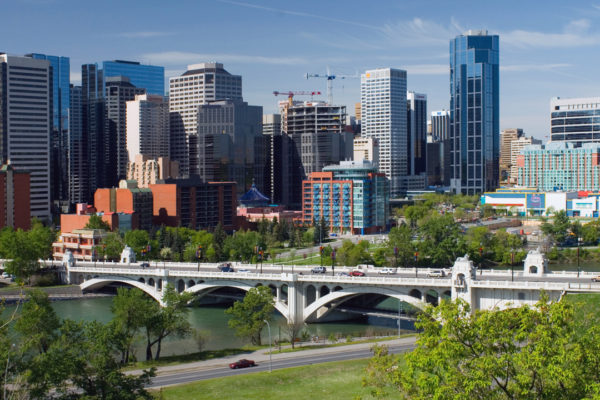
Where the Bow and Elbow rivers meet — Mohkinstsis, “the elbow”, to the Blackfoot — Calgary began as a North-West Mounted Police fort in 1875, which its commander named Fort Brisebois after himself until his superior, James Macleod, renamed it in 1876 after Calgary on the Isle of Mull.
Calgary’s big draw is the Stampede every July — a one-off in 1912 and an annual fixture only since 1923 — alongside Heritage Park, the Calgary Tower, and the ski jumps of Canada Olympic Park on the western skyline.
Calgary’s 1988 Winter Olympics gave the world Eddie “the Eagle” Edwards, last in both ski jumps, and Jamaica’s bobsleigh team, who crashed out of the four-man event — though Cool Runnings invented their coach and the moment they carried the sled over the line.
6 – Banff Legacy Trail
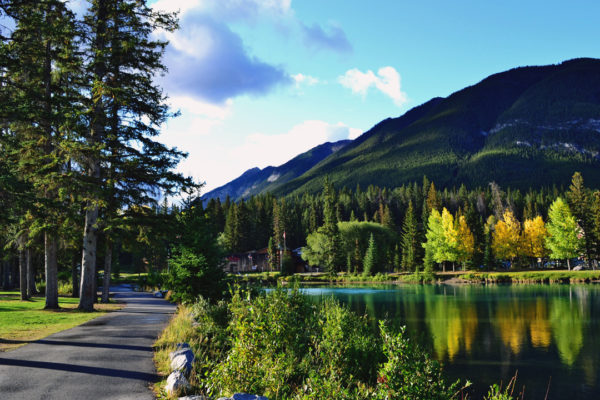
Running about 26 km beside the Trans-Canada Highway from Canmore to the town of Banff, the Banff Legacy Trail was opened in 2010 for the national park’s 125th anniversary, and it links entries 4 and 1 along one of the most closely studied wildlife corridors in the world.
Cycle or walk the Banff Legacy Trail with the highway fence on one side and the Bow Valley peaks on the other, and you pass the bridges and tunnels that let elk, bears and wolves cross the road without ever setting foot on it.
Banff’s stretch of highway now has six wildlife overpasses and 38 underpasses, the first overpasses built in 1996–97, which have cut collisions with wildlife by more than 80% and logged over 150,000 animal crossings — not the world’s first (France and Utah got there earlier), but by Parks Canada’s account the longest-monitored.
7 – Fort McMurray
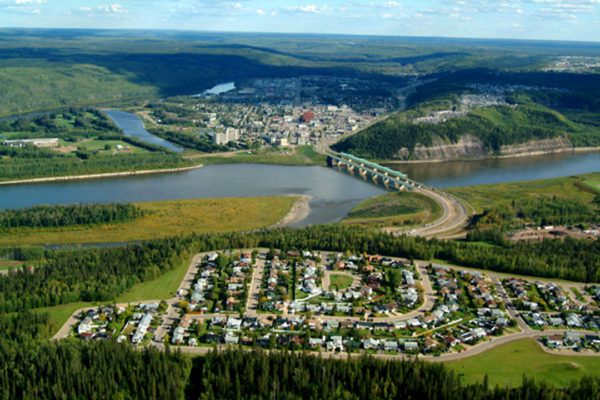
Where the Athabasca and Clearwater rivers meet in north-east Alberta, Fort McMurray began as a Hudson’s Bay Company post in 1870 and sits on the Athabasca oil sands, the main reason Canada holds the world’s fourth-largest proven oil reserves — though it isn’t legally a city, just the “urban service area” of the Regional Municipality of Wood Buffalo since 1995.
Fort McMurray’s Oil Sands Discovery Centre explains how bitumen is separated from sand and shows the scale of the machinery, and the long winter nights this far north make it a reliable place to see the northern lights.
Indigenous people were sealing canoes with the bitumen long before a Cree man brought a sample to the Hudson’s Bay Company at York Factory in 1719, and in May 2016 a wildfire forced all of Fort McMurray’s roughly 88,000 people to flee and destroyed about 2,400 buildings — still the costliest insured disaster in Canadian history.
8 – Jasper National Park
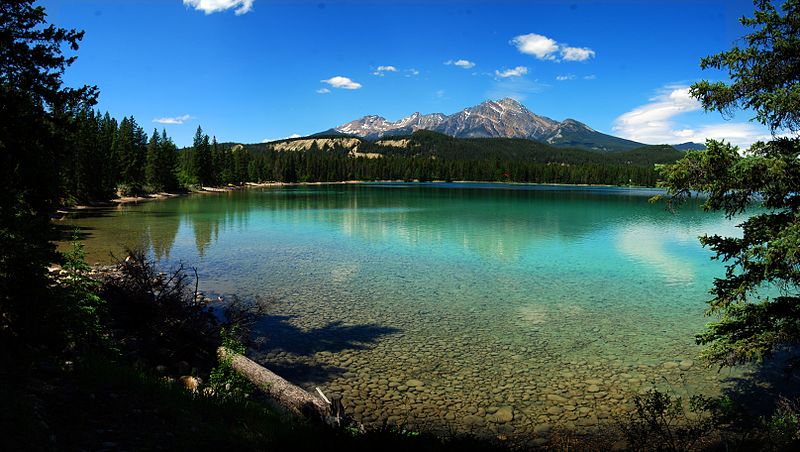
North of Banff along the Icefields Parkway, Jasper National Park was set aside in 1907, named for Jasper Hawes, who ran a fur-trade post here from 1817, and its creation came with the eviction of six Métis homesteaders, members of the Moberly family among them, by 1910.
Lake Edith, pictured, is a few minutes’ drive from Jasper town, and further out are Maligne Lake, the largest natural lake in the Rockies, the Columbia Icefield, and Mount Edith Cavell, named in 1916 for the British nurse executed in Brussels the year before.
In July 2024 a lightning-sparked wildfire reached Jasper town and destroyed 358 of its 1,113 buildings, and a firefighter, Morgan Kitchen, was killed — by mid-2026 rebuilding in Jasper was well under way, though Maligne Canyon was to stay closed through the year.
9 – Lethbridge
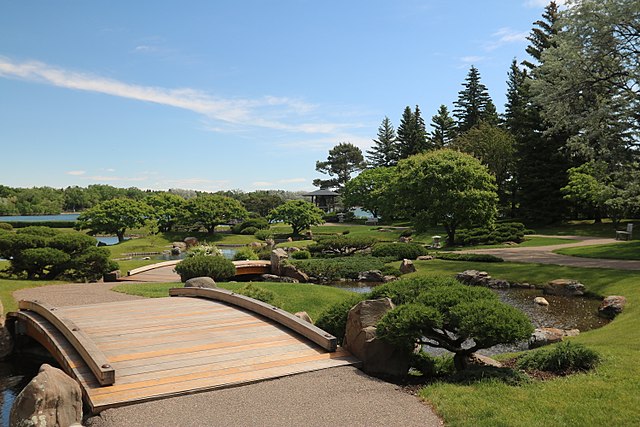
On the Oldman River in southern Alberta, Lethbridge began as Coal Banks, a mining camp of 1874, renamed for coal-company president William Lethbridge, who never came to Canada, and nearby stood Fort Whoop-Up, the American whisky post the Mounties marched west in 1874 to shut down, only to find it empty.
The Nikka Yuko Japanese Garden, pictured, opened in 1967 with pavilions and gates made in Kyoto and reassembled without nails, and the Lethbridge Viaduct of 1909, 1.6 km long and 96 metres high, is the longest and highest railway bridge of its kind in Canada.
Nikka Yuko — “Japan–Canada friendship” — stands in Lethbridge because in 1942 some 3,600 Japanese Canadians were removed from the British Columbia coast and sent to work Prairie sugar-beet farms, many of them in southern Alberta, where they were housed in uninsulated granaries and shacks.
10 – Head-Smashed-In Buffalo Jump
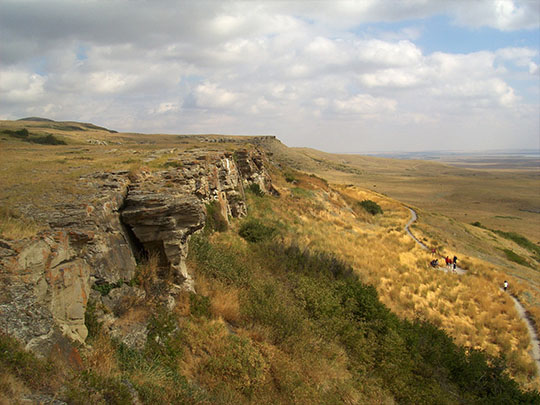
In the foothills west of Fort Macleod, Head-Smashed-In Buffalo Jump — Estipah-skikikini-kots in Blackfoot — was used to hunt bison from around 6,000 years ago until about 1850, and UNESCO, which listed it in 1981, calls it the most outstanding surviving bison jump in the Americas.
The interpretive centre, opened in 1987, is seven storeys built into the cliff and largely staffed by Blackfoot guides, and from the top you can trace the drive lanes, marked by more than 500 stone cairns, along which hunters disguised in calf robes and wolf skins steered the herds towards the edge.
Head-Smashed-In isn’t quite what its billing suggests — radiocarbon dates show a gap of a thousand years or more in its use, the cliff now stands only about 10 metres high because bone has piled up more than 10 metres deep at its foot, and the story of a young man crushed while watching from below is the one usually told, though some Blackfoot elders place that legend at a different jump.
11 – Writing-on-Stone / Áísínai’pi
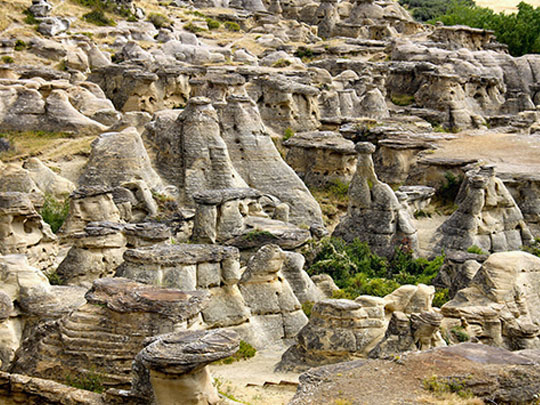
In the Milk River valley just north of the Montana border, Writing-on-Stone — Áísínai’pi, “it is pictured” or “it is written” — is a Blackfoot sacred landscape of sandstone hoodoos, a provincial park since 1957 and a World Heritage Site since 2019.
Áísínai’pi holds one of the largest concentrations of rock art on the Great Plains, some 138 sites and about 250 panels, and since the Archaeological Preserve is closed to unguided visitors you see the best of it on a ranger-led walk, which also takes in the reconstructed North-West Mounted Police post of 1887, built against whisky smugglers and horse raiders.
Most of the images date from the last 1,800 years and run right up to contact, with horses and guns among the figures, and in Blackfoot tradition they were left by spirit beings rather than people — which is why Blackfoot elder Martin Heavy Head renders Áísínai’pi as “where things are being written”, an archive still in use.