
Wikimedia Commons / CC-BY-SA-3.0 / GFDL
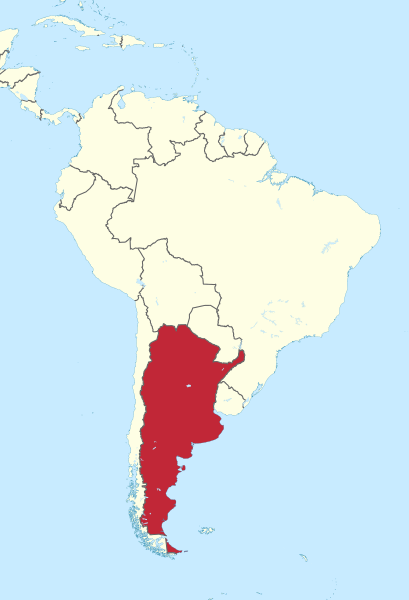
Capital: Buenos Aires
Population: 46 million+
Language: Spanish (Guaraní is co-official in Corrientes province)
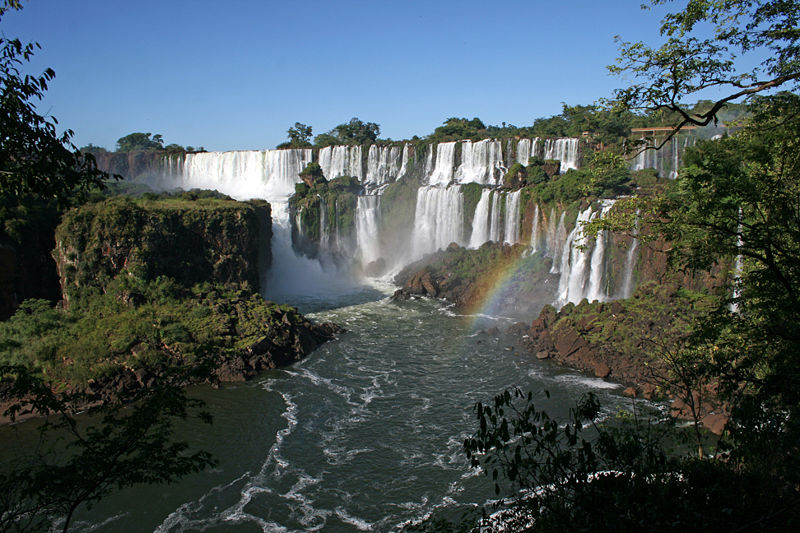
1 – Iguazú Falls & National Park (also above)

Iguazú Falls straddles the border between Argentina and Brazil in the subtropical Atlantic Forest, a horseshoe of around 275 cascades, depending on the river’s level, spread across nearly 3 km, one of the largest waterfall systems in the world and one of the New7Wonders of Nature.
Walkways in Iguazú National Park lead over and among the falls to the brink of the Devil’s Throat, a horseshoe-shaped chasm more than 80 m deep, through forest home to toucans, monkeys, coatis and the occasional elusive jaguar.
Eleanor Roosevelt is said to have exclaimed “Poor Niagara!” on seeing Iguazú, and the falls star in The Mission (1986), whose famous opening scene sends a Jesuit priest tied to a cross over the edge.
2 – Bariloche
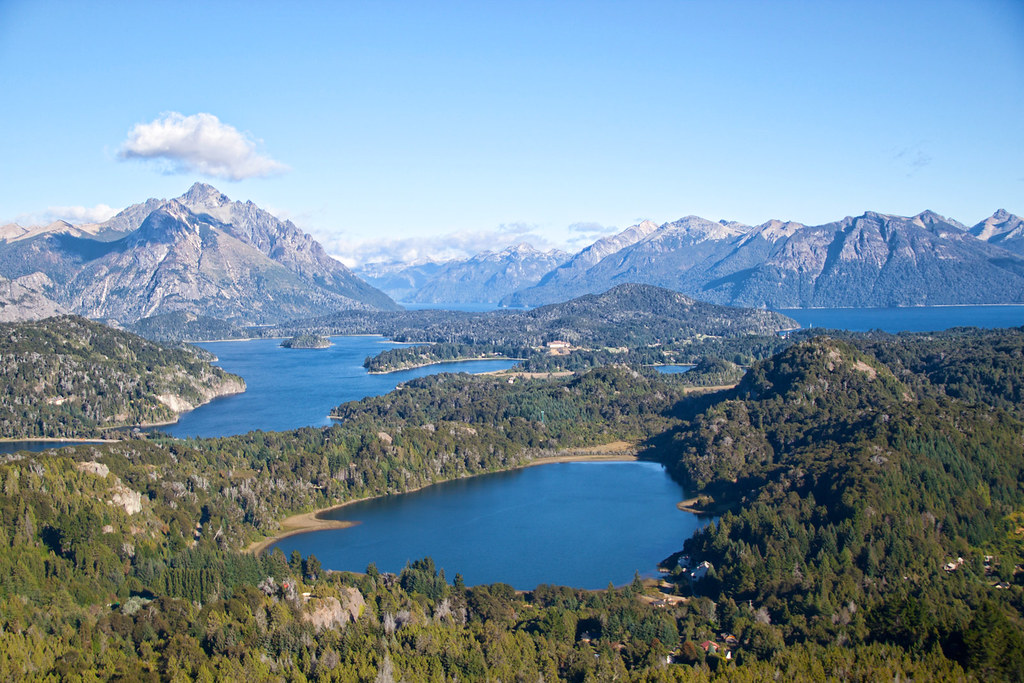
Bariloche sits on the shore of the glacial Lake Nahuel Huapi, ringed by the Andes, a town founded in 1902 around a German merchant’s store and shaped by German and Swiss settlers into the alpine resort nicknamed “Little Switzerland”, inside Nahuel Huapi National Park, the first national park in South America.
Bariloche’s chalet-lined centre is famous for its chocolate shops along Calle Mitre, with skiing on Cerro Catedral in winter and, in summer, hiking, kayaking and the scenic lakeside loop of the Circuito Chico.
Bariloche’s alpine calm hid a dark secret, for the former SS captain Erich Priebke, wanted for his part in the 1944 Ardeatine Caves massacre in Rome, lived here for more than 40 years, heading the German school, until an ABC News crew confronted him in 1994 and he was extradited to Italy.
3 – Monte Fitz Roy
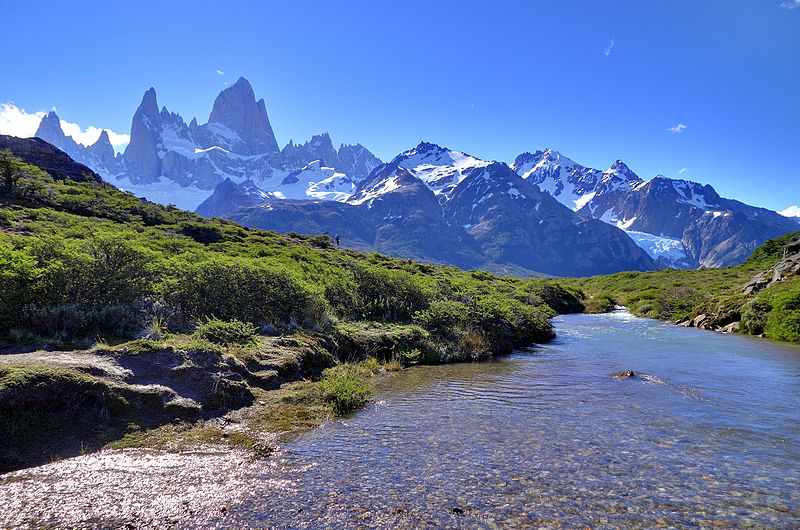
Monte Fitz Roy is a jagged granite spire rising to 3,405 m above the Patagonian steppe, named by the explorer Francisco “Perito” Moreno after Robert FitzRoy, captain of Darwin’s HMS Beagle, and first climbed in 1952 by the French mountaineers Lionel Terray and Guido Magnone.
Below Monte Fitz Roy lies El Chaltén, founded in 1985 and named Argentina’s National Trekking Capital, where day-hikers set out for Laguna de los Tres at the mountain’s foot, and the name Chaltén, “smoking mountain”, comes from the banner of cloud that streams from its summit.
The jagged skyline of Monte Fitz Roy is the inspiration for the logo of the outdoor-clothing company Patagonia, so this remote Argentine peak travels the world on millions of jackets and backpacks.
4 – Perito Moreno Glacier
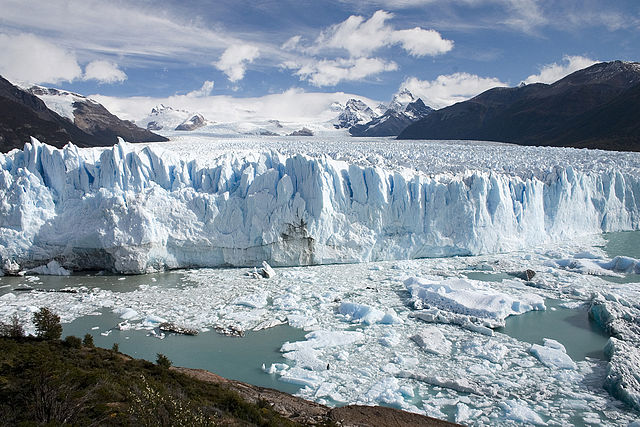
The Perito Moreno Glacier flows down from the Southern Patagonian Ice Field, often described as the world’s third-largest reserve of fresh water, and ends in a jagged wall of ice about 5 km wide and some 74 m high above Lago Argentino, in the UNESCO-listed Los Glaciares National Park.
Boardwalks let visitors stand face to face with the Perito Moreno Glacier as house-sized blocks of ice calve into the lake, while guided treks with crampons cross its cracked blue surface.
Every few years, the Perito Moreno Glacier advances far enough to dam an arm of Lago Argentino, until the trapped water tunnels through the ice and the bridge collapses in a thunderous rupture, first recorded in 1917.
5 – Calchaquí Valleys
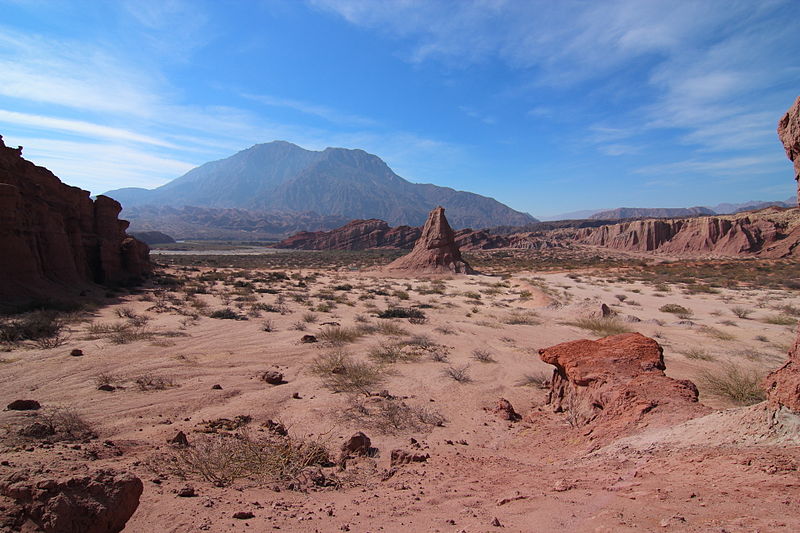
The Calchaquí Valleys wind through the mountains of north-west Argentina, named after the Calchaquí people, who resisted Spanish conquest for more than a century until the last holdouts, the Quilmes, were marched some 1,500 km to near Buenos Aires in 1666–67, where a city bears their name.
Ruta 40 runs through the Calchaquí Valleys past the colonial town of Cachi to Cafayate, while Ruta 68 cuts through the red rock of the Quebrada de las Conchas, with its Anfiteatro, a natural amphitheatre whose acoustics draw folk musicians.
The Calchaquí Valleys hold some of the highest vineyards on Earth, where the Colomé estate near Molinos grows grapes at 3,111m, a world record until Guinness recognised a vineyard in Tibet in 2018, and the floral white Torrontés is the local signature.
6 – Aconcagua
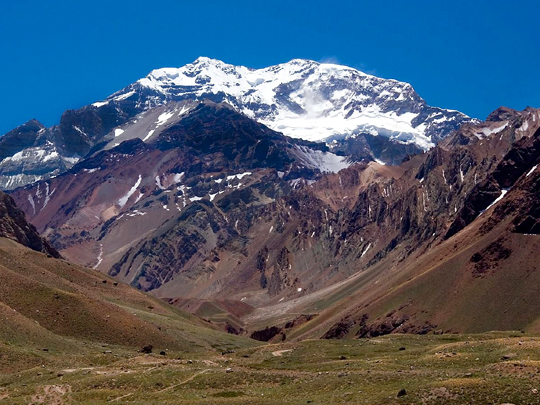
Rising to about 6,961 m in the Andes of Mendoza, near the Chilean border, Aconcagua is the highest mountain outside Asia and one of the Seven Summits, first climbed on 14 January 1897 by the Swiss guide Matthias Zurbriggen, alone, after his expedition leader turned back ill.
Aconcagua’s normal route needs no ropes or technical climbing, which is why it is often called the highest non-technical ascent on Earth, yet the thin air, fierce cold and wind make it a serious undertaking, and climbers die on the mountain most seasons.
In 1985 climbers on a ridge of Aconcagua found, at about 5,300 m, the frozen body of an Inca boy offered in a capacocha sacrifice some 500 years earlier, whose DNA later revealed a previously unknown ancient lineage.
7 – Cueva de las Manos

Cueva de las Manos, the “Cave of the Hands”, lies in the remote canyon of the Río Pinturas in Santa Cruz province, Patagonia, where hunter-gatherers began painting the rock more than 9,000 years ago.
The walls of Cueva de las Manos carry more than 800 stencilled hands in red, ochre, white and black, alongside lively scenes of hunters using bolas to chase herds of guanaco, and the site is a UNESCO World Heritage Site.
The hands of Cueva de las Manos were probably made by spraying pigment through hollow bone pipes, and the vast majority are left hands, which suggests the artists, like most people, held the pipe in their right.
8 – Pucará de Tilcara
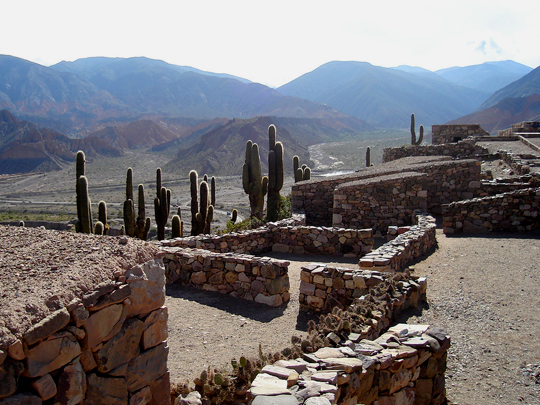
The Pucará de Tilcara crowns a hill above the Quebrada de Humahuaca in Jujuy province, a fortified town built by the Omaguaca people around 1,000 years ago on an ancient route through the Andes, later taken by the Incas and part of the UNESCO-listed Quebrada de Humahuaca.
Excavated from 1908 and partly rebuilt in the mid-20th century, the Pucará de Tilcara is a maze of low stone houses, corrals and paths among towering cardón cacti, with a high-altitude botanical garden at its foot.
At the summit of the Pucará de Tilcara stands a 1935 truncated pyramid honouring the archaeologists who excavated it, a style foreign to the Andes, and archaeologists say its construction destroyed part of the very site it was built to celebrate.
9 – Plaza de Mayo, Buenos Aires

Plaza de Mayo in Buenos Aires takes its name from the May Revolution of 1810, which set Argentina on the road to independence, and has been the stage for the nation’s history ever since, including the bombing of 16 June 1955, when navy and air force planes attacked the square and killed more than 300 people.
Around Plaza de Mayo stand the colonial Cabildo, the Metropolitan Cathedral, where Jorge Bergoglio, the future Pope Francis, was archbishop and where General San Martín lies buried, and the Casa Rosada, the “Pink House”, from whose balcony Eva Perón addressed vast crowds.
On 30 April 1977, a group of mothers whose children had been “disappeared” by the military dictatorship first gathered in Plaza de Mayo, and the Mothers of the Plaza de Mayo went on to walk around its central monument each Thursday, wearing white headscarves embroidered with their children’s names.
10 – Ushuaia
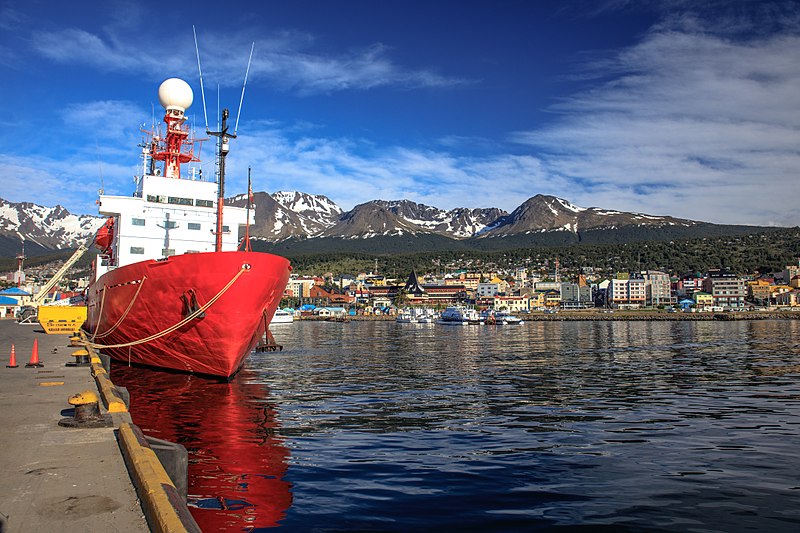
Ushuaia sits on the Beagle Channel beneath snow-streaked peaks at the bottom of South America, founded on 12 October 1884, often billed as the world’s southernmost city, although Chile’s Puerto Williams lies further south, and a main departure point for cruises to Antarctica.
Boat trips from Ushuaia sail the Beagle Channel past sea lion colonies to the Les Éclaireurs lighthouse, often mistaken for Jules Verne’s “Lighthouse at the End of the World”, while the Tierra del Fuego National Park, where Route 3 ends, offers forests, peat bogs and lakes.
Ushuaia grew around a prison, begun by its own inmates in 1902 and closed in 1947, whose convicts logged the forests and built roads, bridges and public buildings, while their prison railway lives on as the End of the World Train, billed as the southernmost railway on Earth.
11 – Jesuit Block & Estancias of Córdoba

The Jesuit Block, a single city block in the heart of Córdoba, was the centre of the Jesuits’ work in the region from their arrival in 1599, where they founded a university in 1613, funded by working estancias in the hills until Charles III expelled the order from his empire in 1767.
The Jesuit Block holds the Church of the Company of Jesus, the Domestic Chapel, the old university and the Colegio Monserrat, while the five estancias of Alta Gracia, Jesús María, Santa Catalina, Caroya and La Candelaria complete the UNESCO World Heritage Site, and Che Guevara, of Galway descent through his father’s Lynch family, grew up in Alta Gracia.
The church roof of Córdoba’s Jesuit Block was designed by the Flemish Jesuit Philippe Lemaire, a former boatbuilder, who built it of cedar in the form of an upturned ship’s hull.
12 – San Ignacio Miní

San Ignacio Miní, about 60 km from Posadas in Misiones province, was founded around 1610 in the Guayrá region of present-day Brazil, where Limerick-born Jesuit Thomas Field had preached in Guaraní two decades earlier, before slave raids drove its people south in the early 1630s and they settled here in 1696.
San Ignacio Miní is one of the best-preserved Jesuit–Guaraní missions, a red sandstone town around a vast plaza, with a 74 m church by the Italian Jesuit Juan Brasanelli whose façade blends baroque and Guaraní motifs, and it is part of a UNESCO World Heritage Site.
The Jesuit–Guaraní missions that included San Ignacio Miní ran the first printing press in the Río de la Plata region from 1700, with the press, type and ink all made in the missions, mainly by Guaraní workers, and only the paper shipped from Europe.
13 – Casa Histórica, Tucumán
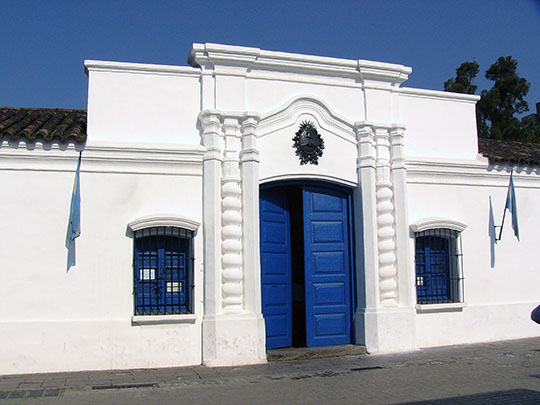
The Casa Histórica in San Miguel de Tucumán, the colonial family home of Francisca Bazán de Laguna, is where the Congress of Tucumán declared independence from Spain on 9 July 1816, the founding moment of the modern Argentine state.
Behind the Casa Histórica’s white façade with its twisted baroque columns, rebuilt in 1943 from Ángel Paganelli’s photographs of 1869, lies the Sala de la Jura, the hall where independence was declared and the only part of the house to survive demolition in the early 1900s.
The Act of Independence agreed at the Casa Histórica was printed in Quechua and Aymara as well as Spanish, so that the Andean peoples of the new nation could read it, yet the original signed document was later lost and has never been found.