

Wikimedia Commons / CC-BY-SA-3.0 / GFDL
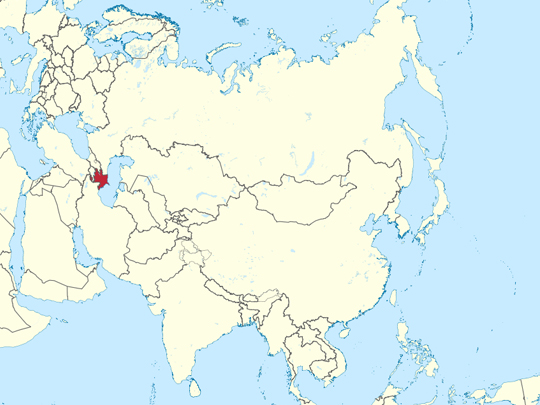
Capital: Baku
Population: 10.3 million+
Language: Azerbaijani
1 – Khinalig & the Caucasus Mountains (also above)
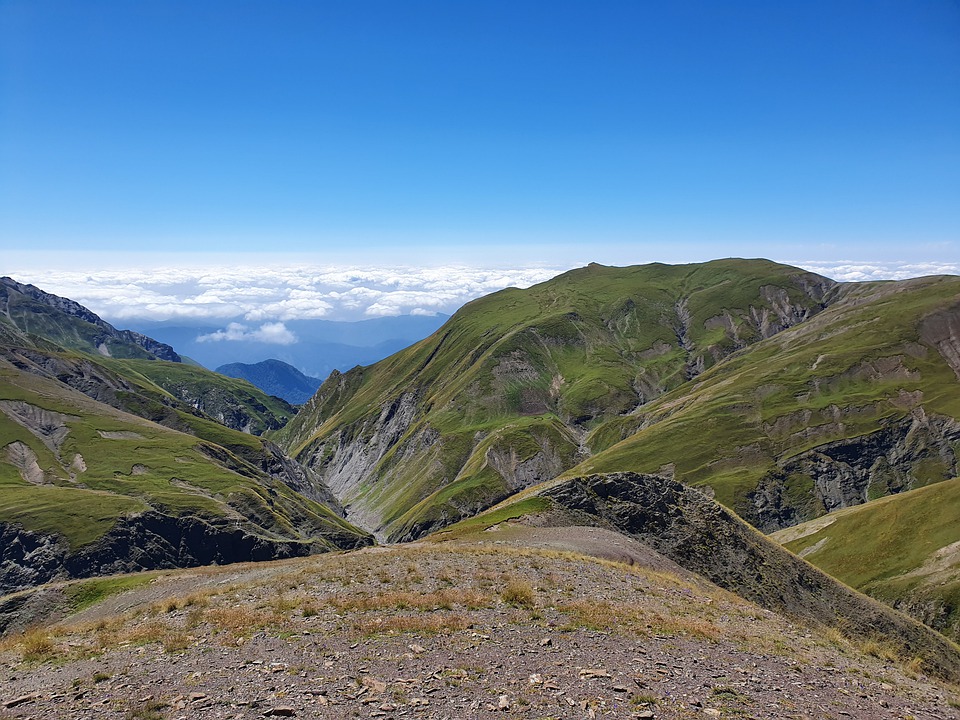
The Greater Caucasus forms Azerbaijan’s northern border with Russia, topping out at Bazardüzü (4,466 m), and up a mountain road from Quba sits Khinalig, a village of flat-roofed stone houses stacked so that each roof is the yard of the house above.
Base yourself in Quba or Qusar for Khinalig, the ski and mountain resort below Şahdağ (4,243 m), and the road to Laza and its waterfalls beneath the mountain’s north face.
Khinalig’s people speak Khinalug, a unique language of the Northeast Caucasian family spoken almost nowhere else, and in 2023 UNESCO listed the village and the Köç Yolu, a 200 km route its shepherds walk with their flocks between summer and winter pastures.
2 – Gobustan National Park
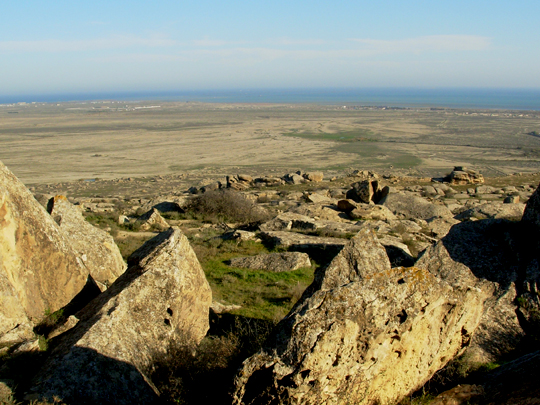
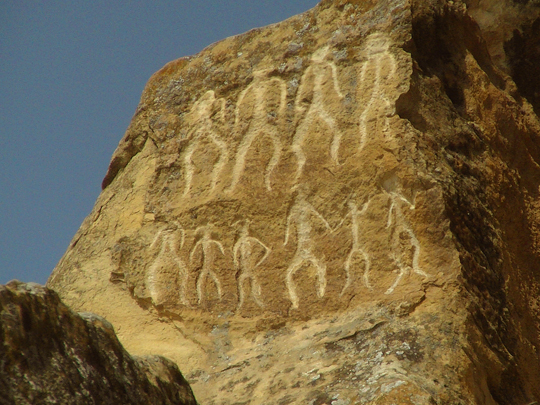
Gobustan National Park, about 60 km south-west of Baku, protects more than 6,000 rock carvings made over a span of roughly 5,000 to 20,000 years, and UNESCO listed it in 2007.
Follow the marked paths from Gobustan’s museum to the carvings of hunters, dancers, bulls and rowed boats on the hills of Boyukdash, Kichikdash and Jingirdag, tap the gaval dash, a slab that rings like a tambourine, and drive on to the nearby mud volcanoes.
Gobustan’s most surprising carving is Roman: Lucius Julius Maximus, a centurion of the Twelfth Legion “Fulminata”, cut an inscription here under Emperor Domitian, and it’s the easternmost known Latin inscription.
3 – Palace of the Shirvanshahs
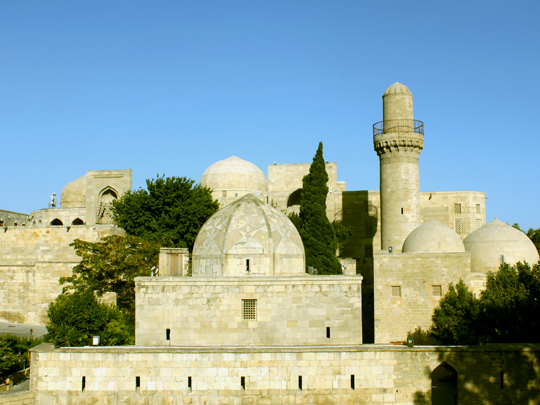
The Palace of the Shirvanshahs crowns Baku’s Old City, built after the Shirvanshahs moved their court to Baku from earthquake-wrecked Shamakhi, begun around 1411 and mostly completed in the 1430s and 1440s under Khalilullah I.
The Palace of the Shirvanshahs spreads over courtyards on three levels, with the residence, the domed Divankhana, whose purpose is debated, a royal tomb Khalilullah built for his mother and seven-year-old son, the mausoleum of the court scholar Seyid Yahya Bakuvi, a mosque and bathhouse ruins.
Work on the palace is thought to have stopped during the Safavid wars of 1500–01, when Shah Ismail’s forces killed Shirvanshah Farrukh Yassar in battle near Shamakhi and then took Baku, which is why parts of the decoration, including an empty inscription frame, were never finished.
4 – Maiden Tower
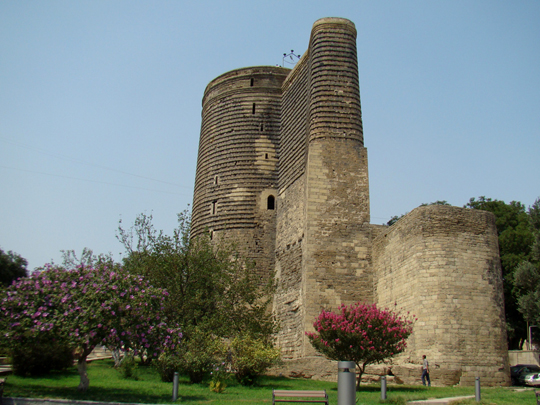
The Maiden Tower, or Qız Qalası, stands at the seaward corner of Baku’s Old City, about 29.5 m tall with walls up to 5 m thick at the base, finished in its present form in the 12th century, though some scholars argue for much earlier origins.
Climb the Maiden Tower’s eight levels, past its museum displays, to the roof terrace for views over the Caspian Sea and the Flame Towers.
Nobody agrees what the Maiden Tower was built for, with theories ranging from fire temple to observatory to watchtower, and it appears on the 10 manat banknote.
5 – Walls of the Old City of Baku
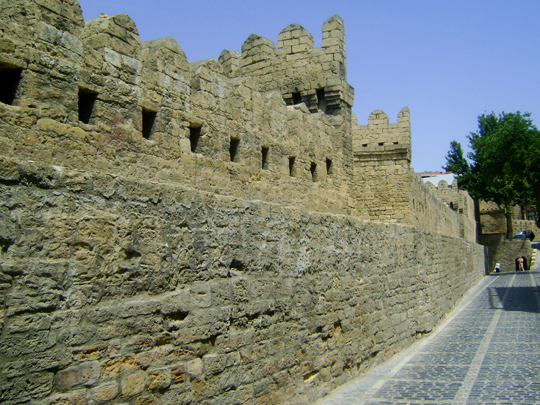
The Old City of Baku covers about 22 hectares inside walls built in the 12th century under Shirvanshah Manuchehr III, and UNESCO listed it in 2000, put it on its danger list in 2003 after earthquake damage and poor restoration, and took it off again in 2009.
Wander the Old City’s lanes to the Muhammad Mosque, whose minaret dates from 1078, and the old caravanserais, all inside a quarter where people live and work.
The Old City played Istanbul in the Soviet comedy The Diamond Arm (1969), and on Kichik Gala street, where the hero slips and falls with a cry of “Chyort poberi!” (“Damn it!”), visitors line up to recreate the scene.
6 – Ateshgah Fire Temple
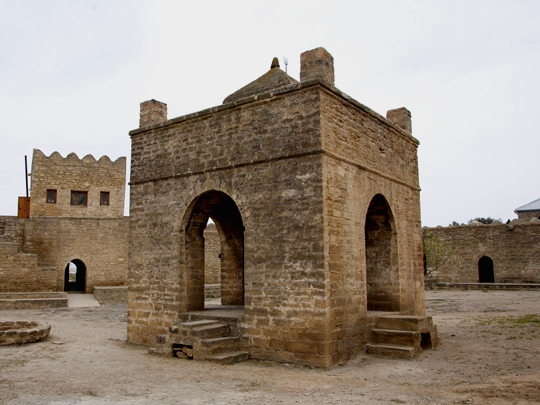
The Ateshgah Fire Temple stands in Surakhani on the Absheron peninsula outside Baku, a pentagonal walled compound built in the 17th and 18th centuries over natural gas vents and associated with Hindu and Sikh traders from India.
Pilgrims’ cells line the Ateshgah’s courtyard around a square altar with a chimney flue at each corner, and 17 inscriptions survive, 14 Hindu in Sanskrit, two Sikh in Punjabi and one in Persian.
The Ateshgah’s natural fire went out in 1969, after decades of oil and gas extraction drained the gas beneath it, so the flame on the altar is piped in from Baku’s gas mains.
7 – Yanar Dag
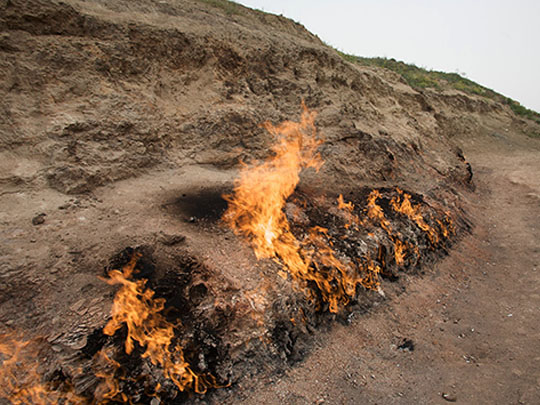

Yanar Dag, the “burning mountain”, is a hillside near Mammadli on the Absheron peninsula, north of Baku, where gas seeping through the sandstone burns in flames up to 3 m high along a 10 m stretch.
Visit Yanar Dag after dark, when the flames are at their most dramatic, and look round the small reserve’s museum and teahouse.
Local legend says a shepherd accidentally lit Yanar Dag in the 1950s, but the Absheron’s oil and gas have fascinated travellers for centuries: Marco Polo described the region’s oil, and Zoroastrians revered fire as a sacred symbol of the divine, not as a god in itself.