
Wikimedia Commons / CC-BY-SA-3.0 / GFDL
Capital: Praia
Population: 500,000+
Language: Portuguese/Cape Verdean Creole

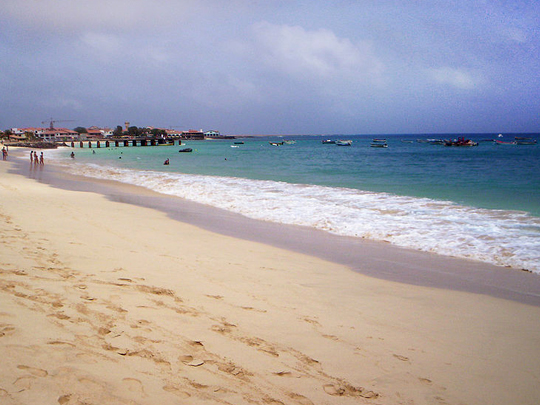
1 – Santa Maria (also above)
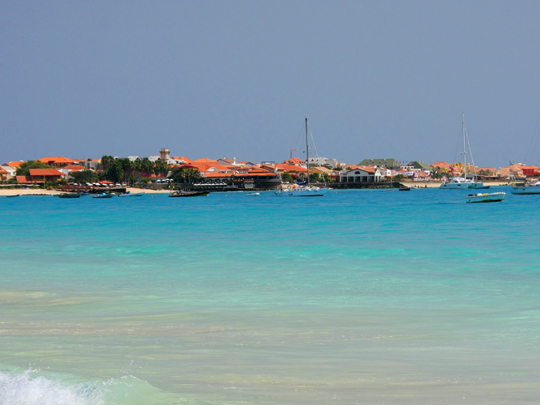
A sun-baked resort town on the southern tip of the island of Sal, fronting one of Cape Verde’s finest white-sand beaches; it was founded in 1830 to harvest salt — the “white gold” that gave the island its name (Sal means “salt”) — before tourism took over in the 1960s.
Life revolves around the long beach and the wooden Pontão pier, where fishermen still land the day’s catch; steady trade winds make it one of the world’s great spots for kitesurfing and windsurfing, and boats head out for diving, turtles and whales.
Nearby, at Pedra de Lume, you can wade into a salt lake inside an extinct volcanic crater and float effortlessly on the surface — the brine is even saltier than the Dead Sea.
2 – São Vicente & Mindelo
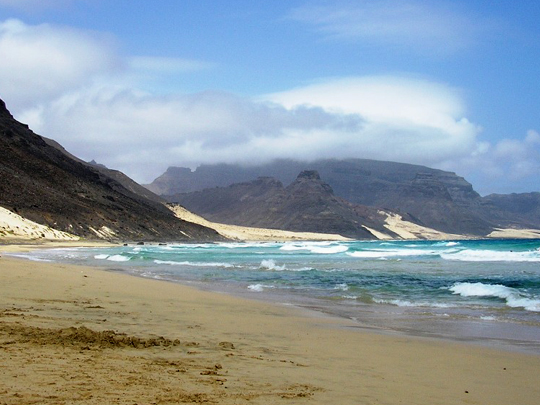
A dry, mountainous island that sat almost empty for centuries after its discovery in 1462 — until in 1838 the huge natural harbour at Porto Grande was turned into a coaling station for Atlantic steamships, briefly making it one of the busiest ports in the world, with the city of Mindelo growing up around the bay.
Mindelo is the country’s cultural capital: a pastel waterfront, 19th-century Portuguese streets and Creole houses that earned it the nickname “African Lisbon”, a scaled-down replica of Lisbon’s Torre de Belém now serving as a sea museum, the pink Palácio do Povo, and February’s Carnival, one of the most riotous in Africa; beyond the city lie Monte Verde’s island-wide views, the surf at São Pedro and the sheltered Baía das Gatas, whose August music festival fills the beach.
Mindelo is the cradle of morna, Cape Verde’s soulful national music, now on UNESCO’s heritage list — and the home of its queen, Cesária Évora, the Barefoot Diva who sang her way from these streets to a Grammy.
3 – Pico do Fogo
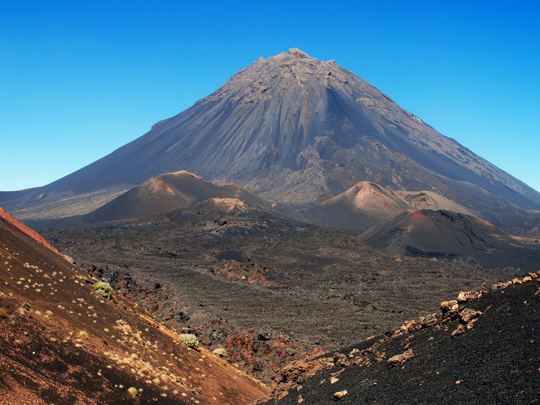
At 2,829m, Pico do Fogo — “Peak of Fire” — is Cape Verde’s highest point and an active volcano that essentially is the island of Fogo, a near-perfect cone rising straight out of the Atlantic; around 73,000 years ago a flank of the volcano collapsed and triggered one of the largest mega-tsunamis ever documented.
It roars back to life every few decades, most recently in 2014, when lava swallowed two villages; hardy travellers climb the black cinder cone from Chã das Caldeiras, a village of a few hundred people who live inside the volcano’s vast caldera at 1,700m — the highest settlement in the country, ringed by the sheer wall of the Bordeira.
Against all sense, the caldera’s people grow vines and coffee in the volcanic ash — producing Cape Verde’s only wine — and most are descended from a single exiled French count who settled here in the 1870s; they simply rebuild each time the lava comes.
4 – Cidade Velha
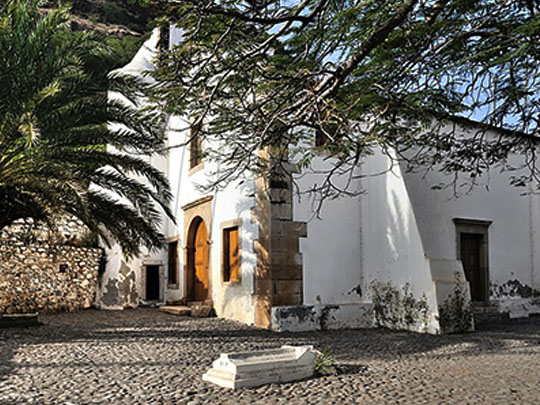
Ten kilometres west of Praia on Santiago, Cidade Velha was founded in 1462 as Ribeira Grande and is the first permanent European settlement anywhere in the tropics — a royal charter of 1466 gave it exclusive trading rights along the Guinea coast, making it a clearing house of the early Atlantic slave trade; UNESCO-listed in 2009.
The marble pillory of the early 1500s still stands in the square where enslaved people were auctioned; around it are the church of Nossa Senhora do Rosário of 1495, usually described as the oldest colonial church in the world, the ruined cathedral, and Rua Banana, said to be the first street the Portuguese laid out in the tropics — with Fort Real de São Filipe on the ridge above, built in the 1590s against the raiders who twice sacked the town, Francis Drake in 1585 and the French privateer Jacques Cassard in 1712.
It was in this valley, out of Portuguese and West African languages thrown together, that Cape Verdean Creole took shape — one of the oldest living creoles on Earth, and still the everyday language of every island and of the diaspora beyond them.
5 – Tarrafal
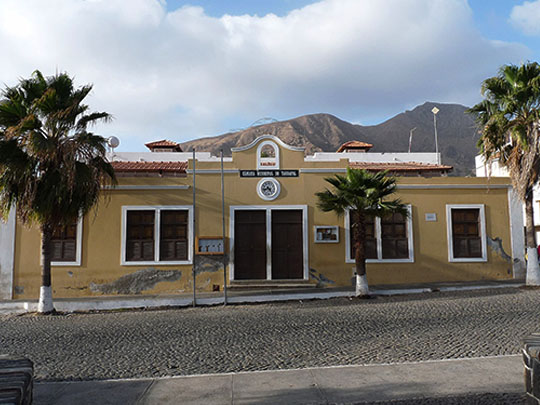
At Chão Bom on the north coast of Santiago stand the remains of the prison camp created by decree in 1936, early in Salazar’s Estado Novo, to hold political prisoners as far from Portugal as the empire allowed: republicans, socialists, anarchists, communists and veterans of the Spanish war, who gave it the name it is still known by — o campo da morte lenta, the camp of slow death.
The compound is open as the Museu da Resistência, with the cell blocks, the exercise ground and the concrete punishment cell the prisoners called the frigideira, the frying pan, alongside photographs, documents and testimony from the men held here.
The camp closed in 1954 after years of pressure, then reopened in the early 1960s for a different set of prisoners — nationalists from Angola, Guinea-Bissau and Cape Verde — and was emptied only days after the Carnation Revolution of April 1974 ended the dictatorship; somewhere between thirty and forty men died in it across the two periods.