

Capital: Yaoundé
Population: 30 million+
Language: English, French, (plus around 250 indigenous languages).

1 – Rhumsiki Valley (above)
Wikimedia Commons / CC-BY-SA-3.0 / GFDL
The Rhumsiki Valley, around a village high in the Mandara Mountains of Cameroon’s Far North near the Nigerian border, is ringed by a “lunar landscape” of rock needles, the eroded plugs of long-dead volcanoes, and the wider Mandara range holds the Diy-Gid-Biy dry-stone sites, which in 2025 became Cameroon’s first cultural World Heritage Site.
Hike among the spires, with Kapsiki Peak rising to about 1,224 m, past Kapsiki villages and terraced fields in hills where the Kapsiki once took refuge from Fulani and Wandala slave raiders.
Rhumsiki’s best-known figure is the “crab sorcerer”, a blacksmith-diviner who reads your future in the way a land crab moves sticks and pebbles inside a clay pot, a rare form of divination practised by the Kapsiki and Higi.
2 – Waza National Park

Waza National Park, on the flat Sahel savanna and seasonal floodplains of Cameroon’s Far North, south of Lake Chad, began as a hunting reserve in 1934, became a national park in 1968 and was made a UNESCO Biosphere Reserve in 1979.
In the dry season elephants, giraffes and antelope gather at shrinking waterholes, with ostriches and more than 300 bird species spread across some 1,700 km² of open plains.
Waza holds one of the last populations of the critically endangered Kordofan giraffe, a subspecies that has vanished from much of its old range across the Sahel.
3 – Korup National Park

Korup National Park, in Cameroon’s south-west on the Nigerian border, where it adjoins Nigeria’s Cross River National Park, has protected since 1986 what is reputedly one of Africa’s oldest and richest rainforests.
Explore jungle trails alive with forest elephants, chimpanzees and rare primates such as the drill and Preuss’s red colobus, along with more than 300 bird species and many plants found nowhere else.
Korup is a Pleistocene refuge, a pocket of forest that stayed lush while the dry spells of the Ice Ages shrank Africa’s rainforests, which helps explain its wealth of species.
4 – Dja Faunal Reserve

The Dja Faunal Reserve, in south-eastern Cameroon’s share of the Congo Basin, is one of the largest and best-protected rainforests in Africa, almost entirely ringed by a loop of the Dja River, and was about 90% undisturbed when UNESCO listed it in 1987.
Guided treks lead into the domain of western lowland gorillas, chimpanzees, mandrills and forest elephants, among 107 mammal species and more than 300 kinds of bird.
The Dja is home to the Baka, forest hunter-gatherers who may hunt inside the reserve using traditional methods, sharing the forest with rarities such as the drill and the white-collared mangabey.
5 – Mount Cameroon

Mount Cameroon, an active volcano rising straight from the Gulf of Guinea coast to about 4,040–4,095 m, is the highest peak in sub-Saharan western and central Africa and has the most frequent recorded eruptions of any West African volcano.
Climb it in two to three days from the town of Buea, passing from rainforest through grassland to a bare summit, along the route of a gruelling annual race to the top and back held since 1973.
The Carthaginian explorer Hanno described a fiery peak he called the “Chariot of the Gods” around 500 BC, possibly Mount Cameroon, and in 1922 its lava flowed all the way to the Atlantic.
6 – Foumban
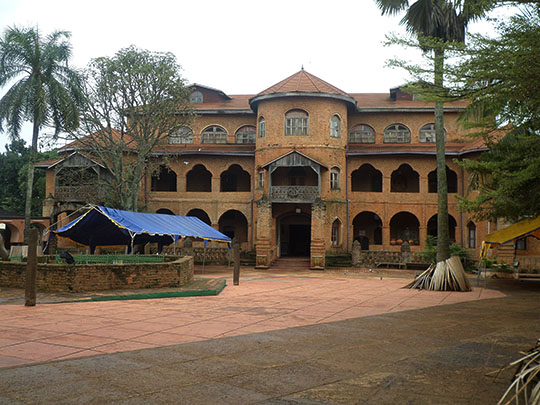

Foumban, in the highlands of the West Region, has been the capital of the Bamum kingdom since its founding by the Tikar prince Nchare Yen, traditionally dated to 1394, and its line of some 20 rulers makes it one of Africa’s longest-surviving royal dynasties.
The royal palace, begun in 1917 under Sultan Ibrahim Njoya, houses a palace museum, the Museum of the Bamoun Kings opened beside it in 2024, and the town’s quarter of bronze-casters, carvers and weavers has made Foumban a centre of Cameroonian crafts.
Around 1896 Njoya began inventing a script for the Bamum language, refining some 500 signs into fewer than 100 syllabic characters by about 1910, and used it to write a history of the kingdom and keep court records, while a survey of 1912 produced a Bamum map of his realm.
7 – Bimbia
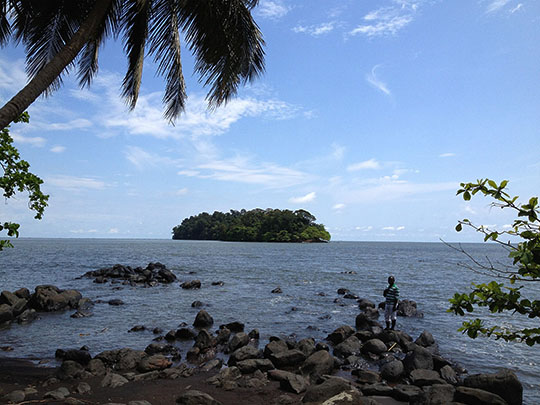
Bimbia, just over 10 km south-east of Limbe on the Atlantic coast, was a slave-trading port in the Bight of Biafra from the 17th to the 19th century, until its chiefs signed a treaty with Britain banning the trade in 1844, though smuggling went on for years.
The ruins stand in the Bimbia-Bonadikombo Community Forest, with stone pillars, chains and irons left where they lie, while slave ships moored off Nicholls Island, about 100 m offshore, and the Jamaican missionary Joseph Merrick founded Cameroon’s first Baptist mission here in 1844.
Researchers led by Lisa Aubrey have traced more than 166 slave ships that carried captives from the Cameroon coast, many of them people brought down from the Grassfields and further north.
8 – Douala
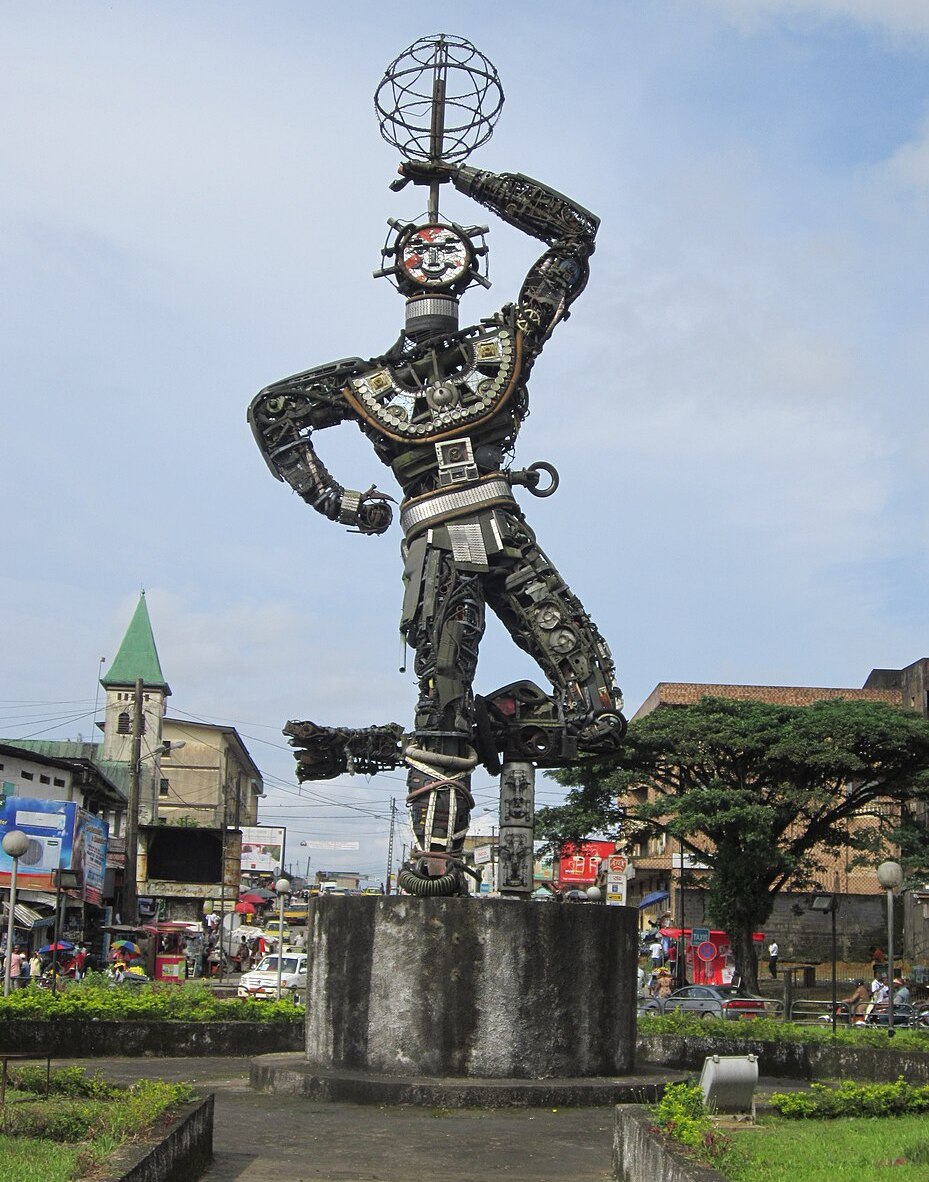

Douala, Cameroon’s largest city and main port on the Wouri estuary, is where Duala kings signed the treaties of July 1884 that placed the country under German protection, and where on 8 August 1914 the Germans hanged Rudolf Duala Manga Bell for resisting the seizure of Duala land.
Walk the Bonanjo quarter, home to La Pagode, the palace built in 1905 for King Auguste Manga Ndumbe Bell, and to public art commissioned since 1991 by Doual’art, in the city that Leclerc took for Free France without bloodshed on the night of 26–27 August 1940, with only a handful of men.
Portuguese sailors reached the Wouri around 1472 and named it Rio dos Camarões, the “River of Prawns”, which became Camarones in Spanish, Kamerun under the Germans and finally Cameroon, making it one of the few countries named after shellfish.