
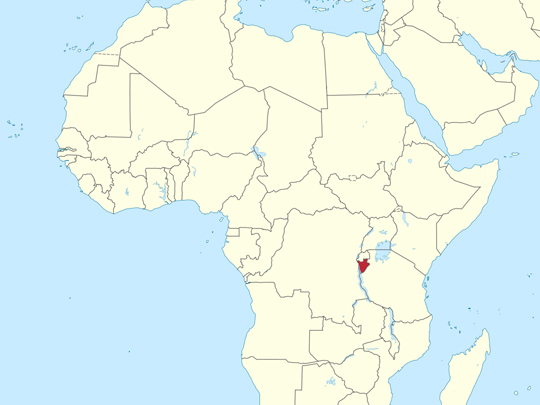
Capital: Gitega
Population: 14 million+
Language: Kirundi, French, English, and Swahili.
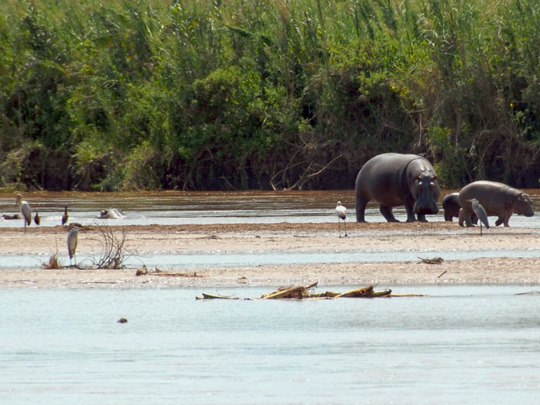
1 – Rusizi National Park (also above)
Rusizi National Park, first protected in 1980, covers the delta and lower plain of the Rusizi River where it flows into Lake Tanganyika, about 15 km north of Bujumbura, and has been a Ramsar wetland since 2002.
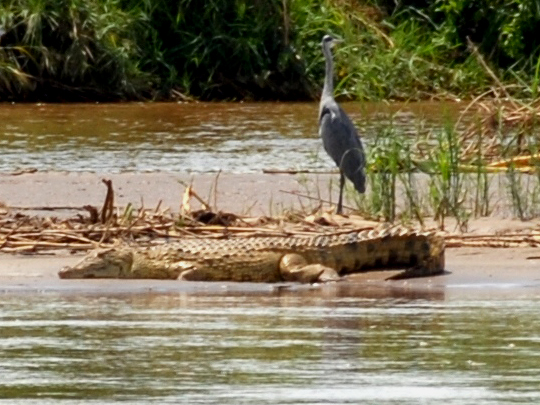
Cruise the reed-lined river by boat to see hippos and basking Nile crocodiles, with elusive sitatunga antelope slipping through the papyrus and large flocks of migratory waterbirds overhead.
Rusizi is the haunt of Gustave, a giant Nile crocodile rumoured to have killed as many as 300 people, though naturalist Patrice Faye put the figure nearer 60, and Faye’s failed attempt to trap him in a giant cage was filmed for Capturing the Killer Croc, while the 2007 horror film Primeval was partly inspired by him.
2 – Lake Tanganyika
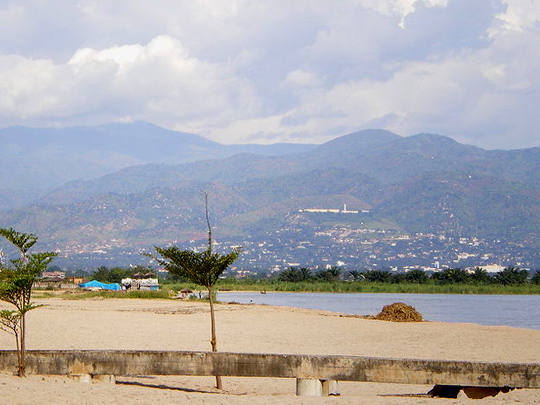
Lake Tanganyika, in the Rift Valley along Burundi’s western edge and shared with the DR Congo, Tanzania and Zambia, is the world’s longest freshwater lake at about 670 km, the second-deepest at about 1,470 m and one of the oldest, holding around a sixth of the world’s available surface fresh water.
From Bujumbura’s shore, swim off sandy beaches, watch fishing boats and sunsets over the water, or snorkel among some 240–250 species of cichlid fish, almost all of them found nowhere else.
In 1915–16 the Royal Navy hauled two small motor boats, Mimi and Toutou, overland through the Belgian Congo to fight Germany’s ships on the lake, an episode widely thought to have helped inspire C.S. Forester’s novel The African Queen, and the German steamer Graf von Götzen, scuttled in 1916, was later raised and returned to service as the ferry Liemba.
3 – Bujumbura
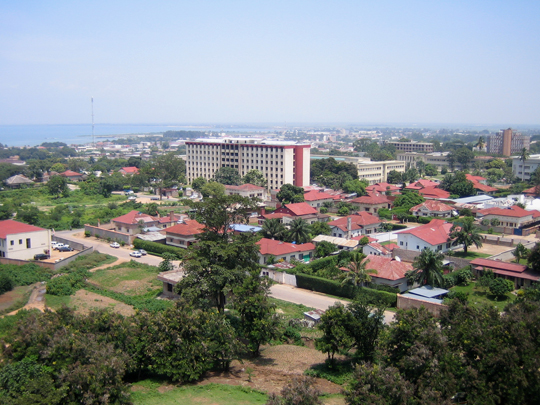
Bujumbura, Burundi’s largest city and main port on the north-eastern shore of Lake Tanganyika, grew from a German military post set up in 1899 at the village of Usumbura and took its present name at independence in 1962.
Wander the colonial-era downtown, cool off at the lake beaches just outside town, visit the open-air Musée Vivant with its reconstructed traditional homestead, and see the tomb of Prince Louis Rwagasore, the independence leader assassinated in the city in 1961.
Archbishop Michael Courtney of Nenagh, County Tipperary, the Pope’s ambassador to Burundi, worked from Bujumbura to advance the peace process during the civil war until he was killed in an ambush south of the city on 29 December 2003.
4 – Livingstone–Stanley Monument
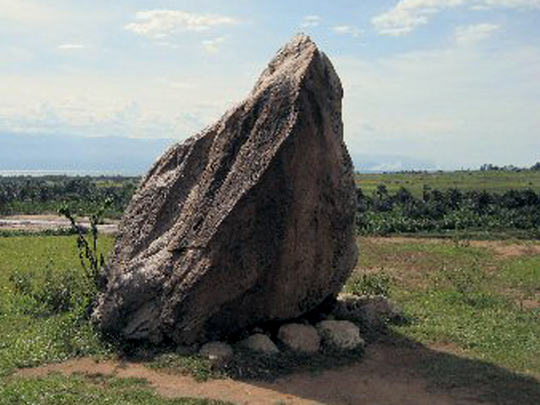
The Livingstone–Stanley Monument, an inscribed rock on a hilltop at Mugere about 12 km south of Bujumbura, marks where the explorers David Livingstone and Henry Morton Stanley camped for two nights, 25–27 November 1871.
The stone is carved with the date “25-XI-1871”, and a small visitor centre with historical panels stands beside it, above sweeping views of Lake Tanganyika.
This is not where Stanley greeted Livingstone with “Dr Livingstone, I presume?”, which happened at Ujiji a few weeks earlier, and here the two were exploring the north of the lake to see whether the Rusizi River flowed out of it, finding instead that it flows in.
5 – Gitega
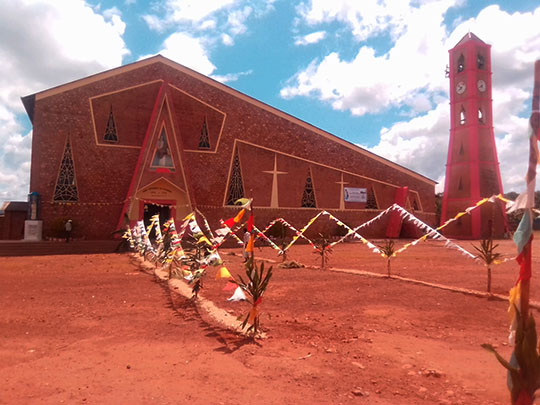
Gitega, in the central highlands about 65 km east of Bujumbura, was long a seat of Burundi’s kings, whose monarchy lasted until 1966, and became the country’s political capital under a 2019 law.
The National Museum of Gitega, founded in 1955, holds royal and ethnographic collections, and about 7 km north at Gishora stands a drum sanctuary founded in the 19th century by a Burundian king to mark a victory over the rebel chief Ntibirangwa.
The great karyenda drums of Gitega’s region were symbols of royal power, traditionally beaten by drummers from hereditary families, and Burundi’s ritual dance of the royal drum was added to UNESCO’s list of intangible cultural heritage in 2014.
6 – Gasumo
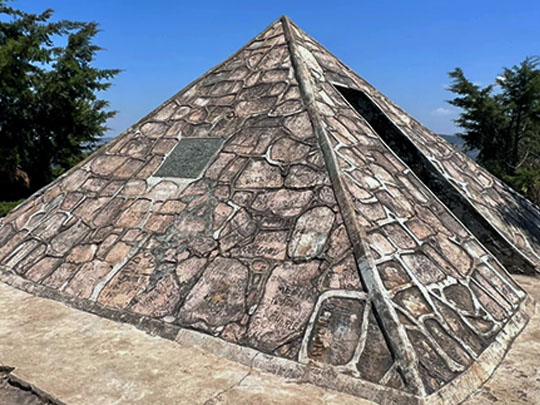
Gasumo, on the northern flank of Mount Gikizi at Rutovu, about 130 km by road from Bujumbura, is widely regarded as the southernmost source of the Nile, whose waters run through the Ruvyironza, Ruvubu and Kagera rivers into Lake Victoria and on to the Mediterranean, some 6,650 km in all.
A small stone pyramid on the ridge above is cut with the Latin words “Caput Nili Meridianissimum” (“the southernmost head of the Nile”), and below it the spring emerges as a modest trickle in the hills.
Burkhart Waldecker, a German who had left Hitler’s Germany for the Belgian Congo in 1935, pinpointed the spring in 1937, finding a source the 19th-century Nile explorers never reached, and later marked it with the stone pyramid.