
Wikimedia Commons / CC-BY-SA-3.0 / GFDL
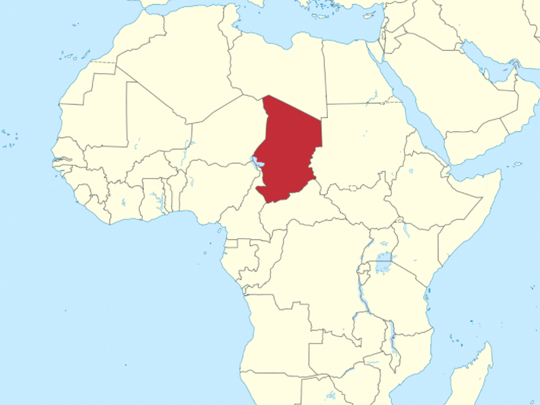
Capital: N’Djamena
Population: 21 million+
Language: Arabic/French (More than 120 languages are spoken)
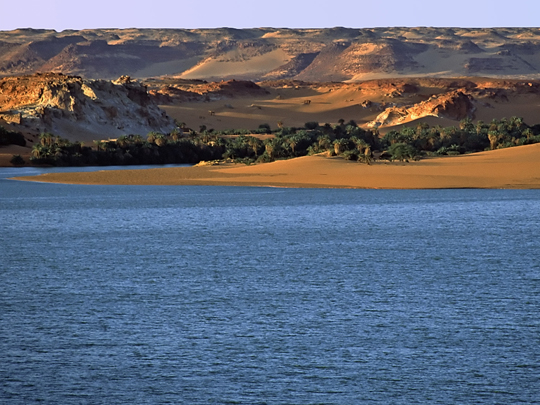
1 – Lake Yoa (also above)
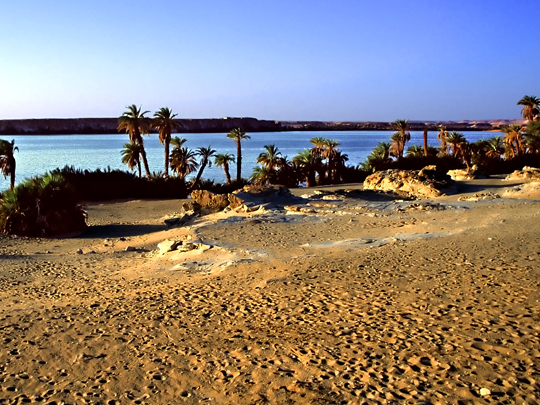
The best-known of the Lakes of Ounianga — 18 permanent lakes stranded in the heart of the Sahara in northeastern Chad, together the largest desert lake system on Earth and the country’s first UNESCO World Heritage Site (2012).
The undisturbed mud at the bottom of Lake Yoa is a famous “climate time capsule” that recorded the exact period, ~5,500 years ago, when the green Sahara flipped to desert.
Astonishingly, these lakes never dry up despite 50°C heat that evaporates metres of water a year — they’re kept topped up by ancient “fossil” groundwater, and the reed mats act as living lids that shade the surface and slow the loss.
2 – Ennedi Massif
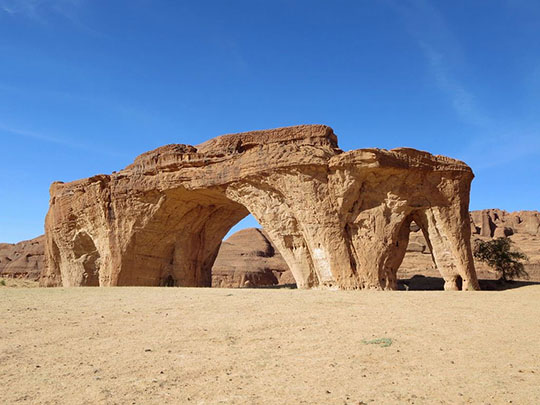
Out in the far northeast, Ennedi is a sandstone plateau roughly the size of Switzerland, worn by wind and water into canyons, towers, mushroom rocks and arches, and inscribed by UNESCO in 2016 as a mixed natural and cultural landscape — a category few sites anywhere qualify for.
Aloba Arch stands about 120m, among the largest natural arches on Earth; the Oyo labyrinth is a maze cut by vanished water; more than a thousand archaeological sites have been recorded across the massif, their painted and engraved walls layered one era over another; and at Guelta d’Archei a permanent pool sits at the foot of black cliffs where herders bring hundreds of camels down the canyon to drink.
That same pool holds a handful of West African crocodiles — the last of their kind for hundreds of miles, marooned when the desert closed around them — which means the camels come down every morning to drink alongside the crocodiles, and have done for thousands of years.
3 – Lake Chad
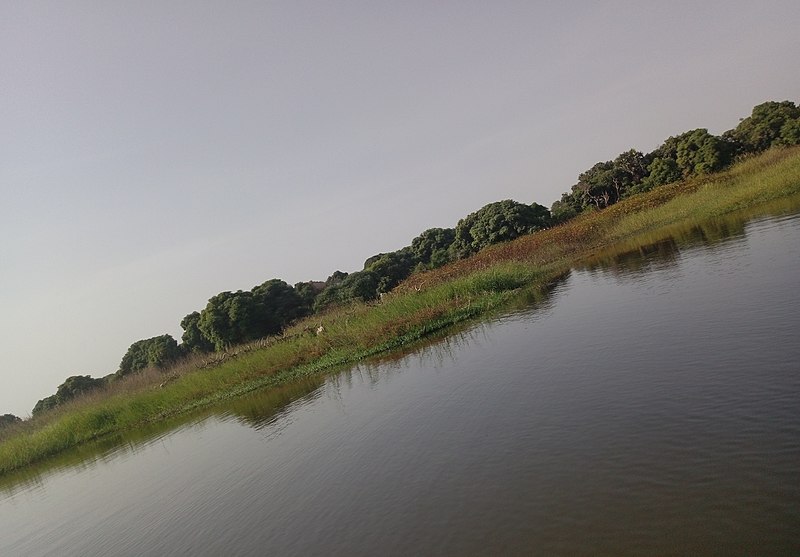
A vast, shallow lake in the Sahel where Chad meets Cameroon, Niger and Nigeria — the lake that gave the whole country its name (Chad means “lake”) and a lifeline for tens of millions of people across the region.
Its ever-shifting maze of reed-fringed channels, marshes and low islands is home to the Buduma, who fish and herd cattle from papyrus-reed boats, alongside hippos, crocodiles and clouds of migratory birds, from flamingos to cranes.
Hard as it is to believe, this was once the largest lake on Earth — around 7,000 years ago “Mega-Chad” spread across an area bigger than the Caspian Sea — though drought and irrigation have since shrunk it to a fraction of even its 1960s size.
4 – Zakouma National Park
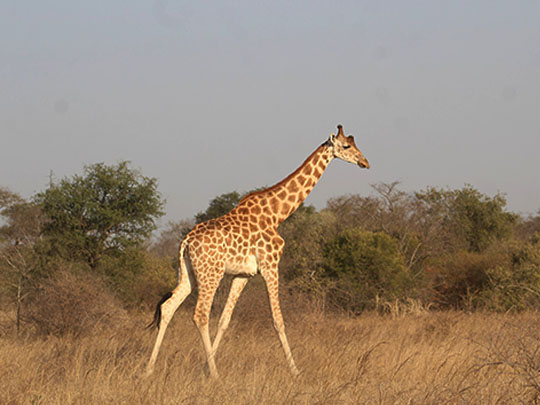

In the southeast between the Guéra and Salamat regions, Zakouma is Chad’s oldest national park, declared by decree in 1963 — some 3,000 km² of floodplain, acacia woodland, and open savanna that floods in the rains and shrinks to a handful of waterholes by spring.
The dry season is the season: buffalo move in herds a thousand strong, Kordofan giraffe browse the acacias, and lion, roan and tiang gather at the pans, while the bird numbers are among the best in the Sahel — crowned cranes, storks and quelea in clouds that darken the sky.
Zakouma is one of Africa’s great conservation recoveries: ivory poaching killed roughly nine in ten of its elephants through the 2000s, and in 2007 militia attacked the park headquarters for a seized ivory store and shot three rangers dead — but since the non-profit African Parks took over management in 2010 the survivors have stabilised, and calves are being born again.
5 – Tibesti Mountains
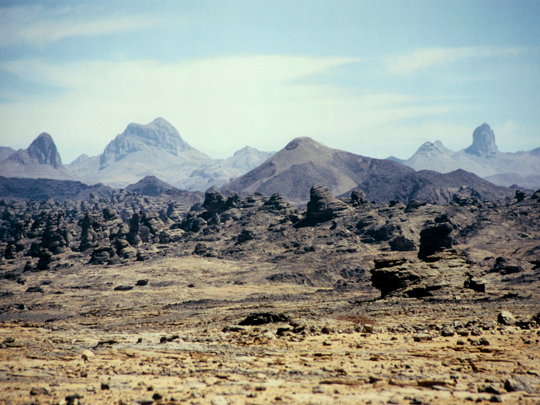
A colossal volcanic massif marooned in the deep Sahara of northern Chad, on the Libyan border — the highest mountain range in the desert and one of the most remote, least-explored places on Earth; its name means roughly “where the mountain people live.”
This is the homeland of the fiercely independent Toubou, a landscape of black lava fields, sandstone canyons and giant calderas — crowned by Emi Koussi, at around 3,415m the highest peak in the entire Sahara, and pocked by the Trou au Natron, a crater some 700m deep with a salt-white floor.
Scattered across these now-lifeless mountains are thousands of ancient rock engravings and paintings — of elephants, giraffes and cattle-herders — left up to 9,000 years ago, when the Sahara was green and full of life.