
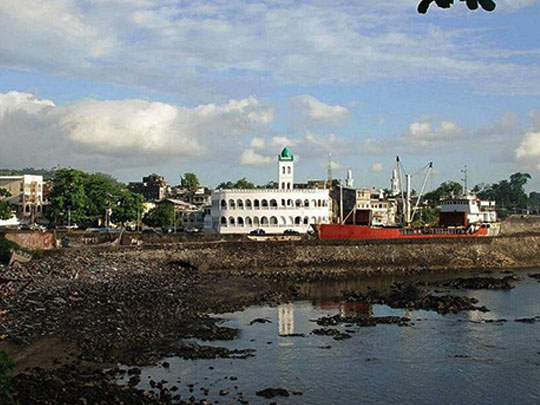
Sascha Grabow / CC-BY-SA-3.0 / GFDL
Capital: Moroni
Population: 900,000+
Language: Comorian (Shikomor), French and Arabic
1 – Moroni (also above)
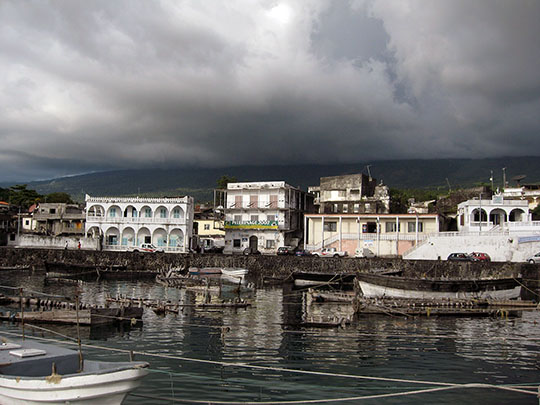

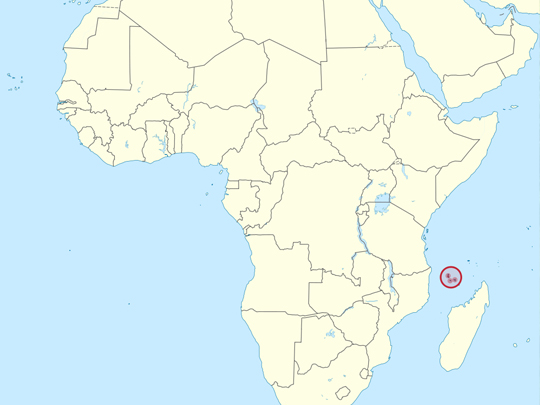
The southeasternmost island of the Comoros archipelago, in the Mozambique Channel northwest of Madagascar — but the one island that voted to stay French when the others became independent in 1975, and today a French overseas department whose status the Comoros still disputes.
Its crowning glory is one of the largest and most beautiful coral lagoons in the world, ringed by barrier reef; snorkel and dive among turtles and dolphins, watch humpback whales calve offshore in season, and hike the peak of Mount Choungui for the view.
Because it stayed French, this Indian Ocean island is now a full part of France — and of the European Union — using the euro thousands of kilometres from Europe, the only slice of the Comoros archipelago that’s European soil.
2 – Moheli Marine Park
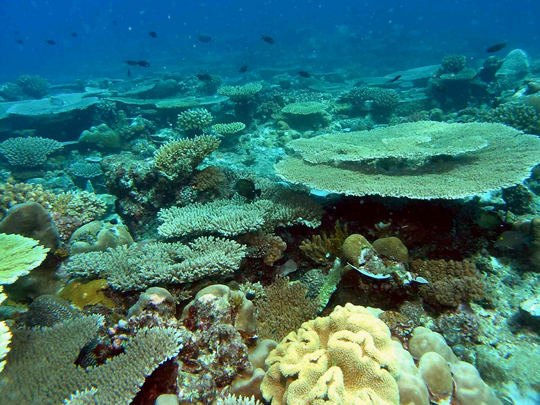
Set around Mohéli, the smallest of the Comoros islands, this was the country’s very first protected area (2001) — a pioneering, community-run marine park of coral reefs, mangroves, seagrass beds and a scatter of uninhabited islets.
Its warm, shallow waters are a nursery of the Indian Ocean — one of the region’s most important green-turtle nesting sites, where at Itsamia turtles haul ashore to lay almost every night of the year, with dugongs grazing the seagrass and whales passing through between July and October.
Mohéli and neighbouring Anjouan are the last home of Livingstone’s fruit bat, a giant black bat with a wingspan of up to 1.4 metres — one of the largest bats on Earth.
3 – Karthala Volcano

The Comoros’ highest point at 2,361m and one of the world’s most active volcanoes — a vast shield that forms the entire southern half of Grande Comore and looms directly over the capital, Moroni, having erupted more than 20 times since the 19th century.
Climbing it is one of the Indian Ocean’s great treks: a two-day slog from near Moroni that rises through rainforest and heath to bare lava at the rim, where fumaroles still steam and lava flows have more than once reached the sea.
Its summit crater is astonishing — an elongated caldera roughly 3 by 4 km across, ranking among the largest active volcanic craters on Earth, and a lava lake and even a crater lake have come and gone inside it.
4 – Lake Dzialandzé
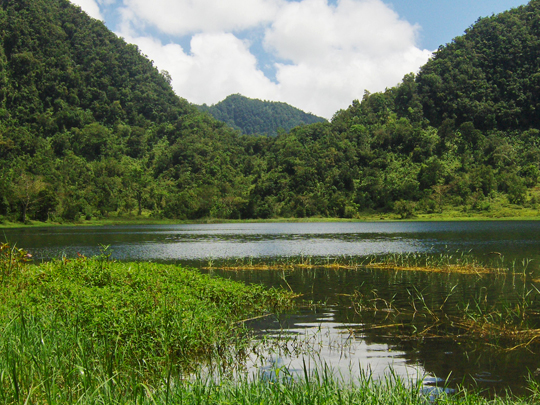
A small, serene crater lake cradled at around 900m on the flank of Mount Ntringui — the highest peak of Anjouan, the “pearl of the Comoros” — and the island’s largest lake, at the heart of a national park created in 2010.
Reaching it means a couple of hours’ hike up through some of the last surviving mountain forest on this heavily cleared island — a green, birdsong-filled refuge, with ylang-ylang and spice plantations cloaking the lower slopes.
Those forests are the only home of the Anjouan scops owl — a small owl that was feared extinct for most of the 20th century, until it was rediscovered here in 1992.
5 – Mutsamudu
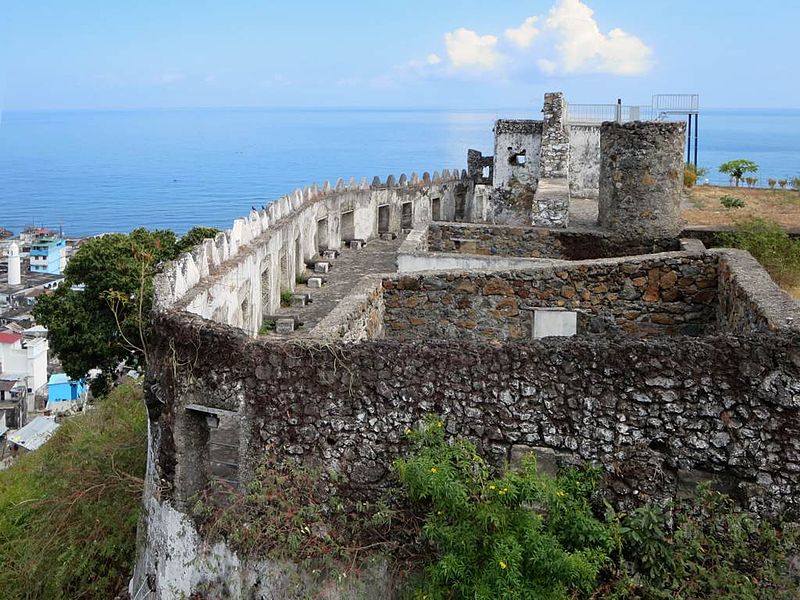
The historic capital of Anjouan and one of the oldest towns in the Comoros — a Swahili port on the northwest coast, founded in the 15th century, that grew rich as a trading hub linking the Swahili coast, Arabia, Madagascar and beyond.
Wander its medina, a warren of narrow coral-stone lanes, carved Swahili houses, old mosques and the sultans’ Ujumbe palace, all watched over by an 18th-century citadel on the hill above the harbour; the market spills over with cloves, vanilla and ylang-ylang.
That clifftop citadel was raised in the 1780s to guard the town against slave-raiding pirates who sailed up from Madagascar to plunder the islands — a threat so severe it emptied whole villages.
6 – Cœlacanth National Park
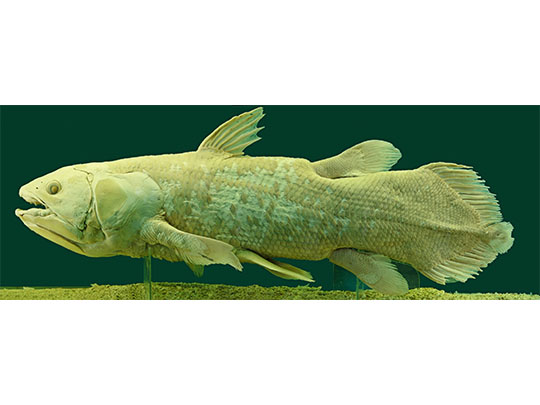
Declared in 2016 along the western shore of Grande Comore, this marine park protects the steep volcanic slopes and submerged caves that shelter the coelacanth — a lobe-finned fish whose lineage runs back some 400 million years, and which science had written off as extinct for tens of millions of them.
There is very little to see, and that is rather the point: the fish spend daylight resting in caves 150 to 250 metres down and rise to hunt at night, so almost no one has met one alive. What you get instead is the coast that produced them — dark volcanic reefs and drop-offs for divers, and villages of fishermen who for generations hooked them by accident on deep handlines set for oilfish.
Rediscovered off South Africa in 1938, the coelacanth’s second specimen was landed off Anjouan in December 1952, which put these islands at the centre of one of the great stories in zoology — though Comorian fishermen had known the fish all along and called it gombessa, and the national football team is nicknamed after it.