
Wikimedia Commons / CC-BY-SA-3.0 / GFDL
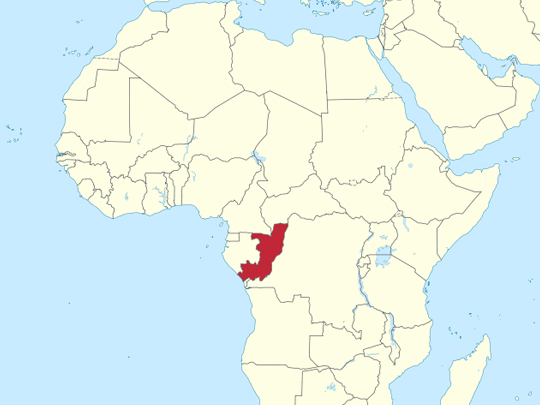
Capital: Brazzaville
Population: 6.5 million+
Language: French, Kituba and Lingala
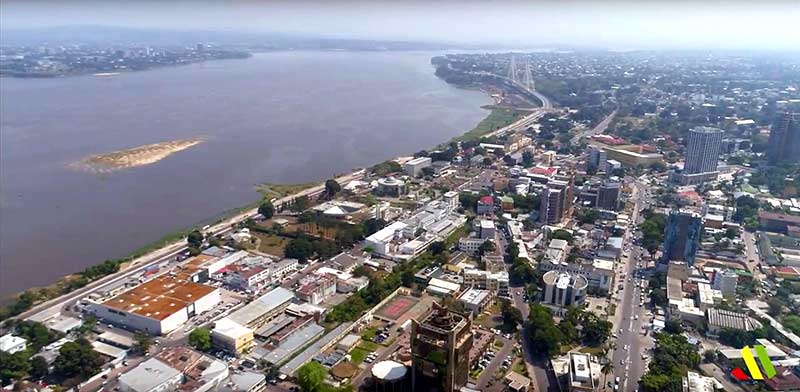
1 – Brazzaville (above)
Capital of the Republic of the Congo, founded in 1880 by the explorer Pierre Savorgnan de Brazza (who gave it his name) on the north bank of the mighty Congo River; it later became the capital of all French Equatorial Africa and, remarkably, of Free France during the Second World War — and it faces Kinshasa across the water, the only two national capitals in the world on opposite banks of the same river.
Landmarks include the striking green-tiled Basilica of Sainte-Anne, the riverside mausoleum of the city’s founder, and the Poto-Poto quarter with its celebrated school of painting, all set to the soundtrack of Congolese rumba drifting from the bars.
Brazzaville is the spiritual home of “La Sape” — a cult of impeccably dressed dandies, the Sapeurs, who turn out in dazzling designer suits and treat elegant dressing as a joyful art form.
2 – Odzala National Park
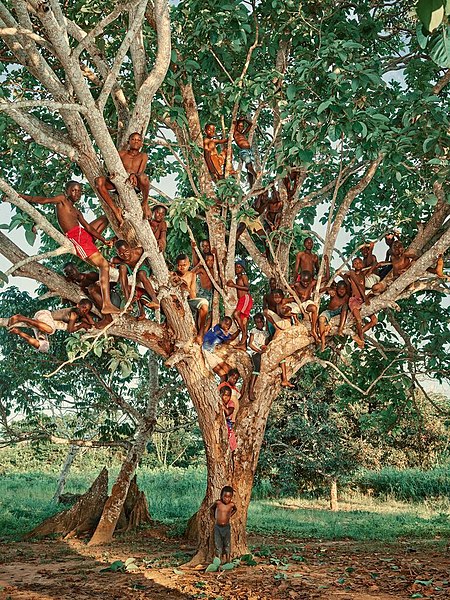
In Congo’s remote northwest on the Gabon border, Odzala-Kokoua is one of Africa’s oldest national parks (established 1935) — a vast, near-pristine expanse of the Congo Basin, the world’s second-largest rainforest, and a UNESCO World Heritage Site.
It holds the highest density of gorillas anywhere in Africa — thousands of western lowland gorillas you can track on foot — along with forest elephants, buffalo, bongo and giant forest hog, which emerge from the trees to feed at the park’s “bais,” mineral-rich forest clearings.
Those same clearings draw dazzling flocks of endangered African grey parrots, which gather in their hundreds to feed on the mineral-rich earth — a swirl of grey and scarlet against the green.
3 – Pointe-Noire Beach

The Republic of the Congo’s second city and main Atlantic port — an oil-rich boomtown built largely from scratch in the 1920s as the ocean terminus of the Congo-Ocean Railway, which hauls goods across the country to Brazzaville.
ts big draw is the Côte Sauvage, a long sweep of wild, surf-pounded Atlantic beach on the edge of town, with the working port and its oil terminals at the other end of the city and quieter sand at Pointe Indienne up the coast.
The city takes its name — “Black Point” — from Portuguese sailors who, back in 1484, spotted a distinctive outcrop of black rocks on this headland and used it as a coastal landmark.
4 – Dolisie
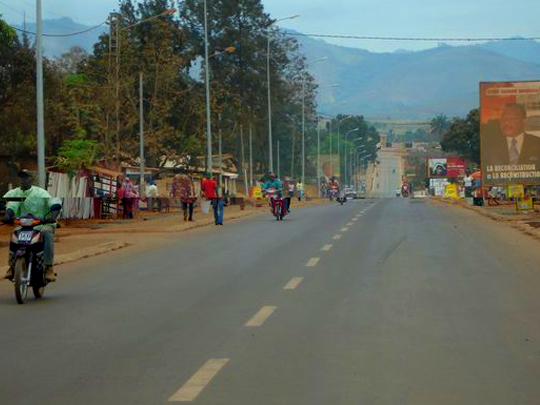
The Republic of the Congo’s third city and capital of the lush Niari region in the southwest, born in 1934 as a station on the Congo-Ocean Railway and named after Albert Dolisie, a lieutenant of the country’s founding explorer Pierre Savorgnan de Brazza — though for sixteen years after 1975 it dropped the colonial name and was known as Loubomo.
A relaxed railway town on the edge of the rainforest, it centres on its handsome ochre 1920s station and busy market; just outside stands L’Arbre de Brazza, a giant baobab, with the wild Mayombe Forest — home to gorillas and forest elephants — rising nearby.
The railway that made this town was built between 1921 and 1934 by conscripted labour, men marched in from as far away as southern Chad and what is now the Central African Republic, and somewhere between fifteen and twenty thousand of them died on it, most in the Mayombe hills to the west; André Gide called it a terrible consumer of human lives after travelling the route in 1926, and the scandal he and Albert Londres raised helped push France towards outlawing forced labour in its colonies.
5 – Diosso and Loango
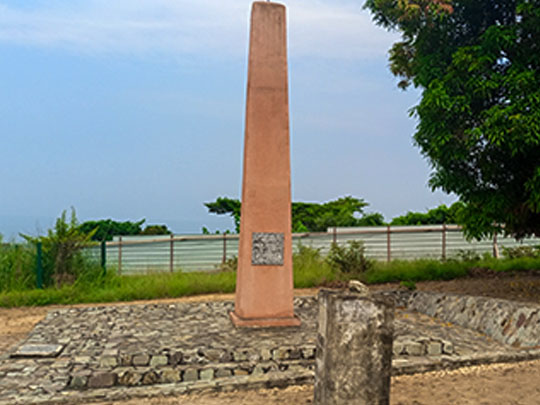

Twenty-five kilometres north of Pointe-Noire, Diosso was the capital of the Kingdom of Loango — a Vili state established before 1500 that ran the coast from southern Gabon to Cabinda and drew ivory, copper and cloth from trade routes reaching inland as far as Malebo Pool.
The Mâ-Loango museum occupies the palace of Moe Poaty III, who reigned from 1931 until 1975, with the kings’ mausoleum close by and the red, deeply eroded cliffs of the Diosso Gorge cutting into the hills behind the village.
Down on the shore, Loango Bay was one of the largest embarkation points on the whole Atlantic coast: over roughly two centuries hundreds of thousands of people were shipped from this beach to the Americas, many of them brought from deep in the interior — and almost nothing of the port survives, which is why Congo has been pressing since 2008 to have the site recognised by UNESCO.
6 – Conkouati-Douli National Park
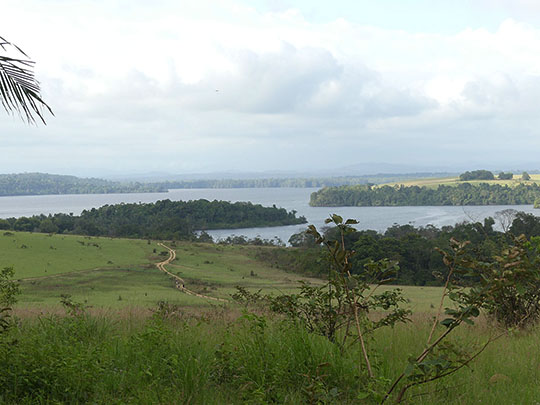

On the Atlantic coast near the Gabon border, Conkouati-Douli was created in 1999 and extended far out to sea in 2023 — the most varied protected area in the country, taking in about a third of Congo’s coastline along with lagoon, mangrove, savanna and the forested slopes of the Mayombe behind.
Leatherback and olive ridley turtles come ashore to nest on beaches that rank among the most important in Africa; manatees and hippos use the lagoon; mandrills, buffalo and chimpanzees hold the forest; and the park runs straight on across the border into Gabon’s Mayumba National Park with nothing to mark the change.
On islands in the lagoon, the sanctuary run by HELP Congo has spent more than thirty years returning chimpanzees seized from the illegal trade to the wild — more than half of some 110 rescued animals have been released into the forest here, making it one of the longest-running experiments of its kind anywhere.