
Wikimedia Commons / CC-BY-SA-3.0 / GFDL
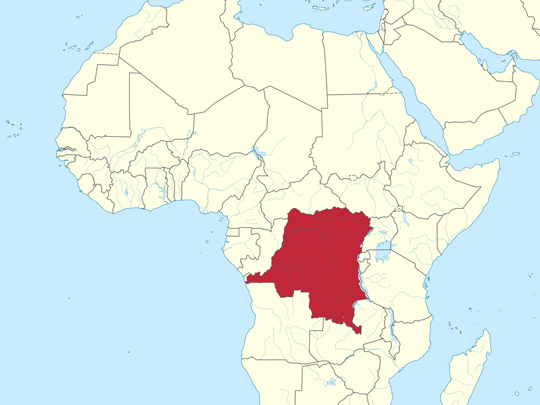
Capital: Kinshasa
Population: 110 million+
Language: French, Lingala, Kikongo, Swahili, Tshiluba.
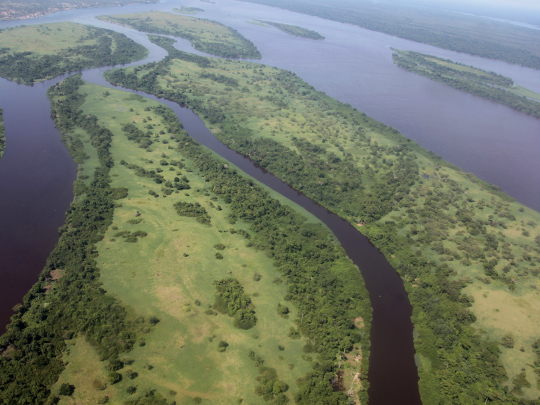
1 – Congo River (also above)
The Congo River, the deepest river on Earth and second only to the Amazon in the volume of water it pours into the sea, drains the world’s second-largest tropical rainforest and is the only major river to cross the equator twice.
Riverboats work its middle reaches, Kinshasa sprawls along the broad Malebo Pool, and in 1890 Joseph Conrad, on the journey upriver behind Heart of Darkness, shared a room with the Irishman Roger Casement, whose 1904 report exposed atrocities in King Leopold’s Congo.
Scientists were drawn to the Congo’s depths by pale, blind cichlids found floating dead or dying, killed by the bends as powerful upwellings swept them up from the deep, and in 2008 sonar measured the riverbed at least 220 m down.
2 – Virunga National Park
Virunga National Park, in the far east of the DRC, was founded in 1925 as Africa’s first national park, has the highest diversity of vertebrates of any park in Africa, and was made a UNESCO World Heritage Site in 1979, stretching from the Rwenzori’s peaks to active volcanoes, rainforest and savanna.
Its greatest treasure is the mountain gorilla, tracked on foot through misty forest, with Virunga home to about a third of the world’s just over 1,000 wild mountain gorillas, alongside chimpanzees, okapi and hippos.
Guarding Virunga is among the most dangerous jobs in conservation, with more than 175 rangers killed since 1996, a struggle told in the Oscar-nominated 2014 documentary Virunga.
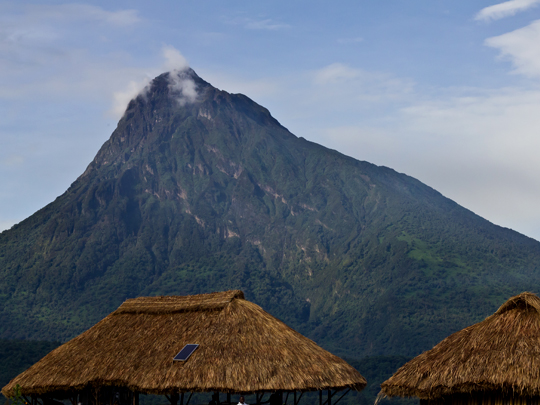
3 – Mount Nyiragongo
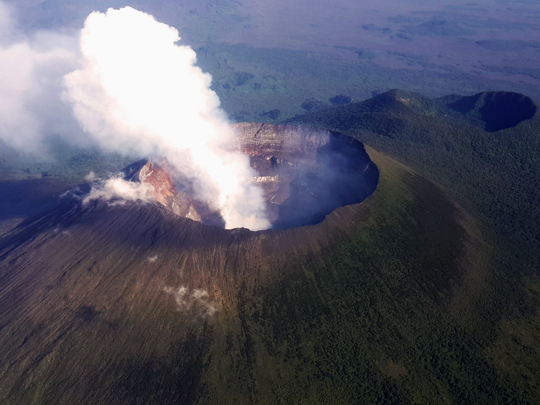
Mount Nyiragongo, an active volcano about 3,470 m high inside Virunga National Park, towers over the lakeside city of Goma and, with its neighbour Nyamulagira, is one of the two most active volcanoes in Africa, sending lava into the region below in 1977, 2002 and 2021.
Trekkers climb it in a day and camp on the crater rim, looking down on one of the largest lava lakes on Earth, a churning cauldron of molten rock that comes and goes over the years.
Nyiragongo’s lava is among the most fluid on the planet, and in 1977 it raced downhill at up to 60 km/h, by some estimates nearly 100, among the fastest lava flows ever recorded.
4 – Garamba National Park
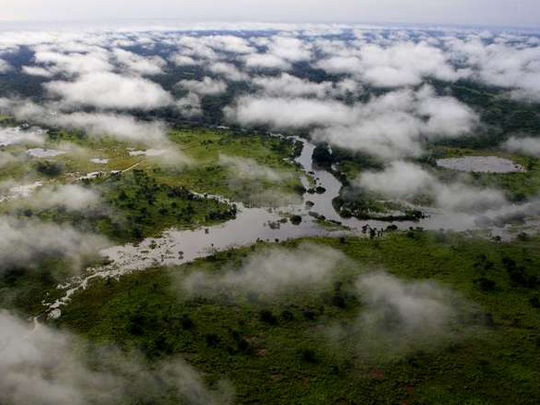
Garamba National Park, in the DRC’s remote far north-east on the South Sudan border, was established in 1938 and made a UNESCO World Heritage Site in 1980, a sweep of savanna, gallery forest and papyrus swamp unlike the rainforest that covers much of the country.
Its grasslands shelter elephants, hippos, buffalo and lions, and the DRC’s last wild giraffes, the Kordofan subspecies, listed by the IUCN as critically endangered.
Garamba was inscribed largely for the last wild northern white rhinos, but none has been seen alive in the wild since 2006, and in 2023 African Parks introduced southern white rhinos from South Africa.
5 – Boyoma Falls
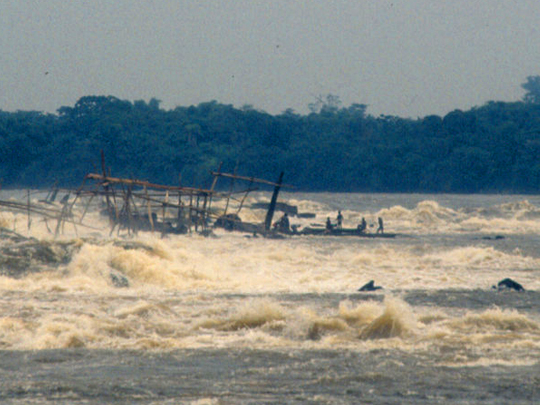
Boyoma Falls, formerly Stanley Falls, is a chain of seven cataracts strung along about 100 km of the Lualaba between Ubundu and Kisangani, marking where the Lualaba becomes the Congo River.
None of the drops is tall, but together they carry an estimated average of around 17,000 m³ of water a second, about seven times Niagara’s, and they are often ranked among the world’s largest waterfalls by volume.
The Wagenia fishermen of Boyoma wedge wooden poles into the rock, lash them into scaffolds across the rapids and lower cone-shaped basket traps into the water, a technique handed down for generations.
6 – Lake Tanganyika
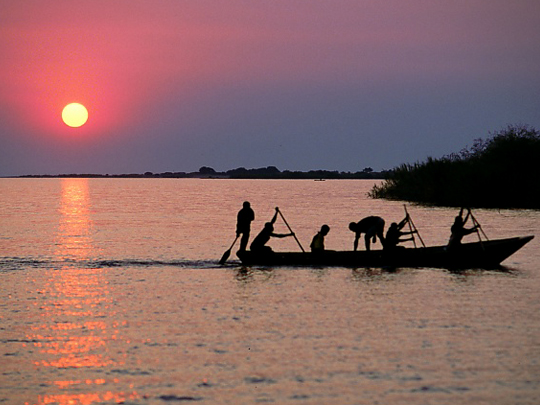
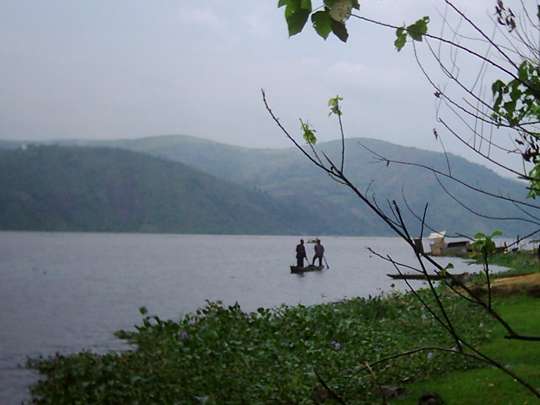
Lake Tanganyika, forming much of the DRC’s eastern border, is the world’s longest freshwater lake at about 670 km and the second-deepest at about 1,470 m, and is thought to be roughly 9–12 million years old.
From Congolese shore towns such as Uvira and Kalemie the lake stretches away like an inland sea, and after dark fishing boats light lamps to draw two small endemic sardines to the surface.
Kalemie, then called Albertville, was the base for Irish UN troops in 1960, and on 8 November that year an 11-man Irish patrol was ambushed by Baluba militia near Niemba, inland from the town, killing nine soldiers, the Defence Forces’ heaviest loss on UN duty.
7 – Kinshasa
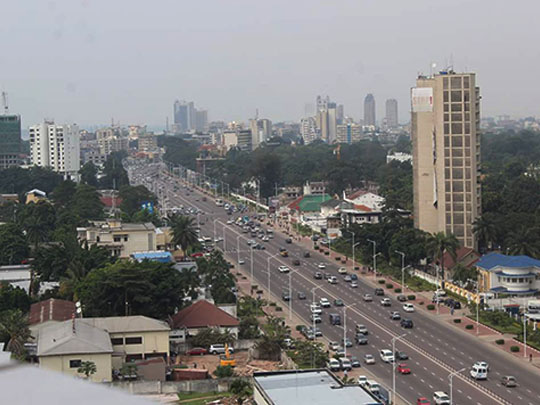
Kinshasa was founded by Henry Morton Stanley in 1881 as Léopoldville, after King Leopold II of Belgium, who ruled the Congo as his personal possession from 1885 to 1908, was renamed by Mobutu in 1966 after an older village on the site, and has grown past 15 million people, the world’s most populous French-speaking city.
The Académie des Beaux-Arts, founded in 1943, and the National Museum, opened in 2019, anchor the cultural quarter, while the real draw is Congolese rumba, which grew up in the city’s bars and was added to UNESCO’s heritage list in 2021.
In the early hours of 30 October 1974 Muhammad Ali knocked out George Foreman in the eighth round before about 60,000 people at Kinshasa’s Stade du 20 Mai, in a fight promoted by Don King and paid for by Mobutu’s government, as the crowd chanted “Ali, bomaye”, Lingala for “Ali, kill him”.
8 – Lubumbashi
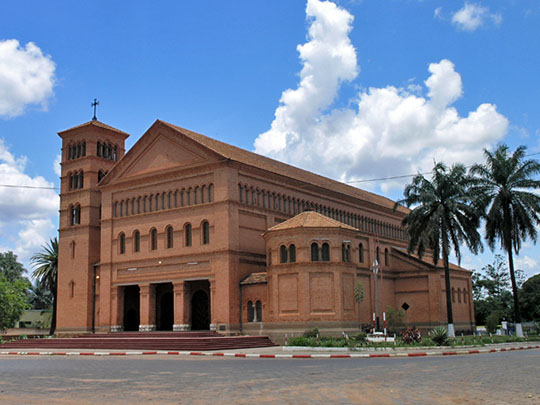
Lubumbashi, founded in 1910 as Élisabethville, is the DRC’s mining capital and was the capital of Moïse Tshombe’s breakaway State of Katanga (1960–63), to which the deposed prime minister Patrice Lumumba was flown and killed in January 1961.
The city keeps a low-rise colonial grid, the National Museum of Lubumbashi and a cathedral dating from 1920, while to the north-west at Jadotville (Likasi), Irish UN troops of A Company, 35th Battalion, held out for five days in September 1961 without losing a man.
At Shinkolobwe, about 145 km north-west of Lubumbashi, lay uranium ore of up to 65%, and in 1940 the Belgian mining director Edgar Sengier shipped about 1,200 tons of it to Staten Island to keep it from Germany, ore that supplied most of the uranium for the Manhattan Project.
9 – Salonga National Park
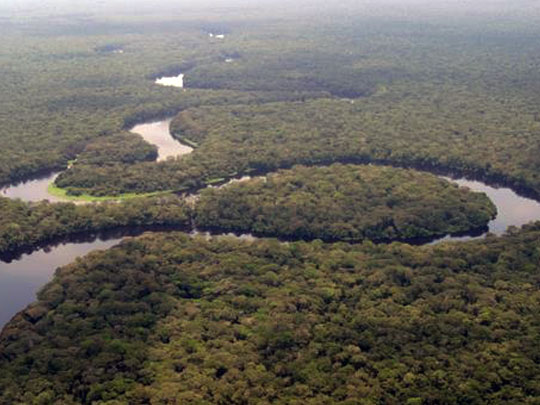
Salonga National Park, deep in the central Congo Basin, is Africa’s largest tropical rainforest reserve, a UNESCO World Heritage Site since 1984 that can mostly be reached only by river.
Its forests hold bonobos, forest elephants, slender-snouted crocodiles and the Congo peacock, which James Chapin first knew from a single strange feather found in 1913, until in 1936 he matched it to two mislabelled stuffed birds in a Belgian museum.
Bonobos live in the wild only in the DRC and share about 98.7% of our DNA, as chimpanzees do, but bonobo groups are led by females, settle quarrels with sex rather than violence and almost never kill one of their own.