
Wikimedia Commons / CC-BY-SA-3.0 / GFDL
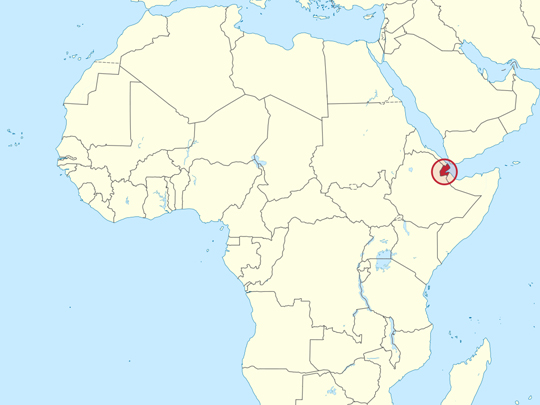
Capital: Djibouti City
Population: 1 million+
Language: Arabic/French/Somali/Afar
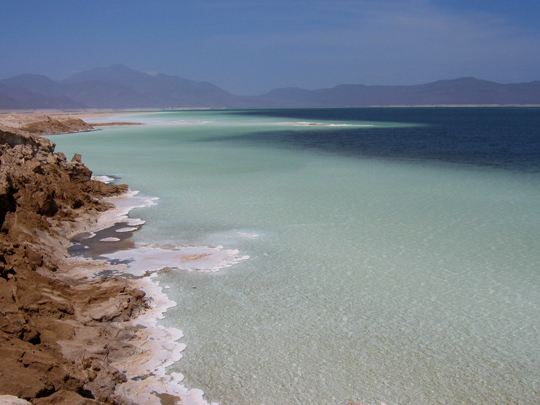
1 – Lake Assal (above)
At 155m below sea level, Lake Assal is the lowest point in Africa — and the third-lowest exposed spot on the whole planet — a blinding-white salt lake ringed by black lava and dormant volcanoes in Djibouti’s volcanic heart, about two hours west of the capital.
One of the saltiest bodies of water on Earth, roughly ten times saltier than the sea and so dense you float without trying; for centuries the Afar people have harvested its “white gold” and hauled it by camel caravan up to the Ethiopian highlands, and the drive out passes lava fields and the brooding bay of the Ghoubbet.
The lake sits in the Afar Depression, one of the only places on land where three of the planet’s tectonic plates are slowly tearing apart — a rift so active that geologists expect the sea to break in one day and split the Horn of Africa off as a new ocean is born.
2 – Khor Ambado
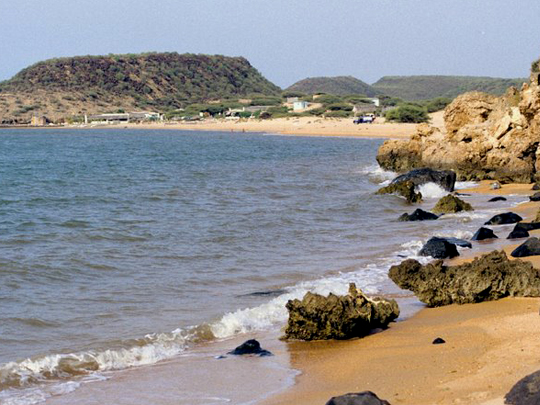
A beautiful, undeveloped beach on the Gulf of Tadjoura, a rough 4×4 ride from Djibouti City — a curve of pale sand hemmed in by black volcanic rock, and one of the capital’s favourite weekend escapes from the heat.
A coral reef drops away just metres offshore, so you can wade straight in from the sand and snorkel among rays, octopus and clouds of tropical fish, the water often crystal-clear inside the sheltered bay.
Locals call it “French Beach,” after the French troops who picnic here — for tiny Djibouti, thanks to its position guarding the gateway to the Red Sea, hosts one of the densest clusters of foreign military bases on Earth, from France and the United States to China and Japan.
3 – Port of Tadjoura
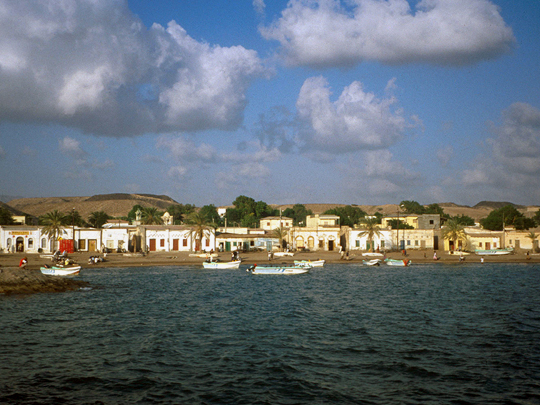
One of the oldest towns on the East African coast — a whitewashed port on the Gulf of Tadjoura, which takes its name — that was the capital of an Afar sultanate for centuries and, remarkably, still has a sultan to this day; for centuries this was the port where great camel caravans — laden with salt, coffee and ivory carried down from the Ethiopian highlands — met the dhows that shipped their cargo across the Red Sea to Arabia.
Nicknamed “La Ville Blanche,” the White City, for its gleaming whitewashed houses and its seven old mosques, it’s a place for slow waterfront strolls at dusk; the green Goda Mountains rise behind it. Its Korijib mosque is listed in some sources as possibly dating to the 7th century (c. 630–640 CE), which would make it one of the oldest mosques in Africa.
Each winter the Gulf of Tadjoura becomes one of the most reliable places on the planet to swim with whale sharks — the largest fish in the ocean — as seasonal plankton blooms draw these gentle giants right up to the surface.
4 – Lake Abbe
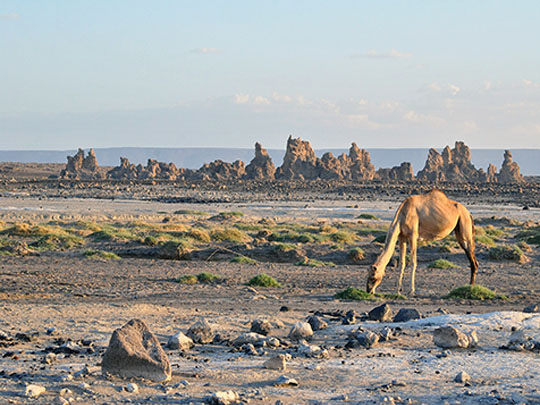

On the remote Djibouti–Ethiopia border, deep in the Afar Depression, Lake Abbe is a shrinking salt lake ringed by one of the most otherworldly landscapes on Earth — a lunar plain of white flats studded with towering natural chimneys, reached only by a long 4×4 haul across the desert.
Hundreds of limestone chimneys, some up to 50m tall, rise from the salt flats and vent steam from the hot springs that built them; the scene is at its most magical at dawn and dusk, when pink flamingos gather on the alkaline shallows and Afar herders drive their goats through the mist.
This bleak lake is where one of Ethiopia’s great rivers comes to die — the Awash flows hundreds of kilometres down from the highlands only to end here, with no outlet to the sea, swallowed by the desert heat and salt.
5 – Djibouti City
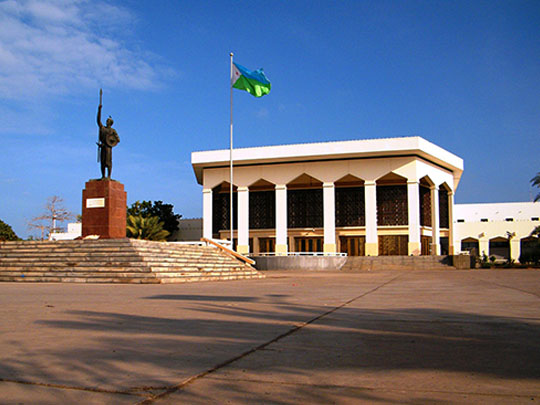
Set on a peninsula at the mouth of the Gulf of Tadjoura, the capital was founded by the French in 1888 and took over as capital of French Somaliland in 1892, when the administration crossed the water from its first foothold at Obock; it stayed French until 27 June 1977, making Djibouti the last territory on mainland Africa to leave the French empire.
The old European quarter still has its arcaded streets around Place Menelik, with the white Hamoudi Mosque above the lanes of the African quarter, the covered Marché Central full of frankincense and khat, and the cranes of one of the busiest ports in the Red Sea working away behind it all.
This city exists because of a railway: the French began a line to Addis Ababa in 1897 and completed it in 1917, giving landlocked Ethiopia its road to the sea — and when the old line finally failed, a Chinese-built electric railway replaced it in 2017, a century on and along much the same route, carrying well over 90% of the trade of a country of 130 million people.