

MaxPixel / Wikimedia Commons / CC-BY-SA-3.0 / GFDL
Capital: Bogotá
Population: 53 million+
Language: Spanish (65 indigenous languages, 2 creoles and Romani)
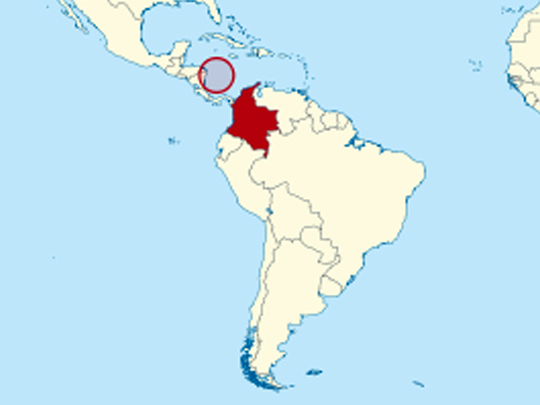
1 – Cartagena (also above)
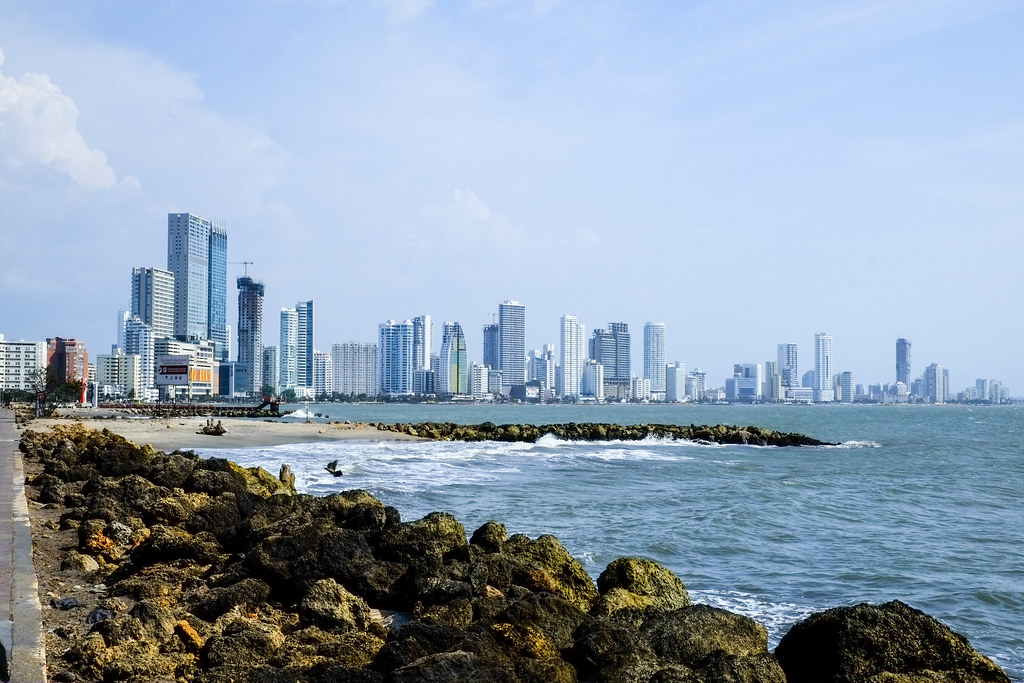
Cartagena, on Colombia’s Caribbean coast, is a sun-baked maze of cobbled lanes, flower-draped balconies and colourful churches inside about 11 km of stone walls, and its walled old town and fortifications have been a UNESCO World Heritage Site since 1984.
Cartagena’s walls and the great Castillo San Felipe de Barajas guarded one of Spain’s richest ports, also one of the largest slave markets in the Americas, a history that shaped the city’s Afro-Caribbean culture and the atmosphere of Gabriel García Márquez’s novels.
In 1741, a huge British fleet under Admiral Edward Vernon besieged Cartagena, only to be beaten off by the Spanish commander Blas de Lezo, who had lost an eye, a leg and the use of an arm, and Britain had already struck medals celebrating a victory that never came.
2 – Tayrona National Natural Park
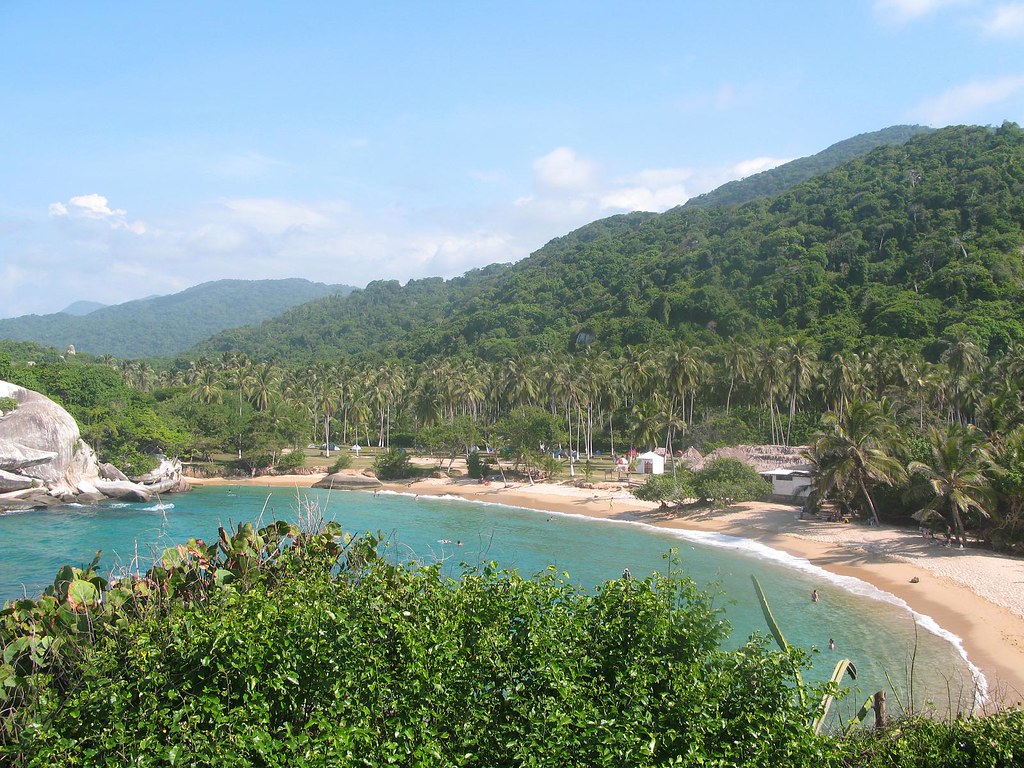
Tayrona National Natural Park, on Colombia’s Caribbean coast, is where the rainforest tumbles into the sea, a park of palm-backed coves, turquoise water and huge boulders in the heartland of the Tayrona civilisation, whose descendants include the Kogi.
The beaches of Tayrona National Natural Park, such as Cabo San Juan, are reached on foot through forest, alive with birds, including toucans and macaws, and the Kogi and their neighbours live in the mountains above.
Behind Tayrona National Natural Park rises the Sierra Nevada de Santa Marta, recognised by Guinness as the highest coastal mountain range on Earth, with snowy peaks at around 5,700 m only 42 km from the sea, sometimes visible from the coast on clear days.
3 – Villa de Leyva
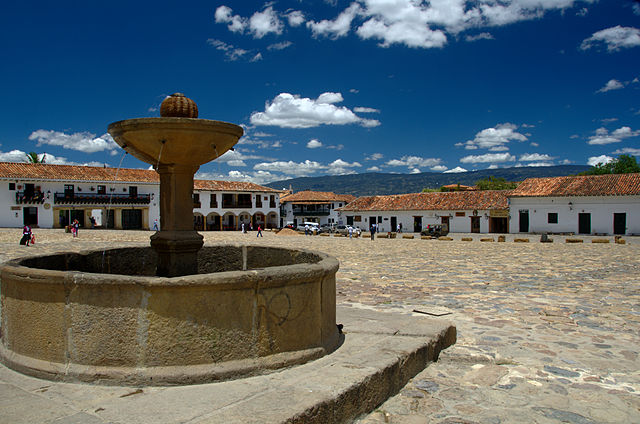
Villa de Leyva, in the Boyacá highlands at about 2,150 m, was founded in 1572 and declared a National Monument in 1954, and strict rules protect the whitewashed houses and cobbled lanes of its colonial centre.
At the heart of Villa de Leyva lies the Plaza Mayor, about 14,000 m² of cobblestones, the largest square in Colombia and one of the largest in South America, flanked by a colonial church, a favourite weekend escape from Bogotá.
More than 100 million years ago the valley around Villa de Leyva lay under a sea, and at the El Fósil museum, a 7m skeleton of a marine reptile, found by locals in 1977 and long called Kronosaurus, lies where it was discovered.
4 – Medellín
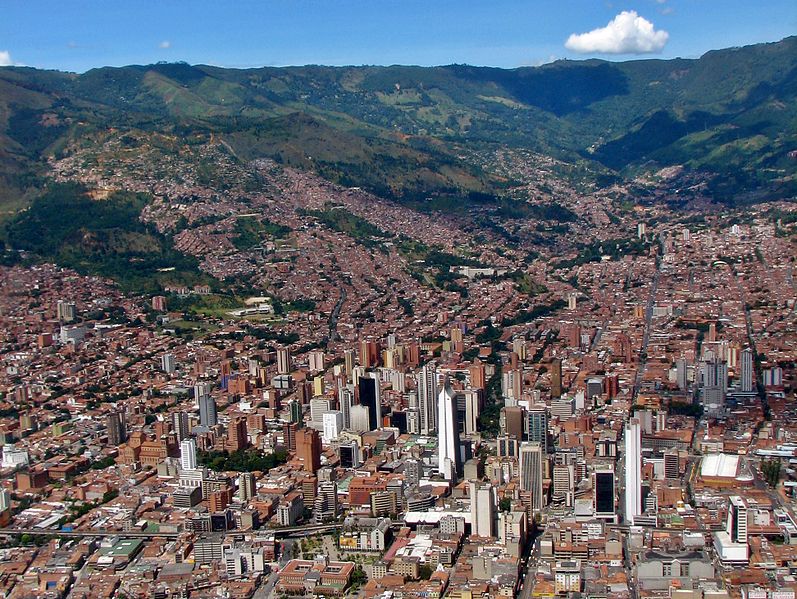
Medellín, Colombia’s second city, lies in a green Andean valley with a climate so mild it is called the “City of Eternal Spring”, and in 1991, when it was home to Pablo Escobar’s cartel, its murder rate reached about 381 per 100,000, widely seen as the worst in the world.
In the centre of Medellín, Plaza Botero displays 23 bronze figures by the city’s famous sculptor Fernando Botero, while the once-notorious hillside district of Comuna 13 is known for its murals, music and street tours.
Medellín’s revival owed much to transport, from the Metrocable, opened in 2004 and described as the world’s first cable car built for daily commuting, to outdoor escalators climbing Comuna 13, and in 2013, the city was named the world’s most innovative city.
5 – San Agustín
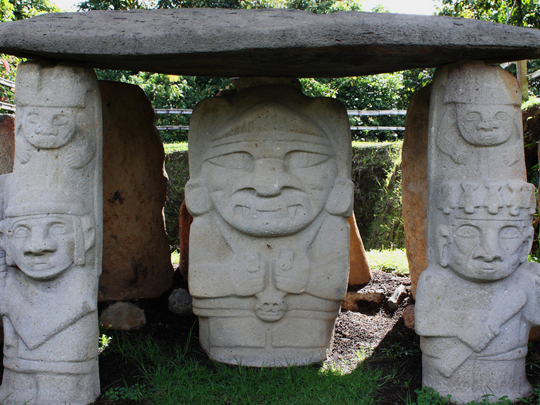
The San Agustín Archaeological Park, in the mountains of southern Colombia, is described by UNESCO as the largest group of religious monuments and megalithic sculptures in South America, and has been a World Heritage Site since 1995.
Around 600 statues are known in the San Agustín region, some over 4 m tall, carved from volcanic rock between about the 1st and 8th centuries AD as fanged deities, warriors and half-human, half-animal creatures, guarding tombs and burial mounds.
The sculptors of San Agustín left no writing and disappear from the record around the 9th century for reasons nobody knows, a mystery that has earned the site the nickname “the Andean Easter Island”.
6 – Zona Cafetera
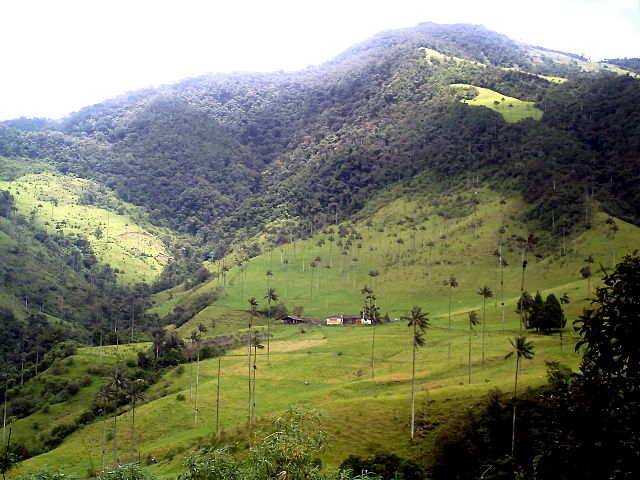
The Zona Cafetera, the heart of Colombia’s coffee country, is protected by UNESCO as the Coffee Cultural Landscape of Colombia, a region of misty green hills planted with coffee, brightly painted villages and old haciendas.
From a town such as Salento, visitors to the Zona Cafetera tour working fincas to follow coffee from cherry to cup, and ride out into the hills in vintage Willys jeeps past hummingbirds, orchids and small farms.
The Zona Cafetera’s most striking sight is the Cocora Valley, home to the wax palm, Colombia’s national tree and the tallest palm in the world, usually up to 45 m and occasionally reaching 60 m.
7 – Bogotá
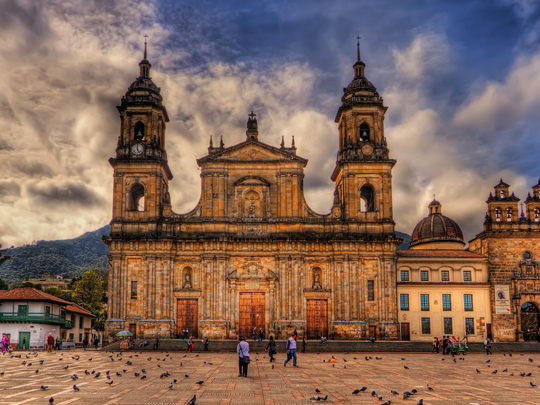
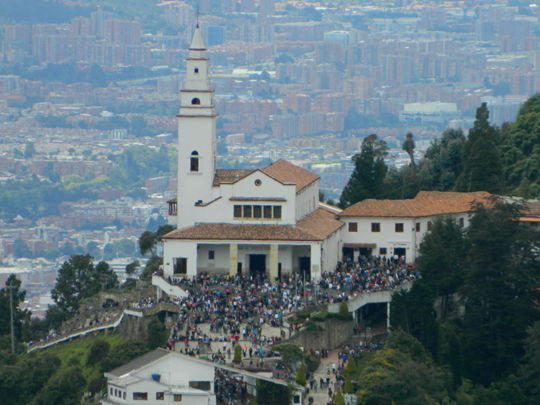
Bogotá, Colombia’s capital, spreads across a high Andean plateau at 2,640 m, founded in 1538 by Gonzalo Jiménez de Quesada, and it was here in 1854 that Daniel Florence O’Leary of Cork, Simón Bolívar’s aide-de-camp and chronicler, died.
Above Bogotá’s colonial quarter of La Candelaria rises Monserrate, a pilgrimage site since the 17th century at 3,152 m, reached by a funicular of 1929 and a cable car of 1955, while the Gold Museum holds the world’s largest collection of pre-Hispanic goldwork.
The star of Bogotá’s Gold Museum is the Muisca raft, found in 1969 and traditionally thought to depict the El Dorado ceremony at Lake Guatavita, where a new chief covered in gold dust was floated out to offer gold and emeralds.
8 – Guatapé

Guatapé, near Medellín, is often called Colombia’s most colourful town, its houses painted in bright hues and decorated with zócalos, moulded panels of flowers, animals and scenes of local life, in a tradition about a century old.
Guatapé stands on a reservoir of blue water and green islands beside El Peñón, a granite monolith rising more than 200 m, climbed by some 740 steps up a giant crack in the rock to a sweeping view of the lake.
The lake at Guatapé was created in the late 1970s for hydroelectric power and to supply Medellín, drowning the old town of El Peñol, whose thousands of residents were moved to a new town nearby, and a memorial cross marks the site of its sunken church.
9 – Ciudad Perdida
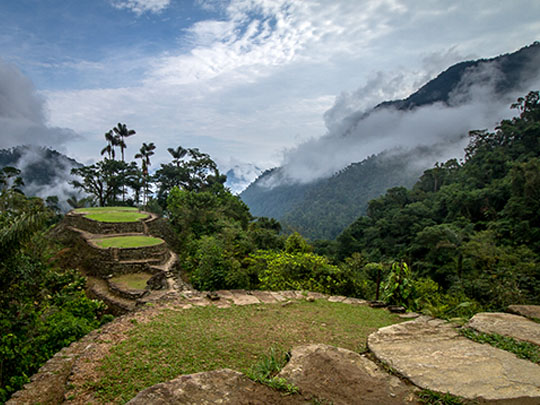
Ciudad Perdida, or Teyuna, is a city of stone terraces, plazas and paths cut into a jungle ridge of the Sierra Nevada de Santa Marta, built by the Tayrona from around AD 800, some 650 years before Machu Picchu, and abandoned in the wake of the Spanish conquest.
There is no road to Ciudad Perdida, only a four-to-five-day trek of about 44 km from the village of Machete Pelao, sleeping in hammocks and wading rivers, before a final climb of some 1,200 stone steps to the terraces.
Ciudad Perdida was stumbled upon by looters in the early 1970s, according to local accounts after a hunter followed a shot bird onto a buried staircase, but the Kogi, Wiwa, Arhuaco and Kankuamo peoples had always known it was there.
10 – San Basilio de Palenque
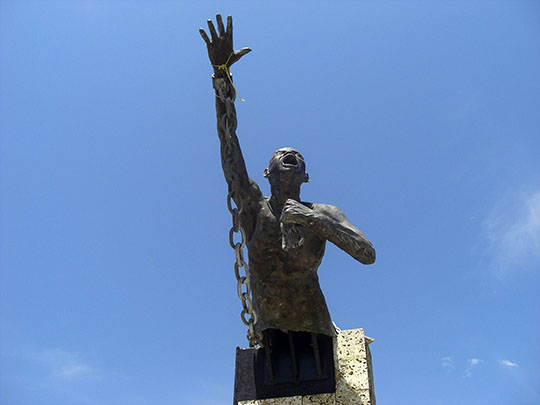
San Basilio de Palenque, about 50 km south-east of Cartagena, was founded around 1600 by Africans who escaped slavery under Benkos Biohó, captured in 1619 and hanged in 1621, and later won recognition of its freedom from the Spanish Crown, often called the first free town in the Americas.
San Basilio de Palenque’s culture, recognised by UNESCO in 2005, has kept its African roots in music, medicine and the lumbalú funeral rites, and its people speak Palenquero, the only creole in Latin America with a Spanish vocabulary and a Bantu grammar.
San Basilio de Palenque’s most famous son is the boxer Antonio “Kid Pambelé” Cervantes, world champion in 1972, whose first request to the government was electricity for his village, and power arrived about two years later.
11 – Puente de Boyacá
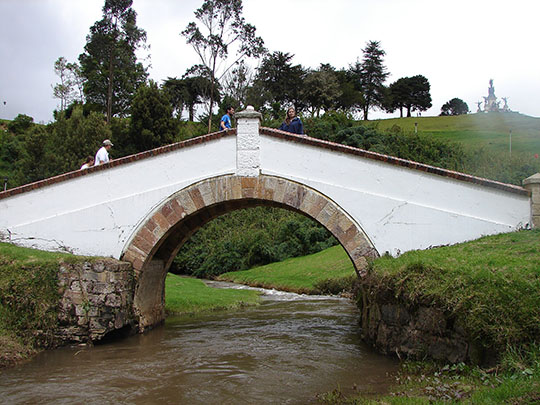

Puente de Boyacá, a short drive south-west of Tunja, is where on 7 August 1819 Simón Bolívar and Francisco de Paula Santander defeated the royalist army of José María Barreiro in about two hours, taking some 1,600–1,800 prisoners and opening the road to Bogotá, which Bolívar entered three days later.
The battlefield of Puente de Boyacá is a park of monuments around a small rebuilt bridge over the narrow Teatinos River, with a towering statue of Bolívar, a triumphal arch, a statue of Santander and the eternal flame of the Llama de la Libertad.
British and Irish volunteers of the British Legion fought at Puente de Boyacá, less than a fortnight after the Battle of Pantano de Vargas, where their Dublin-born officer James Rooke was wounded, lost his left arm and died three days later.
12 – Mompox
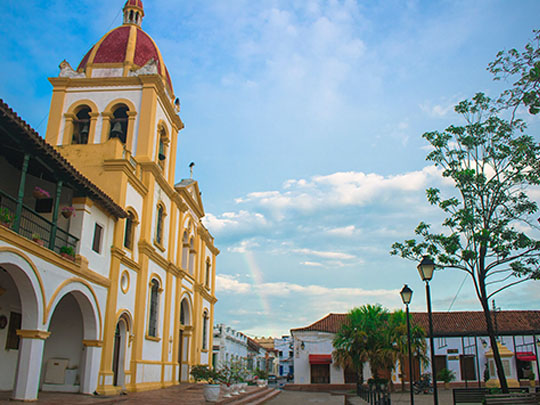

Santa Cruz de Mompox, founded in the late 1530s on a freshwater island in the Magdalena River, grew rich as the river port linking Cartagena with the interior, and on 6 August 1810 it claims to have become the first town in Colombia to declare independence from Spain.
The UNESCO-listed historic centre of Mompox is a riverside town of colonial mansions and churches, among them Santa Bárbara with its octagonal baroque bell tower, famous for its Holy Week processions and its gold and silver filigree jewellery.
From the late 19th century silt pushed river traffic to another channel and Mompox was left behind, which is why it survived largely unchanged, and a plinth in the town carries Bolívar’s tribute, “If to Caracas I owe my life, to Mompox I owe my glory”.
13 – Santa Marta
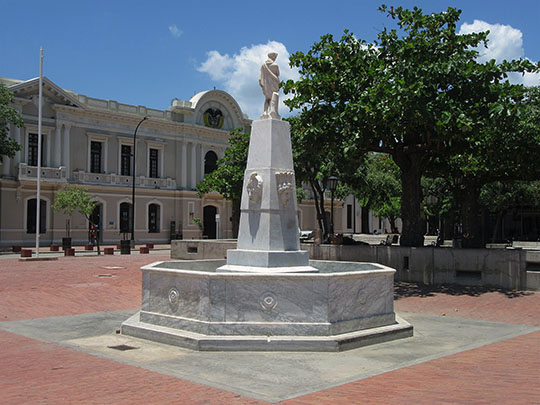
Santa Marta, on Colombia’s Caribbean coast, was founded on 29 July 1525 by Rodrigo de Bastidas, the oldest surviving city in Colombia and one of the oldest Spanish cities in South America, and is the gateway to the Sierra Nevada de Santa Marta.
Just outside Santa Marta lies the Quinta de San Pedro Alejandrino, a hacienda dating from 1608, where Simón Bolívar died on 17 December 1830, and his body lay in state in the city before burial in its cathedral, until his remains were moved to Caracas in 1842.
A week before his death at Santa Marta, the dying Bolívar issued his last proclamation, declaring that “if my death can help to destroy the spirit of partisanship, and strengthen union, I shall tranquilly descend to my grave”.