
Wikimedia Commons / CC-BY-SA-3.0 / GFDL
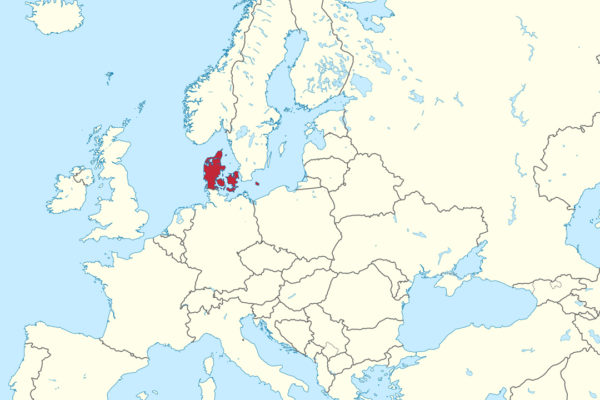
Capital: Copenhagen
Population: 6 million+
Language: Danish
1 – Copenhagen (also above)
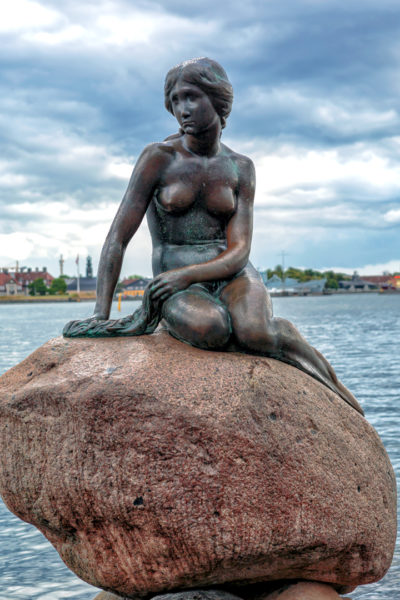
Copenhagen grew from a castle that Bishop Absalon built on the islet of Slotsholmen in 1167, and it became Denmark’s capital around 1416, when King Eric of Pomerania moved his seat there.
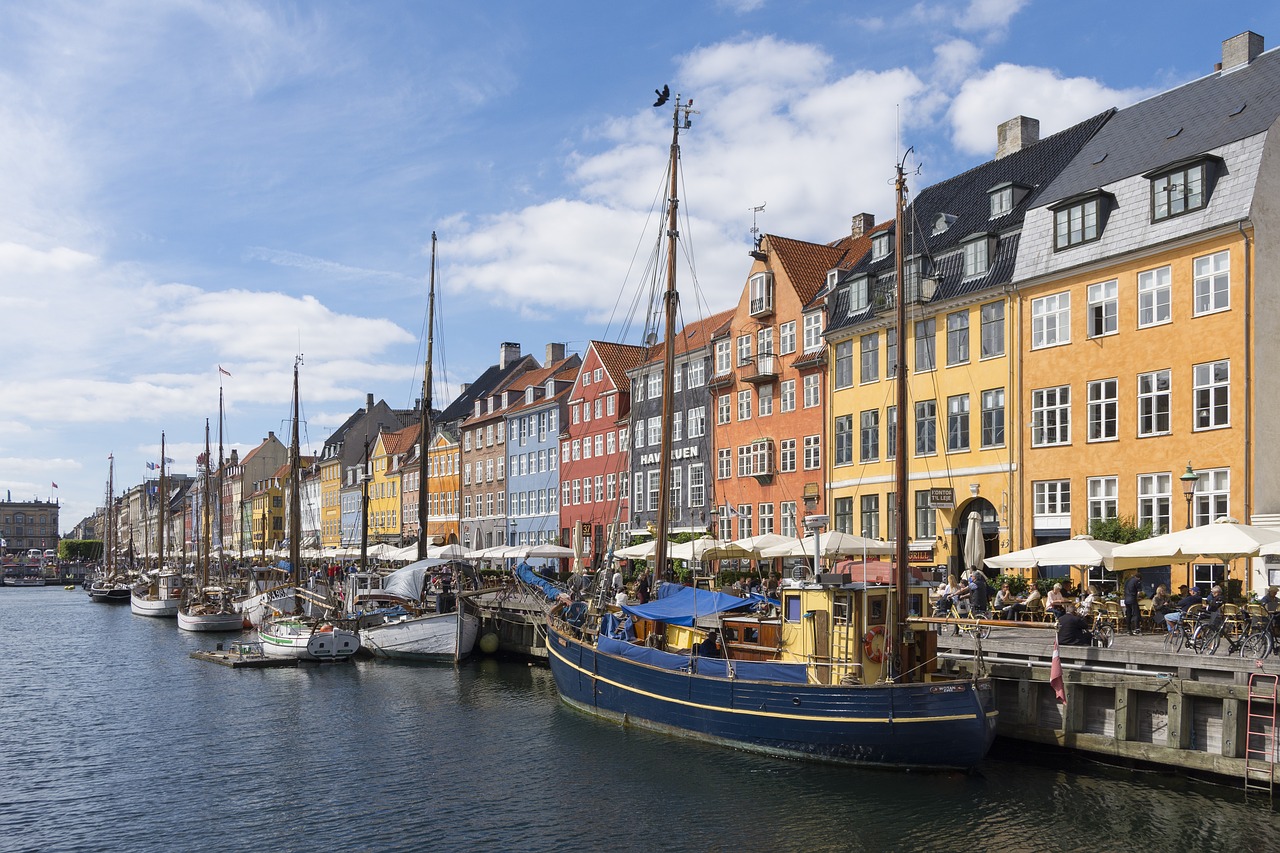
Stroll Copenhagen’s Nyhavn, the painted harbour where Hans Christian Andersen lived at three different addresses, ride Tivoli Gardens’ wooden roller coaster of 1914, and walk up the cobbled spiral ramp of the Round Tower, built by Christian IV as an observatory in 1637–42.
Copenhagen’s Tivoli Gardens opened in 1843, and Walt Disney cited it as an inspiration, while tradition says Peter the Great rode a horse all the way up the Round Tower’s ramp in 1716.
2 – Ribe
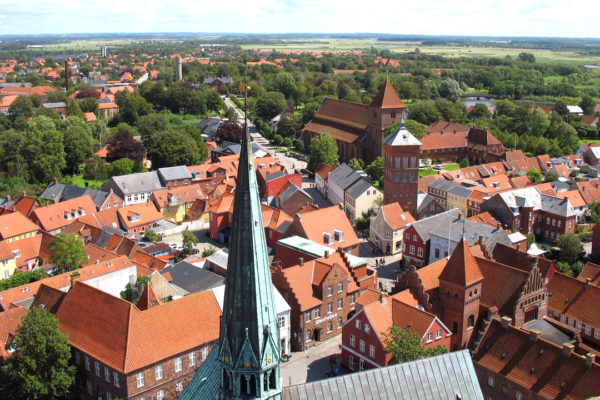
Ribe, in south-west Jutland near the Wadden Sea coast, was a trading place by the early 8th century, which makes it the town usually called the oldest in Denmark.
Visit Ribe’s cathedral, then step back to the Viking market town of Ripa, rebuilt at Ribe VikingeCenter, and follow the night watchman on his evening round.
Ribe’s night watchmen guarded the town against fire and trouble until the job ended in 1902, but the rounds were revived for visitors in the 1930s, and the watchman sings the old verses as he walks.
3 – Aarhus
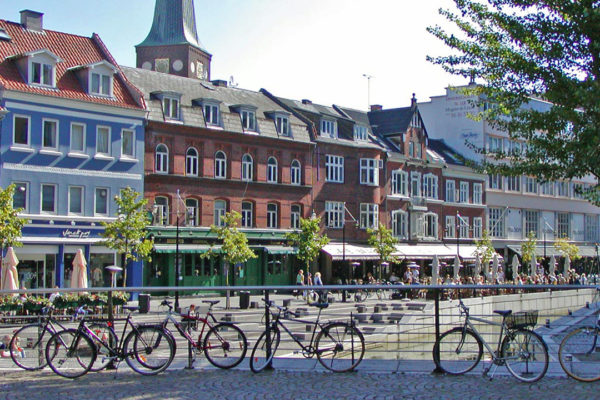
Aarhus, Denmark’s second city, on the east coast of Jutland, began as the Viking harbour town of Aros in the late 8th century, and it was a European Capital of Culture in 2017.
Walk the rooftop of Aarhus’s ARoS art museum inside Olafur Eliasson’s circular rainbow walkway, Your rainbow panorama, wander the old streets of Den Gamle By, and meet the Grauballe Man at the Moesgaard Museum.
Aarhus’s Den Gamle By, opened in 1914, was a pioneer of open-air museums of town life, while the Grauballe Man, pulled from a bog in 1952, is over 2,000 years old and died with his throat cut.
4 – Egeskov Castle
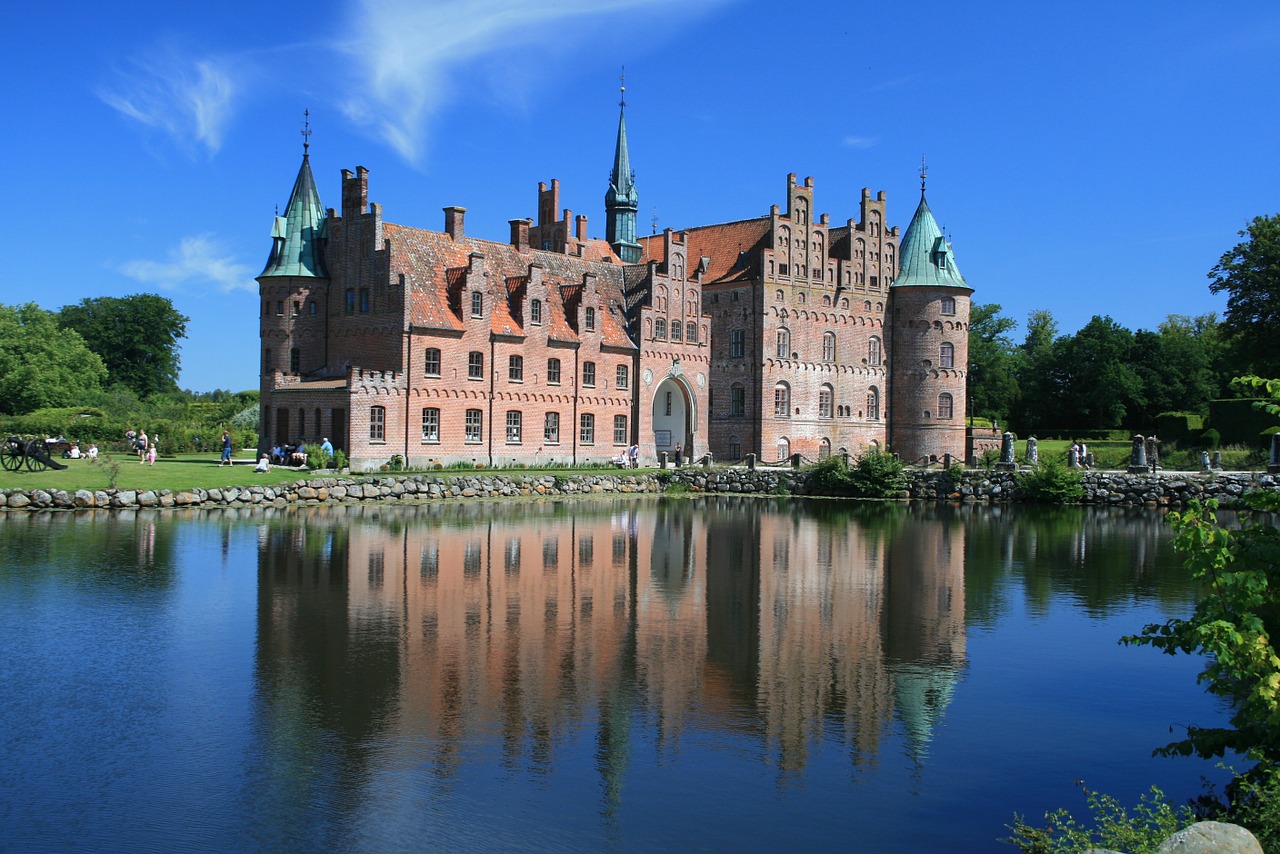
Egeskov Castle, on the island of Funen, was completed in 1554 by Frands Brockenhuus and stands in a lake on oak piles, often called the best-preserved Renaissance water castle in Europe.
Explore Egeskov’s halls, moat-side gardens and hedge mazes, then the halls of vintage cars, motorcycles and aircraft.
A wooden doll lives in Egeskov’s loft, and legend says that if it is ever moved the castle will sink into the moat on Christmas night, while from 1599 to 1625 Rigborg Brockenhuus was kept locked in a room here by her father after having a child outside marriage.
5 – Odense
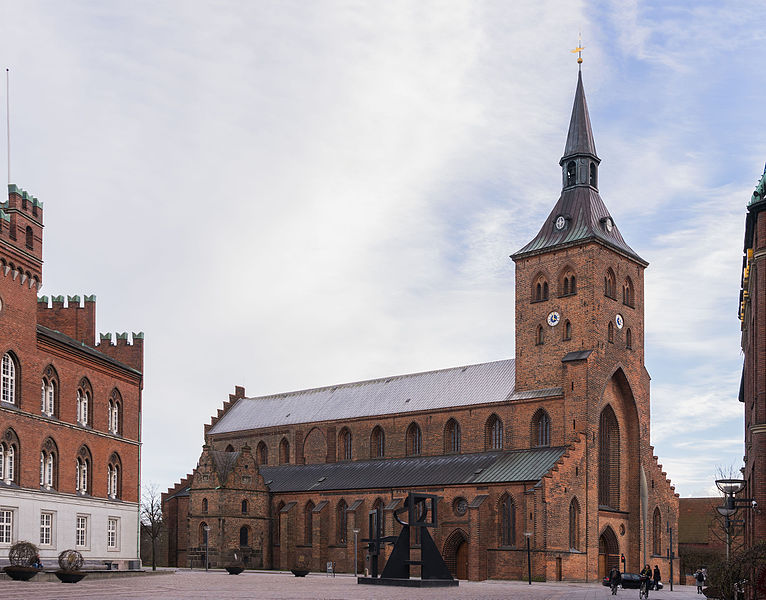
Odense, on the island of Funen, is where King Knud IV was killed with his brother and 17 followers in St Alban’s church in 1086, and he was canonised in 1101 as Denmark’s first saint.
Visit Odense’s St Canute’s Cathedral, whose crypt holds the bones of Knud and his brother, then Hans Christian Andersen’s House, a museum designed by Kengo Kuma around the house where he was born.
Odense’s most famous son, Hans Christian Andersen, was born here in 1805, and the theory that he was secretly the son of a future king, Christian VIII, has been dismissed by Andersen scholars.
6 – Billund
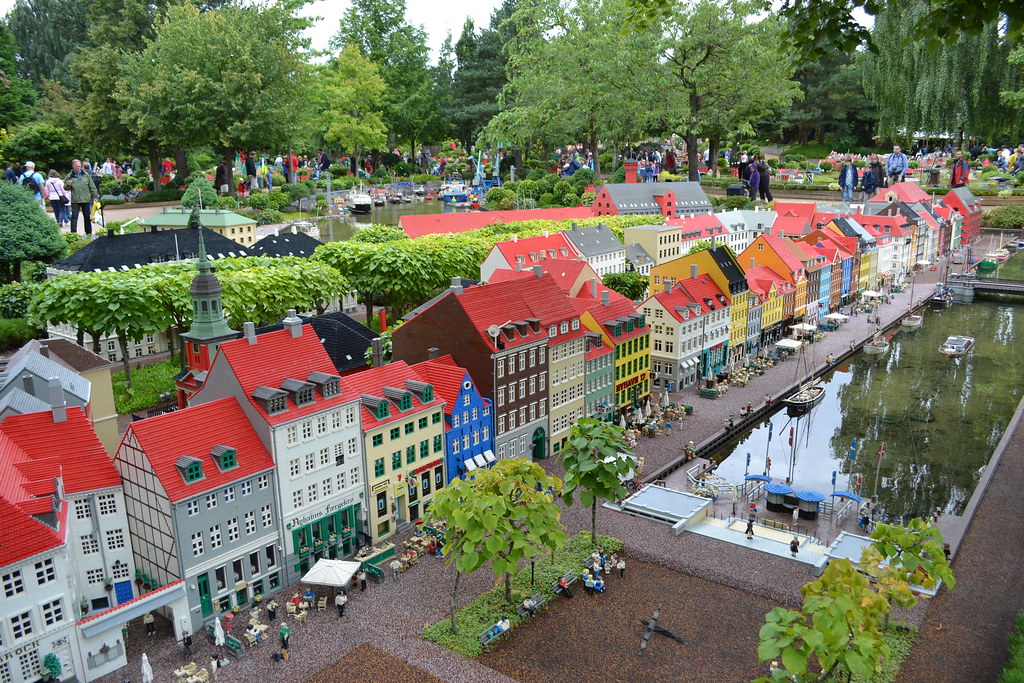
Billund, in central Jutland, is where the carpenter Ole Kirk Christiansen started making toys in his workshop in 1932, and in the mid-1930s he named the company LEGO, from the Danish “leg godt”, meaning “play well”.
Visit Billund’s LEGOLAND, which opened in 1968 as the first Legoland, and LEGO House, designed by Bjarke Ingels’s BIG to look like 21 stacked bricks.
Billund’s modern LEGO brick arrived in 1958, and the fact that “lego” also means something like “I gather” in Latin is a coincidence the company discovered only later.
7 – Møns Klint

Møns Klint, on the island of Møn south of Zealand, is a wall of white chalk cliffs rising to 128 m, made from seabed laid down in the Cretaceous period.
Walk the clifftop woods of Møns Klint, take the stairs down to the beach, then learn the cliffs’ story at the GeoCenter Møns Klint geology museum.
UNESCO listed Møns Klint in 2025 as one of the best-preserved examples of a landscape shaped by the pressure of ice-age glaciers, which shoved the chalk up and folded it like a crumpled rug.
8 – Bornholm
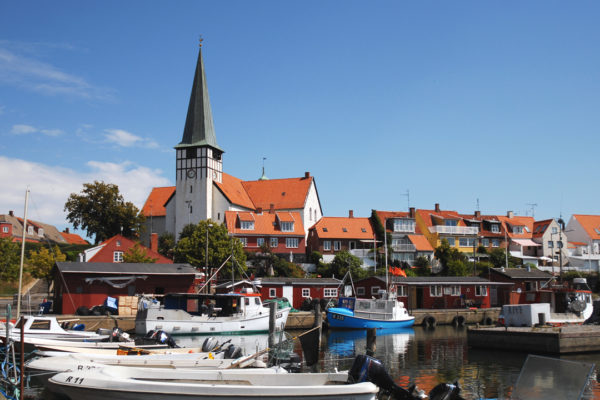
Bornholm is a Baltic island south of Sweden and far east of mainland Denmark, and after Denmark ceded it to Sweden in 1658 the islanders rose up and handed it back to the Danish king.
Explore Hammershus, often called the largest castle ruin in Northern Europe, visit Bornholm’s round churches, whose upper floors doubled as defences, with Østerlars the largest, and try the island’s smoked herring.
Three paving stones in Rønne mark where Villum Clausen shot the Swedish commander Johan Printzensköld in December 1658, and Bornholm’s own tourist board doubts the story that his gun was loaded with a silver button.
9 – Skagen
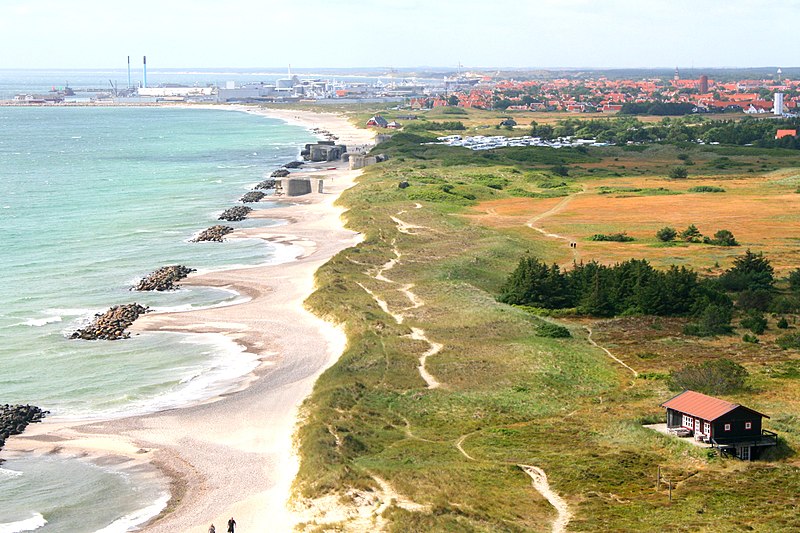
Skagen is Denmark’s northernmost town, at the tip of Jutland, and from the late 1870s to about 1900 it drew the Skagen Painters, led by P.S. Krøyer with Michael and Anna Ancher.
Stand with a foot in each sea at Grenen, the sandbar where the Skagerrak meets the Kattegat, see the painters’ work at Skagens Museum, and visit the Sand-Buried Church, abandoned to drifting sand in 1795 with only its tower left standing.
Skagen’s best-known painting, Krøyer’s Hip, Hip, Hurrah!, showing the artists at a party, hangs not in Denmark but in the Gothenburg Museum of Art in Sweden.
10 – Roskilde
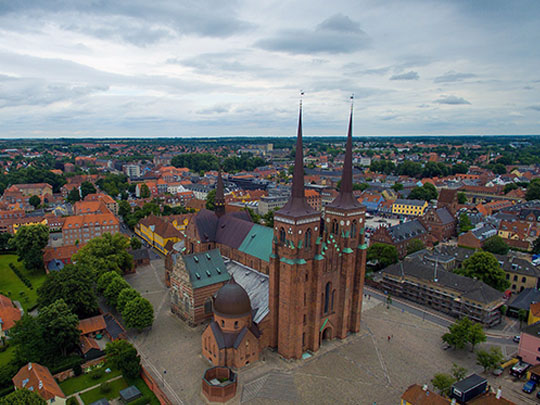
Roskilde, on Zealand at the southern end of Roskilde Fjord, is where Bishop Absalon began a brick Gothic cathedral around 1170, one of the first of its kind in Northern Europe, and UNESCO listed it in 1995.
See the tombs of around 40 Danish kings and queens in Roskilde Cathedral and the pillar marked with royal heights, then visit the Viking Ship Museum and its five ships, deliberately sunk to block the fjord’s narrowest channel.
One of Roskilde’s Viking ships, the 30 m warship Skuldelev 2, was built in or near Dublin around 1042, and its replica, the Sea Stallion from Glendalough, sailed to Dublin in 2007 and back in 2008.
11 – Jelling
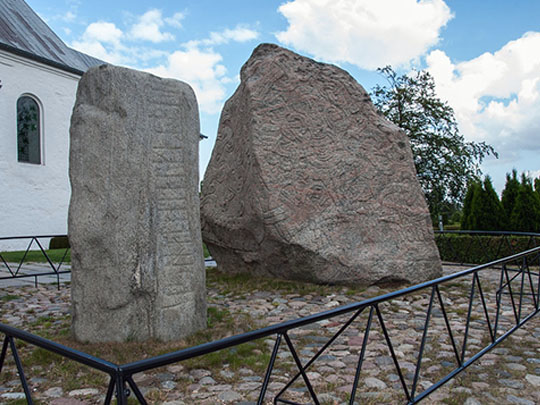
Jelling, in central Jutland, was the 10th-century royal seat of Gorm the Old and his son Harald Bluetooth, and UNESCO listed its mounds, runestones and church in 1994.
See Jelling’s two great mounds, each about 70 m across, the runestones in glass cases beside the church, and the marked-out line of a 1,440 m palisade and a stone ship setting of about 360 m, the largest known in Scandinavia.
Jelling’s larger runestone, raised around 965, says Harald “won for himself all of Denmark and Norway and made the Danes Christian” and carries Scandinavia’s earliest image of Christ, while his runic initials became the Bluetooth logo.
12 – Kronborg
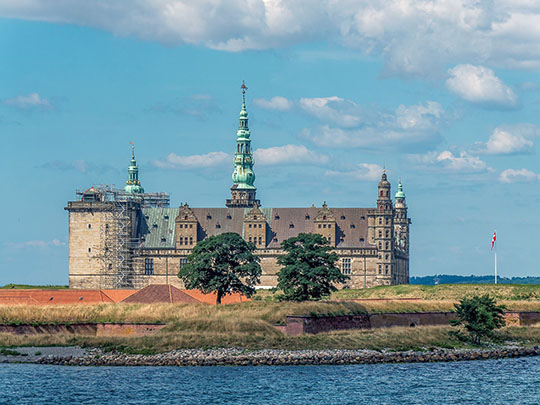
Kronborg Castle stands at Helsingør, where the Øresund narrows to about 4 km from Sweden, and from 1429 to 1857 Denmark charged every passing ship the Sound Dues here, with Frederik II rebuilding the castle in Renaissance style in 1574–85; UNESCO listed it in 2000.
Explore Kronborg’s ballroom and royal apartments, then go down into the casemates to find Holger Danske, the sleeping hero of legend who will wake when Denmark is in danger.
Kronborg is the Elsinore of Hamlet, though Shakespeare almost certainly never came, while English actors including Will Kemp played for the court here in 1585, and Hamlet has been staged at the castle since 1816, with Olivier, Gielgud, Branagh and Jude Law among its princes.
13 – Trelleborg
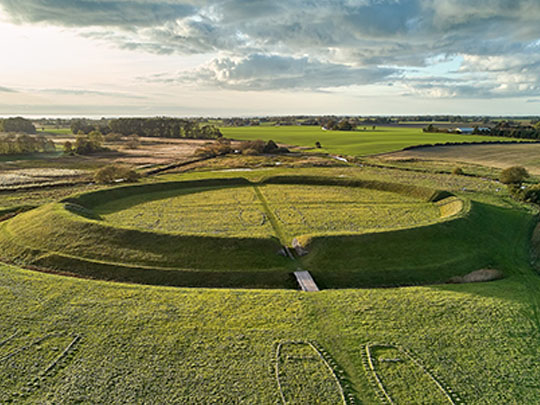
Trelleborg, near Slagelse in West Zealand, is a Viking ring fortress built from timber felled in 980, in the reign of Harald Bluetooth, and UNESCO listed it in 2023 with four other Viking-Age ring fortresses.
Walk Trelleborg’s circular rampart, with four gates set to the points of the compass, see where 16 longhouses stood in four square groups, then visit the museum, the Viking site and a reconstructed longhouse from the 1940s.
Trelleborg was long thought to be a training camp for Sweyn Forkbeard’s invasion of England, but tree-ring dating puts it decades too early, and the fort was used for only 10 to 20 years or so.
14 – Silkeborg
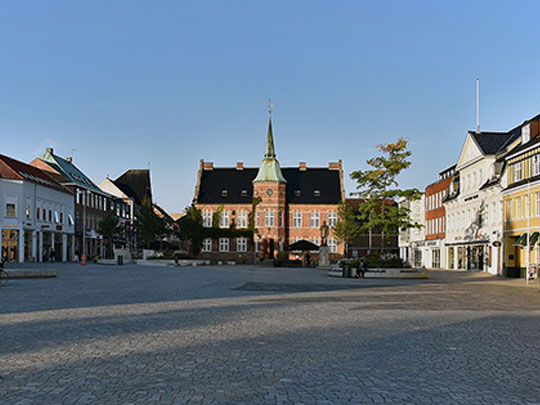
Silkeborg, in the lake country of central Jutland on the Gudenå river, grew up from the mid-1840s around Michael Drewsen’s paper mill, near Himmelbjerget, a 147 m hill long mistaken for Denmark’s highest point.
Meet the Tollund Man at Museum Silkeborg, see Asger Jorn and the CoBrA artists at Museum Jorn, and cruise the lakes on Hjejlen, a coal-fired paddle steamer from 1861.
Silkeborg’s Tollund Man was found by peat cutters in 1950 who thought he was a recent murder victim, but he was hanged around 400 BC, and Seamus Heaney made him famous in his 1972 poem “The Tollund Man”, visiting him a year later.