
Photo credit: WanderPast
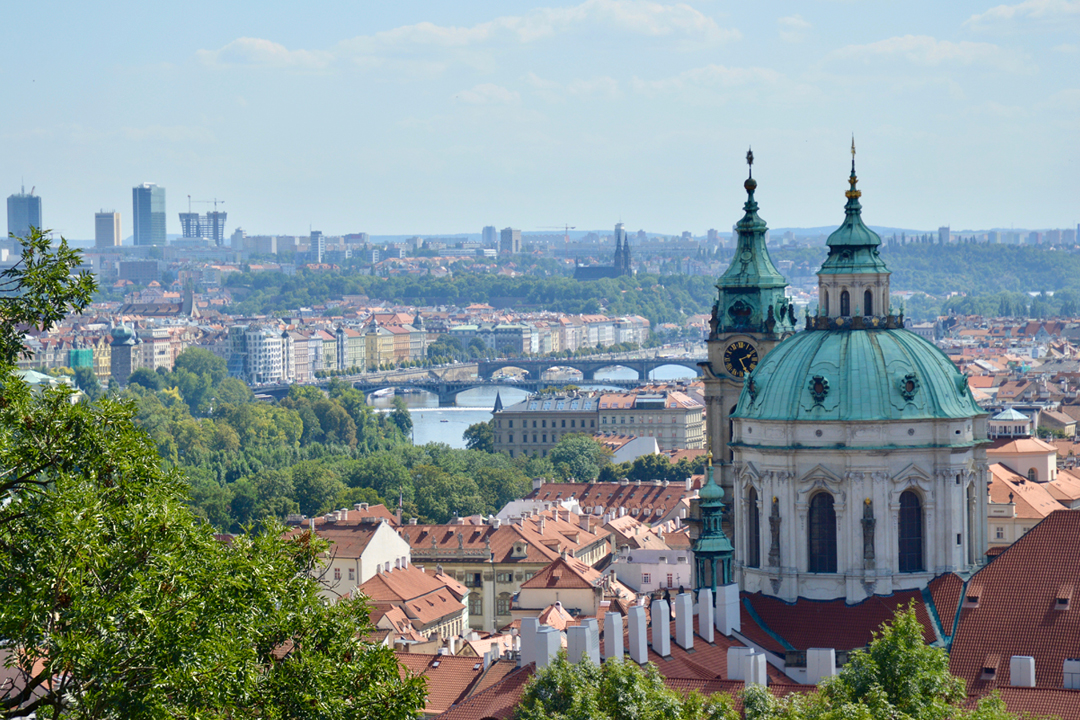
Capital: Prague
Population: 10.9 million+
Language: Czech
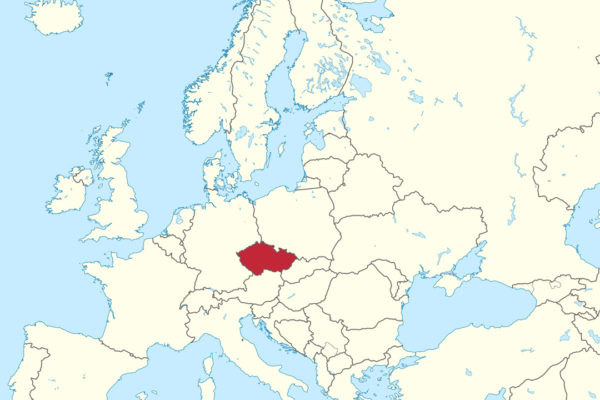
1 – Prague (also above)

Prague, on the Vltava, was the seat of Bohemian kings and of Emperor Charles IV, and its defenestrations, when officials were thrown from windows in 1419 and 1618, helped spark the Hussite Wars and the Thirty Years’ War.
Cross Charles Bridge, begun in 1357 and lined with Baroque statues, climb to Prague Castle, which Guinness lists as the largest ancient castle in the world, then watch the Astronomical Clock on Old Town Square, first recorded in 1410 and one of the oldest in the world.
From 1629 to 1786 Prague had an Irish Franciscan college, founded with the emperor’s backing to train priests for Ireland, and the Czech nickname for its friars, “Hyberni”, lives on in Hybernská Street.
2 – Telč
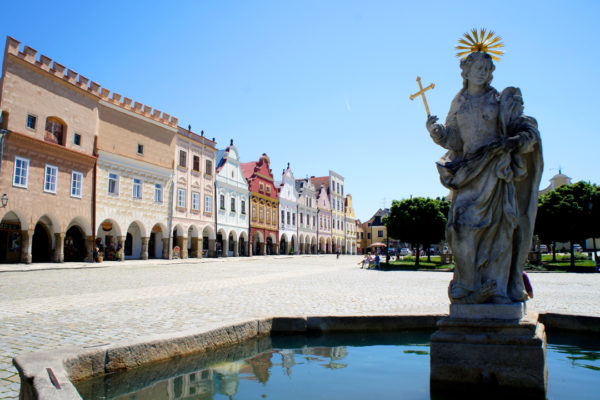
Telč, in the Vysočina highlands near the Moravian border, was rebuilt in stone after a fire at the end of the 14th century, and UNESCO listed it in 1992 as an outstanding planned town founded in forest country.
Walk Telč’s long square, lined with pastel Renaissance and Baroque houses with matching arcades and gables, then visit the chateau, surrounded on three sides by fishponds.
Telč’s square owes its looks to Zachariáš of Hradec, a lord who admired Italian style, and from the 1550s he turned the castle into a Renaissance chateau while the townspeople gave their houses arcades and fancy gables.
3 – Český Krumlov
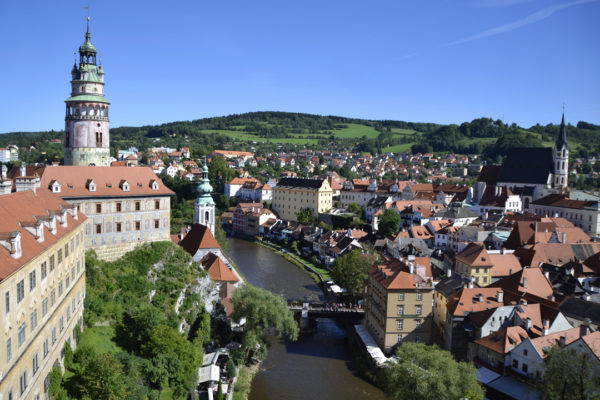
Český Krumlov sits in a tight bend of the Vltava in South Bohemia, a town that grew under the Rosenberg family’s castle, and UNESCO listed it in 1992.
Explore Český Krumlov Castle, the second-largest castle complex in the country after Prague Castle, cross its five-storey Cloak Bridge, and see the Baroque castle theatre of the 1680s, one of the best-preserved in the world, with its original stage machinery and scenery.
Bears have lived in Český Krumlov Castle’s moat since at least 1707, and the painter Egon Schiele, whose mother was born in the town, was driven out by locals in 1911 over his lifestyle and his use of local girls as models.
4 – Karlovy Vary
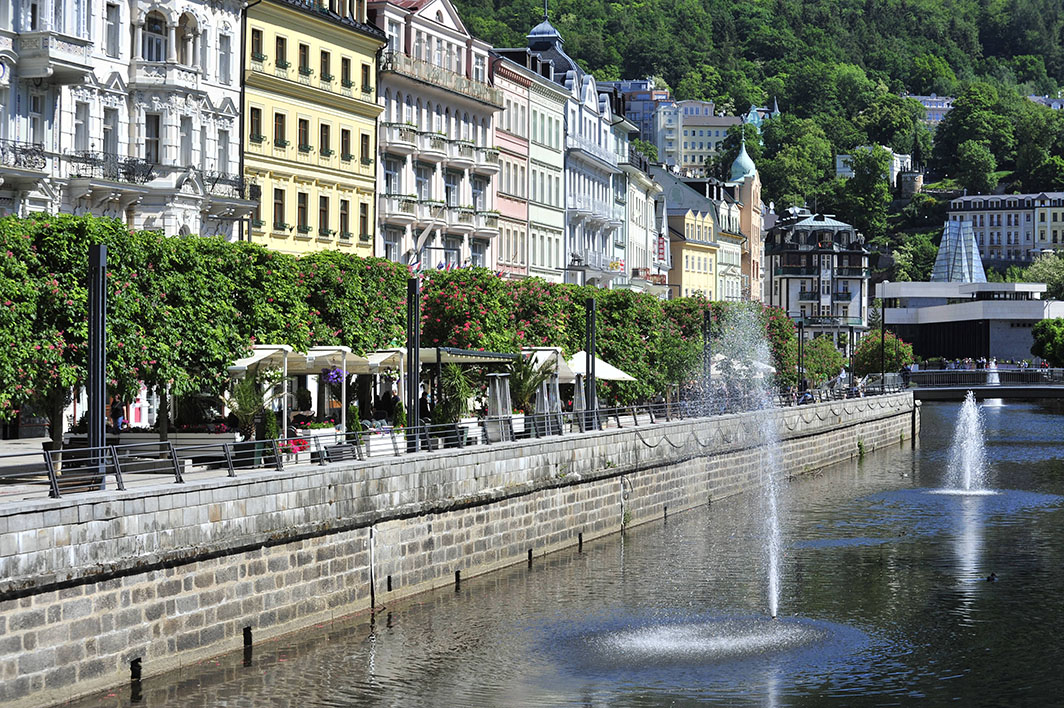
Karlovy Vary, or Carlsbad, in West Bohemia, is named after Charles IV, whose hunting party is said to have found its hot springs, and he granted it town privileges in 1370.
Stroll Karlovy Vary’s colonnades, sip the waters from its drinking springs, and watch the Vřídlo spring shoot water at about 73 °C almost 12 m into the air, a town UNESCO listed among the Great Spa Towns of Europe in 2021.
Karlovy Vary gave the world Becherovka, the herbal liqueur sold since 1807 from a recipe said to be known to only two people, and hosts one of Europe’s oldest film festivals, founded in 1946.
5 – Olomouc
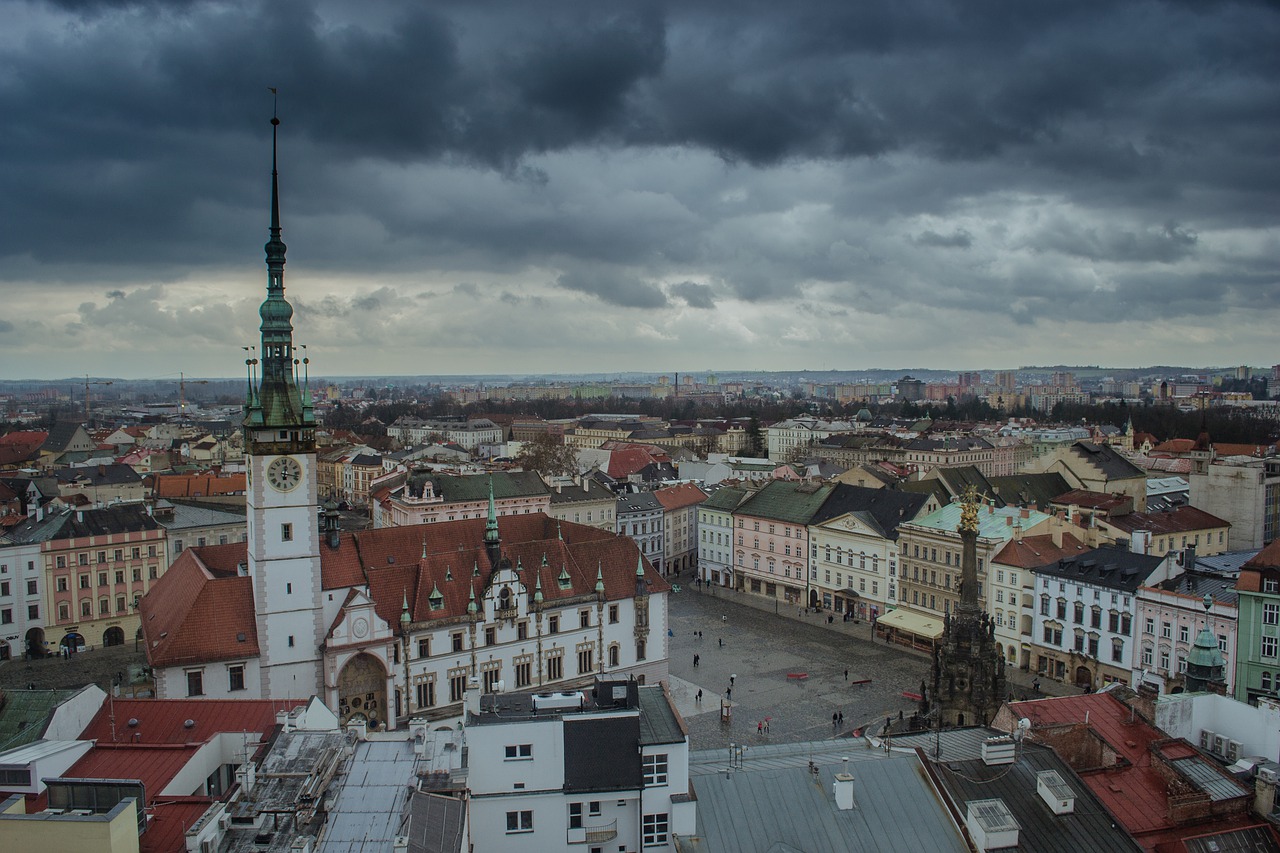
Olomouc, in central Moravia, was long the region’s capital, where King Wenceslas III was murdered in 1306, ending the male line of the Přemyslid dynasty, and the 11-year-old Mozart stayed here in 1767, finishing his Symphony No. 6.
See Olomouc’s Holy Trinity Column, over 32 m tall and UNESCO-listed, the six Baroque fountains, and the Astronomical Clock on the town hall.
Olomouc’s Astronomical Clock was rebuilt after damage in 1945 in Socialist Realist style, unveiled in 1955, so instead of saints and apostles its figures are workers, athletes and a scientist.
6 – Terezín

Terezín, north of Prague, was built in 1780–90 as a fortress town by Joseph II and named after his mother, Maria Theresa, and in 1941–45 the Nazis turned it into the Theresienstadt ghetto, where more than 140,000 Jews were held, over 33,000 died and about 88,000 were sent on, mostly to their deaths.
Visit Terezín’s Ghetto Museum, the Magdeburg Barracks, the crematorium and the Small Fortress, the old Habsburg prison where Gavrilo Princip, the assassin of Archduke Franz Ferdinand, died of tuberculosis in 1918.
Before a Red Cross inspection in June 1944, the Nazis dressed Terezín up with fake shops and cafés and deported about 7,500 people to Auschwitz so it would look less crowded, then made a propaganda film there.
7 – Kutná Hora

Kutná Hora, east of Prague, boomed on silver mining from the 13th century to become the rival of Prague, and from 1300 its Italian Court minted the Prague groschen, one of Europe’s strongest coins of the age.
Visit Kutná Hora’s Gothic Church of St Barbara, patron saint of miners, the Italian Court mint, and Sedlec, whose cathedral and old town UNESCO listed in 1995.
Kutná Hora’s Sedlec Ossuary is decorated with the bones of some 40,000–70,000 people, arranged in 1870 by woodcarver František Rint, including a chandelier made from nearly every bone in the human body.
8 – Litomyšl
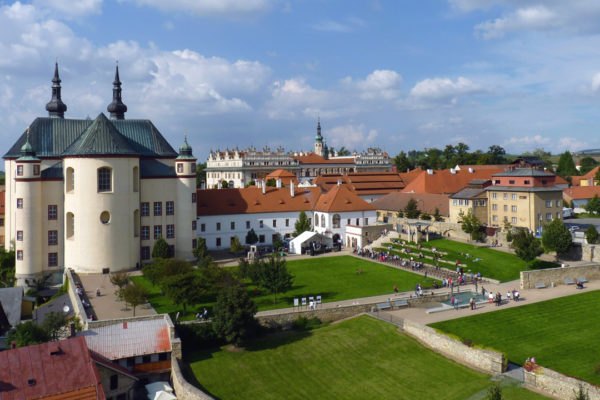
Litomyšl, in East Bohemia, is home to a Renaissance castle built in 1568–80 for Vratislav of Pernštejn to designs by Giovanni Battista Aostalli, and UNESCO listed it in 1999.
Walk round Litomyšl Castle, whose walls are covered in sgraffito, with around 8,000 scratched-plaster panels, each one different, then visit the castle’s 18th-century theatre and the old town square.
Litomyšl Castle’s brewery was the birthplace of the composer Bedřich Smetana in 1824, where his father worked as brewer, and the town honours him with an opera festival.
9 – Karlštejn Castle

Karlštejn Castle stands in the woods south-west of Prague, founded in 1348 by Charles IV to guard the imperial regalia and holy relics, and restored in neo-Gothic style in the late 19th century.
Karlštejn’s treasure is the Chapel of the Holy Cross, consecrated in 1365, whose walls are inlaid with semi-precious stones and hung with 129 panel paintings by Master Theodoric beneath a gilded vault.
Karlštejn is famous for banning women overnight, but the rule comes from an 1884 comedy, later a 1973 musical, and in reality women came and went freely, as only the chapel’s guardians were barred from sleeping with a woman, even their wives.
10 – Punkva Caves
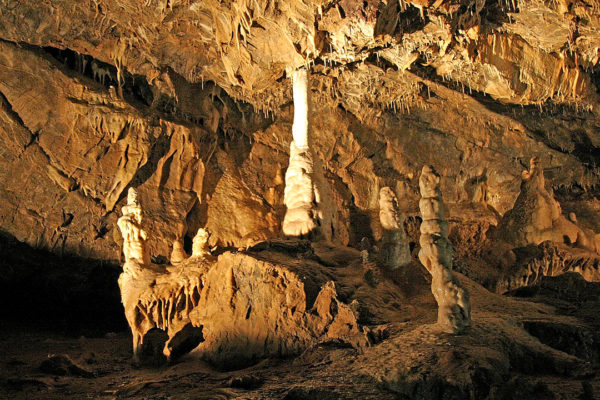
The Punkva Caves lie in the Moravian Karst north of Brno, explored by Karel Absolon’s team from 1909, and they open into the Macocha Abyss, about 138 m deep and the deepest of its kind in Central Europe.
Walk through the Punkva Caves’ stalactite halls, look up from the bottom of the Macocha Abyss, then take a boat along the underground Punkva river, and ride the cable car to the rim.
Macocha means “stepmother”, after a legend that a woman threw her stepson into the abyss so her own son would inherit, but the boy survived, and in the end it was she who went over the edge.
11 – Brno
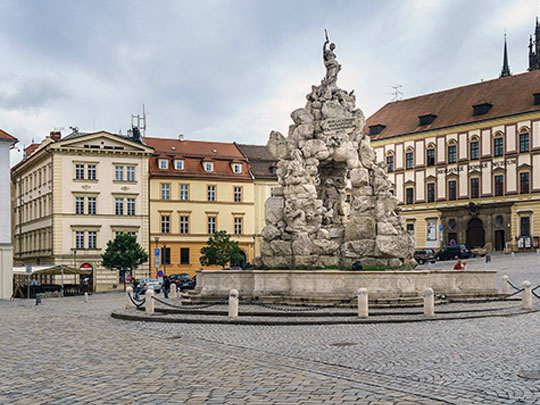
Brno, where the Svratka and Svitava rivers meet in South Moravia, is the Czech Republic’s second city and was the capital of Moravia until 1948, and in 1645 it held out against a Swedish siege in the Thirty Years’ War.
Visit Brno’s Villa Tugendhat, built by Mies van der Rohe in 1929–30 and UNESCO-listed in 2001, Špilberk Castle, once the Habsburg empire’s harshest prison, and the ossuary under St James’s Church, with the remains of more than 50,000 people.
In the garden of Brno’s St Thomas’s Abbey, the friar Gregor Mendel crossed thousands of pea plants from 1856, and the paper he published in 1866 laid the foundations of genetics.
12 – Cheb
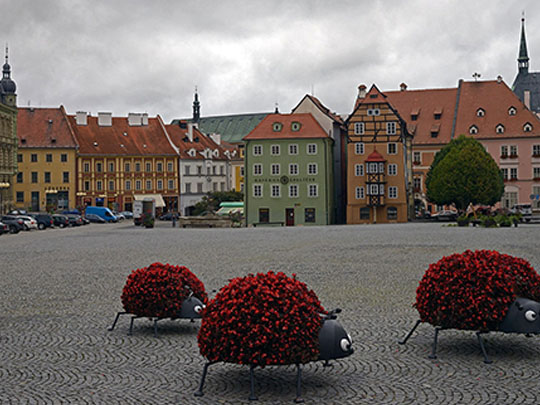
Cheb, on the Ohře river in far western Bohemia near the German border, grew up around an imperial palace of Frederick Barbarossa’s time, from about 1180, and as Eger it was a mainly German-speaking town until the expulsions after 1945.
Explore Cheb Castle’s Romanesque double chapel, whose upper level was reserved for the imperial family, climb the Black Tower, then find the Špalíček, a huddle of 11 medieval houses split by a narrow lane on the main square.
In 1634 the Habsburg general Albrecht von Wallenstein was murdered in Cheb in a plot led by the Irish colonel Walter Butler of Roscrea, and it was an Irish captain, Walter Devereux, who broke into the house on the square where he slept and ran him through with a polearm.
13 – Lednice–Valtice
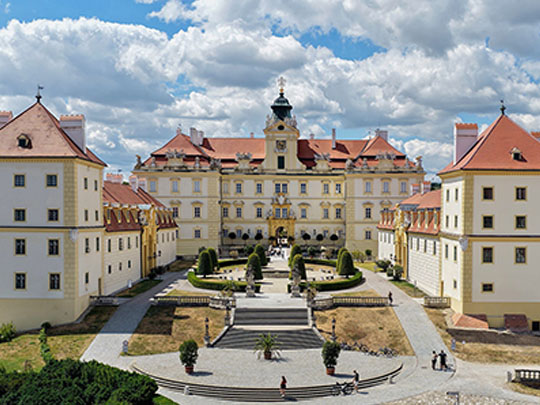
The Lednice–Valtice Cultural Landscape, in South Moravia on the Austrian border, was shaped over centuries by the Liechtenstein family, and Valtice belonged to Lower Austria until 1920; UNESCO listed it in 1996 as one of the largest artificial landscapes in Europe.
Tour Lednice Chateau, rebuilt in neo-Gothic style in 1846–58, its cast-iron glasshouse, and the 60 m minaret begun in 1797, then head to Valtice Chateau, whose cellars hold a tasting salon of the country’s top 100 wines.
Lednice–Valtice is dotted with follies the princes built for hunts and parties, including a fake ruined castle and a hunting lodge shaped like a triumphal arch, and the family lost the lot in 1945, when Czechoslovakia confiscated their estates as German property.
14 – Třebíč
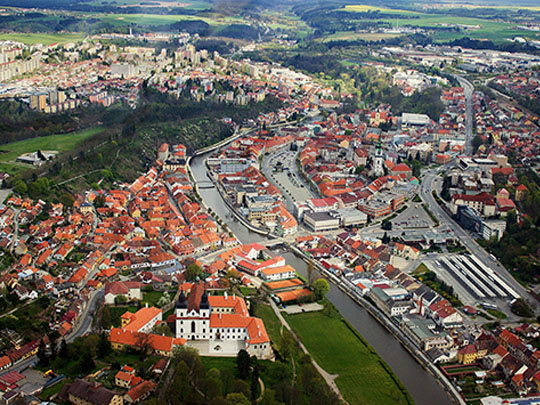
Třebíč, on the Jihlava River in the Vysočina Region, grew around a Benedictine monastery founded in 1101, and UNESCO listed its Jewish Quarter and St Procopius’ Basilica together in 2003.
Wander Třebíč’s Jewish Quarter of about 120 houses and two synagogues, see the painted walls of the Rear Synagogue and the Jewish cemetery, whose oldest headstone dates from 1631, then visit the Romanesque-Gothic basilica, built around 1240–60.
Třebíč’s Jewish Quarter is one of the few completely preserved Jewish quarters outside Israel, while the basilica’s crypt once did duty as a brewery cellar.
15 – Plzeň
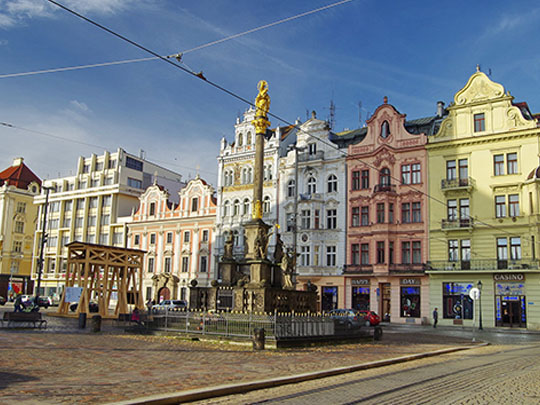
Plzeň, or Pilsen, in West Bohemia where four rivers meet to form the Berounka, was founded as New Plzeň by King Wenceslas II in 1295, and it held out as a Catholic stronghold through the Hussite Wars.
Climb the tower of Plzeň’s St Bartholomew’s Cathedral, at over 102 m the tallest church tower in the country, see the Great Synagogue, built in 1888–93 and the second-largest in Europe, and explore the medieval tunnels under the old town.
In 1842 Plzeň’s brewers hired the Bavarian Josef Groll, and his first batch of clear golden lager, brewed on 5 October, became the original Pilsner, a style copied around the world.